ToolMage
Sign in

Best 1 Electronic Signature AI tools for Document Management

Popular Electronic Signature AI tools in Document Management include SignuluOne, helping you work more efficiently.

SignuluOne
Paid

SignuluOne

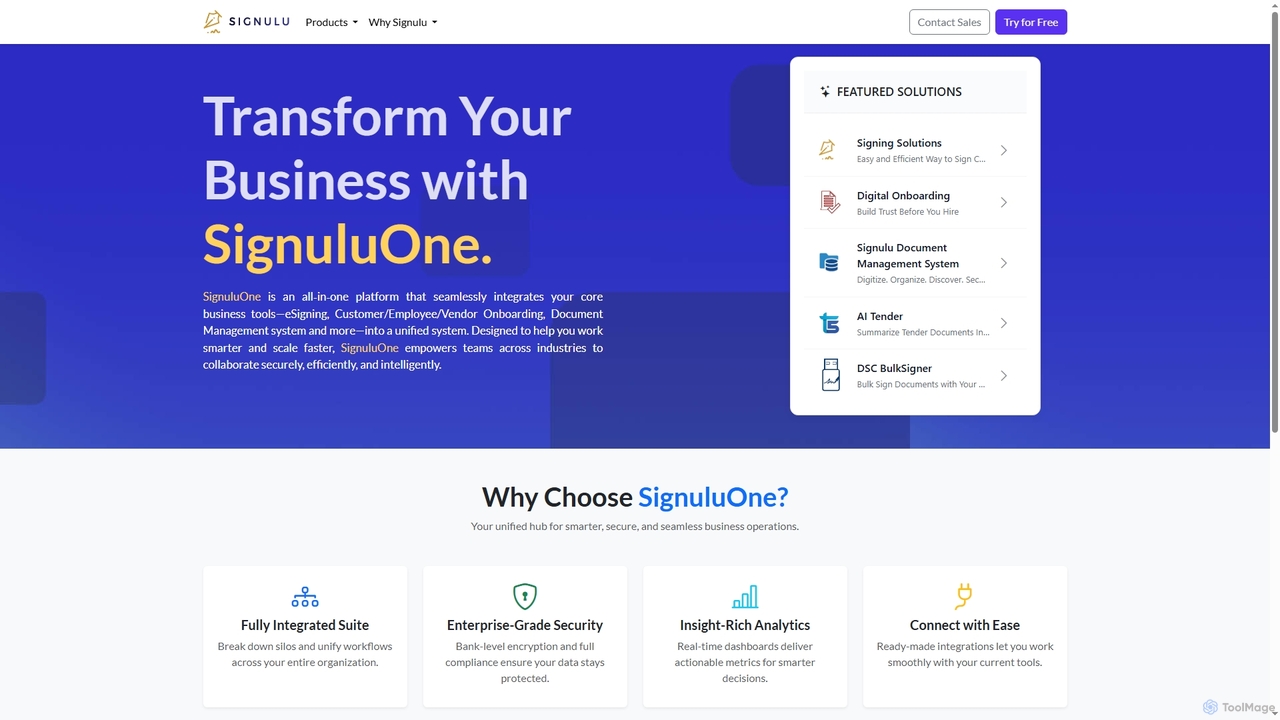
SignuluOne is an all-in-one platform designed to transform business operations by integrating core tools like eSigning, customer/employee/vendor onboarding, and document management into a unified system. It empowers teams across various industries to collaborate securely, efficiently, and intelligently, helping businesses work smarter and scale faster.

Text Summarization
Visits 5.6KFavorites 113Likes 130

About Electronic Signature

Electronic Signature tools are AI-powered solutions designed to facilitate the secure and legally binding signing of digital documents. Leveraging advanced encryption and identity verification technologies, these tools enable individuals and organizations to execute contracts, agreements, and forms remotely, significantly streamlining document workflows. They offer a robust alternative to traditional paper-based signing, enhancing efficiency, reducing costs, and improving document security within the broader context of document management.

Core Features

  • Secure Document Upload: Allows users to securely upload various document formats for signing.
  • Drag-and-Drop Signature Fields: Provides an intuitive interface to place signature, date, and text fields on documents.
  • Identity Verification: Incorporates methods like email verification, SMS OTP, or biometric checks to confirm signer identity.
  • Audit Trails & Tamper-Proofing: Records all document activities and uses cryptographic hashing to ensure document integrity after signing.
  • Legal Compliance: Adheres to global e-signature laws such as ESIGN Act, UETA, and eIDAS regulations.

Use Cases

These tools are indispensable across various sectors for accelerating agreement processes. Businesses utilize them for sales contracts, HR departments for onboarding documents, and legal firms for client agreements. They are particularly valuable for remote teams and international transactions, ensuring quick and compliant document execution without physical presence.

How to Choose

When selecting an electronic signature tool, prioritize legal compliance in your region, robust security features like encryption and audit trails, and ease of use for both senders and signers. Consider integration capabilities with existing document management or CRM systems, scalability for future needs, and transparent pricing models that align with your usage volume.

Electronic Signature use cases

1

Streamlining Sales Contract Execution

Sales teams often face delays in closing deals due to the time-consuming process of printing, signing, scanning, and sending physical contracts. Electronic signature tools enable sales professionals to send contracts digitally, allowing clients to review and sign from any device, anywhere. This accelerates the sales cycle, reduces administrative overhead, and ensures a faster path to revenue recognition.

2

Expediting HR Onboarding Documents

Human Resources departments manage a large volume of paperwork for new hires, including offer letters, employment agreements, and policy acknowledgements. Electronic signature platforms allow HR to digitize the entire onboarding packet, sending all necessary documents for secure, compliant signing. This significantly reduces the time and cost associated with manual processing, providing a seamless experience for new employees.

3

Securing Legal Agreements and NDAs

Legal professionals frequently handle sensitive documents like Non-Disclosure Agreements (NDAs), service agreements, and client retainers. Electronic signature tools provide a secure and legally admissible method for obtaining signatures, complete with detailed audit trails and tamper-proof seals. This ensures the integrity and authenticity of legal documents, minimizing risks and enhancing compliance.

4

Facilitating Real Estate Transaction Closings

Real estate agents and brokers manage numerous documents for property sales, leases, and disclosures, often requiring multiple parties to sign. Electronic signatures simplify this complex process by allowing all parties—buyers, sellers, agents, and lenders—to sign documents remotely and securely. This accelerates closing times, reduces travel, and improves overall transaction efficiency.

5

Digitizing Financial Service Applications

Financial institutions process a high volume of applications for loans, accounts, and investment products, which traditionally involve extensive paper forms. Electronic signature solutions enable banks and credit unions to offer fully digital application processes. Customers can securely sign forms online, improving convenience, reducing processing errors, and ensuring regulatory compliance for sensitive financial data.

6

Managing Vendor and Partnership Contracts

Businesses regularly engage with vendors, suppliers, and strategic partners, necessitating various contracts and agreements. Electronic signature tools streamline the creation, distribution, and signing of these documents, from procurement contracts to partnership agreements. This ensures faster onboarding of new partners, maintains clear contractual obligations, and enhances operational efficiency across the supply chain.

Electronic Signature FAQ

What are AI-powered electronic signature tools?

AI-powered electronic signature tools are software solutions that enable users to legally and securely sign documents digitally, often incorporating artificial intelligence for enhanced features like smart field detection or workflow automation. They provide a legally binding method to approve or agree to terms on electronic documents, eliminating the need for physical paper and manual signatures. Key characteristics include robust security, audit trails, and compliance with global e-signature laws.

Are electronic signatures legally binding and secure?

Yes, electronic signatures are legally binding in most countries worldwide, supported by laws such as the ESIGN Act in the U.S. and eIDAS in the EU. Their security is ensured through advanced encryption, tamper-evident seals, and comprehensive audit trails that record every action taken on a document. This cryptographic protection makes them highly secure and often more verifiable than traditional wet signatures, providing strong evidence of intent and authenticity.

What are the main benefits of using electronic signature tools?

The primary benefits of using electronic signature tools include significant time and cost savings by eliminating printing, scanning, and mailing. They enhance efficiency by accelerating document workflows and reducing turnaround times for agreements. Furthermore, these tools improve document security through encryption and audit trails, reduce errors, and support environmental sustainability by minimizing paper consumption. They also offer greater convenience and accessibility for signers.

How do I choose the right electronic signature tool for my needs?

To choose the right electronic signature tool, consider several factors. First, assess your legal and compliance requirements based on your industry and location. Look for robust security features, including strong encryption and detailed audit trails. Evaluate ease of use for both senders and signers, and check for integration capabilities with your existing business software (e.g., CRM, ERP). Finally, compare pricing models, scalability options, and customer support quality to ensure it meets your organizational needs.

What is the difference between an electronic signature and a traditional wet signature?

An electronic signature is a digital representation of a signature, created and affixed to an electronic document, while a traditional wet signature is a handwritten mark on a physical paper document. Electronic signatures offer advantages in speed, convenience, and often enhanced security through cryptographic methods and audit trails. Wet signatures require physical presence or mailing. Both are legally recognized, but electronic signatures streamline processes, reduce costs, and improve traceability in digital workflows.