ToolMage
Sign in

Best 2 Price Monitoring AI tools for E Commerce

Popular Price Monitoring AI tools in E Commerce include 922proxy and PriceResonance, helping you work more efficiently.

922proxy
Paid

922proxy

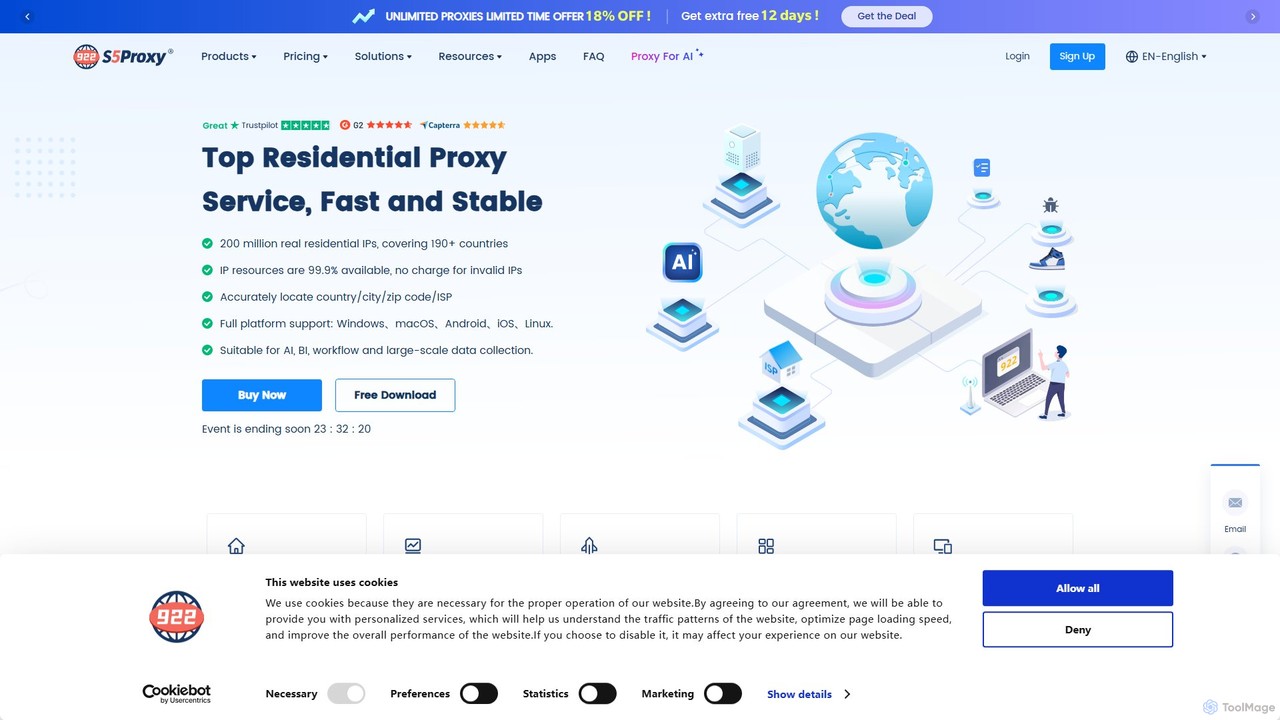
922proxy is a leading residential proxy service provider, offering over 200 million real residential IPs across 190+ countries. It specializes in providing high-purity, stable, and anonymous SOCKS5 proxies for various business needs, including web scraping, e-commerce management, ad verification, SEO monitoring, and social media marketing. With support for all major operating systems and seamless integration with anti-detect browsers, 922proxy ensures reliable and secure data access.

Web Scraping
Visits 6.1KFavorites 129Likes 115
PriceResonance
Paid

PriceResonance

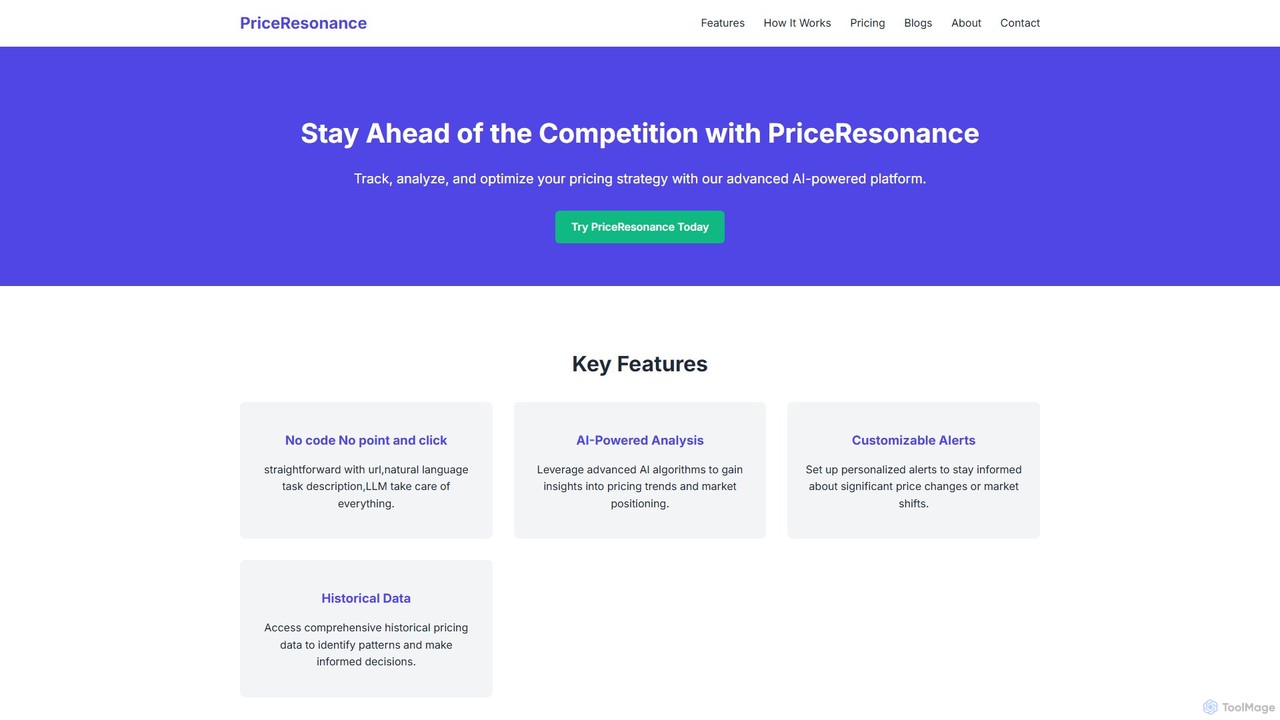
PriceResonance is an AI-powered competitive intelligence tool that simplifies price tracking and analysis. It automates web scraping to monitor competitor pricing strategies on e-commerce sites like Amazon and SaaS platforms, providing actionable insights for businesses to optimize their pricing, stay competitive, and increase market share.

Web Scraping
Visits 6KFavorites 151Likes 157

About Price Monitoring

Price Monitoring tools are AI-powered solutions designed to automatically track and analyze product prices across various online platforms. Leveraging advanced algorithms, these tools continuously collect real-time pricing data from competitors, marketplaces, and retailers, providing businesses with critical insights into market dynamics. They enable e-commerce businesses to maintain competitive pricing strategies, optimize profit margins, and respond swiftly to market changes, ultimately enhancing their position within the competitive online retail landscape.

Core Features

  • Real-time Price Tracking: Continuously monitors product prices across specified websites and marketplaces, ensuring up-to-the-minute data.
  • Competitor Analysis: Identifies and tracks competitor pricing strategies, promotions, and stock levels for comparative insights.
  • Dynamic Pricing Recommendations: Utilizes AI to suggest optimal price adjustments based on market demand, competitor actions, and inventory.
  • Alert Systems: Notifies users instantly of significant price changes, stock fluctuations, or new competitor entries.
  • Historical Data & Reporting: Stores past pricing data for trend analysis and generates comprehensive reports on market performance.

Applicable Scenarios

E-commerce managers use these tools to ensure their product prices remain competitive and profitable. Retailers leverage price monitoring to identify pricing gaps, respond to competitor promotions, and prevent price erosion. Brand owners utilize the insights to understand market positioning and enforce minimum advertised price (MAP) policies across their distribution channels.

How to Choose

When selecting a Price Monitoring tool, consider its data source coverage (e.g., specific marketplaces, global reach), the frequency of data updates, and its integration capabilities with your existing e-commerce platform. Evaluate the accuracy of its data, the robustness of its reporting features, and the customization options for alerts. Finally, assess the tool's ability to provide actionable dynamic pricing recommendations and its overall scalability to match your business growth.

Price Monitoring use cases

1

Dynamic Pricing Adjustment for E-commerce

An e-commerce manager needs to optimize product pricing daily to maximize sales and profit margins. By using an AI price monitoring tool, they can automatically track competitor prices and market demand in real-time. The tool then provides data-driven recommendations, allowing the manager to implement dynamic pricing strategies that adjust prices based on market conditions, ensuring competitiveness and increased revenue without constant manual oversight.

2

Competitor Price Intelligence Gathering

A retail business wants to understand its competitors' pricing strategies to inform its own sales campaigns. A price monitoring tool automatically collects and analyzes competitor prices across hundreds of products. This intelligence helps the business identify pricing gaps, discover popular promotional tactics, and react quickly to new market entries, enabling more effective strategic planning and market positioning.

3

Enforcing Minimum Advertised Price (MAP) Policies

A brand manufacturer needs to ensure its authorized retailers adhere to MAP policies to protect brand value. An AI price monitoring solution continuously scans online channels for violations. When a retailer lists a product below the agreed-upon MAP, the system automatically generates an alert, allowing the brand to take swift corrective action and maintain pricing consistency across its distribution network.

4

Optimizing Promotional Campaign Planning

A marketing team is planning a seasonal sales event and needs to set attractive yet profitable prices. By analyzing historical pricing data and competitor promotions through a price monitoring tool, they can identify optimal discount levels and timing. This data-driven approach helps them design campaigns that resonate with customers while safeguarding profit margins, leading to higher conversion rates.

5

Identifying New Market Opportunities

A business is looking to expand its product offerings and needs to gauge market demand and pricing for potential new items. A price monitoring tool can be configured to track prices and availability of similar products from various sellers. This provides insights into market saturation, competitive pricing benchmarks, and potential niches, guiding product development and market entry strategies.

6

Inventory Management Based on Price Trends

A supply chain manager aims to optimize inventory levels by anticipating demand shifts influenced by pricing. By integrating price monitoring data with inventory systems, they can forecast potential sales spikes or drops based on competitor price changes or market trends. This allows for proactive adjustments in stock orders, reducing overstocking or stockouts and improving overall supply chain efficiency.

Price Monitoring FAQ

What are AI Price Monitoring tools?

AI Price Monitoring tools are software solutions that use artificial intelligence to automatically track, collect, and analyze product pricing data from various online sources, such as e-commerce websites, marketplaces, and competitor sites. They provide real-time insights into market prices, competitor strategies, and demand fluctuations, helping businesses make data-driven pricing decisions to optimize sales and profitability.

How do AI Price Monitoring tools differ from manual price tracking?

AI Price Monitoring tools offer significant advantages over manual tracking by automating data collection, analysis, and reporting across vast numbers of products and sources. Unlike manual methods which are time-consuming, prone to errors, and limited in scope, AI tools provide real-time updates, historical data analysis, dynamic pricing recommendations, and instant alerts, ensuring comprehensive and accurate market intelligence at scale.

Who can benefit most from using Price Monitoring tools?

Price Monitoring tools are highly beneficial for e-commerce businesses, online retailers, brand manufacturers, and distributors. E-commerce managers use them for competitive pricing, marketing teams for promotional planning, and brand owners for MAP policy enforcement. Any business operating in a competitive online market can leverage these tools to gain a strategic edge and optimize their pricing strategies.

What key features should I look for in a Price Monitoring solution?

When choosing a Price Monitoring solution, prioritize features like real-time data collection, broad data source coverage (e.g., specific marketplaces, global reach), robust competitor analysis capabilities, and customizable alert systems. Look for tools that offer historical data analysis, comprehensive reporting, and AI-driven dynamic pricing recommendations. Integration with your existing e-commerce platform and scalability are also crucial considerations.

How can Price Monitoring tools help improve profitability?

Price Monitoring tools improve profitability by enabling businesses to set optimal prices that are competitive yet maximize margins. They help identify opportunities for price increases without losing market share, prevent price erosion by quickly reacting to competitor drops, and optimize promotional strategies. By providing insights into market demand and competitor actions, these tools ensure that pricing decisions are always aligned with business goals and market realities.