Ecommerce Best in category 1 results Pricing AI Tool

Popular AI tools in the Pricing field of Ecommerce include Pricing Maker, etc., helping you quickly improve efficiency.

Pricing Maker

Pricing Maker

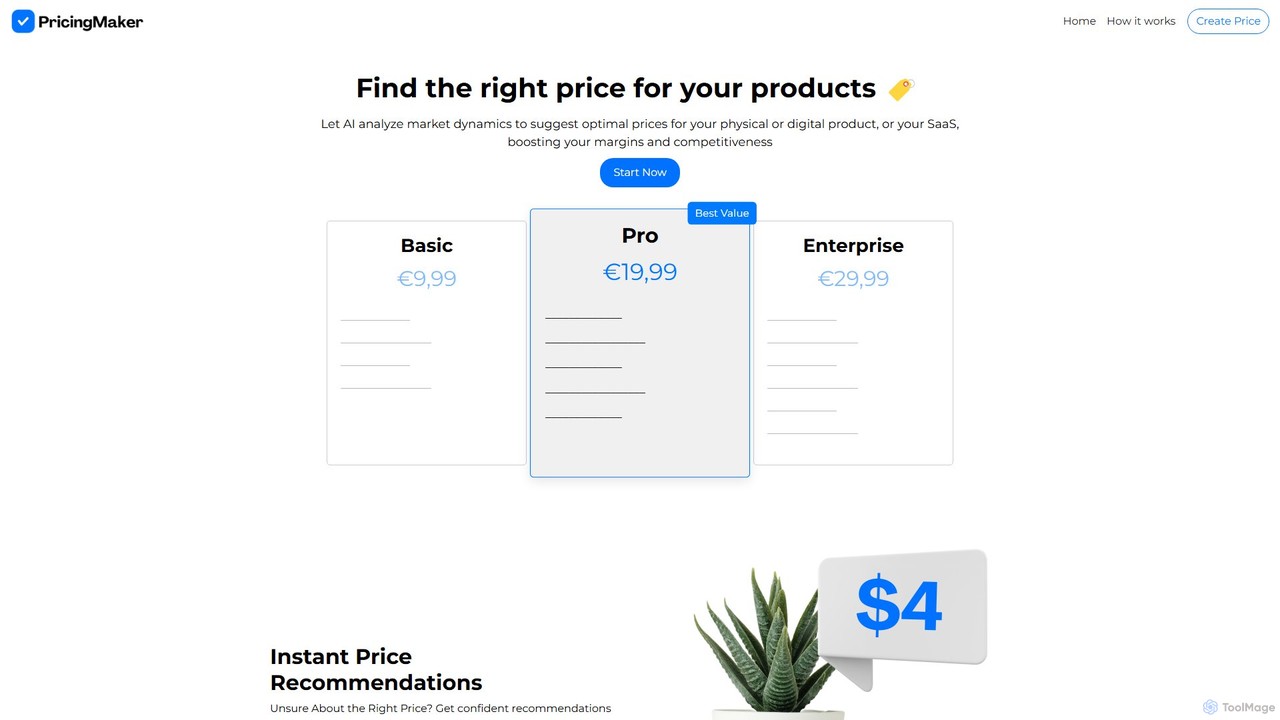
Pricing Maker is an AI-powered pricing generator that helps businesses find the optimal price for their products. By …

2.6K

About Pricing

AI Pricing tools are a specialized category within ecommerce that use machine learning to automate and optimize product pricing strategies. These tools analyze vast datasets, including competitor prices, market demand, inventory levels, and customer behavior, to recommend or automatically set the most profitable prices. They enable online businesses to move beyond static or rule-based pricing towards dynamic, data-driven strategies that enhance competitiveness and maximize revenue. This approach allows for real-time adjustments, ensuring prices are always aligned with market conditions.

Core Features

  • Dynamic Pricing Engine: Automatically adjusts prices in real-time based on predefined rules, demand fluctuations, and competitive landscape.
  • Competitor Price Monitoring: Systematically tracks and analyzes competitor pricing data across the web to inform strategic decisions.
  • Predictive Analytics & Simulation: Uses AI models to forecast the impact of price changes on sales volume and profitability before implementation.
  • Markdown Optimization: Recommends optimal discount strategies for clearance or slow-moving items to maximize revenue recovery.
  • Price Elasticity Analysis: Determines how sensitive demand for a product is to changes in its price, identifying optimal price points.

Use Cases

AI Pricing tools are primarily used by ecommerce managers, pricing analysts, and marketing teams in online retail sectors such as fashion, electronics, and consumer goods. They are also valuable in industries with high price volatility like travel and ticketing. For instance, a retailer can use these tools to automatically lower prices during off-peak hours to stimulate sales or increase them when a competitor runs out of stock.

How to Choose

When selecting an AI Pricing tool, consider its integration capabilities with your ecommerce platform (e.g., Shopify, Magento, BigCommerce). Evaluate the sophistication of its AI models and the range of data sources it can analyze. Also, assess the level of automation offered—whether it provides recommendations for manual approval or executes price changes automatically. Finally, review the analytics and reporting features to ensure you can measure the impact on your key business metrics.

PricingUse Cases

1

Dynamic Pricing for Seasonal Fashion Items

An ecommerce manager for an online fashion retailer uses an AI Pricing tool to manage seasonal collections. As a new season approaches, the tool analyzes historical sales data, current trends, and competitor pricing to suggest optimal launch prices. During the season, it implements dynamic pricing, slightly increasing prices on best-sellers with high demand and low stock, while gradually reducing prices on items with slower sales to avoid excess inventory. This strategy helps maximize profit margins on popular items and minimizes losses on clearance stock, leading to an overall revenue uplift of 10-15% per season.

2

Competitive Price Monitoring for Electronics

A pricing analyst at an online electronics store sets up an AI tool to continuously monitor the prices of top 50 products across three major competitors. The system is configured to send alerts when a competitor drops a price by more than 5% on a key product. It also provides a dashboard comparing their own prices against the market average. Using these insights, the analyst can make informed decisions, such as initiating a price match guarantee or bundling a product with an accessory to offer more value instead of simply cutting the price, thus protecting profit margins while staying competitive.

3

Simulating the Impact of a Sales Campaign

A marketing manager plans a site-wide '20% Off' summer sale. Before launching, they use an AI pricing tool's simulation feature. They input the campaign parameters (discount percentage, duration, and affected product categories). The AI model, trained on past sales data and market elasticity, predicts the likely increase in sales volume, the total revenue, and the impact on profit margin. The simulation reveals that a 15% discount would achieve 90% of the sales lift while preserving a significantly higher margin. Based on this data, the manager adjusts the campaign to 15% off, optimizing for profitability.

4

Markdown Optimization for End-of-Life Products

A category manager for a home goods retailer is tasked with clearing out last season's inventory. Instead of applying a standard 50% off discount, they use an AI pricing tool. The tool analyzes the remaining stock quantity, the rate of sale at full price, and demand patterns for similar clearance items in the past. It recommends a multi-stage markdown strategy: starting with a 20% discount, then moving to 35%, and finally 50% in the last week. This phased approach maximizes revenue by selling more units at a smaller discount initially, resulting in a 25% higher revenue recovery compared to a single, deep discount.

5

Personalized Pricing for a Subscription Service

The owner of a SaaS (Software as a Service) ecommerce business wants to increase conversion rates for new sign-ups. They integrate an AI pricing tool that analyzes user data such as geographic location, referral source, and on-site behavior. Based on this data, the tool presents personalized offers. For example, a user from a developing country might see a localized price point, while a user referred from a high-value partner blog might be offered a premium feature trial. This targeted approach increases the relevance of the offer for each visitor, leading to a significant lift in trial-to-paid conversions without devaluing the service with a universal discount.

6

Geographic Pricing for an International Store

An online retailer selling digital goods globally uses an AI pricing tool to implement a geographic pricing strategy. The tool analyzes purchasing power parity, local market competition, and regional demand for each country. It then automatically adjusts the prices displayed to customers based on their IP address. For example, a customer in Switzerland might see a price of €25, while a customer in Brazil sees a price of R$99 for the same product, reflecting local economic conditions. This localization of pricing helps the retailer stay competitive in diverse markets and maximizes global revenue by capturing the optimal price point in each region.

PricingFrequently Asked Questions