
Engineering Management Best in category 1 results Ai Governance AI Tool

Popular AI tools in the Ai Governance field of Engineering Management include Actual, etc., helping you quickly improve efficiency.

Actual

Actual

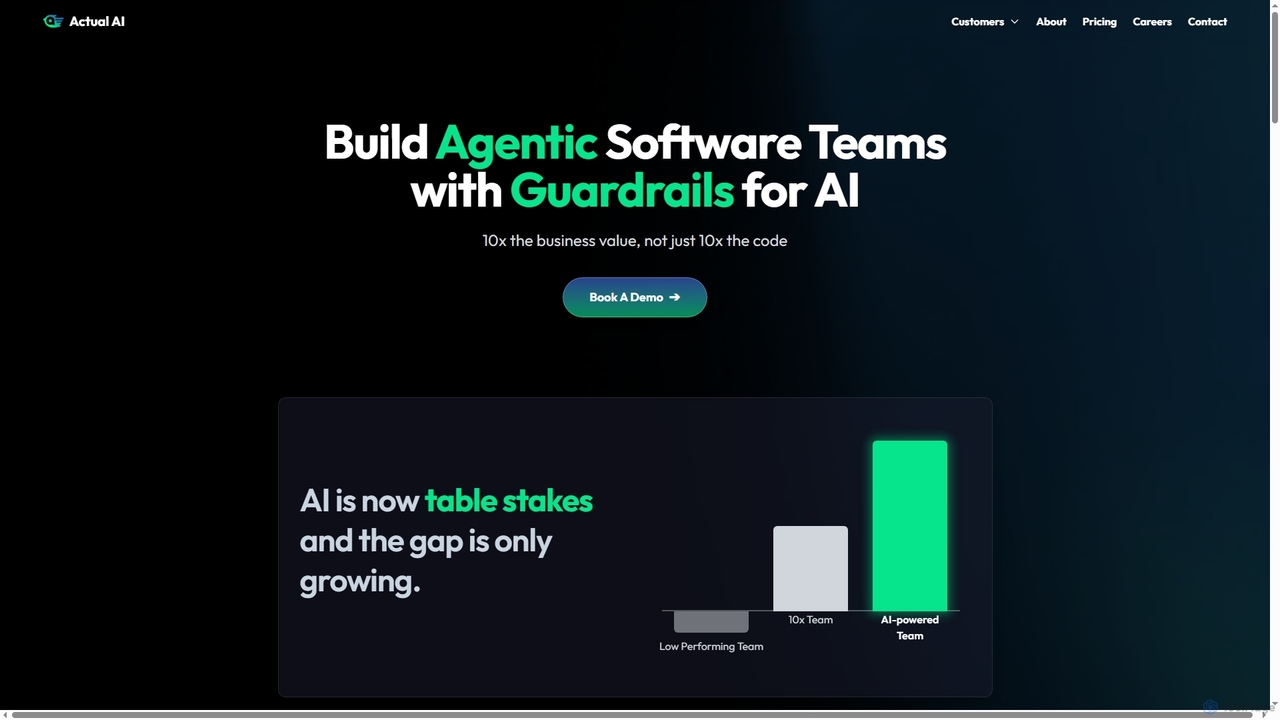
Actual is an AI-powered platform designed to empower engineering managers and software teams by providing guardrails for AI …

3.2K

About Ai Governance

Ai Governance tools are a specialized category within Engineering Management that establish frameworks, policies, and processes to ensure AI systems are developed and used responsibly and ethically. These tools leverage advanced analytics and compliance automation to manage the unique risks associated with artificial intelligence. They are crucial for organizations aiming to build trust, ensure regulatory adherence, and maintain accountability across their AI initiatives.

Core Features

  • Policy Enforcement: Automating the application and monitoring of AI-specific ethical guidelines and operational policies.
  • Risk Assessment & Mitigation: Identifying, evaluating, and reducing potential risks such as algorithmic bias, data privacy breaches, and security vulnerabilities.
  • Regulatory Compliance Monitoring: Tracking and reporting adherence to evolving AI regulations like GDPR, the EU AI Act, and industry-specific standards.
  • Transparency & Explainability: Providing mechanisms to understand AI model decisions, inputs, and outputs for auditing and stakeholder communication.
  • Audit Trails & Reporting: Generating comprehensive logs and reports on AI system performance, changes, and compliance status for accountability.

Applicable Scenarios

Ai Governance tools are vital for organizations deploying AI in sensitive areas, including finance, healthcare, and public services. They are used by compliance officers, data scientists, legal teams, and risk managers to embed ethical considerations and regulatory requirements throughout the AI lifecycle, from development to deployment and monitoring.

How to Choose

When selecting Ai Governance tools, prioritize solutions that offer robust regulatory coverage for your industry and region, strong integration capabilities with existing MLOps and data platforms, and comprehensive risk management features including bias detection and explainability. Evaluate their scalability to manage a growing portfolio of AI models and their reporting functionalities for clear audit trails and stakeholder communication.

Ai GovernanceUse Cases

1

Ensuring Regulatory Compliance for Financial AI

Financial institutions using AI for credit scoring or fraud detection must comply with strict regulations like GDPR and upcoming AI Acts. Ai Governance tools enable compliance officers to monitor model fairness, data privacy, and decision transparency. By automating audit trails and generating compliance reports, these tools help avoid penalties and build trust with regulators and customers, ensuring responsible AI deployment in sensitive financial operations.

2

Mitigating Bias in HR AI Systems

Companies utilizing AI for recruitment, performance evaluation, or promotion decisions face the risk of algorithmic bias leading to discriminatory outcomes. Ai Governance tools empower HR and ethics teams to detect and mitigate such biases by analyzing model outputs for unfair patterns. They provide fairness metrics, explainability reports, and audit trails, ensuring equitable hiring practices and fostering a diverse workforce while complying with anti-discrimination laws.

3

Establishing Ethical Guidelines for Healthcare AI

Healthcare providers deploying AI for diagnostics, treatment recommendations, or patient management require robust ethical oversight to ensure patient safety and data privacy. Ai Governance platforms assist medical and legal teams in defining and enforcing policies around model explainability, data consent, and clinical validation. This ensures responsible AI deployment, builds patient trust, and navigates the complex ethical landscape of medical AI applications.

4

Managing AI Risk in Autonomous Systems Development

Automotive companies developing self-driving cars or industrial robots face immense safety, ethical, and liability challenges. Ai Governance tools assist engineering and legal teams in documenting decision-making processes, tracking model performance under various conditions, and ensuring adherence to safety standards. They provide audit trails for every AI-driven action, crucial for demonstrating due diligence and managing potential liabilities in autonomous system deployment.

5

Implementing Data Privacy for Customer Service AI

Businesses using AI chatbots or virtual assistants handle sensitive customer data, necessitating strict adherence to privacy laws like CCPA and GDPR. Ai Governance solutions help data privacy officers enforce data anonymization, consent management, and secure data handling protocols. By providing tools for data lineage tracking and privacy impact assessments, they ensure customer trust, prevent data breaches, and maintain compliance with evolving data protection regulations.

6

Auditing AI Models for Transparency in Public Sector

Government agencies utilizing AI for public services, such as resource allocation or predictive policing, face high demands for transparency and accountability. Ai Governance tools enable public sector organizations to conduct thorough audits of AI models, providing explainability reports on how decisions are made and identifying potential biases. This ensures fair and equitable service delivery, builds public trust, and demonstrates adherence to ethical AI principles in government operations.

Ai GovernanceFrequently Asked Questions