Engineering Management Best in category 1 results Technical Leadership AI Tool

Popular AI tools in the Technical Leadership field of Engineering Management include DevBlogs, etc., helping you quickly improve efficiency.

DevBlogs

DevBlogs

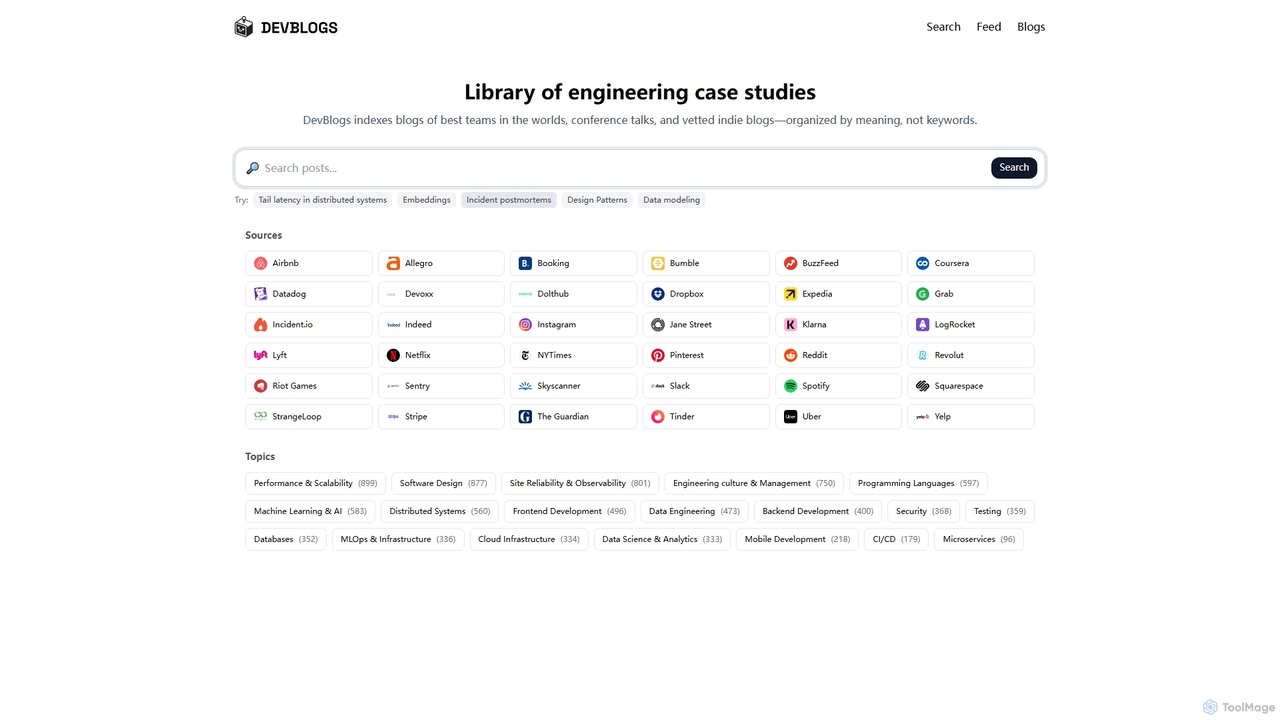
DevBlogs is a curated library indexing engineering case studies, tech blogs, and conference talks from leading global teams. …

3.0K

About Technical Leadership

AI Technical Leadership tools are a specialized category of engineering management software that provides data-driven insights into the software development lifecycle. They analyze source code, pull requests, and project data to help tech leads and managers make informed decisions, mentor their teams, and improve code quality. These platforms translate complex engineering activities into actionable metrics, bridging the gap between technical execution and strategic business objectives. They focus on the 'how' and 'why' of engineering work, not just the 'what' and 'when'.

Core Features

  • Code Quality & Technical Debt Analysis: Automatically scans codebases to identify hotspots, complexity, and areas needing refactoring.
  • Pull Request (PR) Analytics: Measures metrics like cycle time, review depth, and collaboration patterns to optimize the review process.
  • Developer Growth Insights: Provides objective data on individual contributions and work patterns to facilitate coaching and mentorship.
  • Engineering-Business Alignment: Connects development work to business goals like OKRs to demonstrate engineering's impact.
  • Team Workflow Visualization: Maps out collaboration and communication patterns to identify bottlenecks and improve team dynamics.

Use Cases

These tools are primarily used by Engineering Managers, Tech Leads, VPs of Engineering, and CTOs. They are valuable in contexts like sprint retrospectives for process improvement, one-on-one meetings for career development discussions, and strategic planning sessions to allocate resources effectively against technical debt.

How to Choose

When selecting a Technical Leadership tool, consider its integration capabilities with your version control system (e.g., GitHub, GitLab). Evaluate the depth and actionability of its analytics, data privacy and security policies, and its support for different programming languages. Also, assess how well its metrics align with your team's culture and development philosophy.

Technical LeadershipUse Cases

1

Optimize Code Review Processes

An Engineering Manager notices that pull request (PR) approval times are increasing, slowing down feature delivery. Using an AI Technical Leadership tool, they analyze the entire code review workflow. The tool highlights that PRs from junior developers wait longer for a first review and that a single senior engineer is a bottleneck for approvals. Armed with this data, the manager implements a new policy for peer reviews and distributes review responsibilities more evenly, reducing the average PR cycle time by 30%.

2

Identify and Prioritize Technical Debt

A VP of Engineering needs to justify allocating a full sprint to address technical debt. The AI tool scans all microservices and generates a report that quantifies the debt, identifying specific modules with high complexity and low test coverage. The report also correlates these modules with a recent increase in production bugs. This data-driven evidence allows the VP to clearly communicate the business risk to stakeholders and secure the necessary resources for a dedicated refactoring sprint, preventing future outages.

3

Facilitate Data-Driven 1-on-1 Meetings

A Tech Lead prepares for a 1-on-1 meeting with a mid-level developer. Instead of relying solely on subjective feelings, the lead reviews the developer's metrics in the AI tool. They see the developer has a high code churn rate but also contributes significantly to complex features. This insight allows the lead to structure the conversation around improving code planning and design upfront to reduce rework, turning a potentially critical conversation into a constructive coaching session focused on professional growth.

4

Align Engineering Work with Business Goals

During a quarterly business review, a CTO uses a dashboard from their Technical Leadership tool to demonstrate the engineering team's impact. The dashboard visually connects specific epics and pull requests to the company's OKR of 'Improving User Retention by 15%'. They can show that 40% of recent engineering effort was directly invested in features related to this goal. This provides clear, quantifiable evidence of engineering's contribution, moving the conversation beyond simple feature delivery velocity.

5

Assess Team Health and Collaboration Patterns

A newly appointed Tech Lead wants to understand the team's dynamics. By using an AI tool, they visualize the team's collaboration graph based on PR reviews and comments. The visualization reveals two distinct subgroups that rarely interact, indicating a knowledge silo. The lead uses this insight to proactively re-organize the team for an upcoming project, mixing members from both groups to encourage cross-pollination of ideas and improve overall team resilience.

6

Improve Onboarding for New Engineers

A team lead is responsible for onboarding a new junior engineer. They use a technical leadership tool to monitor the new hire's progress. The tool shows that the engineer's first few PRs are small and well-scoped, but their review turnaround time is slow. The lead also sees that the new hire is only interacting with one other team member. This allows the lead to pair the new engineer with different mentors and provide specific guidance on navigating the team's review culture, accelerating their integration and productivity.

Technical LeadershipFrequently Asked Questions