Eco-AI
Eco-AI is a pioneering decentralized artificial intelligence platform designed for sustainability, significantly reducing energy and water consumption compared …
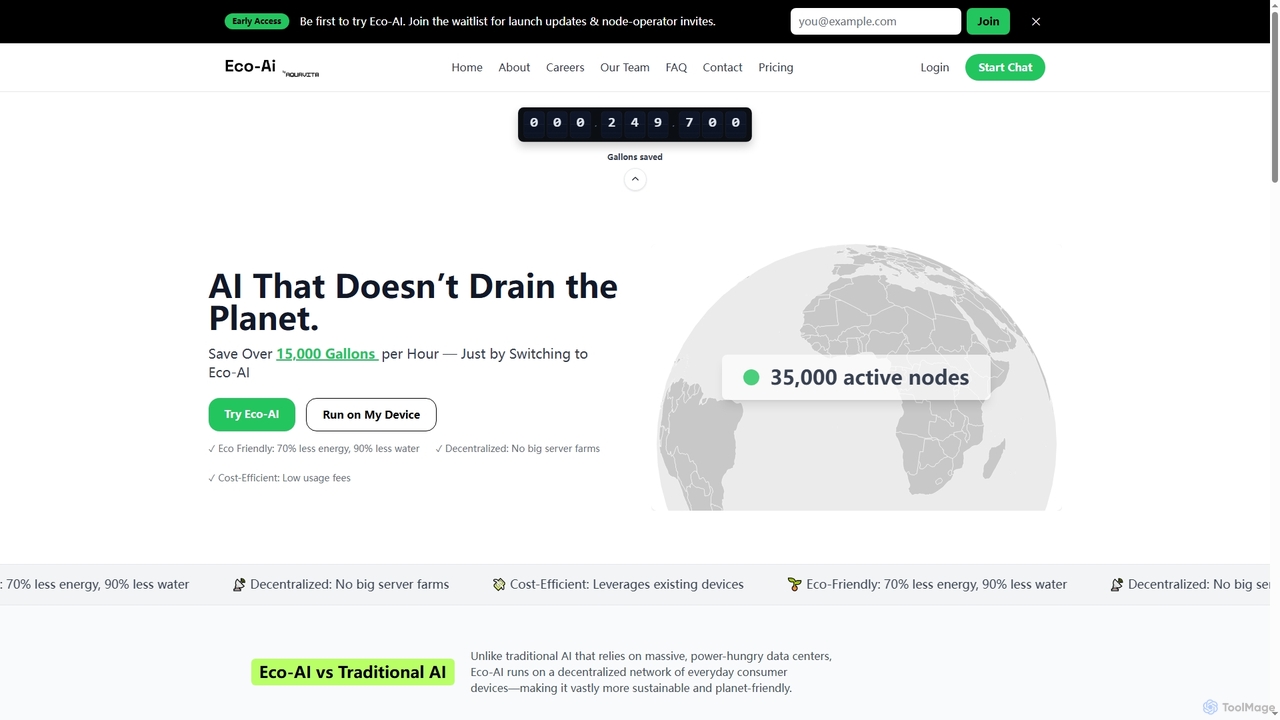
Eco-AI is a pioneering decentralized artificial intelligence platform designed for sustainability, significantly reducing energy and water consumption compared to traditional AI. It leverages a network of consumer-owned devices, promoting an eco-friendly and cost-efficient approach to AI processing while enhancing privacy.
About Environmental Technology
Environmental Technology tools are AI-powered solutions designed to address complex environmental challenges through advanced data analysis, predictive modeling, and automated management. These innovative tools leverage machine learning, computer vision, and sensor data to monitor ecosystems, optimize resource usage, and mitigate pollution effectively. They provide critical insights for sustainable development, climate action, and efficient environmental management, enabling proactive decision-making across various sectors. By integrating artificial intelligence, these technologies enhance our ability to understand, predict, and respond to environmental changes with unprecedented precision.
Core Features
- Real-time Environmental Monitoring: Collect and analyze data from sensors (air quality, water quality, soil health) for immediate insights.
- Predictive Modeling & Forecasting: Use AI to predict climate patterns, pollution spread, and resource availability for proactive planning.
- Resource Optimization: AI algorithms optimize energy consumption, waste management, and water usage in industrial and urban settings.
- Biodiversity & Ecosystem Analysis: Identify species, track populations, and assess ecosystem health using computer vision and acoustic data.
- Environmental Impact Assessment: Automate data collection and analysis for more accurate and efficient environmental risk evaluations.
Use Cases
Environmental Technology tools are utilized across diverse sectors, including energy, agriculture, urban planning, and conservation. Environmental scientists use them for detailed ecosystem analysis, while urban planners leverage them for smart city energy grids. Sustainability managers apply these tools for optimizing waste streams, and policymakers use them for climate action planning and tracking illegal deforestation.
How to Choose
When selecting Environmental Technology tools, prioritize solutions with robust data integration capabilities to connect with existing sensor networks. Evaluate their scalability and flexibility to adapt to evolving environmental challenges and data volumes. Assess the accuracy and reliability of their predictive models and monitoring systems. Finally, ensure the tools offer comprehensive compliance and reporting features to meet regulatory requirements and facilitate transparent environmental management.

Environmental TechnologyUse Cases
Optimizing Renewable Energy Grids
Energy companies and grid operators use AI to analyze real-time weather patterns, energy production from solar and wind farms, and consumer demand. This allows for intelligent distribution of renewable energy, minimizing waste, preventing grid overloads, and ensuring a stable power supply. The AI predicts fluctuations, enabling proactive adjustments and maximizing the integration of green energy sources.
Predicting & Mitigating Air Pollution
Environmental agencies and urban planners deploy AI models that process data from air quality sensors, traffic patterns, and industrial emissions. These tools forecast air pollution levels in specific areas, identify major contributing sources, and recommend targeted interventions like traffic restrictions or industrial emission controls. This helps protect public health and improve urban air quality effectively.
Smart Waste Management & Recycling
Municipalities and waste management companies leverage AI-powered sensors in bins and collection vehicles, along with data analytics platforms. AI optimizes waste collection routes based on fill levels, identifies contamination in recycling streams, and automates sorting processes in facilities. This reduces operational costs, increases recycling rates, and minimizes landfill volumes, contributing to a circular economy.
Precision Agriculture for Resource Efficiency
Farmers and agricultural enterprises utilize AI-driven drones and ground sensors to monitor soil moisture, nutrient levels, and crop health across vast fields. AI algorithms analyze this data to predict crop diseases, optimize irrigation schedules, and precisely apply fertilizers and pesticides only where needed. This significantly reduces water usage, chemical runoff, and overall environmental impact while boosting yields.
Biodiversity Monitoring & Conservation
Conservation organizations and researchers employ AI-driven image and sound recognition systems in remote cameras and acoustic sensors. These tools automatically identify and track endangered species, detect illegal poaching activities, and assess habitat health without constant human presence. This provides crucial data for conservation strategies, allowing for timely interventions and more effective protection of wildlife.
Automated Environmental Impact Assessment
Consulting firms and industrial companies use AI to rapidly process vast datasets, including geographical information, regulatory documents, and historical environmental data, for environmental impact studies. AI tools can identify potential risks, simulate different development scenarios, and generate comprehensive reports. This streamlines the compliance process, reduces assessment time, and helps identify sustainable development opportunities.