Finance Best in category 4 results Analysis AI Tool

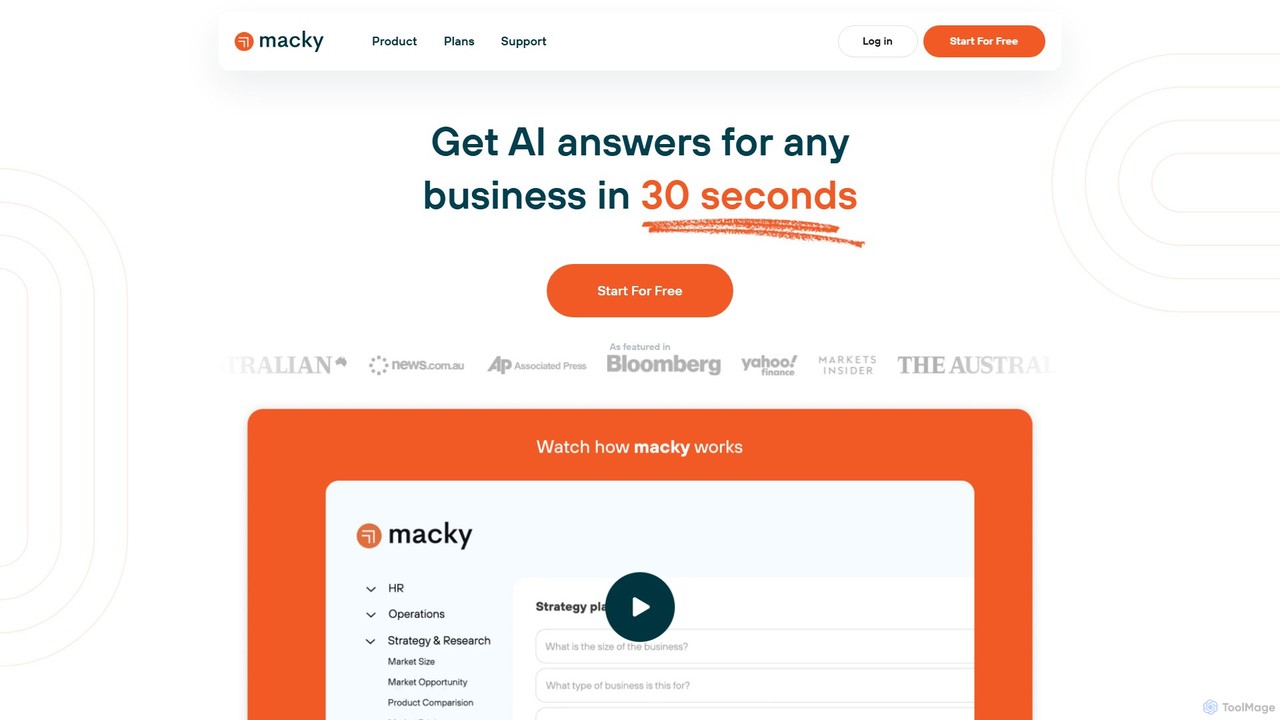
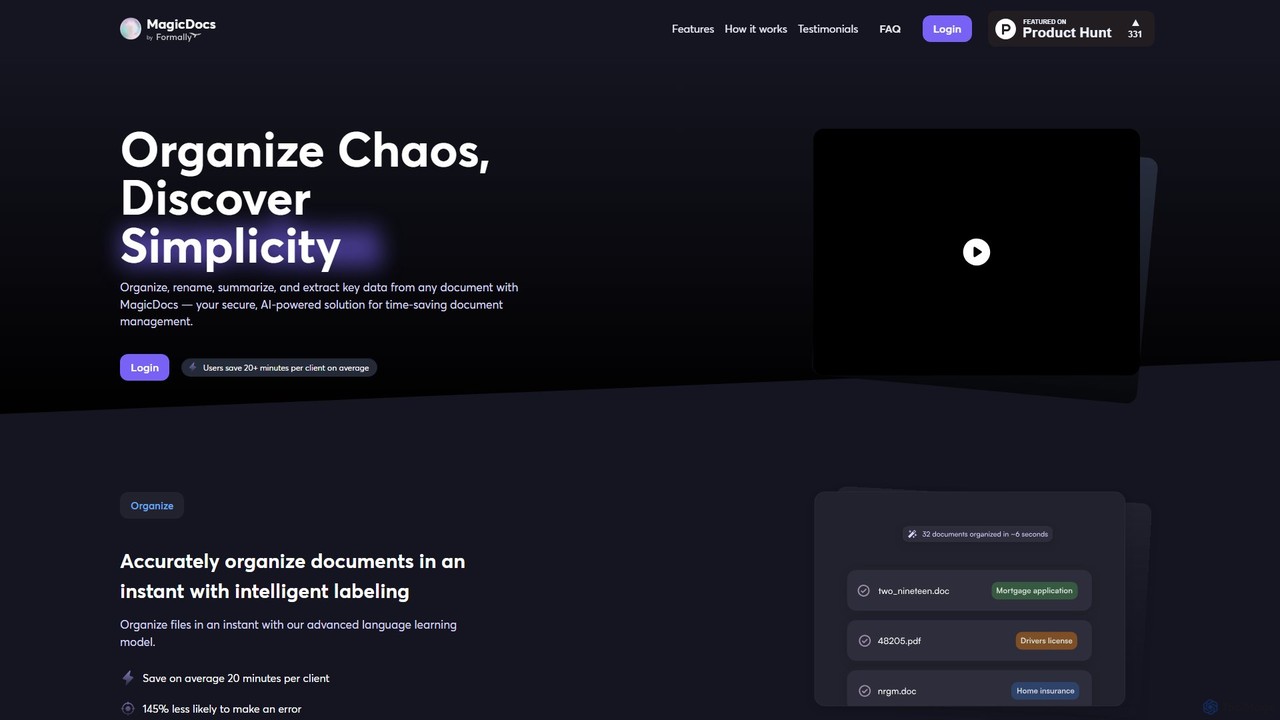
Popular AI tools in the Analysis field of Finance include FinanceGPT、macky、Empsing、Magic Documents, etc., helping you quickly improve efficiency.

Magic Documents

Magic Documents

Magic Documents is a secure, AI-powered solution that transforms chaotic document management. It automatically organizes, renames, summarizes, and …

2.2K
macky

macky

macky is an AI-powered business consulting platform that provides on-demand, actionable insights for businesses of all sizes. By …

3.8K
FinanceGPT

FinanceGPT

FinanceGPT is an AI-powered SaaS platform that transforms complex financial data into actionable insights. It combines generative AI …

9.6K
Empsing

Empsing

Empsing provides businesses with autonomous AI digital employees to automate tasks across various departments. These AI agents can …

2.2K

About Analysis

AI Financial Analysis tools are a class of applications that use machine learning and data science to interpret complex financial data. These tools process vast datasets, including market trends, company financial statements, and economic indicators, to automate forecasting, risk assessment, and opportunity identification. They empower investors, analysts, and corporate finance teams to make faster, more accurate, data-driven decisions. Unlike traditional manual methods, AI analysis can uncover subtle correlations and predictive patterns that are often missed by human observation.

Core Features

  • Predictive Forecasting: Utilizes historical data and machine learning models to project future stock prices, revenue, or market trends.
  • Risk Modeling: Quantifies and simulates potential financial risks, such as market volatility, credit default, or operational failures.
  • Sentiment Analysis: Analyzes news articles, social media, and earnings calls to gauge market sentiment towards a specific asset or company.
  • Automated Reporting: Automatically generates comprehensive financial summaries, performance dashboards, and investment reports from raw data.
  • Fundamental Analysis Automation: Extracts and interprets key metrics from financial statements like balance sheets and income statements to evaluate a company's health.

Applicable Scenarios

These tools are widely used in investment banking, asset management, and corporate finance. For instance, hedge funds use them for algorithmic trading strategies, while corporate FP&A (Financial Planning & Analysis) teams leverage them for more accurate budgeting and strategic planning. Individual investors also use them to analyze potential stock investments.

Selection Criteria

When choosing a tool, consider the scope of data sources it integrates with (e.g., Bloomberg, public APIs), the transparency of its AI models (explainability), its specialization (e.g., equities, forex, derivatives), and its ability to integrate with your existing workflow and software. Also, evaluate the balance between ease of use for non-technical users and advanced customization for data scientists.

AnalysisUse Cases

1

Automated Equity Research for Investment Decisions

A junior financial analyst at an investment firm is tasked with covering 50 new tech stocks. Manually reading through quarterly reports, news, and analyst calls for each is unfeasible. Using an AI financial analysis tool, the analyst inputs the stock tickers. The tool automatically scrapes and processes financial statements, calculates key ratios (P/E, ROE), performs sentiment analysis on recent news, and generates a standardized summary report for each company. This reduces preliminary research time from weeks to hours, allowing the analyst to focus on deeper, qualitative analysis and strategic recommendations.

2

Dynamic Portfolio Risk Assessment

A portfolio manager for a retirement fund needs to ensure the portfolio remains within its defined risk tolerance. They use an AI analysis tool to continuously monitor the portfolio's exposure to market volatility, interest rate changes, and sector-specific risks. The tool runs thousands of simulations (Monte Carlo analysis) based on real-time data to predict potential drawdowns. When the predicted risk exceeds a set threshold, the system alerts the manager and suggests specific rebalancing actions, such as reducing exposure to a high-correlation asset, to mitigate risk proactively.

3

Corporate Budgeting and Revenue Forecasting

The Financial Planning & Analysis (FP&A) team at a retail company needs to create the budget for the next fiscal year. Instead of relying solely on historical sales data, they use an AI tool that integrates sales figures with external data like macroeconomic indicators, consumer spending trends, and competitor performance. The model identifies complex patterns and seasonality to generate a more accurate and dynamic revenue forecast. This allows the team to allocate resources more effectively and set realistic performance targets for different departments.

4

Real-Time Market Sentiment Analysis for Trading

A day trader specializing in volatile assets like cryptocurrencies or tech stocks needs to react quickly to market news. They employ an AI analysis tool that constantly scans Twitter, financial news sites, and online forums. The tool provides a real-time sentiment score (e.g., from -1 to +1) for specific assets. When the sentiment score for a stock rapidly turns positive following a news announcement, the trader receives an alert, enabling them to enter a position before the price movement fully materializes, capitalizing on short-term opportunities.

5

Advanced Credit Risk Scoring for Lenders

A fintech lending company aims to provide loans to individuals with limited traditional credit history. They use an AI financial analysis tool to build a more inclusive credit scoring model. The tool analyzes alternative data points such as utility payment history, rental payments, and online transaction behavior alongside traditional financial data. This provides a more holistic view of an applicant's creditworthiness, allowing the company to approve more loans accurately while managing default risk effectively.

6

Anomaly Detection for Financial Fraud Prevention

A compliance department at a large bank is responsible for preventing fraudulent transactions. They deploy an AI analysis tool that learns the normal transaction patterns for each customer. The system monitors millions of transactions in real-time. When it detects an activity that deviates significantly from a customer's established behavior—such as an unusually large international transfer from an account that has never done so—it flags the transaction for immediate review by a human analyst, preventing potential financial loss and ensuring regulatory compliance.

AnalysisFrequently Asked Questions