Finance Best in category 1 results Credit Risk Assessment AI Tool

Popular AI tools in the Credit Risk Assessment field of Finance include Nova Credit, etc., helping you quickly improve efficiency.

Nova Credit

Nova Credit

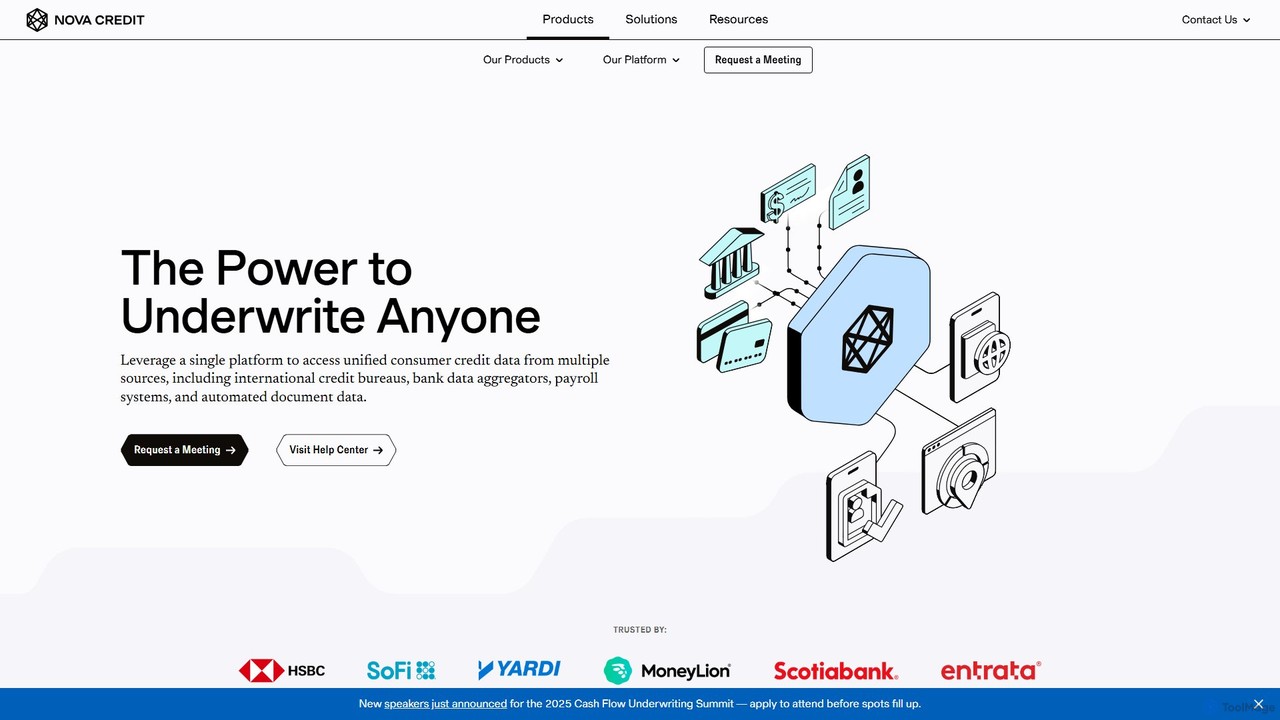
Nova Credit is a fintech platform that enables lenders and businesses to assess credit risk for underserved populations. …

280.7K

About Credit Risk Assessment

AI Credit Risk Assessment tools are specialized applications that use machine learning to analyze financial and alternative data for predicting a borrower's likelihood of default. These tools leverage advanced algorithms to process vast datasets, identifying complex patterns that traditional scoring models might miss. This results in more accurate, faster, and consistent credit decisions for financial institutions. Their primary value lies in enhancing the underwriting process, reducing loan losses, and enabling financial inclusion for individuals with limited credit history.

Core Features

  • Predictive Modeling: Builds and deploys machine learning models to generate precise credit scores and default probabilities.
  • Alternative Data Analysis: Incorporates non-traditional data sources like transaction history, utility payments, and digital footprint for a holistic risk view.
  • Automated Underwriting: Automates the evaluation and decision-making process for loan applications based on predefined risk parameters.
  • Model Explainability (XAI): Provides transparent explanations for AI-driven decisions to ensure regulatory compliance and fairness.
  • Portfolio Monitoring: Continuously tracks the credit risk of existing loans and alerts managers to potential defaults.

Use Cases

These tools are primarily used by financial institutions such as banks, credit unions, fintech startups, and peer-to-peer lending platforms. Key users include risk managers, loan officers, and underwriters who need to make informed lending decisions quickly and efficiently. They are applied in consumer lending, small business loans, mortgage applications, and credit card approvals.

How to Choose

When selecting an AI Credit Risk Assessment tool, consider its data integration capabilities with your existing systems and data sources. Evaluate the model's explainability and transparency to meet regulatory requirements. Assess its scalability to handle your application volume and the level of customization available for risk models. Finally, verify its security protocols and compliance with financial data protection standards.

Credit Risk AssessmentUse Cases

1

Automating Personal Loan Approvals for Fintechs

A fintech startup aims to provide quick personal loans to 'thin-file' applicants who lack a traditional credit history. Their risk analysts use an AI Credit Risk Assessment tool to analyze alternative data, such as bank transaction history, utility payment records, and online behavior. The tool's machine learning model generates a reliable risk score in seconds, allowing the company to automate over 90% of its lending decisions. This significantly reduces manual review time, lowers operational costs, and enables them to serve a previously untapped market segment safely.

2

Enhancing Mortgage Underwriting in Banks

A large retail bank struggles with a slow and labor-intensive mortgage underwriting process. By implementing an AI assessment tool, their underwriters can now process applications faster. The AI system automatically verifies applicant data, flags high-risk files, and provides a preliminary risk assessment. This allows human underwriters to focus their expertise on complex cases rather than routine data checks. The result is a 40% reduction in application processing time, improved consistency in decision-making, and a better overall experience for mortgage applicants.

3

Real-Time Fraud Detection in Credit Applications

An online lender faces increasing challenges with fraudulent credit card applications submitted through their website. They integrate an AI risk assessment tool that specializes in anomaly detection. The tool analyzes application data in real-time, cross-referencing it with known fraud patterns and identifying inconsistencies, such as mismatched IP addresses and personal information. When a high-risk application is detected, it is immediately flagged for manual review, preventing potential losses. This real-time screening has helped reduce fraud-related losses by over 60% without adding friction to the legitimate customer's application process.

4

Assessing Creditworthiness of Small Businesses

A commercial lender needs a more effective way to assess the credit risk of small and medium-sized enterprises (SMEs), which often have complex financial profiles. They adopt an AI tool that connects to accounting software, bank accounts, and payment processors. The AI analyzes real-time cash flow, revenue trends, and customer payment patterns to build a dynamic risk profile. This provides a much more accurate picture of a business's health than a static annual report. As a result, the lender can make faster, more confident loan decisions for SMEs, increasing their loan portfolio in this segment by 25%.

5

Dynamic Portfolio Risk Monitoring

An investment firm managing a large portfolio of corporate loans needs to proactively monitor risk. They deploy an AI system that continuously analyzes market data, news sentiment, and the financial performance of the companies in their portfolio. The tool provides real-time risk alerts, identifying companies whose creditworthiness may be deteriorating before it's reflected in official credit ratings. This allows portfolio managers to take early action, such as restructuring loans or hedging their positions, thereby minimizing potential losses and maintaining the overall health of the investment portfolio.

6

Fair Lending Compliance and Bias Reduction

A credit union is concerned about potential unconscious bias in its loan approval process and needs to ensure compliance with fair lending regulations. They use an AI tool with advanced explainability (XAI) features. The tool not only provides a risk score but also clearly outlines the key factors contributing to each decision, without using protected characteristics like race or gender. This transparency allows compliance officers to audit lending decisions easily, demonstrate fairness to regulators, and identify and mitigate any potential biases in the data or model, ensuring equitable access to credit for all community members.

Credit Risk AssessmentFrequently Asked Questions