Finance Best in category 1 results Data Analytics AI Tool

Popular AI tools in the Data Analytics field of Finance include Ignite, etc., helping you quickly improve efficiency.

Ignite

Ignite

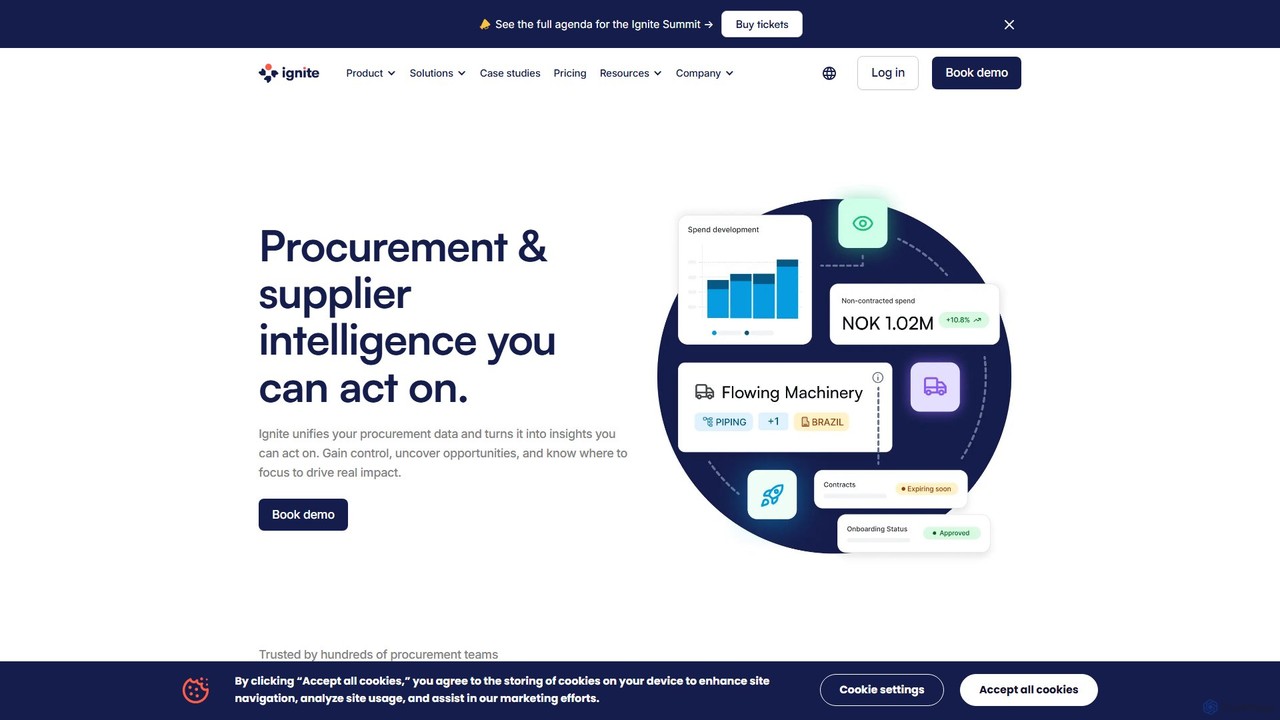
Ignite is an AI-powered platform for procurement and supplier intelligence. It unifies all procurement data into a single …

10.4K

About Data Analytics

AI Data Analytics tools for finance are specialized platforms designed to process and interpret vast financial datasets. They leverage machine learning, predictive modeling, and natural language processing to uncover complex patterns, forecast market trends, and assess risk. By transforming raw data from markets, reports, and transactions into actionable intelligence, these tools empower financial professionals to make more informed, data-driven decisions. Their key advantage lies in identifying subtle correlations and anomalies that are often missed by traditional analytical methods.

Core Features

  • Predictive Modeling: Forecasts stock prices, market volatility, and economic indicators using historical data and machine learning algorithms.
  • Risk Assessment Automation: Analyzes portfolios and transactions to quantify credit risk, market risk, and operational risk in real-time.
  • Algorithmic Signal Generation: Identifies potential buy or sell opportunities by analyzing real-time market data streams and technical indicators.
  • Unstructured Data Analysis: Extracts insights from financial news, earnings call transcripts, and social media to gauge market sentiment.
  • Fraud Detection: Employs anomaly detection algorithms to identify and flag unusual or potentially fraudulent financial activities.

Use Cases

These tools are primarily used in investment banks, hedge funds, asset management firms, and corporate finance departments. Financial analysts, quantitative analysts (quants), portfolio managers, and risk officers utilize them for tasks like strategy backtesting, credit scoring, and compliance monitoring.

How to Choose

When selecting a tool, consider its data integration capabilities with sources like Bloomberg or Refinitiv, the flexibility to customize or build proprietary models, its adherence to financial regulations (e.g., SOX, GDPR), and its real-time data processing speed for time-sensitive applications like high-frequency trading.

Data AnalyticsUse Cases

1

Algorithmic Trading Strategy Backtesting

A quantitative analyst at a hedge fund needs to validate a new trading strategy before deploying it with real capital. Using an AI Data Analytics tool, they can simulate the strategy's performance against years of historical market data, including tick-level price changes and order book information. The platform automatically calculates key performance metrics like Sharpe ratio, maximum drawdown, and alpha. This process allows the analyst to refine model parameters and assess risk exposure, significantly reducing the risk of live deployment and accelerating the strategy development cycle.

2

Automated Credit Risk Scoring

A loan officer at a commercial bank is tasked with evaluating hundreds of small business loan applications. An AI Data Analytics tool automates this process by integrating data from various sources, such as financial statements, payment histories, and macroeconomic indicators. The tool's machine learning model generates a precise credit score and highlights key risk factors for each applicant. This not only speeds up the approval process from days to hours but also improves the accuracy of risk assessment, leading to a healthier loan portfolio and reduced default rates.

3

Real-Time Financial Fraud Detection

A compliance team at a fintech company needs to monitor millions of daily transactions for fraudulent activity. The AI Data Analytics platform analyzes transaction patterns in real-time, using anomaly detection to flag suspicious behaviors that deviate from a user's normal activity, such as unusual transaction amounts or geographic locations. When a potential threat is detected, the system automatically generates an alert for immediate investigation. This proactive approach helps prevent financial losses and protects customer accounts without disrupting legitimate transactions.

4

Market Sentiment Analysis for Investment

A portfolio manager at an asset management firm wants to understand the market's perception of a specific stock before making a large investment. The AI tool scans and analyzes thousands of news articles, analyst reports, and social media posts related to the company. Using Natural Language Processing (NLP), it quantifies sentiment as positive, negative, or neutral and identifies emerging themes or concerns. This provides the manager with a comprehensive, real-time view of market sentiment, offering a crucial data point beyond traditional financial metrics.

5

Summarizing Earnings Call Transcripts

During a busy earnings season, a financial analyst needs to cover dozens of companies. Manually reading through long earnings call transcripts is time-consuming. An AI Data Analytics tool can ingest these transcripts and automatically generate concise summaries, highlighting key topics like revenue guidance, management sentiment, and answers to critical analyst questions. This enables the analyst to quickly grasp the essential information from each call, compare performance across companies, and update their financial models more efficiently.

6

Portfolio Optimization and Rebalancing

An investment advisor is managing diversified portfolios for multiple clients with different risk tolerances. An AI Data Analytics tool can analyze current market conditions and correlations between different asset classes. It runs thousands of simulations to recommend an optimal asset allocation that maximizes potential returns for a given level of risk. The tool can also monitor the portfolio continuously and suggest rebalancing actions when the asset mix deviates from the target, ensuring the strategy remains aligned with the client's goals.

Data AnalyticsFrequently Asked Questions