Finance Best in category 1 results Due Diligence AI Tool

Popular AI tools in the Due Diligence field of Finance include Binocs, etc., helping you quickly improve efficiency.

Binocs

Binocs

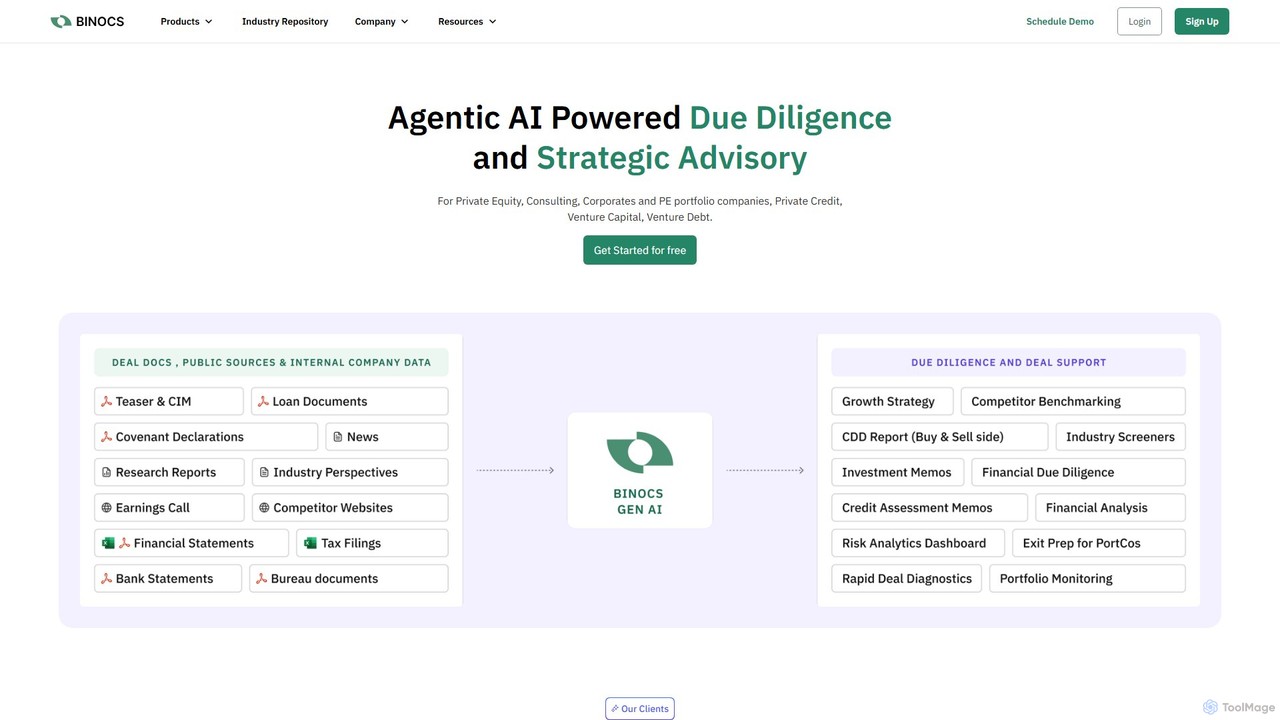
Binocs is an agentic AI platform designed for finance professionals, automating due diligence, strategic advisory, and portfolio monitoring. …

9.8K

About Due Diligence

AI Due Diligence tools are specialized platforms that use artificial intelligence to automate and accelerate the investigation of a business or asset before a major transaction. Leveraging technologies like Natural Language Processing (NLP) and machine learning, these tools can analyze vast volumes of documents, financial records, and public data in minutes. They are designed to identify risks, uncover anomalies, and verify information, significantly enhancing the accuracy and efficiency of the due diligence process in finance. This allows teams to make faster, more informed decisions in M&A, investments, and partnerships.

Core Features

  • Automated Data Aggregation: Gathers and centralizes information from diverse sources like data rooms, public records, and news feeds.
  • Intelligent Document Analysis: Uses NLP to scan contracts and reports, extracting key clauses, identifying risks, and flagging deviations.
  • Risk Identification & Scoring: Employs machine learning models to detect financial inconsistencies, legal liabilities, and compliance issues, often assigning a risk score.
  • Automated Reporting: Generates comprehensive, customizable reports that summarize findings, highlight red flags, and provide an auditable trail.

Use Cases

These tools are crucial for professionals in mergers and acquisitions (M&A), venture capital, private equity, and corporate law. They are used to vet potential acquisition targets, assess the viability of startup investments, and ensure regulatory compliance. For example, a legal team can use an AI tool to review thousands of contracts in a virtual data room, identifying change-of-control clauses that could impact a merger.

How to Choose

When selecting an AI Due Diligence tool, consider the accuracy and language support of its NLP models. Evaluate the breadth of its data integration capabilities, especially with virtual data rooms. Assess the sophistication of its risk detection algorithms and the customizability of its reporting features. Finally, ensure the platform meets stringent security and data privacy standards, such as SOC 2 or GDPR compliance.

Due DiligenceUse Cases

1

Accelerating M&A Due Diligence

An M&A analyst team is evaluating a potential acquisition target with thousands of documents in a virtual data room. Using an AI due diligence tool, they upload all documents for automated analysis. The platform scans contracts for non-standard clauses, identifies potential liabilities in litigation files, and flags inconsistencies in financial statements. This reduces the manual review time from several weeks to just a few days, allowing the team to focus on strategic negotiation points rather than tedious document review.

2

Screening Venture Capital Investments

A venture capital firm receives hundreds of investment proposals each month. To streamline screening, they use an AI due diligence tool to perform initial background checks on founding teams and analyze business plans. The AI aggregates public data, including news articles, social media presence, and litigation records, to create a comprehensive risk profile for each startup. This automated process allows investment associates to quickly identify high-potential, low-risk opportunities and discard unsuitable proposals early on.

3

Ensuring Real Estate Transaction Compliance

A real estate investment firm is acquiring a portfolio of commercial properties. They use an AI tool to conduct due diligence on all property titles, zoning regulations, environmental reports, and lease agreements. The system automatically cross-references information across documents to identify discrepancies, such as a lease agreement that violates local zoning laws. This ensures all properties in the portfolio are compliant and free from hidden legal issues, protecting the firm's investment.

4

Vetting Supply Chain Partners

A global manufacturing company needs to vet a new critical supplier from an overseas market. They use an AI due diligence platform to conduct a comprehensive background check. The tool scans global watchlists, sanctions lists, and adverse media databases in multiple languages. It uncovers previously unknown litigation involving the supplier's parent company, flagging a potential reputational and operational risk. This allows the procurement team to address the issue before finalizing the partnership.

5

Automating IPO Readiness Checks

A company preparing for an Initial Public Offering (IPO) must ensure all its corporate records are in perfect order. A legal team uses an AI due diligence tool to review years of board minutes, shareholder agreements, and material contracts. The AI identifies any inconsistencies, missing signatures, or clauses that could pose a risk during regulatory scrutiny. This proactive audit helps the company remediate issues efficiently, ensuring a smoother and more successful IPO filing process.

6

Enhancing Loan Origination Risk Assessment

A commercial bank's underwriting team uses an AI platform to assess the risk of a large corporate loan application. The tool analyzes the applicant's financial statements, business projections, and market position. It also scans public data for red flags, such as recent negative news or undisclosed legal disputes. The AI generates a comprehensive risk score and a summary report, enabling the underwriters to make a faster, data-driven decision on whether to approve the loan and at what terms.

Due DiligenceFrequently Asked Questions