
Spatialzr
Spatialzr is an AI-powered platform designed for sustainable real estate investment and urban development. It leverages spatial data …
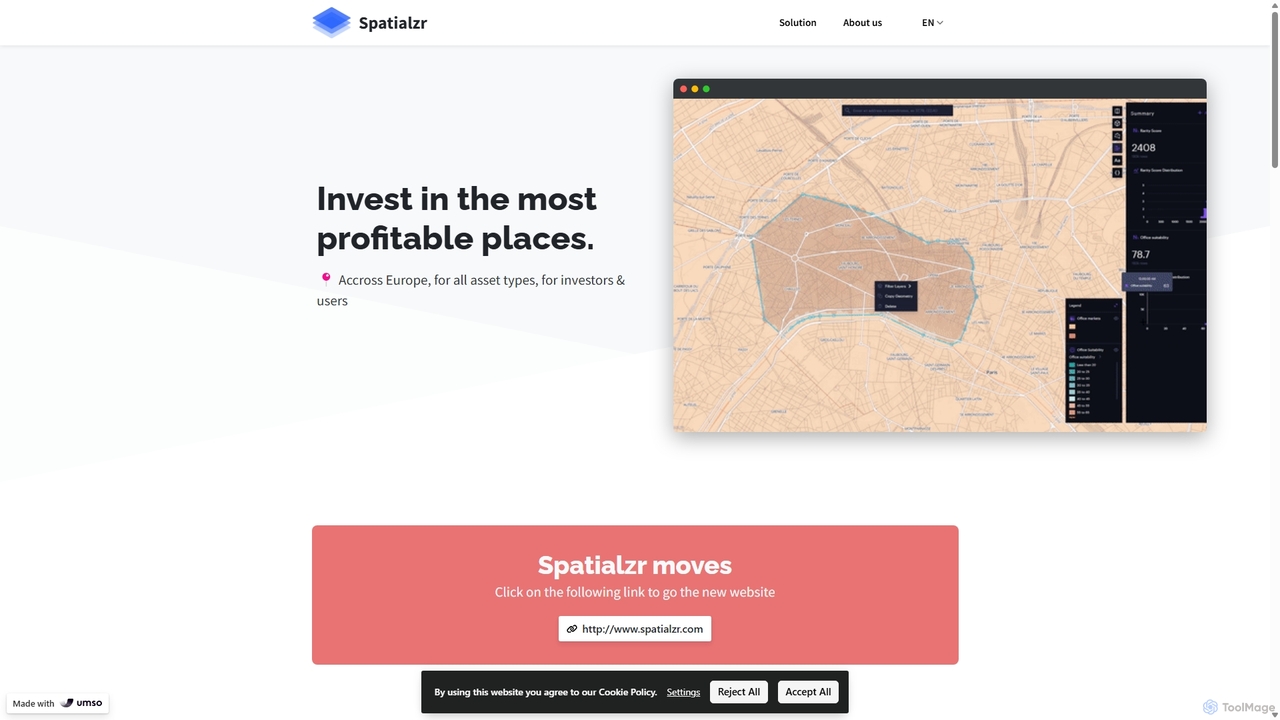
Spatialzr is an AI-powered platform designed for sustainable real estate investment and urban development. It leverages spatial data analysis and ESG principles to provide actionable insights, helping investors, developers, and planners make data-driven decisions that are both profitable and environmentally responsible. The tool promotes urban densification and resource conservation for building resilient future cities.
About Esg Investing
ESG Investing tools are AI-powered platforms designed to integrate Environmental, Social, and Governance factors into investment analysis and decision-making. These tools leverage advanced algorithms and data analytics to assess non-financial risks and opportunities, providing investors with deeper insights into a company's sustainability performance. They enable more responsible and impactful investment strategies, aligning financial goals with ethical and environmental considerations.
Core Features
- ESG Data Aggregation: Collects and standardizes vast amounts of ESG data from diverse sources, including corporate reports, news, and alternative data.
- Sustainability Scoring & Rating: Generates comprehensive ESG scores and ratings for companies, industries, and portfolios based on predefined criteria and AI models.
- Impact Measurement & Reporting: Quantifies the environmental and social impact of investments, facilitating transparent reporting to stakeholders.
- Risk & Opportunity Identification: Uses AI to identify potential ESG-related risks (e.g., climate change, labor disputes) and opportunities (e.g., green innovation) that may affect financial performance.
- Portfolio Optimization: Helps construct and optimize investment portfolios that meet specific financial objectives while adhering to desired ESG criteria.
Use Cases
ESG Investing tools are crucial for institutional investors, asset managers, financial advisors, and corporate sustainability officers. They are used to enhance due diligence, develop sustainable investment products, and manage portfolios with a focus on long-term value creation and societal impact.
How to Choose
When selecting an ESG Investing tool, consider the breadth and depth of its data coverage, the transparency and methodology of its scoring models, its integration capabilities with existing financial systems, and the customization options for specific ESG criteria. Evaluate the tool's ability to provide actionable insights and support regulatory compliance.
Esg InvestingUse Cases
Assessing Corporate Sustainability Performance
An institutional investor uses an ESG Investing tool to evaluate the sustainability performance of potential portfolio companies. By inputting company identifiers, the tool aggregates ESG data, generates a comprehensive score, and highlights specific environmental, social, and governance risks or strengths, enabling informed investment decisions aligned with responsible investing mandates.
Building Sustainable Investment Portfolios
An asset manager leverages an ESG Investing platform to construct a new fund focused on climate-resilient companies. The tool allows them to filter companies based on specific carbon emission targets, renewable energy commitments, and governance structures, ensuring the portfolio not only meets financial return expectations but also adheres to strict environmental and social impact criteria.
Identifying ESG-Related Investment Risks
A financial analyst employs an ESG Investing tool to proactively identify non-financial risks within an existing portfolio. The tool continuously monitors news, regulatory changes, and supply chain events, flagging companies with increasing exposure to environmental litigation, labor controversies, or governance failures, allowing for timely risk mitigation and portfolio adjustments.
Enhancing Due Diligence for M&A
A private equity firm utilizes an ESG Investing solution during the due diligence phase of an acquisition. The tool provides a detailed ESG profile of the target company, assessing its compliance with sustainability standards, potential liabilities related to environmental impact, and social responsibility practices, which informs valuation and integration strategies.
Reporting on Investment Impact and Compliance
A corporate sustainability officer uses an ESG Investing tool to generate transparent reports on the social and environmental impact of their organization's investments. The tool automates the collection and presentation of key performance indicators (KPIs) related to carbon footprint, diversity, and community engagement, fulfilling stakeholder demands and regulatory reporting requirements.
Customizing ESG Screening Criteria
An individual investor with specific ethical preferences uses an ESG Investing tool to screen investments. They can customize criteria to exclude industries like fossil fuels or tobacco, and prioritize companies with strong gender diversity or ethical supply chains, ensuring their personal values are reflected in their investment choices beyond standard financial metrics.