Finance Best in category 1 results Insurtech AI Tool

Popular AI tools in the Insurtech field of Finance include IMT Care, etc., helping you quickly improve efficiency.

IMT Care

IMT Care

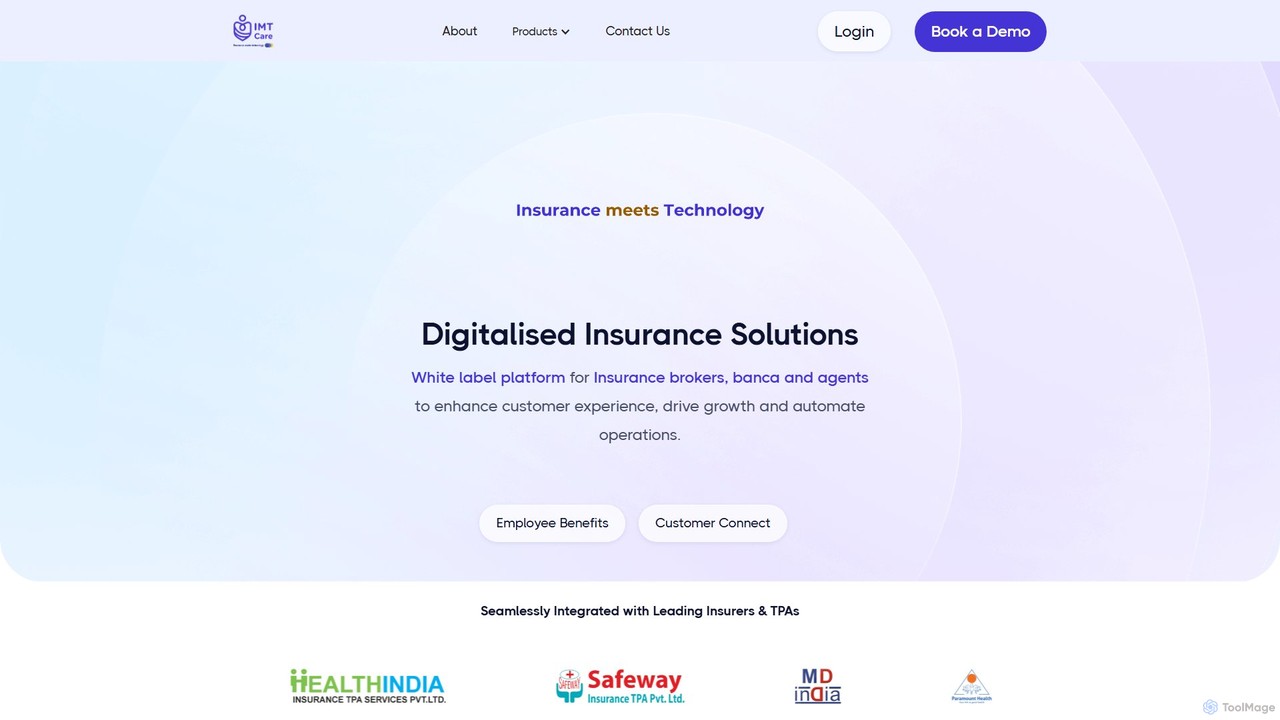
IMT Care is a white-label Insurtech platform designed to empower insurance intermediaries. It provides digital solutions, including an …

7.5K

About Insurtech

Insurtech (Insurance Technology) refers to AI-powered tools and platforms that leverage advanced technologies to innovate and optimize various aspects of the insurance industry. These solutions utilize artificial intelligence, machine learning, big data analytics, and automation to enhance efficiency, improve customer experience, and refine risk assessment. By transforming traditional insurance processes, Insurtech tools enable more personalized products, faster claims processing, and more accurate underwriting, ultimately driving innovation across the entire value chain.

Core Features

  • Automated Underwriting: AI-driven assessment of risk profiles and policy pricing based on vast datasets.
  • Personalized Policy Generation: Creating tailored insurance products and premiums for individual customer needs.
  • Fraud Detection & Prevention: Using machine learning to identify suspicious claims patterns and reduce losses.
  • Claims Automation: Streamlining the entire claims process from submission to payout using AI and RPA.
  • Customer Engagement Platforms: AI chatbots and virtual assistants for instant support and personalized communication.

Applicable Scenarios

Insurtech tools are vital for insurance carriers, brokers, and agents seeking to modernize operations, reduce costs, and offer superior customer service. They are used in areas like new policy issuance, claims management, customer relationship management, and regulatory compliance. From large enterprises to agile startups, these technologies empower stakeholders to adapt to evolving market demands and consumer expectations.

How to Choose

When selecting Insurtech solutions, consider the specific insurance domain (life, health, property & casualty), integration capabilities with existing legacy systems, scalability to handle growing data volumes, and compliance with industry regulations. Evaluate the AI models' accuracy in risk assessment and fraud detection, the level of automation offered, and the user-friendliness of customer-facing interfaces. Prioritize solutions that offer robust data security and clear ROI potential.

InsurtechUse Cases

1

Streamlining Claims Processing with AI

For insurance adjusters and claims departments, Insurtech tools automate the initial intake, verification, and assessment of claims. By analyzing submitted documents, images, and historical data, AI can quickly identify valid claims, flag potential fraud, and even initiate payouts for simple cases, significantly reducing processing times from weeks to days and improving customer satisfaction during critical moments.

2

Enhancing Risk Assessment and Underwriting

Underwriters leverage Insurtech platforms to gain deeper insights into applicant risk profiles. These tools analyze diverse data sources, including IoT device data, public records, and behavioral patterns, to provide more accurate risk scores. This enables insurers to offer personalized premiums, identify high-risk individuals more effectively, and develop innovative, usage-based insurance products, leading to fairer pricing and reduced exposure.

3

Personalizing Insurance Product Offerings

Marketing and product development teams use Insurtech AI to understand individual customer needs and preferences. By analyzing demographic data, purchasing history, and online behavior, AI can recommend highly tailored insurance policies, bundles, and add-ons. This hyper-personalization increases conversion rates, improves customer loyalty, and allows insurers to tap into niche markets with customized solutions.

4

Automating Customer Service and Support

Insurance companies deploy AI-powered chatbots and virtual assistants to handle routine customer inquiries 24/7. These tools can answer FAQs, guide users through policy changes, assist with claim submissions, and provide instant policy information. This frees up human agents to focus on complex issues, reduces call center wait times, and provides a consistent, efficient customer experience across multiple channels.

5

Detecting and Preventing Insurance Fraud

Fraud investigation units utilize Insurtech solutions equipped with advanced machine learning algorithms to detect fraudulent activities. These systems analyze vast amounts of claims data, identify unusual patterns, anomalies, and connections between seemingly unrelated claims or individuals. Early detection helps prevent significant financial losses, protects honest policyholders, and maintains the integrity of the insurance ecosystem.

6

Optimizing Regulatory Compliance and Reporting

Compliance officers and legal teams use Insurtech tools to navigate the complex landscape of insurance regulations. These platforms can monitor regulatory changes, automatically update policy documents, ensure data privacy (e.g., GDPR, CCPA) compliance, and generate accurate reports for auditing purposes. This reduces the risk of non-compliance fines, streamlines reporting processes, and ensures operational transparency.

InsurtechFrequently Asked Questions