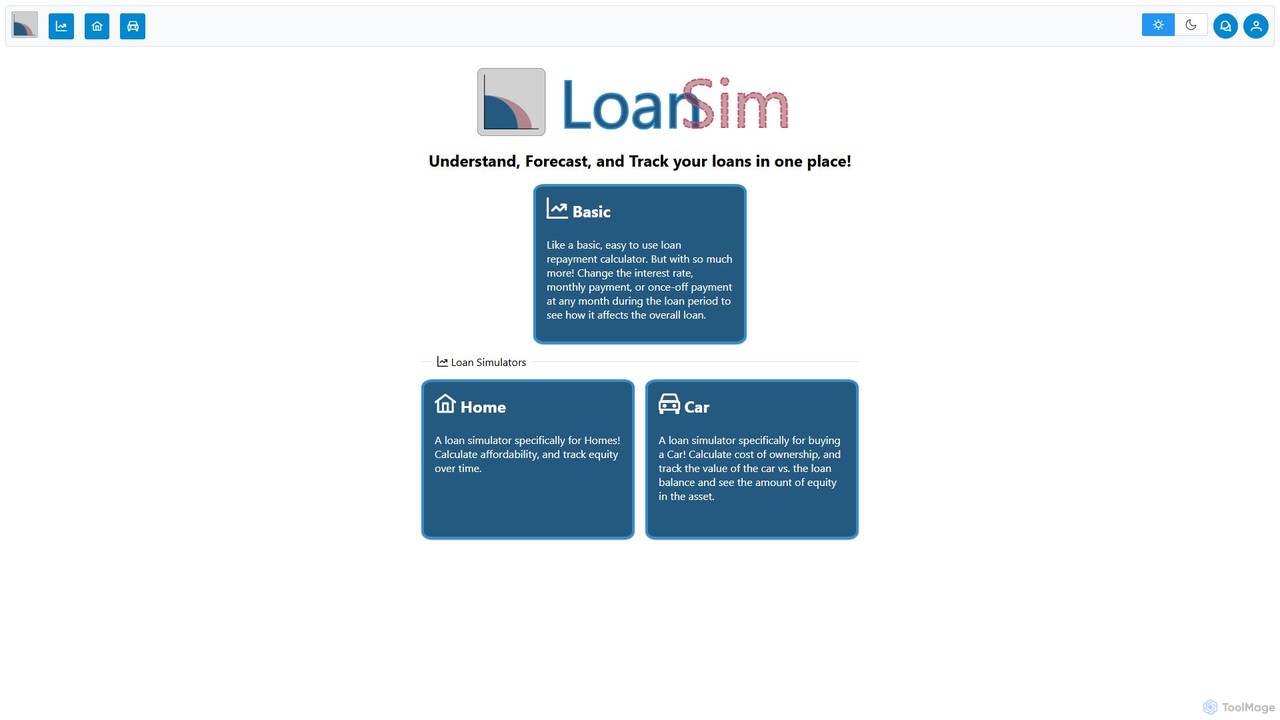
Loan calculators are digital tools designed to help individuals and businesses estimate loan payments and understand the financial implications of borrowing. These tools typically use mathematical formulas to compute monthly installments, total interest paid, and amortization schedules based on inputs like principal amount, interest rate, and loan term. They provide clarity and foresight, enabling users to make informed financial decisions regarding mortgages, personal loans, and auto loans.
Core Features
- Payment Estimation: Calculates regular loan payments (e.g., monthly, bi-weekly) based on principal, interest rate, and term.
- Amortization Schedule: Generates a detailed breakdown of each payment, showing how much goes towards principal and interest over the loan's lifetime.
- Total Cost Analysis: Displays the total amount of interest paid over the loan term, helping users understand the overall cost of borrowing.
- "What-If" Scenarios: Allows users to adjust variables (rate, term, principal) to see how changes impact payments and total costs.
- Extra Payment Impact: Some advanced calculators show how additional payments can reduce the loan term and total interest.
Use Cases
Individuals planning to buy a home can use a mortgage calculator to estimate monthly payments and compare different loan options. Small business owners can assess the cost of a business loan to fund expansion. Students can calculate potential student loan repayments.
How to Choose
When selecting a loan calculator, consider its ease of use, the types of loans it supports (e.g., mortgage, auto, personal), the level of detail in its amortization schedules, and any additional features like "what-if" scenario planning or extra payment analysis. Ensure it provides clear, understandable results.