ToolMage
Sign in

Best 1 Loan Management AI tools for Finance

Popular Loan Management AI tools in Finance include Clerkie, helping you work more efficiently.

Clerkie
Paid

Clerkie

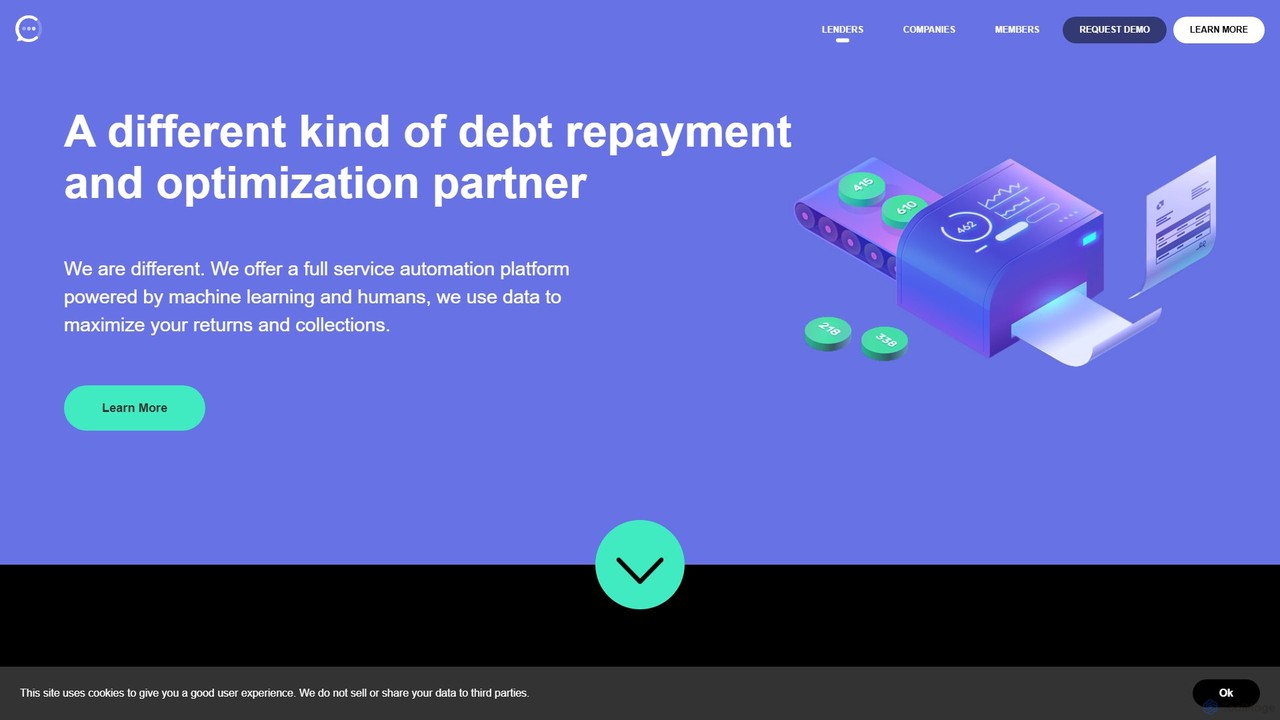
Clerkie is an AI-powered automation platform for lenders to optimize debt repayment and loan portfolio management. It uses machine learning to create smart payment arrangements, enhance collection strategies, and ensure regulatory compliance, ultimately increasing revenue and operational efficiency.

Customer Relationship Management
Visits 17.5KFavorites 119Likes 132

About Loan Management

AI Loan Management tools are specialized platforms that use artificial intelligence to automate and optimize the entire loan lifecycle. These systems leverage machine learning for predictive credit scoring, natural language processing (NLP) for document analysis, and data analytics to assess risk with greater accuracy than traditional methods. They enable financial institutions to accelerate loan origination, reduce default rates, and enhance operational efficiency. By automating repetitive tasks and providing deep insights, these tools transform lending into a more data-driven and responsive process.

Core Features

  • Automated Underwriting: Uses AI models to analyze applicant data and make instant, data-backed credit decisions.
  • Predictive Risk Assessment: Employs machine learning to identify patterns and predict the likelihood of loan defaults.
  • Intelligent Document Processing: Automatically extracts and verifies information from documents like pay stubs and bank statements using OCR and NLP.
  • AI-Powered Servicing: Deploys chatbots and automated communication to manage borrower inquiries and payment reminders.
  • Compliance Monitoring: Continuously scans processes and data to ensure adherence to financial regulations and detect potential fraud.

Applicable Scenarios

These tools are essential for financial institutions within the broader finance sector, including retail banks, credit unions, fintech lenders, and mortgage companies. They are used to streamline processes like personal loan applications, mortgage origination, and small business lending. For example, a fintech lender can offer instant loan approvals, while a bank can proactively manage its portfolio's credit risk.

Selection Criteria

When choosing an AI Loan Management tool, consider its integration capabilities with your existing core banking systems and CRMs. Evaluate the accuracy and explainability of its AI models (XAI) to ensure transparency and regulatory compliance. Assess its scalability to handle your loan volume and the scope of its modules—whether you need a full end-to-end solution or specific functions like underwriting or collections.

Loan Management use cases

1

Automating Loan Origination for Fintech Lenders

A fintech lending company aims to provide instant personal loan decisions to attract more customers. They use an AI Loan Management tool to create a fully digital application process. When a customer applies, the AI automatically performs identity verification, extracts data from uploaded bank statements using OCR, and runs a machine learning model to assess creditworthiness in seconds. This allows the company to provide an approval or denial decision in under five minutes, significantly improving the customer experience and reducing manual underwriting costs by over 70%.

2

Predictive Delinquency Management for Credit Unions

A credit union wants to proactively reduce loan defaults in its auto loan portfolio. By implementing an AI Loan Management system, they can analyze members' transaction histories, payment patterns, and other behavioral data. The AI model identifies members who are at high risk of missing a future payment. The system then automatically triggers a personalized outreach campaign, such as sending a friendly SMS reminder or an email with flexible payment options, days before the payment is due. This proactive approach helps members stay on track and has reduced the credit union's 30-day delinquency rate by 15%.

3

Intelligent Document Processing in Mortgage Applications

A mortgage lender processes thousands of documents per application, including tax returns, pay stubs, and bank statements. This manual review is time-consuming and prone to errors. They adopt an AI Loan Management platform with intelligent document processing (IDP). The IDP feature uses OCR to digitize documents and NLP to understand the context, automatically extracting key data points like income, employer, and account balances. It cross-references information across documents to flag inconsistencies. This automation reduces document processing time from hours to minutes per application, freeing up loan officers to focus on customer relationships.

4

Enhancing Fraud Detection in Real-Time

A regional bank is facing an increase in sophisticated loan application fraud. They integrate an AI Loan Management tool that analyzes application data in real-time. The AI scans for anomalies such as synthetic identities, inconsistent personal information across different data sources, and unusual IP address activity. It compares applicant details against known fraud databases and internal watchlists. When the system flags a high-risk application, it is immediately routed to a human fraud analyst for review, preventing potential losses. This has helped the bank reduce fraudulent loan approvals by 40%.

5

Personalizing Loan Servicing with AI Chatbots

An auto finance company's call center is overwhelmed with routine borrower inquiries about payment dates, payoff amounts, and account details. They deploy an AI-powered chatbot integrated with their loan management system. The chatbot is available 24/7 on their website and mobile app. It can securely authenticate users, provide instant answers to common questions, and even process payments. For complex issues, it seamlessly transfers the conversation to a human agent with the full context. This frees up agents to handle more sensitive cases, reduces call center wait times, and improves overall borrower satisfaction.

6

Optimizing Small Business Loan Underwriting

A bank's small business lending division struggles with long underwriting times due to the complexity of analyzing business financials. They leverage an AI Loan Management tool to automate this process. The AI connects to accounting software (like QuickBooks), analyzes cash flow statements, balance sheets, and profit/loss reports in minutes. It assesses business health using hundreds of data points, far more than a human underwriter could manually. This provides a comprehensive risk score and recommended loan terms, enabling the bank to make faster, more consistent, and more accurate lending decisions for small businesses.

Loan Management FAQ

What is AI Loan Management?

AI Loan Management refers to software platforms that use artificial intelligence technologies to automate and enhance every stage of the loan lifecycle. Unlike traditional systems, they use machine learning for dynamic risk assessment, natural language processing (NLP) for document analysis, and predictive analytics to forecast borrower behavior. The primary goal is to make lending faster, more accurate, and more efficient by reducing manual intervention and leveraging data for better decision-making. This includes everything from initial application and underwriting to ongoing servicing and collections.

How to choose the right AI Loan Management tool?

Choosing the right tool depends on your specific needs. Consider the following factors:

  • Integration Capabilities: Ensure the tool can seamlessly integrate with your existing systems, such as your core banking platform, CRM, and data warehouses.
  • Scalability: Select a platform that can grow with your loan portfolio, capable of handling increasing volumes of applications and data without performance degradation.
  • Model Explainability (XAI): For regulatory compliance and internal trust, choose a tool whose AI decision-making process is transparent and can be explained to auditors and customers.
  • Modular vs. End-to-End: Decide if you need a comprehensive solution covering the entire loan lifecycle or a specific module to improve one area, like underwriting or collections.
  • Compliance and Security: Verify that the platform adheres to financial industry regulations (like GDPR, CCPA) and has robust security measures to protect sensitive customer data.
What's the difference between AI Loan Management and a traditional Loan Origination System (LOS)?

A traditional Loan Origination System (LOS) is primarily a workflow and record-keeping tool. It digitizes the paper-based process, managing applications and documents based on pre-set, static rules. An AI Loan Management system is a significant evolution. It goes beyond simple workflow automation by incorporating intelligence. Key differences include:

  • Decision-Making: Traditional LOS uses hard-coded rules. AI systems use machine learning models that can analyze vast datasets to make more nuanced, predictive credit decisions.
  • Risk Assessment: AI tools offer dynamic, real-time risk assessment that adapts as new data becomes available, whereas LOS relies on static credit scores.
  • Automation: AI platforms provide intelligent automation, such as reading and understanding documents (IDP), not just storing them.
  • Scope: AI Loan Management often covers the entire lifecycle, including predictive servicing and collections, while a traditional LOS is focused solely on the origination phase.
What are the key features of AI Loan Management software?

AI Loan Management software typically includes a suite of features designed to optimize the lending process. Key features often include:

  • Automated Underwriting and Credit Scoring: Using AI to analyze diverse data sources for faster and more accurate credit decisions.
  • Predictive Analytics: Forecasting potential delinquencies and defaults to enable proactive risk management.
  • Intelligent Document Processing (IDP): Automating the extraction and verification of data from applicant documents using OCR and NLP.
  • AI-Powered Chatbots and Communication: Handling routine borrower inquiries and sending automated, personalized payment reminders.
  • Real-Time Fraud Detection: Identifying and flagging suspicious applications and transactions instantly to prevent financial loss.
  • Compliance Monitoring: Ensuring all lending activities adhere to regulatory requirements through automated checks and reporting.
Who can benefit from using AI Loan Management tools?

A wide range of institutions in the financial sector can benefit from AI Loan Management tools. This includes:

  • Retail Banks and Credit Unions: To automate personal loans, auto loans, and mortgage processing, improve customer service, and manage portfolio risk more effectively.
  • Fintech Lenders: To build highly efficient, digital-first lending platforms that offer instant decisions and a superior user experience.
  • Mortgage Companies: To accelerate the complex and document-heavy mortgage origination process and improve underwriting accuracy.
  • Commercial and Small Business Lenders: To automate the analysis of complex business financials, leading to faster and more reliable lending decisions for businesses.
  • Alternative Lenders: To leverage alternative data sources and sophisticated AI models for underwriting non-traditional borrowers.