Finance Best in category 2 results Prediction AI Tool

Popular AI tools in the Prediction field of Finance include Betsync、TicoP SGP Prediction, etc., helping you quickly improve efficiency.

Free
TicoP SGP Prediction

TicoP SGP Prediction

TicoP SGP Prediction is an AI-powered analytical platform designed for lottery enthusiasts. It leverages historical data and predictive …

2.5K
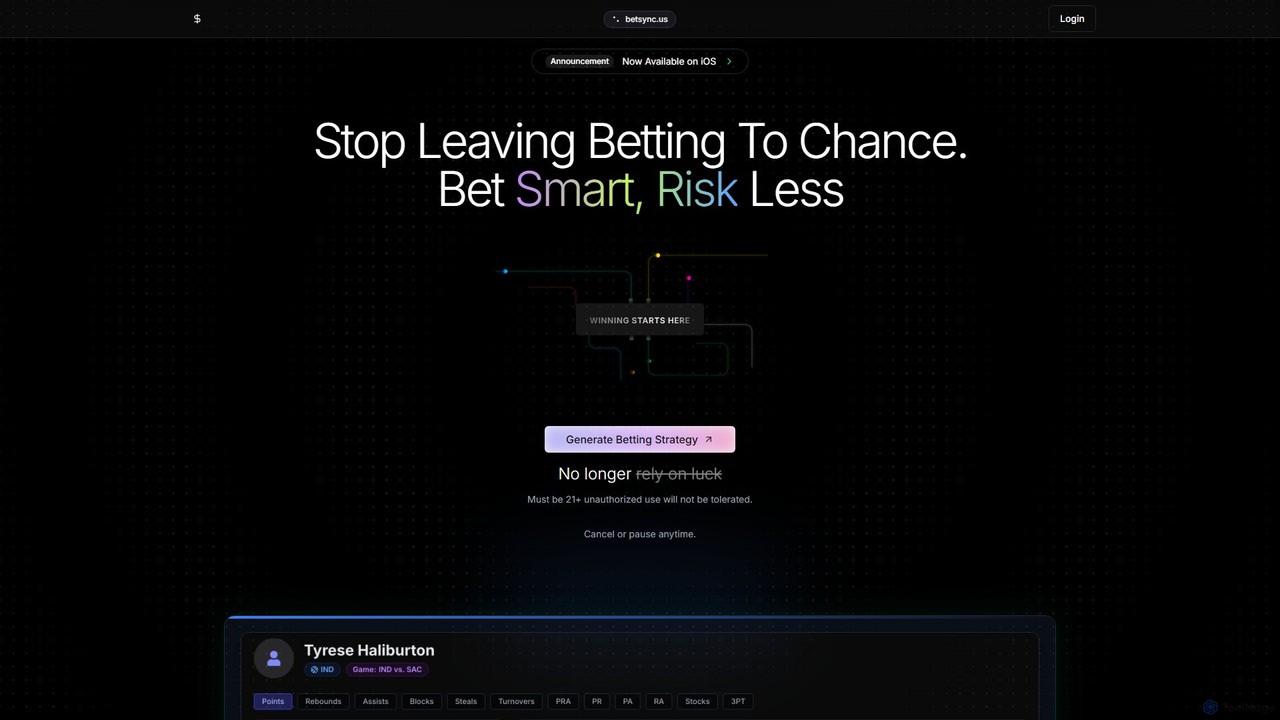
Betsync

Betsync

Betsync is an AI-powered sports analytics platform that delivers real-time stats, live analytics, and predictive insights for sports …

2.8K

About Prediction

AI Prediction tools are a class of financial software that leverage machine learning and large-scale data analysis to forecast future market trends and economic outcomes. These tools process vast amounts of historical data, including stock prices, economic indicators, and corporate financials, to identify patterns and generate predictive models. Their primary value lies in providing data-driven insights that support more informed investment, risk management, and strategic planning decisions within the finance sector.

Core Features

  • Predictive Modeling: Utilizes algorithms like regression and neural networks to forecast asset prices, sales, or economic indicators.
  • Time-Series Analysis: Specializes in analyzing sequential data points to identify trends, seasonality, and anomalies over time.
  • Risk Assessment: Quantifies the probability of financial risks, such as loan defaults or market downturns.
  • Scenario Simulation: Allows users to model potential outcomes based on various hypothetical market conditions, such as Monte Carlo simulations.

Applicable Scenarios

These tools are widely used by quantitative analysts, investment managers, and corporate finance teams. Common applications include algorithmic trading, credit scoring for loan approvals, fraud detection in transactions, and corporate revenue forecasting.

Selection Criteria

When selecting a tool, consider its model accuracy and backtesting capabilities, the breadth of supported data source integrations (e.g., market data APIs), the level of model customization available, and its security and compliance with financial regulations.


PredictionUse Cases

1

Forecasting Stock Market Trends

An investment analyst uses an AI prediction tool to analyze historical price data, trading volumes, and market sentiment from news sources for a specific stock. The tool generates a forecast of the stock's likely price movement over the next quarter, highlighting potential support and resistance levels. This allows the analyst to make a data-backed recommendation to either buy, hold, or sell, improving the strategic quality of their investment portfolio management.

2

Assessing Credit Risk for Loan Applications

A loan officer at a fintech company inputs an applicant's financial data into an AI prediction platform. The tool analyzes hundreds of variables, including credit history, income stability, and debt-to-income ratio, against its trained model to generate a precise credit score and default probability. This automates a complex decision-making process, enabling faster loan approvals for qualified applicants while minimizing the institution's risk exposure.

3

Detecting Fraudulent Financial Transactions

A fraud detection team at an online payment processor integrates an AI prediction tool into their transaction monitoring system. The AI continuously analyzes transaction patterns in real-time, flagging activities that deviate from a user's normal behavior, such as unusual purchase amounts or logins from new locations. This proactive system can automatically block suspicious transactions, significantly reducing financial losses from fraud.

4

Automating Corporate Revenue Forecasting

A financial planning and analysis (FP&A) team at a retail company uses an AI tool to predict quarterly sales. The system integrates historical sales data, marketing campaign performance, and macroeconomic indicators. It generates a detailed revenue forecast broken down by product line and region, providing a more accurate baseline for budgeting and resource allocation than traditional spreadsheet-based methods.

5

Analyzing Cryptocurrency Price Volatility

A cryptocurrency trader connects an AI prediction tool to multiple exchange APIs to analyze real-time market data for Bitcoin and Ethereum. The tool identifies complex patterns, social media sentiment shifts, and on-chain metrics to predict short-term volatility spikes and potential trend reversals. This provides the trader with timely alerts and actionable insights to execute trades more effectively in a highly volatile market.

6

Optimizing Insurance Premium Pricing

An underwriter at an insurance company employs an AI prediction model to calculate auto insurance premiums. The tool analyzes a vast dataset including driver history, vehicle type, geographic location, and telematics data. It predicts the likelihood and potential cost of future claims for each applicant, enabling the company to set more accurate, competitive, and profitable premium rates tailored to individual risk profiles.

PredictionFrequently Asked Questions