ToolMage
Sign in

Best 3 Betting Analytics AI tools for Sports

Popular Betting Analytics AI tools in Sports include soccersm, Betsync, and FindMyOdds.com, helping you work more efficiently.

soccersm
Freemium

soccersm

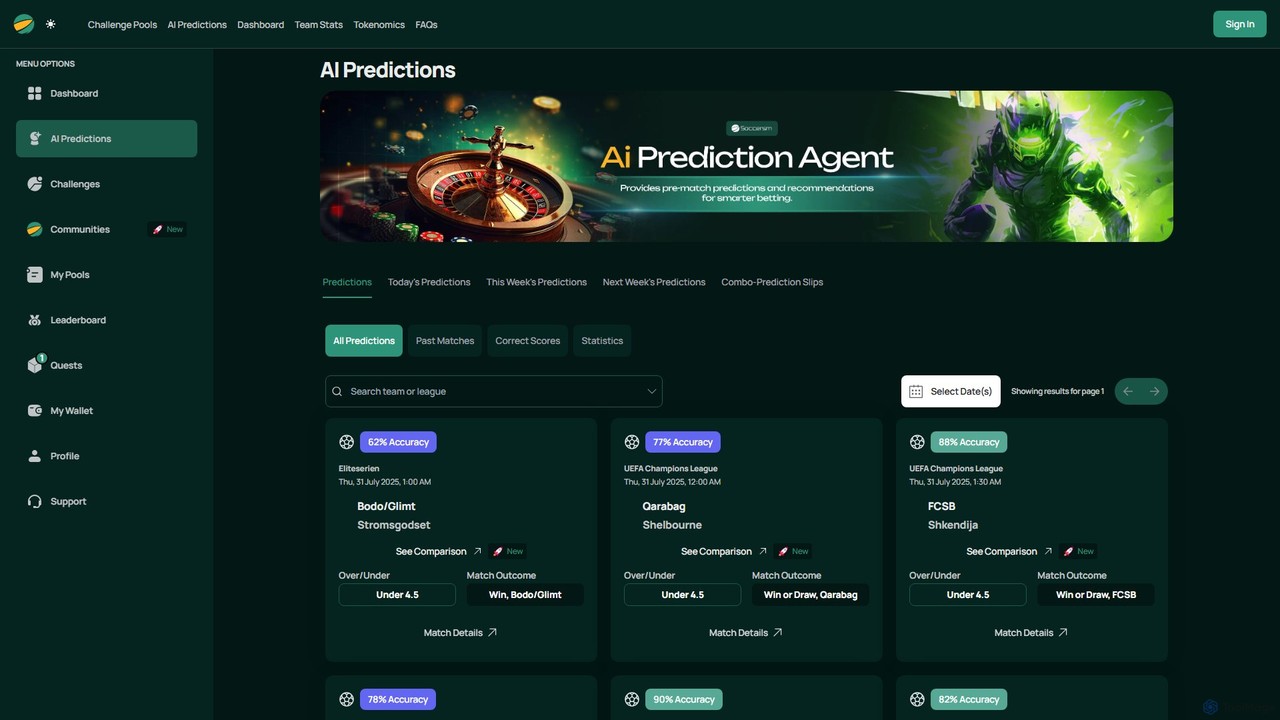
Soccersm is an AI-powered platform offering detailed soccer match predictions, including outcomes, over/under, and correct scores. Beyond sports, it features a social prediction market where users can create and join challenge pools on various topics like crypto and politics, using the platform's currency. It combines data-driven insights with community engagement and gamification elements like leaderboards and quests.

Prediction Markets
Visits 17.2KFavorites 150Likes 153
FindMyOdds.com
Free

FindMyOdds.com

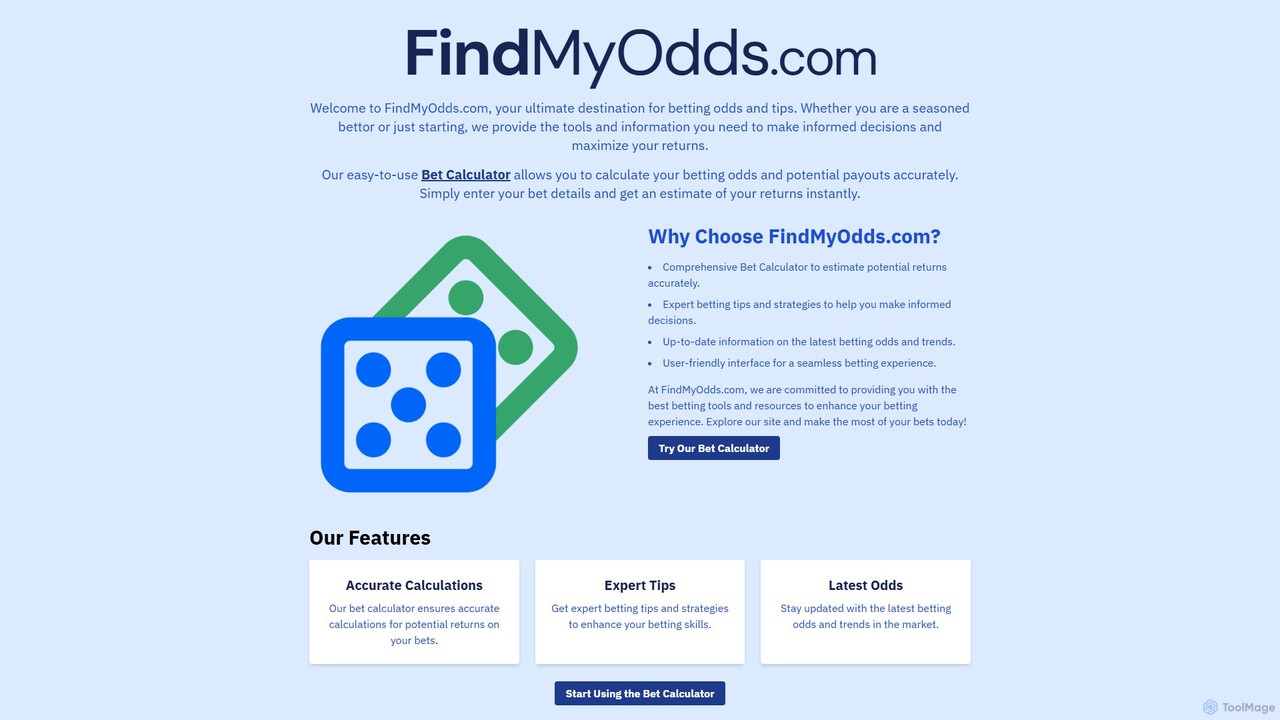
FindMyOdds.com is a free, AI-powered platform offering a comprehensive suite of tools for sports bettors. It features an accurate bet calculator, expert betting tips, and up-to-date odds comparison. Ideal for both beginners and seasoned bettors, it helps users make informed, data-driven decisions to maximize potential returns.

Calculators
Visits 5.9KFavorites 151Likes 136
Betsync
Freemium

Betsync

Betsync is an AI-powered sports analytics platform that delivers real-time stats, live analytics, and predictive insights for sports betting. It analyzes player performance and historical data to identify high-value betting opportunities across major sports like basketball, baseball, hockey, and soccer.

Prediction
Visits 5.9KFavorites 147Likes 135

About Betting Analytics

Betting Analytics tools are AI-powered platforms designed to analyze sports data for wagering purposes. They utilize machine learning models to process vast datasets, including historical performance, player statistics, and real-time market odds. The primary value of these tools is to identify statistical patterns and probabilities, helping users make more data-driven and informed betting decisions. By quantifying outcome likelihoods, they aim to uncover value in betting markets where odds may not reflect the true probability.

Core Features

  • Predictive Modeling: Uses algorithms to forecast match outcomes, point spreads, and other event probabilities.
  • Value Bet Identification: Scans odds across multiple bookmakers to find bets where the offered odds are statistically favorable.
  • Historical Data Analysis: Provides access to extensive historical databases to backtest strategies and identify long-term trends.
  • Real-time Odds Monitoring: Tracks live market odds and alerts users to significant line movements or arbitrage opportunities.
  • Bankroll Management Tools: Offers simulators and calculators to help users apply staking strategies and manage risk.

Use Cases

These tools are primarily used by serious sports bettors, data analysts, and professional betting syndicates. They are applied to develop systematic betting strategies for sports like football, basketball, and tennis. For instance, a user might analyze historical data to build a model for predicting corner kicks in soccer matches or use real-time alerts to capitalize on in-play betting opportunities based on momentum shifts.

How to Choose

When selecting a Betting Analytics tool, consider the breadth and accuracy of its sports data coverage. Evaluate the transparency and historical performance of its predictive models. The user interface should align with your technical skill level, whether you need a simple dashboard or a complex API for custom analysis. Finally, assess the subscription cost relative to the features offered and your betting volume.

Betting Analytics use cases

1

Identifying Value Bets in Football Matches

A data-savvy football fan wants to move beyond simple intuition for their weekend bets. They use a Betting Analytics tool to analyze upcoming Premier League fixtures. The tool's AI model, trained on years of match data, calculates a 65% probability for the home team to win, considering factors like current form, head-to-head stats, and player availability. However, the market odds from several bookmakers imply only a 55% probability. The tool flags this 10% discrepancy as a significant 'value bet', providing a statistical justification for placing a wager that, over the long term, is mathematically profitable.

2

Developing Arbitrage Betting Strategies

An advanced bettor uses an analytics tool to find risk-free profit opportunities. The tool continuously scans real-time odds for a specific NBA game across dozens of online bookmakers. It identifies an arbitrage situation: Bookmaker A offers odds of 2.10 for Team X to win, while Bookmaker B offers odds of 2.15 for Team Y to win. By placing precisely calculated stakes on both outcomes across the two platforms, the user guarantees a small, consistent profit (e.g., 1-2%) regardless of which team wins. The tool automates the detection and calculation, turning a complex manual task into an actionable alert.

3

Backtesting a Custom Betting Strategy

A bettor has a hypothesis: 'Betting on the underdog in NBA games when they are playing at home after a two-game losing streak is profitable.' Instead of risking real money, they use an analytics platform's backtesting feature. They input their specific criteria into the system, which then simulates this strategy against a historical database of the last ten NBA seasons. The tool generates a detailed report showing the strategy's overall profit/loss, return on investment (ROI), and win rate, allowing the user to validate or discard their hypothesis with historical data before ever placing a bet.

4

In-Play Betting Decisions for Tennis

During a live Grand Slam tennis match, a user receives real-time alerts from their analytics tool. The AI monitors in-play statistics like first-serve percentage, unforced errors, and break point conversion rates. When it detects a significant momentum shift—for example, one player's first-serve percentage drops by 20% in the second set—it sends an alert. This alert highlights a potential opportunity to bet on the opposing player to win the current set. This allows the user to make rapid, data-backed decisions in the fast-paced environment of live betting, moving beyond emotional reactions to the game.

5

Analyzing Player Prop Bets in Basketball

A basketball enthusiast focuses on player proposition (prop) bets rather than game outcomes. They use an analytics tool to evaluate a bet on 'Player X to score over 25.5 points'. The tool aggregates and analyzes vast data points: Player X's recent scoring trends, their historical performance against the specific opponent, the opponent's defensive rating against players of that position, and the projected pace of the game. The AI model then outputs a probability distribution for Player X's potential point totals, concluding there is a 60% chance he will score over 25.5 points. This provides a clear, quantitative basis for making the prop bet.

6

Managing Betting Portfolio Risk

A professional bettor treats their wagers like a financial portfolio. They use a Betting Analytics tool with integrated bankroll management features. After identifying several potential value bets across different sports (football, tennis, basketball), they input the odds and their estimated probabilities into a Kelly Criterion calculator within the tool. The calculator recommends the optimal percentage of their total bankroll to stake on each bet, balancing potential returns with risk. This systematic approach helps them avoid over-staking on any single event and manage their capital for long-term, sustainable growth, protecting them from the emotional decisions that can lead to significant losses.

Betting Analytics FAQ

What are AI Betting Analytics tools?

AI Betting Analytics tools are specialized software platforms that use artificial intelligence and machine learning to analyze sports data. Unlike simple tipsters or odds portals, they process vast historical datasets, player stats, and market odds to build predictive models. Their primary function is to identify statistically profitable betting opportunities, such as value bets or arbitrage, by calculating the true probability of an outcome and comparing it to the odds offered by bookmakers. They serve as advanced decision-support systems for serious bettors.

How do you choose a good Betting Analytics tool?

Choosing the right tool depends on your needs. Consider these factors:

  • Data Coverage & Quality: Does it cover the sports, leagues, and bet types you focus on? Is the data accurate and updated frequently?
  • Model Transparency: Does the tool explain its predictions, or is it a 'black box'? Some users prefer models they can understand and customize.
  • Features: Do you need advanced features like backtesting, arbitrage alerts, or API access for your own models?
  • User Interface: Is the platform intuitive for your skill level? A beginner might prefer a simple dashboard, while an expert may need complex data visualization tools.
  • Cost vs. Value: Evaluate the subscription price against the potential edge it provides for your betting volume.
What's the difference between Betting Analytics and simple odds comparison sites?

The key difference is analysis versus aggregation. An odds comparison site simply aggregates and displays the odds from various bookmakers, helping you find the best price for a bet you've already decided on. A Betting Analytics tool goes much further. It uses statistical models to calculate its own probability for an event's outcome. It then compares this 'true' probability to the market odds to identify discrepancies and find 'value'—bets where the odds are more favorable than the statistics suggest. In short, one finds the best price, the other finds the best bet.

Can these tools guarantee profits?

No, and it is crucial to understand this. No tool can guarantee profits in sports betting due to the inherent randomness of sports. These tools are powerful analytical instruments designed to increase your chances of making informed, long-term profitable decisions. They help you identify statistical advantages and manage risk, but they do not eliminate it. Success still depends on a disciplined strategy, proper bankroll management, and acknowledging that even statistically sound bets can lose. Be wary of any service that promises guaranteed wins.

Who are these betting analytics tools for?

These tools are primarily designed for serious and data-driven sports bettors, not casual fans. The ideal users are individuals who treat betting as a form of investment and are willing to dedicate time to analysis. This includes:

  • Professional Bettors: Individuals who make a living from sports betting.
  • Data Analysts: People with a background in statistics or data science looking to apply their skills to sports.
  • Advanced Amateurs: Serious hobbyists who want to move beyond guesswork and adopt a systematic, analytical approach.

A basic understanding of betting concepts like odds, probability, and value is generally required to make the most of these platforms.