ToolMage
Sign in

Best 3 Calculators AI tools for Finance

Popular Calculators AI tools in Finance include RentLateFee, CalcGen AI, and FindMyOdds.com, helping you work more efficiently.

RentLateFee
Freemium

RentLateFee

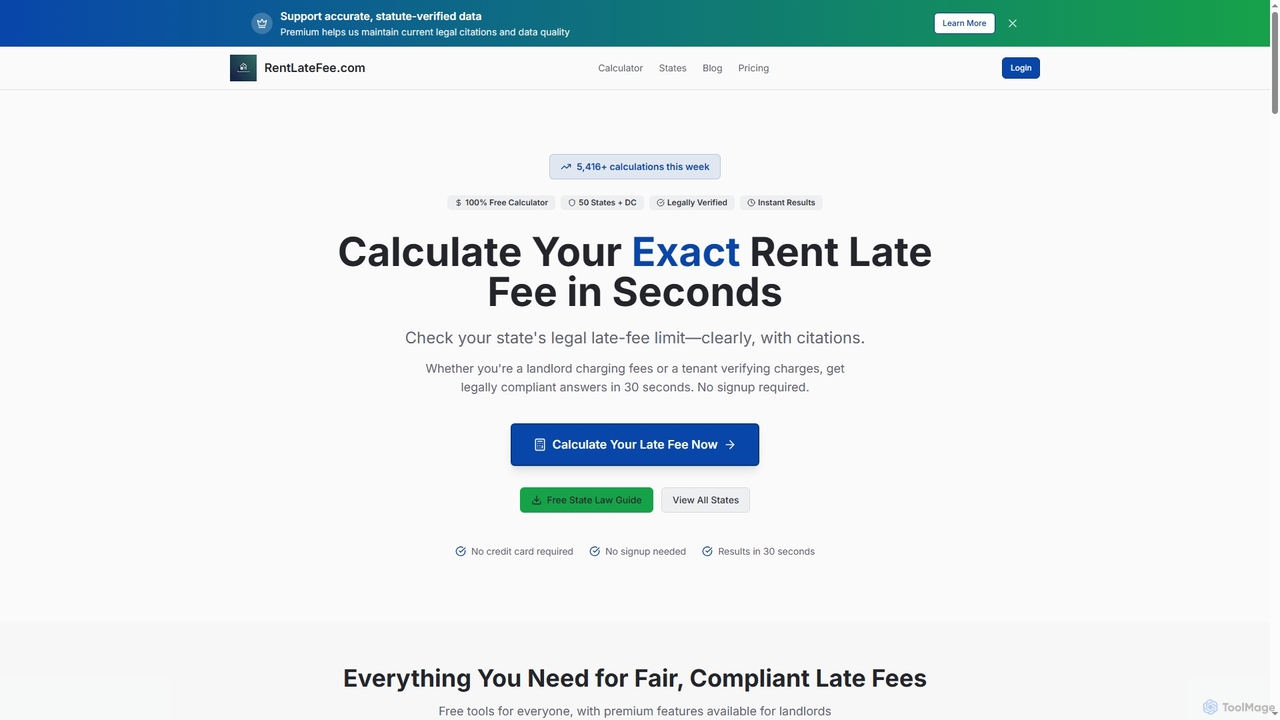
RentLateFee is an essential online tool for landlords and tenants to accurately calculate legally compliant rent late fees across all 50 U.S. states and D.C. It provides instant, state-verified results, professional documentation, and advanced multi-property management features for landlords, ensuring fairness and legal adherence without requiring signup for basic use.

Calculators
Visits 13.4KFavorites 124Likes 137
CalcGen AI
Freemium

CalcGen AI

CalcGen AI is a no-code platform that transforms natural language prompts into interactive calculators, charts, and data visualizations. Effortlessly create custom tools for finance, science, business, and more, simply by describing what you need. Upload your data or provide parameters to generate embeddable widgets in seconds.

Calculators
Visits 6.3KFavorites 135Likes 132
FindMyOdds.com
Free

FindMyOdds.com

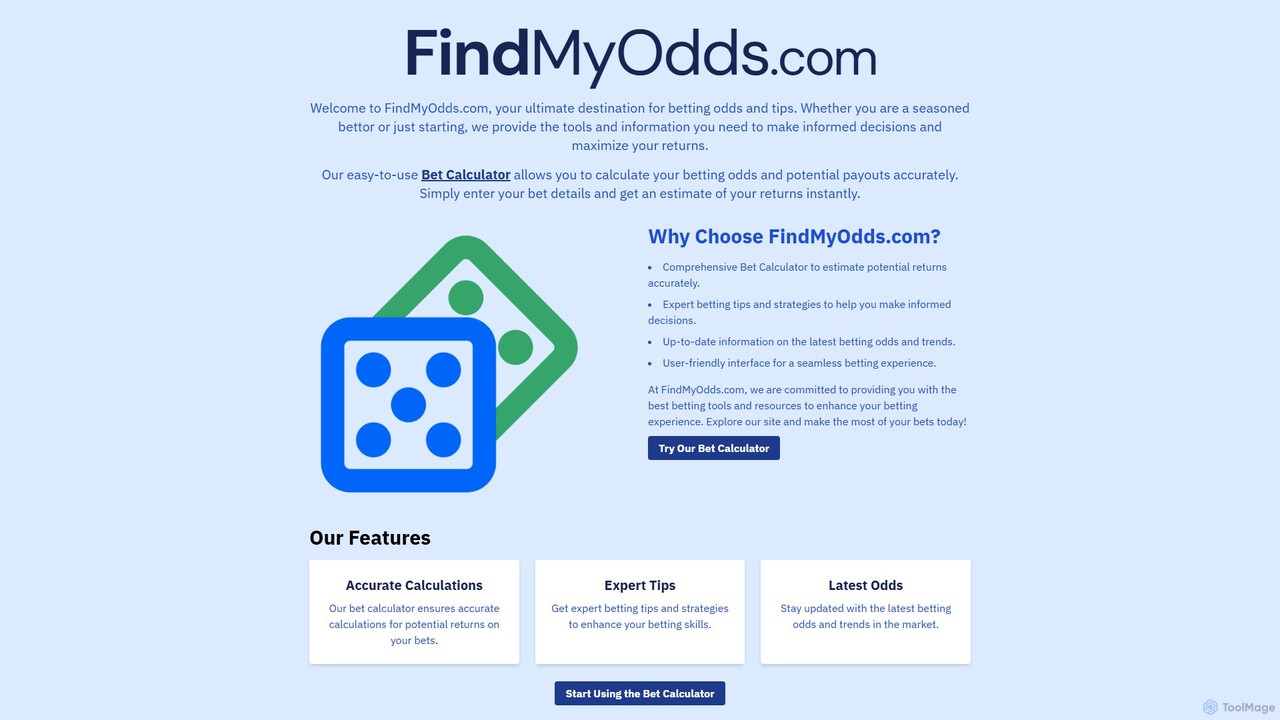
FindMyOdds.com is a free, AI-powered platform offering a comprehensive suite of tools for sports bettors. It features an accurate bet calculator, expert betting tips, and up-to-date odds comparison. Ideal for both beginners and seasoned bettors, it helps users make informed, data-driven decisions to maximize potential returns.

Calculators
Visits 4KFavorites 140Likes 115

About Calculators

AI-powered Calculators are specialized tools that leverage artificial intelligence to perform complex financial, statistical, and predictive computations beyond traditional calculators. These tools often integrate advanced algorithms and machine learning models to process large datasets, analyze trends, and provide highly accurate, context-aware results. They are invaluable for professionals and individuals seeking precise estimations, risk assessments, and future projections within the broader finance domain, enabling smarter decision-making and optimized resource allocation.

Core Features

  • Predictive Modeling: Utilizes AI to forecast future financial outcomes, market trends, or project costs based on historical data and various influencing factors.
  • Scenario Analysis: Allows users to test different variables and assumptions to understand their potential impact on financial results, aiding in strategic planning.
  • Automated Data Input & Validation: Integrates with other financial systems to automatically pull relevant data, validate its accuracy, and prepare it for calculation, reducing manual errors.
  • Customizable Algorithms: Offers flexibility to tailor calculation logic and parameters to specific industry standards, regulatory requirements, or unique business models.
  • Risk Assessment & Optimization: Calculates potential risks associated with investments or projects and suggests optimal strategies to mitigate them, often using Monte Carlo simulations.

Applicable Scenarios

AI Calculators are widely used across various financial sectors and business functions. Financial analysts employ them for intricate investment portfolio optimization and risk evaluation. Business planners leverage these tools for detailed budget forecasting and strategic resource allocation. Real estate professionals utilize them for property valuation and mortgage affordability assessments, while individuals can use them for personal financial planning, retirement projections, and loan comparisons.

How to Choose

When selecting an AI Calculator, consider its specific computational capabilities, ensuring it supports the types of analyses you require (e.g., predictive, statistical, financial modeling). Evaluate its data integration features, checking compatibility with your existing financial systems. Assess the level of customization offered for algorithms and reporting. Finally, consider user-friendliness and the clarity of its output, as complex calculations require understandable results for effective decision-making.

Featured tool rankings

Calculators use cases

1

Investment Portfolio Optimization

A financial advisor uses an AI Calculator to analyze a client's risk tolerance, investment goals, and market data. The tool then suggests an optimized portfolio allocation, predicting potential returns and risks under various economic conditions, helping the advisor make data-driven recommendations for maximum growth and minimal exposure.

2

Real Estate Property Valuation

A real estate investor inputs property specifics, local market trends, and comparable sales data into an AI Calculator. The tool processes these variables, along with economic indicators, to provide a highly accurate estimated market value and potential rental income, aiding in informed purchasing and selling decisions.

3

Loan Affordability and Repayment Planning

An individual planning to buy a home uses an AI Calculator to determine their maximum affordable loan amount, calculate monthly repayments across different interest rates and terms, and project the total cost of the loan, ensuring a sustainable financial commitment.

4

Business Budget Forecasting

A small business owner utilizes an AI Calculator to forecast future revenues and expenses. By inputting historical financial data, sales projections, and operational costs, the tool generates detailed budget scenarios, identifying potential shortfalls or surpluses and enabling proactive financial adjustments.

5

Project Cost Estimation and Risk Analysis

A project manager employs an AI Calculator to estimate the total cost of a new project, considering labor, materials, overheads, and potential unforeseen expenses. The tool also performs risk analysis, identifying cost overrun probabilities and suggesting contingency plans, ensuring projects stay within budget.

6

Personal Retirement Planning

An individual uses an AI Calculator to project their retirement savings needs. By inputting current savings, expected contributions, desired retirement age, and inflation rates, the tool estimates the required nest egg and suggests adjustments to contributions or investment strategies to meet their long-term financial goals.

Calculators FAQ

What are AI-powered Calculators?

AI-powered Calculators are advanced digital tools that go beyond basic arithmetic by using artificial intelligence and machine learning algorithms to perform complex computations, analyze data, and make predictions. Unlike traditional calculators, they can process vast datasets, identify patterns, and offer insights for financial modeling, risk assessment, and strategic planning within the finance domain.

How do AI Calculators differ from traditional calculators?

Traditional calculators perform fixed, rule-based arithmetic operations. AI Calculators, however, leverage machine learning to adapt, learn from data, and perform dynamic, predictive, and scenario-based analyses. They can handle unstructured data, identify hidden correlations, and provide probabilistic outcomes, making them suitable for complex financial forecasting and decision support, whereas traditional ones are for direct, known computations.

Who benefits most from using AI Calculators?

Financial professionals such as analysts, investment bankers, and wealth managers benefit significantly from AI Calculators for portfolio optimization, risk management, and market forecasting. Business owners and strategists use them for budget planning and project cost analysis. Individuals can also benefit for personal finance, retirement planning, and loan comparisons, gaining deeper insights than standard tools.

What types of calculations can AI Calculators perform?

AI Calculators can perform a wide range of calculations, including predictive analytics for market trends, statistical analysis for risk assessment (e.g., Monte Carlo simulations), complex financial modeling for valuations and derivatives, and scenario planning for strategic decision-making. They can also automate data aggregation and validation, providing comprehensive insights for various financial applications.

How do AI Calculators enhance financial decision-making?

AI Calculators enhance financial decision-making by providing more accurate predictions, deeper insights into complex data, and the ability to simulate various scenarios. They help identify hidden risks and opportunities, optimize resource allocation, and support data-driven strategies. By automating tedious calculations and offering sophisticated analyses, they empower users to make more informed, proactive, and strategic financial choices.