DataReconIQ
DataReconIQ is an AI-powered data reconciliation software designed to match, merge, and clean two datasets, even when schemas …
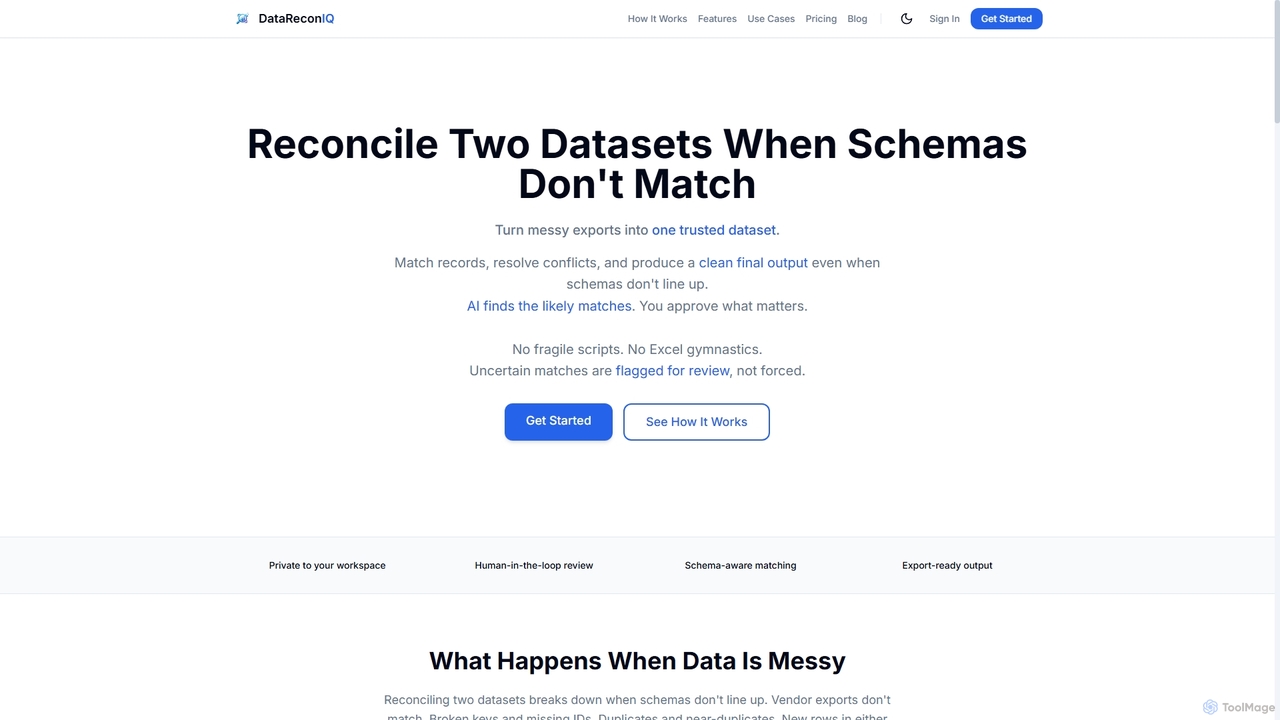
DataReconIQ is an AI-powered data reconciliation software designed to match, merge, and clean two datasets, even when schemas don't align. It intelligently identifies matches, flags conflicts for human review, and produces a trusted, normalized output with a full audit trail.
Fieldguide
Fieldguide is an AI-powered platform designed for advisory and audit firms. It streamlines complex engagements like SOC 2, …
Fieldguide is an AI-powered platform designed for advisory and audit firms. It streamlines complex engagements like SOC 2, PCI DSS, and financial audits by automating tasks, managing documents, and facilitating client collaboration. The platform helps firms increase efficiency, boost profit margins, and enhance client satisfaction through features like AI-driven procedure drafting, automated reporting, and a centralized engagement hub.
About Audit
AI Audit tools are a specialized category within finance technology that leverage artificial intelligence, machine learning, and advanced data analytics to automate and enhance the auditing process. These tools are designed to efficiently analyze vast datasets of financial transactions, records, and documents, identifying anomalies, assessing risks, and ensuring compliance with regulatory standards and internal policies. By moving beyond traditional manual methods, AI audit solutions provide deeper insights, improve accuracy, and enable continuous monitoring for proactive risk management and fraud detection.
Core Features
- Automated Data Analysis: Rapidly processes and analyzes large volumes of financial data, including ledgers, transactions, and documents.
- Anomaly and Fraud Detection: Identifies unusual patterns, outliers, or suspicious activities that may indicate errors, fraud, or non-compliance.
- Continuous Compliance Monitoring: Automatically checks adherence to regulatory standards (e.g., SOX, IFRS) and internal policies in real-time.
- Risk Assessment and Prediction: Evaluates financial risks by analyzing historical data and predicting potential future vulnerabilities.
- Automated Report Generation: Streamlines the creation of detailed audit reports, findings, and recommendations.
Applicable Scenarios
AI Audit tools are crucial for internal audit departments seeking continuous monitoring, external audit firms aiming to enhance client engagements with data-driven insights, and compliance officers needing real-time regulatory adherence checks. They support organizations in maintaining financial integrity and mitigating risks across various operational areas.
How to Choose
When selecting an AI Audit tool, consider its data integration capabilities with existing financial systems, the transparency and explicability of its AI models, and its scalability to handle growing data volumes. Evaluate its support for specific compliance frameworks and the clarity of its reporting features to ensure it meets your organization's unique audit requirements.

AuditUse Cases
Automated Transaction Monitoring for Fraud Detection
Financial crime analysts and internal auditors use AI audit tools to continuously monitor millions of daily transactions. The AI identifies unusual patterns, large transfers to new beneficiaries, or transactions outside normal business hours, flagging suspicious activities. This reduces false positives and allows human analysts to focus on high-risk cases, leading to proactive fraud detection and reduced financial losses.
Continuous Compliance Monitoring
Compliance officers and regulatory auditors deploy AI audit tools to ensure an organization's financial activities consistently adhere to evolving regulatory standards like GDPR, SOX, or IFRS. The AI automatically scans contracts, policies, and transaction data against regulatory requirements, alerting to potential breaches in real-time. This minimizes regulatory fines, maintains reputation, and ensures a robust compliance posture.
Enhanced Risk Assessment in Financial Reporting
External auditors and financial controllers leverage AI to assess the risk of material misstatement in financial statements. By analyzing vast amounts of general ledger data, journal entries, and supporting documents, AI identifies high-risk accounts, unusual entries, or inconsistencies. This guides auditors to focus their efforts on critical areas, improving the accuracy of financial reports and enabling better risk mitigation.
Supply Chain Finance Audit
Procurement auditors and supply chain finance managers utilize AI audit tools to scrutinize invoices, payment terms, and supplier contracts across a complex global supply chain to identify discrepancies, duplicate payments, or non-compliance with agreements. The AI analyzes large volumes of procurement data, matching invoices to purchase orders and contracts, flagging anomalies or potential overpayments. This results in significant cost savings, improved supplier relationship management, and reduced financial leakage.
Internal Control Effectiveness Testing
Internal audit managers and IT auditors use AI tools to evaluate the effectiveness of internal controls over financial reporting, IT systems, and operational processes. AI can simulate control failures, analyze access logs, and test data integrity controls, providing objective evidence of control strength or weakness. This strengthens internal governance, reduces operational risks, and fosters a more robust control environment.
Automated Expense Report Auditing
Accounts payable auditors and finance managers employ AI audit tools to process and audit thousands of employee expense reports monthly. The AI automatically reviews receipts, categorizes expenses, and cross-references against company policies and historical data, flagging non-compliant or fraudulent claims. This leads to significant time savings for finance teams, reduced expense fraud, and consistent policy enforcement.