Finance Best in category 3 results Auditing AI Tool

Popular AI tools in the Auditing field of Finance include Midship、Agentive、Docufai, etc., helping you quickly improve efficiency.

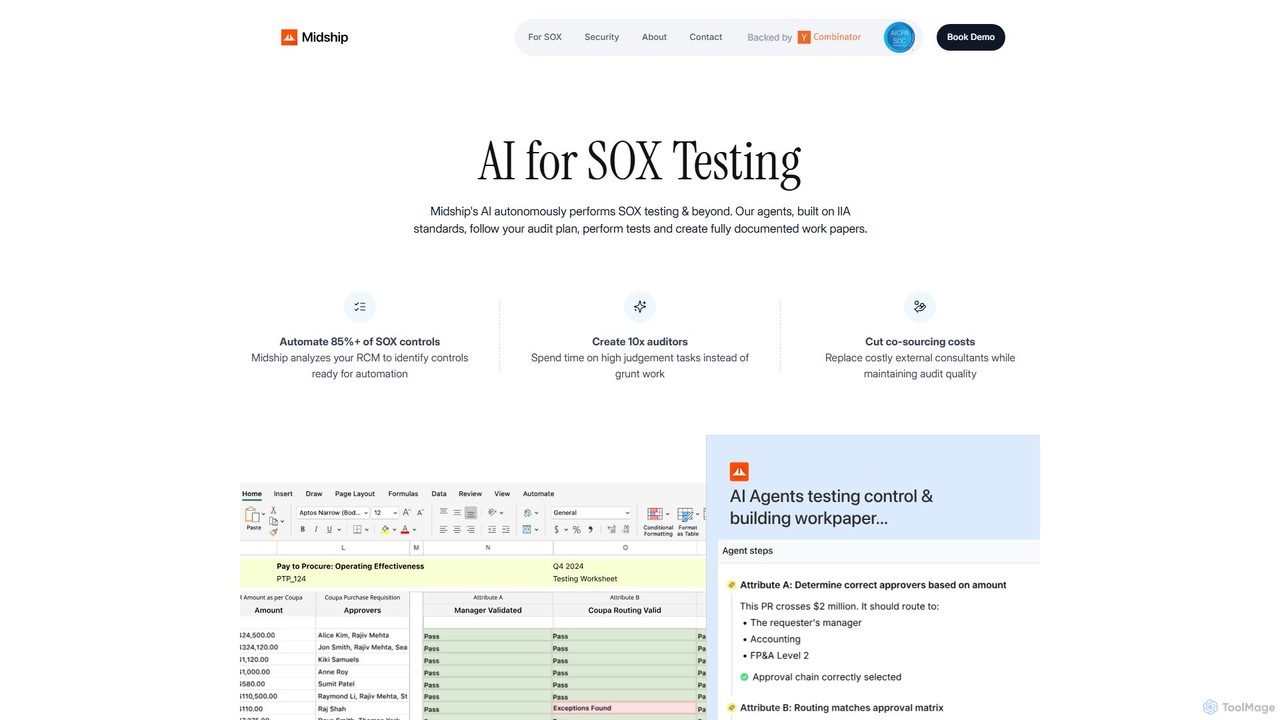
Midship

Midship

Midship is an AI-powered platform designed to automate Sarbanes-Oxley (SOX) compliance testing. Its AI agents, built on IIA …

21.8K
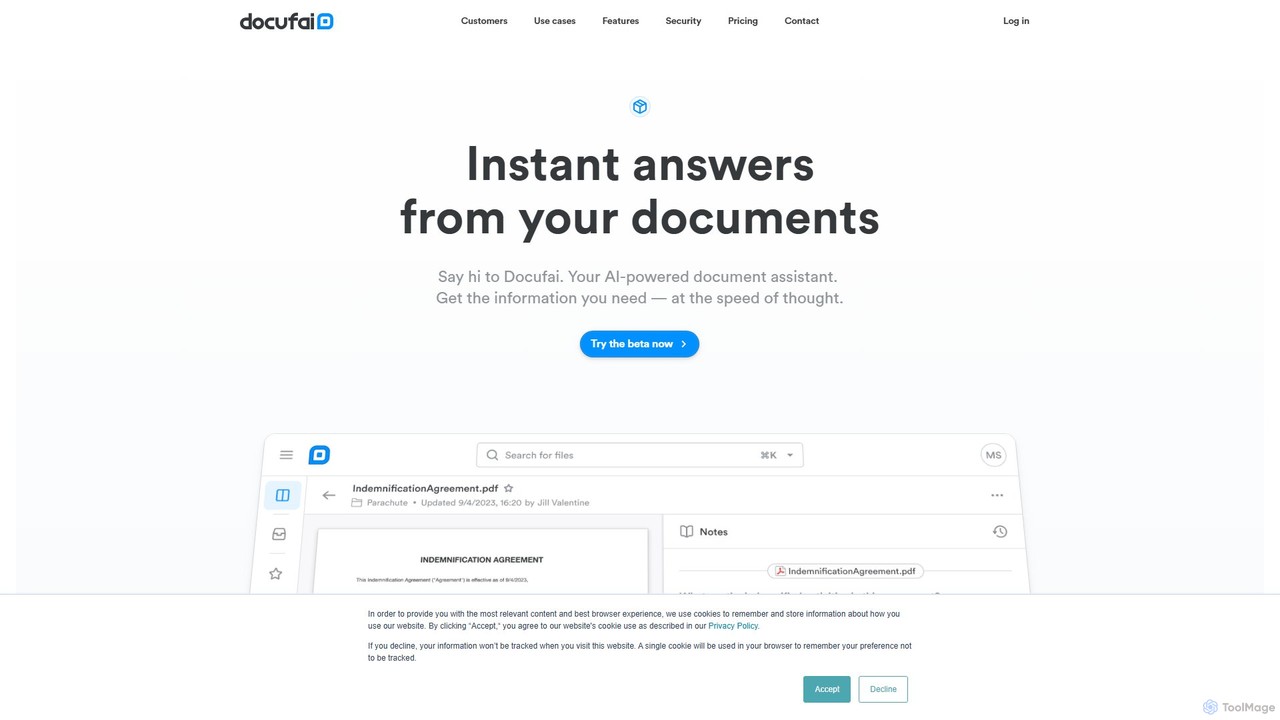
Docufai

Docufai

Docufai is an AI-powered document assistant that allows you to chat with your documents. Upload files, ask questions …

2.4K
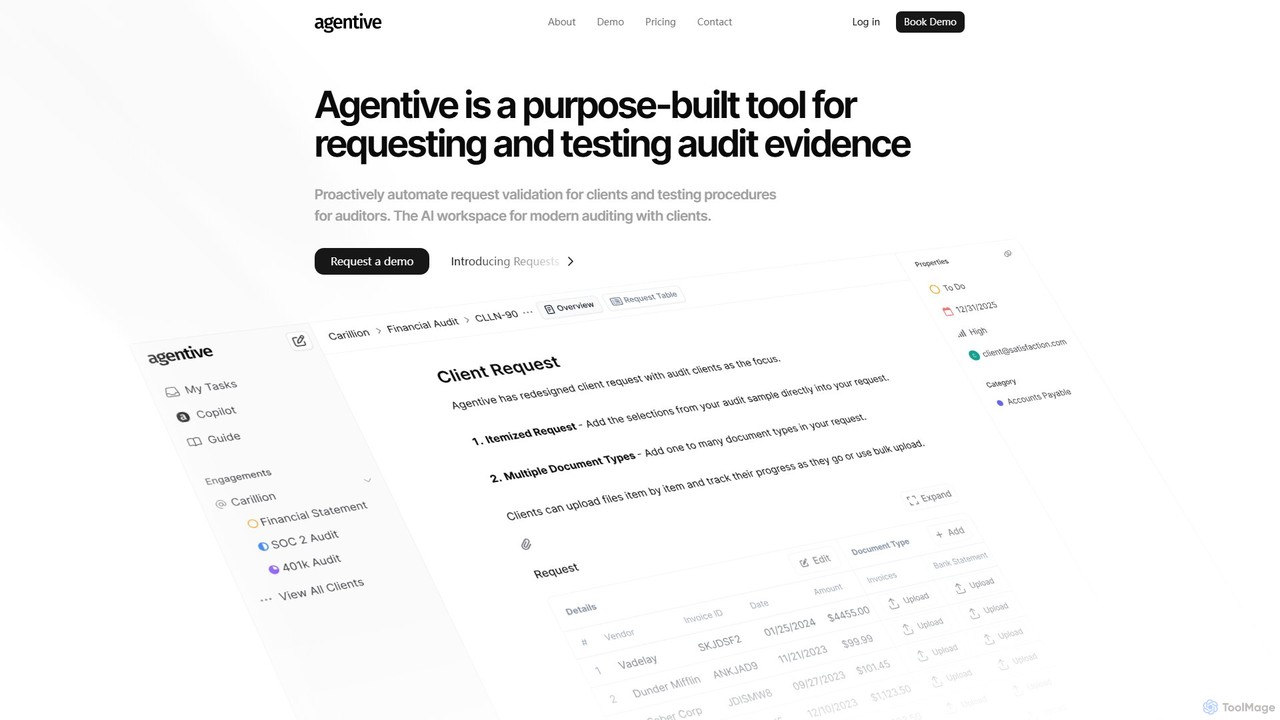
Agentive

Agentive

Agentive is an AI-powered workspace designed for modern auditing. It automates the process of requesting and testing audit …

10.5K

About Auditing

AI Auditing tools are specialized AI-powered solutions designed to enhance and automate various aspects of the auditing process. Leveraging advanced algorithms, machine learning, and natural language processing, these tools efficiently analyze vast datasets, identify anomalies, and assess risks with greater precision and speed than traditional methods. They empower auditors to conduct more comprehensive, data-driven, and continuous audits, significantly improving efficiency, accuracy, and compliance within the finance domain.

Core Features

  • Automated Data Analysis: Rapidly processes and analyzes large volumes of financial and operational data to uncover insights and patterns.
  • Anomaly Detection: Identifies unusual transactions, deviations, or outliers that may indicate errors, fraud, or control weaknesses.
  • Compliance Monitoring: Continuously checks transactions and processes against regulatory requirements and internal policies.
  • Risk Assessment & Prioritization: Evaluates potential audit risks and helps prioritize areas requiring deeper investigation.
  • Fraud Pattern Identification: Detects subtle or complex patterns indicative of fraudulent activities across diverse data sources.

Use Cases

These tools are invaluable for external auditors reviewing financial statements, internal audit teams monitoring controls, and compliance officers ensuring adherence to regulations. They streamline tasks like transaction testing, journal entry analysis, and continuous control monitoring, providing deeper insights into an organization's financial health and operational integrity.

How to Choose

When selecting AI Auditing tools, consider their data integration capabilities with existing systems, the transparency and explainability of their AI models, scalability to handle growing data volumes, robust security features, and specific compliance functionalities. A user-friendly interface and strong reporting capabilities are also crucial for effective implementation and adoption.

AuditingUse Cases

1

Automate Transaction Monitoring for Fraud Detection

Financial auditors and compliance officers use AI auditing tools to continuously monitor vast volumes of financial transactions. The AI identifies suspicious patterns, unusual spending habits, or transactions exceeding predefined thresholds, flagging them for human review. This proactive approach significantly reduces the time spent on manual checks and enhances the detection of potential fraudulent activities, safeguarding assets and ensuring regulatory adherence.

2

Automated Financial Statement Review

External auditors utilize AI auditing tools to automatically analyze large volumes of general ledger data, journal entries, and sub-ledger transactions. The AI identifies unusual fluctuations, potential misstatements, or non-standard entries, allowing auditors to focus their efforts on high-risk areas and complete reviews more efficiently, enhancing audit quality and coverage.

3

Streamlining Regulatory Compliance Checks

Internal audit teams in regulated industries leverage AI auditing tools to ensure adherence to complex and evolving regulatory frameworks (e.g., GDPR, SOX, AML). The tools automatically scan documents, contracts, and operational data against compliance rules, highlighting areas of non-compliance or potential risk. This drastically reduces the manual effort required for compliance audits and provides real-time insights into an organization's regulatory posture.

4

Continuous Internal Control Monitoring

Internal audit teams deploy AI tools to continuously monitor key internal controls across various business processes. The AI automatically flags control deviations, policy breaches, or unusual access patterns in real-time, enabling proactive intervention and reducing the risk of financial irregularities. This shifts auditing from periodic checks to ongoing assurance.

5

Enhancing Financial Statement Audit Efficiency

External audit firms deploy AI auditing solutions to analyze large datasets from client financial statements, general ledgers, and sub-ledgers. The AI can quickly identify inconsistencies, reconcile accounts, and perform substantive testing with greater speed and accuracy than traditional methods. This allows auditors to focus on higher-risk areas and complex judgments, improving audit quality and reducing engagement timelines.

6

Fraud Pattern Identification in Transactions

Forensic auditors and risk management professionals use AI auditing tools to detect complex fraud schemes that might be missed by manual review. The AI analyzes vast transaction datasets, employee expense reports, and vendor invoices to identify subtle patterns, anomalies, or suspicious relationships indicative of collusion, embezzlement, or other fraudulent activities.

7

Optimizing Internal Control Testing

Organizations use AI auditing tools to automate the testing of internal controls over financial reporting (ICFR) and operational processes. The AI can continuously sample transactions, verify control effectiveness, and report on control deficiencies. This shifts control testing from periodic manual reviews to continuous, data-driven monitoring, providing more timely assurance and enabling quicker remediation of control gaps.

8

Regulatory Compliance Check for Financial Institutions

Compliance officers in banks and financial services firms leverage AI auditing tools to ensure strict adherence to complex regulatory frameworks like AML (Anti-Money Laundering) or GDPR. The AI automatically scans transactions, customer data, and communication logs for non-compliance issues, generating alerts and detailed reports to facilitate timely remediation and avoid penalties.

9

Contractual Obligation Verification

Legal and procurement departments, often supported by audit functions, utilize AI auditing tools to review large portfolios of contracts. The AI extracts key clauses, terms, and conditions, verifying adherence to payment schedules, delivery terms, and other obligations. This ensures that contractual agreements are being met, identifies potential breaches, and helps manage financial liabilities more effectively.

10

Supply Chain Audit for Anomaly Detection

Operational auditors apply AI auditing tools to analyze supply chain data, including procurement records, inventory movements, and logistics invoices. The AI identifies inefficiencies, cost discrepancies, or potential risks such as unauthorized vendor payments or unusual inventory shrinkage, optimizing operational performance and reducing financial leakage.

11

Assess Supply Chain Financial Risks

Companies employ AI auditing tools to evaluate the financial health and compliance of their supply chain partners. By analyzing vendor financial statements, credit ratings, and transaction histories, the AI can identify potential risks such as financial instability, non-compliance with ethical sourcing, or payment discrepancies. This helps in making informed decisions about vendor relationships and mitigating supply chain disruptions.

12

IT System Access Log Anomaly Detection

IT auditors use AI auditing tools to scrutinize vast volumes of IT system access logs, user activity data, and security event logs. The AI detects unusual login times, unauthorized access attempts, privilege escalations, or data exfiltration patterns, providing early warnings of potential cyber threats or internal security breaches, thereby strengthening IT governance.

AuditingFrequently Asked Questions