Sports Best in category 3 results Fantasy Sports AI Tool

Popular AI tools in the Fantasy Sports field of Sports include Fantasy Football Hub、fantasyfootballfix、FPL.my, etc., helping you quickly improve efficiency.

Free
FPL.my

FPL.my

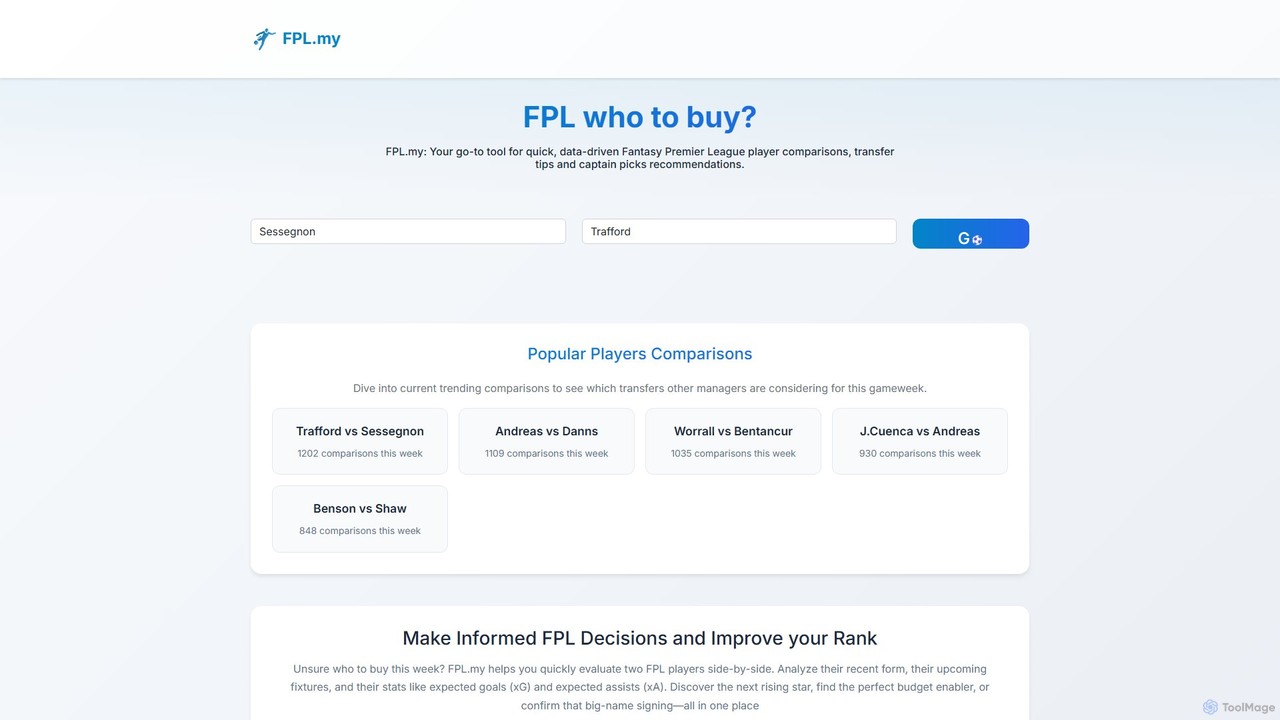
A data-driven AI tool for Fantasy Premier League (FPL) managers. It provides side-by-side player comparisons, detailed statistics (xG, …

6.2K
Fantasy Football Hub

Fantasy Football Hub

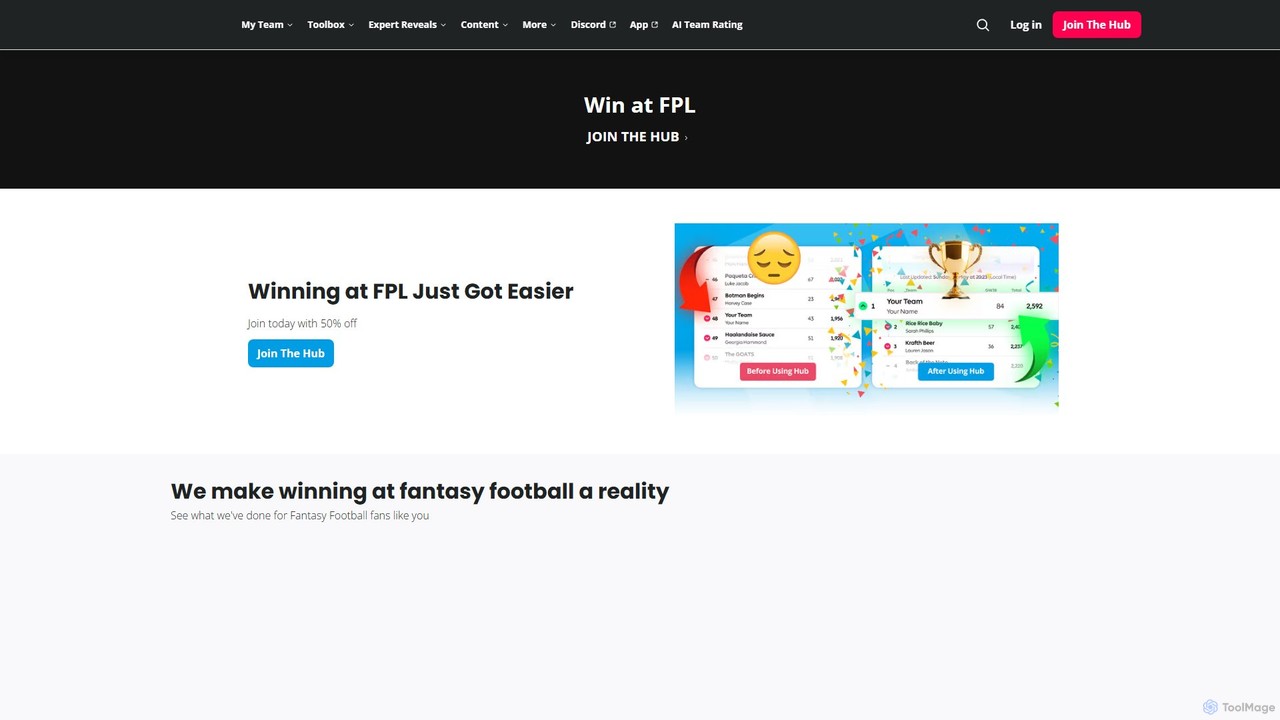
Fantasy Football Hub is an AI-powered platform designed to help you win at Fantasy Premier League (FPL) and …

997.1K
fantasyfootballfix

fantasyfootballfix

fantasyfootballfix is an AI-powered platform for Fantasy Premier League (FPL) managers. It provides AI-driven transfer recommendations, player price …

400.2K

About Fantasy Sports

Fantasy Sports AI tools are specialized platforms that leverage artificial intelligence to enhance decision-making in various fantasy sports leagues. These tools analyze vast datasets of player statistics, team performance, and historical trends using machine learning algorithms to provide predictive insights and strategic recommendations. Their primary value lies in helping fantasy sports enthusiasts optimize their drafts, manage lineups, and make informed waiver wire decisions, ultimately aiming to improve their league performance and win rates. By automating complex data analysis, they offer a significant edge to both casual and serious players within the broader category of sports analytics tools.

Core Features

  • Player Projection: Predicts individual player performance (e.g., points, yards, goals) based on historical data, matchups, and various statistical models.
  • Lineup Optimization: Generates optimal team lineups for daily fantasy sports (DFS) or weekly leagues, considering salary caps, player correlations, and projected scores.
  • Draft Assistant: Provides real-time recommendations during fantasy drafts, suggesting best available players, identifying value picks, and analyzing opponent picks.
  • Waiver Wire Analysis: Identifies high-upside players available on the waiver wire, recommending pickups based on projected performance, injury news, and schedule.
  • Matchup Analysis: Evaluates team and player matchups to highlight favorable or unfavorable conditions that could impact performance.

Applicable Scenarios

Fantasy Sports AI tools are indispensable for individuals deeply engaged in fantasy sports. Daily Fantasy Sports (DFS) players use them to construct competitive lineups under strict salary constraints, while season-long league managers rely on them for draft preparation, weekly lineup adjustments, and strategic waiver wire acquisitions. These tools also benefit content creators who generate fantasy sports advice, providing data-driven insights to their audience.

How to Choose

When selecting a Fantasy Sports AI tool, consider the specific sports and leagues it covers, as well as the accuracy and transparency of its projection models. Evaluate the range of features offered, such as lineup optimizers, draft assistants, and waiver wire analysis, to ensure they align with your needs. Look for tools with intuitive interfaces, reliable data sources, and a strong community or support system. Finally, compare pricing models and ensure the tool's algorithms are regularly updated to reflect new data and trends.

Fantasy SportsUse Cases

1

Optimizing Daily Fantasy Sports (DFS) Lineups

Daily Fantasy Sports players frequently need to construct multiple lineups under strict salary caps for various contests. AI tools for Fantasy Sports can analyze player projections, historical performance, and matchup data to generate optimized lineups that maximize potential points while adhering to budget constraints. This helps players quickly identify high-value picks and avoid suboptimal combinations, significantly improving their chances of winning cash prizes in competitive DFS environments.

2

Drafting a Winning Season-Long Fantasy Team

For season-long fantasy leagues, the draft is a critical event. AI draft assistants provide real-time insights, suggesting players based on their projected value, injury risk, and positional scarcity. They can also analyze opponents' picks to identify potential draft strategies and pinpoint sleepers or busts. This comprehensive support helps fantasy managers make smarter decisions during the draft, building a more balanced and high-potential roster from the outset of the season.

3

Identifying High-Value Waiver Wire Pickups

Throughout a fantasy sports season, injuries, performance slumps, and breakout players create opportunities on the waiver wire. AI tools continuously monitor player news, statistics, and projections to identify undervalued players who are likely to perform well in upcoming weeks. They can alert fantasy managers to optimal pickup opportunities, helping them replace underperforming players or capitalize on emerging talent, thereby maintaining a competitive edge in their league.

4

Analyzing Player Matchups for Weekly Lineup Decisions

Each week, fantasy managers face the challenge of setting their optimal lineup based on player matchups. Fantasy Sports AI tools provide detailed matchup analysis, evaluating how individual players perform against specific opponents or defensive schemes. This allows managers to bench players facing tough defenses and start those with favorable matchups, maximizing their weekly point totals and making data-driven decisions rather than relying solely on gut feelings or general player reputation.

5

Predicting Player Injuries and Performance Drops

AI tools can go beyond simple statistics by incorporating advanced metrics and even external factors to predict potential player injuries or significant drops in performance. By analyzing workload, historical injury patterns, and even social media sentiment, these tools can flag players at high risk, allowing fantasy managers to proactively seek replacements or adjust their expectations. This foresight helps mitigate the negative impact of unforeseen events on a fantasy roster.

6

Customizing Strategy Based on League Rules

Fantasy leagues often have unique scoring systems, roster limits, and trade rules. AI tools can be configured to adapt their recommendations to these specific league settings. For instance, a tool might prioritize players who excel in categories heavily weighted in a custom scoring league, or suggest trades that maximize roster flexibility given specific limits. This customization ensures that the AI's advice is always relevant and optimized for the particular competitive environment a fantasy manager is in.

Fantasy SportsFrequently Asked Questions