ToolMage
Sign in

Best 7 Predictive Analytics AI tools for Analytics

Popular Predictive Analytics AI tools in Analytics include fantasyfootballfix, Prewave, mapzot, ShowStop, Xobot, Admaker, and Notle, helping you work more efficiently.

ShowStop
Paid

ShowStop

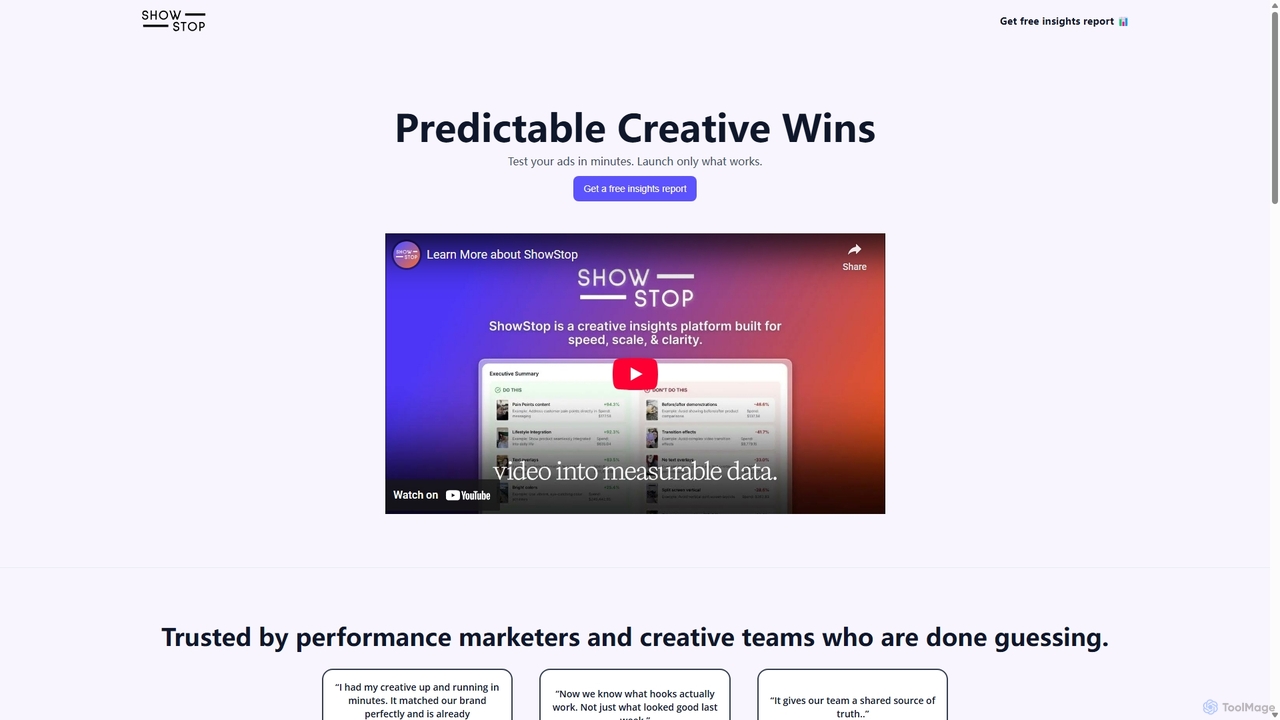
ShowStop is an AI-powered platform that tests and predicts the performance of ad creatives in minutes. It helps performance marketers and creative teams eliminate guesswork by analyzing hundreds of creative elements to forecast ROAS, identify winning ad components, and prevent ad fatigue before campaigns go live.

Predictive Analytics
Visits 3.5KFavorites 113Likes 110
Prewave
Paid

Prewave

Prewave is an AI-powered platform for supply chain risk management. It provides real-time monitoring, predictive analytics, and automated compliance to help businesses build resilient and sustainable supply chains. The platform identifies risks across multiple tiers of suppliers, covering ESG, financial, and geopolitical factors.

Predictive Analytics
Visits 16.5KFavorites 125Likes 132
Admaker

Admaker

An AI platform by Memorable, now part of Reddit, designed to generate and predict the performance of ad creatives. It enhances creative effectiveness to deliver high-impact, memorable advertising campaigns and provides deep insights for optimizing ad performance.

Predictive Analytics
Visits 3.5KFavorites 88Likes 78
Xobot

Xobot

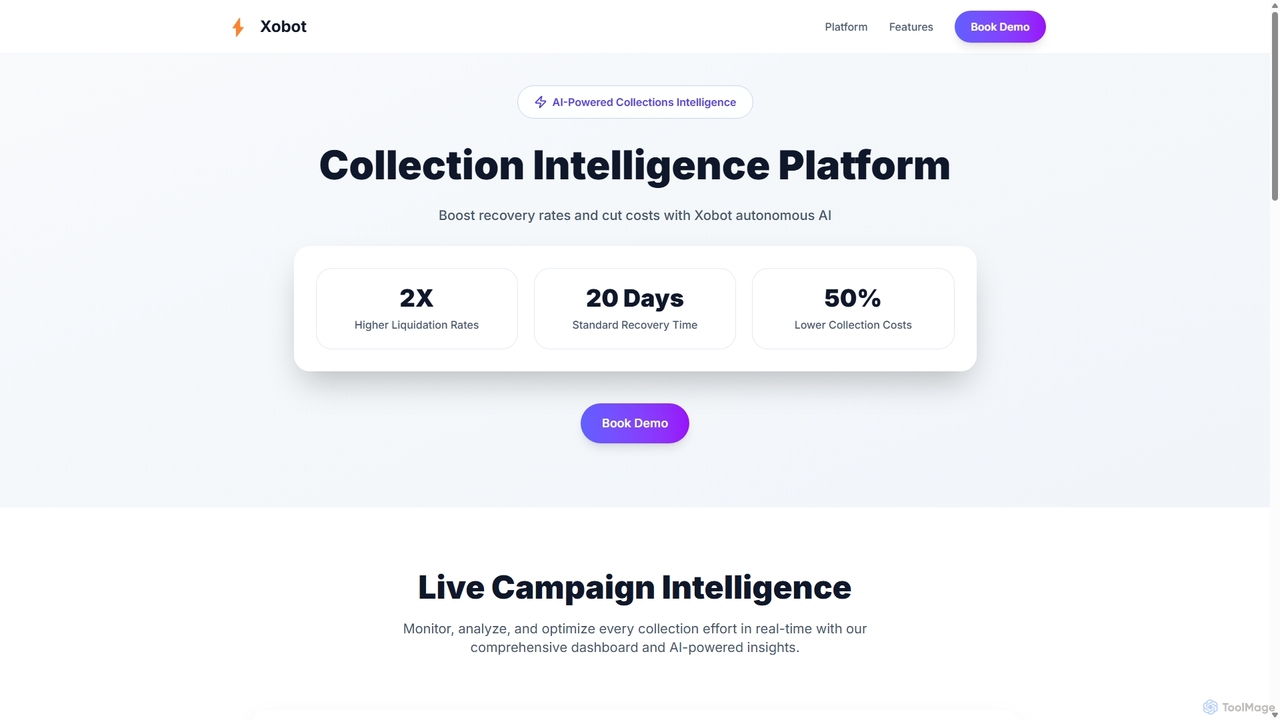
Xobot is an AI-powered Collection Intelligence Platform designed to revolutionize debt recovery. It leverages a proprietary Large Collection Model (LCM) to optimize omnichannel communication, automate the entire collection workflow, and ensure strict regulatory compliance. By providing real-time campaign intelligence and advanced analytics, Xobot helps businesses significantly boost recovery rates, reduce operational costs, and shorten the collection cycle.

Predictive Analytics
Visits 3.5KFavorites 93Likes 99
Notle
Freemium

Notle

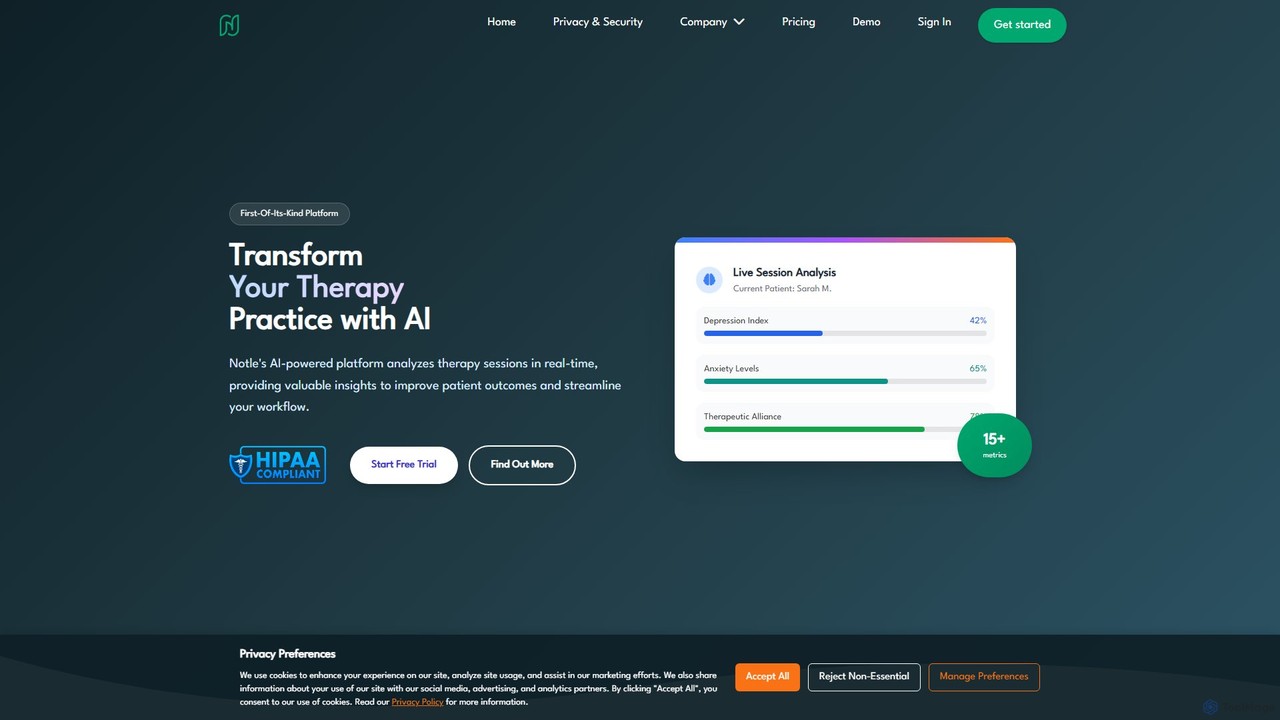
Notle is an AI-powered emotional intelligence platform for mental health therapists. It provides real-time analysis of therapy sessions, automatically generating session notes, tracking over 15 psychometric measures, and offering predictive insights into patient well-being. By streamlining documentation and providing data-driven recommendations, Notle helps clinicians improve patient outcomes, reduce administrative workload, and prevent burnout.

Predictive Analytics
Visits 3.4KFavorites 85Likes 81
mapzot
Paid

mapzot

MapZot.AI is an advanced AI-powered platform for retail site selection and market analysis. It provides businesses with deep location intelligence, including foot traffic insights, competitor analysis, and revenue forecasting. By leveraging real-time data and predictive analytics, MapZot helps industries like retail, real estate, and healthcare identify high-potential locations, optimize expansion strategies, and maximize ROI. The platform offers a comprehensive suite of tools for strategic growth and informed decision-making.

Predictive Analytics
Visits 9KFavorites 132Likes 120
fantasyfootballfix
Freemium

fantasyfootballfix

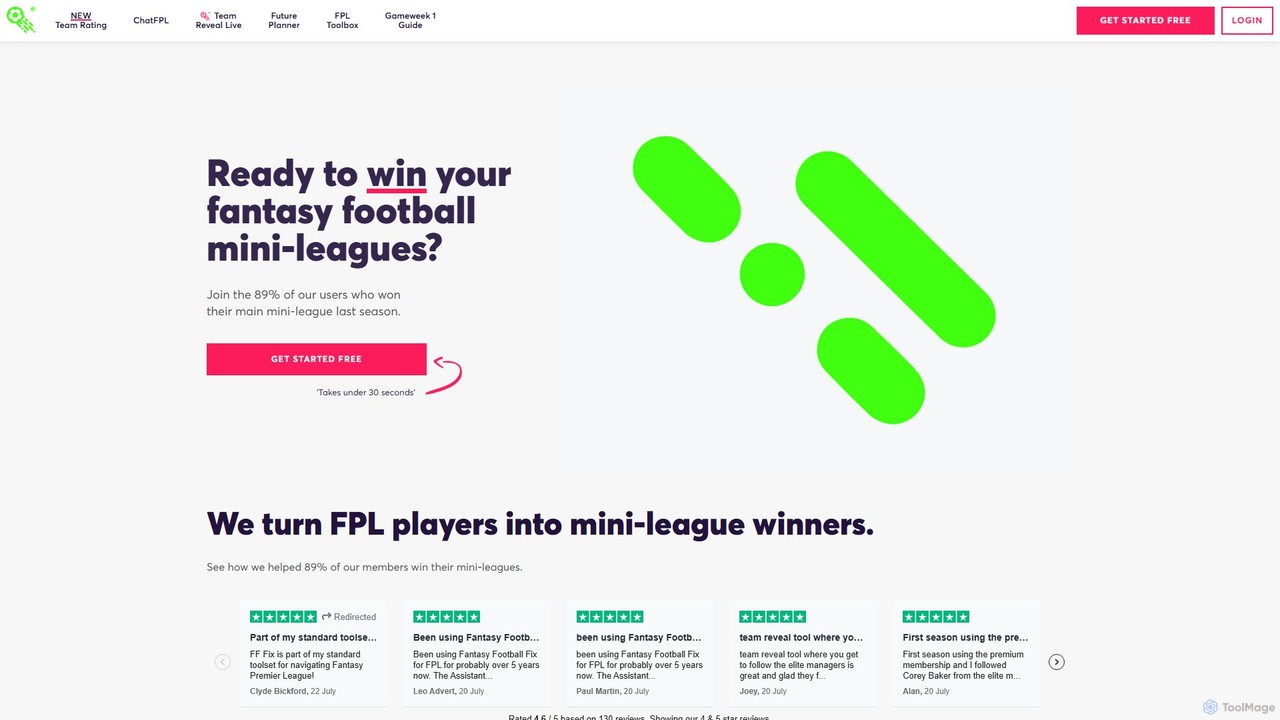
fantasyfootballfix is an AI-powered platform for Fantasy Premier League (FPL) managers. It provides AI-driven transfer recommendations, player price predictions, and access to elite managers' strategies. With tools like ChatFPL, a future gameweek planner, and in-depth Opta stats, it helps users optimize their squads, make informed decisions, and dominate their mini-leagues.

Predictive Analytics
Visits 402.9KFavorites 130Likes 125

About Predictive Analytics

Predictive Analytics are AI-powered tools that leverage historical data, statistical modeling, and machine learning to forecast future outcomes and identify potential trends. These tools analyze complex datasets to uncover patterns, probabilities, and relationships, enabling organizations to anticipate future events with a high degree of accuracy. By transforming data into actionable foresight, predictive analytics empowers proactive decision-making across various industries.

Core Features

  • Forecasting Models: Develops and applies statistical or machine learning models to predict future values or events, such as sales, demand, or stock prices.
  • Risk Assessment: Evaluates potential risks by predicting the likelihood of adverse events, like customer churn, fraud, or equipment failure.
  • Pattern Recognition: Identifies subtle, non-obvious patterns and correlations within large datasets that indicate future behaviors or outcomes.
  • Scenario Simulation: Allows users to test different "what-if" scenarios to understand potential impacts of various decisions or external factors.
  • Automated Insights: Generates automated reports and alerts based on predicted outcomes, highlighting critical information for timely intervention.

Use Cases

Predictive analytics is crucial for businesses aiming to stay ahead of market changes and optimize operations. It's widely adopted in finance for credit scoring, in retail for inventory management, and in healthcare for disease outbreak prediction. Marketing teams use it to forecast campaign success, while manufacturing benefits from predicting equipment maintenance needs.

How to Choose

When selecting a predictive analytics tool, consider its model accuracy and interpretability, ensuring predictions are reliable and understandable. Evaluate its data integration capabilities with existing systems, scalability for growing data volumes, and the range of algorithms supported. User-friendliness and visualization features are also important for effective insight communication.

Featured tool rankings

Predictive Analytics use cases

1

Optimizing Marketing Campaigns

Marketing managers use predictive analytics to forecast the success rate of different campaign strategies. By analyzing past customer behavior, demographic data, and campaign performance metrics, they can predict which channels, messages, and offers will yield the highest conversion rates, allowing for budget allocation optimization and improved ROI.

2

Predicting Customer Churn

Customer success teams deploy predictive models to identify customers at high risk of churning. By analyzing usage patterns, support interactions, and feedback, the tool flags vulnerable accounts, enabling proactive outreach with personalized retention offers or interventions before customers leave.

3

Forecasting Sales Demand

Retail and e-commerce businesses utilize predictive analytics to accurately forecast future product demand. Analyzing historical sales data, seasonality, promotional impacts, and external factors like economic indicators, they can optimize inventory levels, prevent stockouts or overstocking, and improve supply chain efficiency.

4

Detecting Financial Fraud

Financial institutions employ predictive analytics to identify suspicious transactions and potential fraud in real-time. Models learn from past fraudulent activities, recognizing unusual patterns, anomalies, or deviations from normal behavior, thereby minimizing financial losses and enhancing security.

5

Predictive Maintenance for Equipment

Manufacturing and logistics companies use predictive analytics to anticipate equipment failures. Sensors collect operational data (temperature, vibration, pressure), which predictive models analyze to forecast when a machine component is likely to fail, enabling scheduled maintenance before costly breakdowns occur.

6

Personalized Healthcare Interventions

Healthcare providers apply predictive analytics to identify patients at risk of developing certain conditions or experiencing adverse events. By analyzing patient history, genetic data, and lifestyle factors, models can predict disease progression or treatment response, allowing for personalized preventive care and early intervention strategies.

Predictive Analytics FAQ

What is Predictive Analytics?

Predictive Analytics is a branch of advanced analytics that uses historical data, statistical algorithms, and machine learning techniques to identify the likelihood of future outcomes. It goes beyond understanding past events to forecast "what will happen," enabling proactive decision-making and strategic planning.

How does Predictive Analytics differ from Descriptive Analytics?

Descriptive Analytics focuses on "what happened" by summarizing past data (e.g., sales reports, website traffic). Predictive Analytics, however, uses historical data to forecast "what will happen" in the future (e.g., future sales, customer churn risk). While descriptive analytics provides insights into the past, predictive analytics offers foresight into potential future scenarios.

What are the key benefits of using Predictive Analytics tools?

The primary benefits include improved decision-making through foresight, optimized resource allocation by anticipating needs, enhanced risk management by identifying potential threats early, and increased operational efficiency. It helps businesses move from reactive to proactive strategies, gaining a competitive edge.

Which industries commonly use Predictive Analytics?

Predictive Analytics is widely adopted across numerous industries. Finance uses it for credit scoring and fraud detection, retail for demand forecasting and personalized marketing, healthcare for patient risk assessment, manufacturing for predictive maintenance, and telecommunications for churn prediction and network optimization.

What factors should I consider when choosing a Predictive Analytics solution?

When selecting a solution, consider the accuracy and interpretability of its models, its ability to integrate with your existing data sources, and its scalability to handle growing data volumes. Also, evaluate the range of algorithms offered, ease of use, visualization capabilities, and the level of technical support provided.