
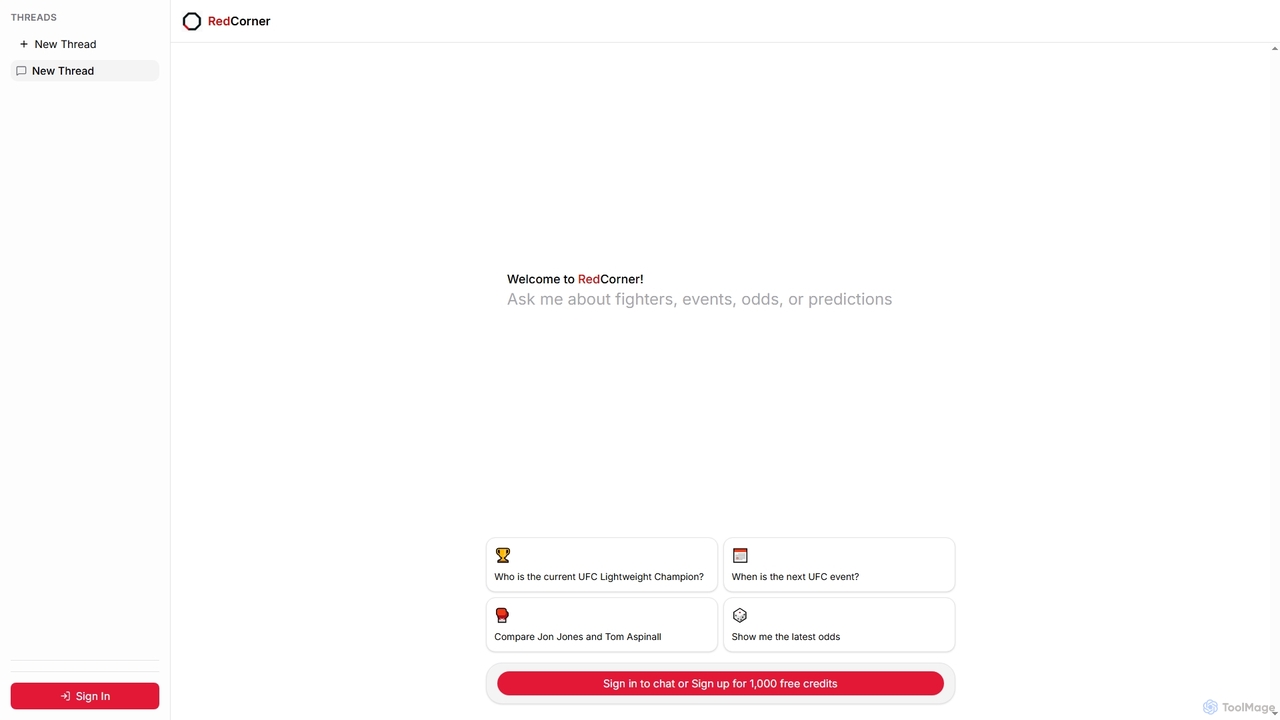
Freemium
Popular Analysis AI tools in Sports include Redcorner, helping you work more efficiently.
AI-powered sports analysis tools are specialized platforms designed to process vast amounts of athletic and game data, providing actionable insights for performance enhancement and strategic decision-making. Leveraging advanced machine learning, computer vision, and statistical modeling, these tools can track player movements, analyze biomechanics, predict game outcomes, and identify emerging talent. They empower coaches, athletes, and sports organizations to gain a competitive edge, optimize training regimens, and refine tactical approaches based on objective, data-driven evidence. This category specifically focuses on transforming raw sports data into meaningful intelligence, moving beyond traditional statistical methods within the broader sports domain.
AI sports analysis tools are indispensable for professional sports teams, individual athletes, and sports academies. They are used by coaches to tailor training programs, by analysts to dissect opponent strategies, and by medical staff to predict and prevent injuries. These tools provide a data-driven foundation for improving athletic performance and achieving competitive success.
When selecting an AI sports analysis tool, consider its data input compatibility (e.g., video, sensor data), the depth of analysis offered (individual, team, or game level), real-time processing capabilities, and the ease of integration with existing sports technology ecosystems. Evaluate the accuracy of its predictive models and the clarity of its reporting features to ensure it meets specific analytical needs.
Coaches utilize AI to analyze an athlete's performance data, including speed, strength, endurance, and movement patterns from practices and games. The AI identifies specific areas for improvement, suggests personalized training drills, and monitors progress, leading to more effective and injury-preventative training plans tailored to individual needs.
Coaches use AI to analyze vast datasets from wearables and training sessions, identifying individual strengths, weaknesses, and fatigue levels. This enables the creation of highly personalized training plans, optimizing performance while minimizing injury risk and ensuring peak condition for competitions.
Sports coaches and trainers utilize AI analysis to process vast datasets from athlete performance during training and competition. By analyzing metrics such as speed, power output, endurance, and movement efficiency, AI identifies individual strengths, weaknesses, and fatigue patterns. This allows for the creation of highly personalized training regimens, optimizing load management, preventing overtraining, and maximizing performance gains tailored to each athlete's unique physiological profile and sport demands.
During live matches, coaching staff employ AI tools to analyze real-time game data, including player positioning, ball movement, opponent formations, and shot efficiency. The AI rapidly identifies tactical patterns, vulnerabilities, and emerging opportunities that might be missed by human observation alone. This enables coaches to make immediate, data-driven adjustments to team strategy, substitutions, and player roles, significantly impacting game outcomes and providing a crucial competitive advantage.
During live matches, AI processes real-time data on player positions, ball movement, and opponent formations. It provides coaches with instant, data-driven insights and recommendations, allowing for rapid tactical adjustments and strategic counter-plays to gain a competitive advantage.
During a live game, AI tools process video feeds and sensor data to analyze opponent formations, player movements, and tactical patterns. Coaches receive instant, data-driven recommendations on substitutions, defensive adjustments, or offensive plays, allowing for dynamic strategic responses that can significantly impact game outcomes.
Professional sports scouts and recruitment teams leverage AI analysis to objectively evaluate potential new talent. By feeding historical performance data, biomechanical metrics, and video footage into AI models, they can identify players with specific skill sets, predict future performance potential, and assess compatibility with existing team dynamics. This data-driven approach reduces subjective bias, streamlines the scouting process, and helps make more informed recruitment decisions across various leagues and age groups.
Sports organizations leverage AI to sift through extensive databases of amateur and professional athletes. By analyzing performance metrics, physical attributes, and video footage, AI identifies promising talent that matches specific team requirements, streamlining the scouting process and reducing human bias.
Sports medical teams leverage AI to analyze historical athlete data, including training load, past injuries, sleep patterns, and biometric markers. The AI identifies high-risk periods or specific movements that could lead to injury, enabling proactive intervention and personalized recovery protocols to keep athletes healthy and on the field.
AI tools analyze an athlete's biomechanical data, training load, and historical injury records to predict potential injury risks. They recommend proactive interventions, adjust training intensity, and guide rehabilitation protocols, significantly reducing recovery times and extending athletic careers.
Professional sports clubs use AI to sift through vast databases of amateur and youth player statistics, video highlights, and physical attributes. The AI identifies players matching specific criteria, such as potential, playing style, or physical profile, streamlining the scouting process and uncovering hidden gems more efficiently than traditional methods.
Sports medical professionals and physiotherapists use AI to proactively manage athlete health and prevent injuries. AI models analyze movement patterns, training loads, recovery data, and historical injury records to identify athletes at high risk of specific injuries. This allows for early intervention, personalized prehabilitation exercises, and optimized rehabilitation protocols. The continuous monitoring helps ensure a safe return to play and minimizes recurrence, extending athletes' careers.
Sports broadcasters and media companies deploy AI analysis to enrich live coverage and deepen fan engagement. AI generates real-time statistics, predictive outcomes (e.g., win probability, next goal scorer), and automated highlight reels. It can also provide deeper tactical explanations and player comparisons, transforming raw game data into compelling visual and narrative content. This makes broadcasts more informative, interactive, and exciting for viewers, attracting a wider audience.
After a game, AI analyzes comprehensive match data, including individual player statistics, team formations, possession rates, and key event sequences. Coaches and players receive detailed reports and video clips highlighting successes, errors, and areas for tactical refinement, accelerating learning and development through objective, data-driven feedback.
Teams utilize AI to meticulously dissect competitor strategies, player tendencies, and historical match data. The AI identifies recurring patterns, vulnerabilities, and strengths of opposing teams, providing invaluable intelligence for developing effective game plans and counter-strategies.
Broadcasters and sports media companies use AI to analyze game flow, player statistics, and historical data to generate real-time insights, predictive scores, and compelling visual overlays. This enhances the viewing experience for fans, providing deeper context and engaging narratives during live broadcasts and highlight reels, making sports more immersive.
Professional sports bettors and analytics firms utilize AI to gain an edge in predicting game outcomes. AI models process vast amounts of data, including team and player statistics, historical results, head-to-head records, weather conditions, and even social media sentiment. By identifying complex correlations and patterns, AI generates more accurate probability assessments and value bets than traditional methods, helping users make more informed and potentially profitable betting decisions.
Broadcasters employ AI to generate dynamic, real-time statistics, probability predictions (e.g., win probability, next goal scorer), and insightful commentary points. This enriches the viewing experience for fans, offering deeper analytical perspectives and fostering greater engagement with the sport.
AI-powered sports analysis tools are platforms that use artificial intelligence to process and interpret complex sports data. They leverage machine learning and computer vision to track performance, analyze tactics, and predict outcomes, offering data-driven insights to enhance athlete performance, optimize team strategies, and prevent injuries across various sports disciplines.
AI Sports Analysis tools are software solutions that use artificial intelligence, such as machine learning and computer vision, to collect, process, and interpret data from sports activities. These tools provide objective insights into athlete performance, team tactics, and game dynamics. They are designed to help coaches, athletes, and sports organizations make data-driven decisions to improve training, optimize strategies, and enhance overall competitive outcomes across various sports disciplines.
AI Sports Analysis tools are advanced software solutions that use artificial intelligence, including machine learning and computer vision, to collect, process, and interpret complex data related to athletic performance and sports events. They aim to provide objective, data-driven insights for optimizing training, improving game strategies, and enhancing overall decision-making in sports.
AI tools significantly enhance sports performance analysis by offering capabilities beyond human observation. They can process massive datasets rapidly, identify subtle patterns in movement and strategy, and provide predictive insights into future performance or injury risks. This leads to more objective evaluations, personalized training plans, real-time tactical adjustments during games, and a deeper understanding of both individual and team dynamics, ultimately driving superior athletic achievement.
AI tools significantly enhance sports performance analysis by offering unparalleled speed and accuracy in processing large datasets. They can identify subtle patterns and correlations that human analysts might miss, provide predictive insights into future performance or injury risks, and offer objective evaluations of technique and strategy, leading to more effective coaching and athlete development.
Traditional sports statistics are primarily descriptive and historical, relying on human interpretation of past events. AI sports analysis tools, however, go beyond this by offering predictive and prescriptive insights. They can identify complex patterns in unstructured data like video, provide real-time analysis, forecast future outcomes (e.g., injury risk, game results), and suggest optimal actions, offering a deeper, more dynamic understanding of performance.
AI Sports Analysis tools integrate a wide array of data sources. This includes video footage (for tracking player movement, tactics, and biomechanics), wearable sensor data (GPS, heart rate, accelerometers), historical match statistics, biometric data, and environmental factors. The combination of these diverse datasets allows for comprehensive and holistic analysis.
AI sports analysis tools utilize a diverse range of data inputs. These commonly include video footage from games and training, wearable sensor data (e.g., GPS trackers, heart rate monitors), biometric data, historical game statistics, player health records, and even environmental factors. The integration of these varied data sources allows for comprehensive and multi-dimensional analysis.
AI sports analysis tools utilize a wide array of data types. This includes quantitative data from wearable sensors (GPS, heart rate monitors, accelerometers), video footage (for tracking player movement, ball trajectory, and tactical formations), biometric data (sleep, nutrition, recovery), historical game statistics, and environmental factors (weather, pitch conditions). The integration and analysis of these diverse data sources enable a comprehensive understanding of performance.
Traditional sports analytics often rely on manual data collection and statistical methods, which can be time-consuming and limited in scope. AI Sports Analysis tools, however, automate data processing, leverage advanced machine learning for pattern recognition and predictive modeling, and can provide real-time insights. This allows for deeper, more dynamic, and forward-looking analysis compared to retrospective statistical reporting.
A wide range of stakeholders in the sports industry benefit significantly. This includes coaches who optimize training and strategy, athletes seeking performance improvement and injury prevention, scouts identifying new talent, sports scientists conducting research, and team management making recruitment and investment decisions. Broadcasters also use these tools to enhance fan engagement through richer, data-driven commentary and visuals.
To choose an effective AI sports analysis platform, consider several factors. First, assess its compatibility with your specific sport and existing data collection infrastructure. Look for robust analytical capabilities, including real-time processing, predictive modeling, and clear data visualization. Evaluate the platform's user-friendliness, customization options, and the quality of support. Finally, consider the cost-effectiveness and scalability to ensure it meets both current and future needs for your team or organization.
A wide range of stakeholders in the sports industry benefits from AI Sports Analysis tools. This includes professional and amateur coaches seeking to optimize team performance and individual athlete development, athletes aiming for self-improvement and injury prevention, sports scientists conducting research, talent scouts identifying promising recruits, and broadcasters enhancing fan engagement with data-rich commentary.
Traditional sports analysis often relies on human observation, manual data entry, and basic statistical methods, which can be time-consuming, subjective, and limited in scope. AI-powered analysis, conversely, automates data collection and processing, uses advanced algorithms to identify complex patterns, and provides objective, predictive insights at scale. While traditional methods offer valuable qualitative context, AI analysis delivers unparalleled quantitative depth, speed, and accuracy, enabling more precise and proactive decision-making.
When selecting an AI sports analysis platform, key considerations include the accuracy and reliability of its algorithms, its compatibility with your existing data sources (e.g., video formats, sensor types), and its real-time processing capabilities for immediate insights. Evaluate the depth of analysis offered, customization options for specific sports or metrics, the user interface's intuitiveness, pricing models, and the quality of customer support and integration services.