ToolMage
Sign in

Best 1 Cycling AI tools for Sports

Popular Cycling AI tools in Sports include cyclingcoachai, helping you work more efficiently.

cyclingcoachai
Freemium

cyclingcoachai

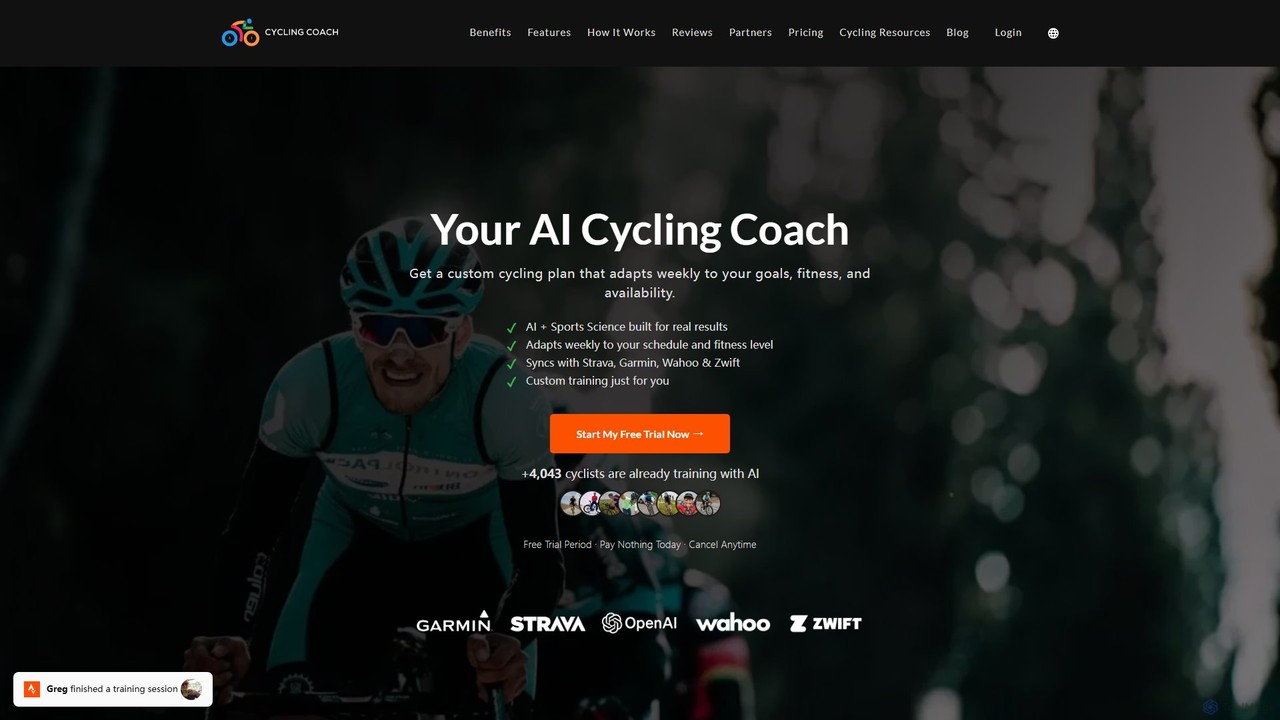
cyclingcoachai is an AI-powered platform that creates highly personalized cycling training plans. It analyzes your fitness level via Strava or manual input, considers your time availability, and tailors workouts to your specific goals, such as improving FTP, sprinting, or weight loss. With integrations for Garmin, Wahoo, and Zwift, it provides daily feedback and real-time progress monitoring to help cyclists of all levels train smarter and achieve better results.

Personal Training
Visits 8.3KFavorites 165Likes 152

About Cycling

Cycling AI tools are specialized applications that leverage artificial intelligence to enhance various aspects of the cycling experience. These tools utilize data analysis, machine learning, and computer vision to provide personalized insights, optimize performance, and improve safety for riders. They cater to a wide range of cyclists, from casual commuters to professional athletes, by transforming raw data into actionable intelligence for better rides.

Core Features

  • Performance Analysis: AI algorithms process power, heart rate, speed, and cadence data to identify training zones, fatigue levels, and performance trends.
  • Personalized Coaching: Adaptive AI coaches generate customized workout plans and real-time feedback based on individual goals, fitness levels, and recovery needs.
  • Smart Route Planning: Tools analyze terrain, weather, traffic, and user preferences to suggest optimal, safe, and challenging routes.
  • Safety & Awareness: AI-powered sensors and cameras detect potential hazards, provide collision warnings, and offer advanced navigation assistance.

Applicable Scenarios

AI cycling tools are invaluable for athletes aiming to optimize their training for races, commuters seeking safer and more efficient routes, and recreational riders wanting to explore new paths with intelligent guidance. They assist coaches in monitoring team performance and help urban planners understand cycling patterns.

How to Choose

When selecting an AI cycling tool, consider its data integration capabilities with existing sensors (e.g., power meters, heart rate monitors), the depth of its analytical insights, the personalization level of coaching features, and its compatibility with your preferred devices. Evaluate the user interface for ease of use and the accuracy of its real-time feedback and safety alerts.

Cycling use cases

1

Optimizing Training for Competitive Cyclists

Professional cyclists or serious amateurs can use AI cycling tools to analyze power output, heart rate, and cadence data in real-time. The AI identifies training zones, suggests optimal recovery periods, and adapts workout plans based on performance trends and fatigue levels, leading to improved race day readiness and injury prevention.

2

Enhancing Safety for Urban Commuters

Urban cyclists can leverage AI-powered cycling tools with integrated cameras and sensors to detect potential road hazards, blind spots, and approaching vehicles. These tools provide real-time audio or visual alerts, helping commuters navigate busy city streets more safely and proactively avoid accidents, especially in low-visibility conditions.

3

Personalized Route Discovery for Adventure Riders

Adventure cyclists looking for new challenges can use AI tools to generate personalized routes based on desired elevation gain, surface type (e.g., gravel, road), scenic points, and points of interest. The AI learns from past rides and preferences, suggesting unique paths that match the rider's skill level and exploration goals, avoiding monotonous or overly difficult sections.

4

Real-time Performance Feedback for Indoor Training

Cyclists using indoor trainers can connect AI cycling tools to their setups for real-time performance feedback. The AI analyzes pedaling efficiency, power distribution, and consistency, providing immediate suggestions to improve form and maximize workout effectiveness. This helps riders simulate outdoor conditions and achieve specific training goals without leaving home.

5

Predictive Maintenance for Cycling Equipment

Advanced AI cycling tools can monitor the wear and tear of bike components (e.g., chain, tires, brakes) by analyzing usage data, terrain, and environmental factors. The AI predicts when maintenance is due or when parts might fail, sending timely alerts to the rider. This proactive approach helps prevent breakdowns, extends equipment lifespan, and ensures optimal performance.

6

Analyzing Group Ride Dynamics for Coaches

Cycling coaches can utilize AI tools to analyze data from multiple riders during group training sessions or races. The AI identifies individual and collective performance patterns, pacing strategies, and drafting effectiveness. This allows coaches to provide targeted feedback, optimize team tactics, and improve overall group cohesion and performance for events.

Cycling FAQ

What are Cycling AI tools?

Cycling AI tools are software or hardware solutions that integrate artificial intelligence to enhance various aspects of cycling. They typically feature advanced data analytics, machine learning for personalized insights, and sometimes computer vision for safety. Common use cases include optimizing training, planning smart routes, and providing real-time performance feedback.

How do Cycling AI tools enhance performance?

Cycling AI tools enhance performance by providing data-driven insights and personalized guidance. They analyze metrics like power, heart rate, and speed to identify strengths, weaknesses, and optimal training zones. AI coaches can then adapt workout plans in real-time, suggest pacing strategies, and help riders maintain consistent effort, leading to more effective training and improved race results.

What's the difference between a basic cycling computer and an AI cycling tool?

A basic cycling computer primarily displays raw data like speed, distance, and time. An AI cycling tool, however, goes beyond simple data display. It uses AI algorithms to analyze this data, providing deeper insights such as personalized training recommendations, predictive performance analysis, and smart route suggestions. AI tools offer adaptive coaching and safety features that basic computers lack, transforming data into actionable intelligence.

Who can benefit most from using Cycling AI tools?

A wide range of cyclists can benefit. Competitive athletes gain from performance optimization and personalized coaching. Urban commuters find value in enhanced safety features and smart navigation. Adventure riders benefit from intelligent route discovery. Even casual riders can improve their fitness and enjoyment through data-driven insights. Essentially, anyone looking to make their cycling experience smarter, safer, or more efficient will find these tools useful.

What data do Cycling AI tools typically collect?

Cycling AI tools typically collect a comprehensive range of data to provide their insights. This includes basic metrics like speed, distance, time, and elevation. More advanced tools also gather power output, heart rate, cadence, GPS location, and sometimes even environmental data like temperature and humidity. Some may also integrate with cameras to collect visual data for safety features or route analysis.

Are Cycling AI tools suitable for beginners?

Yes, Cycling AI tools can be very beneficial for beginners. Many tools offer simplified interfaces and guided training programs that help new riders establish good habits, understand basic metrics, and gradually improve their fitness. Features like smart route planning can also help beginners discover safe and manageable paths, making the initial cycling experience more enjoyable and less intimidating.