CovertNest
CovertNest is an AI-powered real estate investment platform designed to help investors find, analyze, and manage high-yield rental …
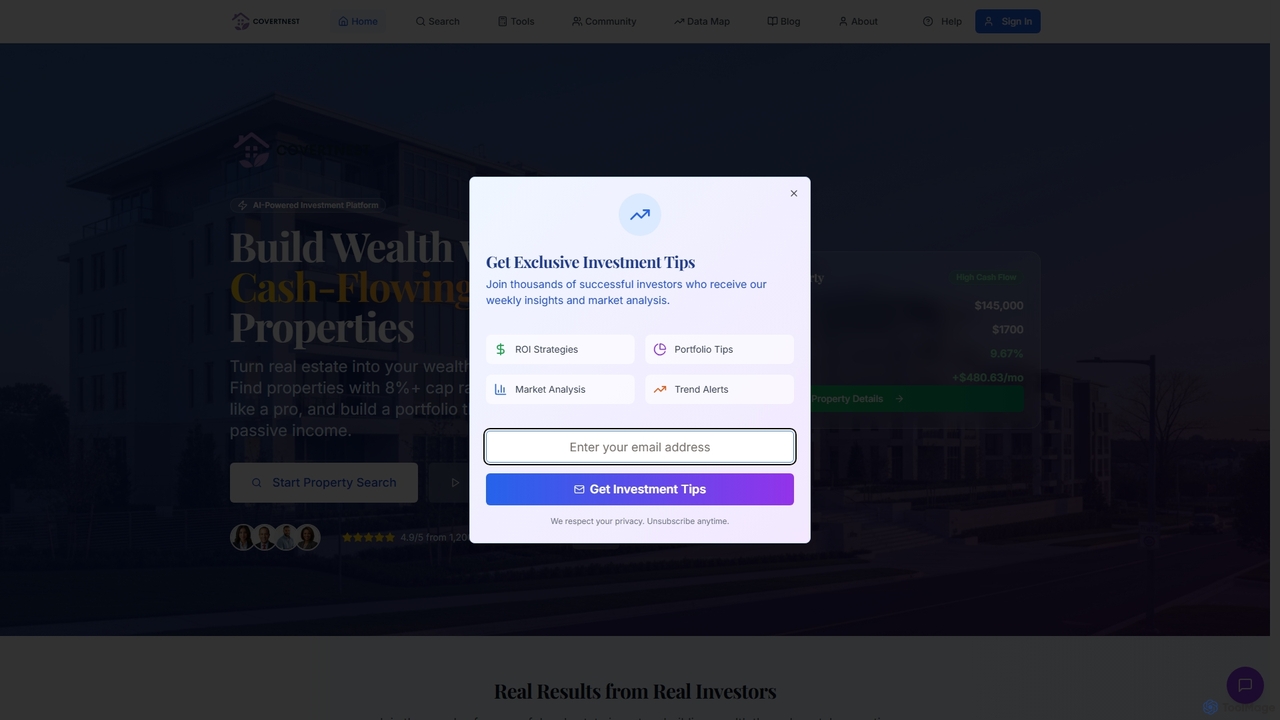
CovertNest is an AI-powered real estate investment platform designed to help investors find, analyze, and manage high-yield rental properties. It provides advanced search filters, comprehensive financial analysis tools, and personalized AI insights to build a cash-flowing portfolio, democratizing access to profitable investment opportunities.
About Property Investment
AI Property Investment tools are specialized platforms that use machine learning to analyze real estate markets and identify lucrative opportunities. These tools process vast datasets, including property values, rental yields, demographic shifts, and economic indicators, to provide predictive insights. They empower investors to make data-driven decisions, moving beyond traditional analysis to forecast market trends and assess property-specific risks. As a key segment of financial technology, they bring quantitative analysis and automation to real estate portfolio management.
Core Features
- Predictive Market Analysis: Forecasts future property values, rental demand, and neighborhood appreciation rates using trend analysis.
- Automated Valuation Models (AVM): Provide instant, data-driven estimates of a property's current market value based on comparable sales and features.
- Risk Assessment: Evaluates investment risks by analyzing factors like market volatility, neighborhood stability, and climate-related threats.
- Opportunity Sourcing: Scans thousands of listings and off-market data to identify properties that match specific investment criteria, such as high capitalization rates or value-add potential.
Applicable Scenarios
These tools are utilized by individual investors building rental portfolios, real estate developers scouting locations for new projects, and institutional funds managing large-scale assets. For example, an investor can use an AI tool to find undervalued single-family homes for a fix-and-flip strategy, or a REIT can use it to monitor portfolio-wide risk exposure to economic downturns.
Selection Criteria
When choosing an AI Property Investment tool, consider the breadth and quality of its data sources (e.g., MLS, public records, economic data). Evaluate the accuracy and transparency of its predictive models. Also, assess its specialization (e.g., residential vs. commercial), integration capabilities with other platforms, and whether its user interface aligns with your technical expertise.
Property InvestmentUse Cases
Identifying High-Yield Rental Properties
An individual investor aims to expand their rental portfolio in a new city. Using an AI property investment tool, they input their criteria: a capitalization rate above 7%, a 3-bedroom layout, and proximity to good schools. The AI scans thousands of listings, analyzes historical rental income, property tax records, and school district ratings. Within minutes, it generates a shortlist of five properties, complete with projected monthly cash flow, estimated maintenance costs, and a 5-year appreciation forecast, saving weeks of manual research.
Forecasting Neighborhood Appreciation for Development
A real estate development firm is evaluating three potential neighborhoods for a new multi-family housing project. They use an AI platform to analyze leading indicators of growth. The tool processes data on zoning changes, public infrastructure investments, new business permits, and demographic shifts. It generates a comparative report, forecasting that Neighborhood A has a 15% higher appreciation potential over the next decade due to a planned light rail extension and an influx of tech companies. This data allows the firm to confidently select the most profitable location.
Automating Due Diligence for Commercial Real Estate
An analyst at a real estate investment trust (REIT) is tasked with vetting a potential office building acquisition. Instead of spending weeks manually reviewing documents, they upload the property's financial statements, lease agreements, and inspection reports into an AI tool. The AI extracts key data points, flags discrepancies in operating expenses, analyzes the creditworthiness of major tenants, and compares the property's performance against local market benchmarks. It generates a comprehensive due diligence report in under an hour, enabling faster and more thorough risk assessment.
Optimizing a Fix-and-Flip Renovation Budget
A house flipper is planning renovations for a recently purchased property. To maximize their return, they use an AI tool that analyzes local market data. They input the property's current condition and a potential renovation budget. The AI compares recent sales of renovated vs. unrenovated homes in the area and identifies which upgrades yield the highest ROI. It suggests prioritizing a kitchen remodel over a basement finish, predicting this will increase the After Repair Value (ARV) by an additional $15,000, ensuring the budget is spent most effectively.
Portfolio-Wide Climate Risk Assessment
A manager of a large residential property fund needs to assess the portfolio's long-term exposure to climate change. They use an AI platform that integrates property data with climate models. The tool analyzes each property's vulnerability to risks like flooding, wildfires, and extreme heat over 10, 20, and 30-year horizons. It generates a risk dashboard, highlighting high-risk assets and estimating potential impacts on insurance costs and property values. This enables the fund to develop mitigation strategies, such as divesting from high-risk coastal properties or investing in climate-resilient upgrades.
Sourcing Off-Market Investment Opportunities
A seasoned real estate investor wants to find deals before they hit the open market. They subscribe to an AI service that scours public records for indicators of motivated sellers, such as pre-foreclosure notices, divorce filings, or probate cases. The AI cross-references this data with property characteristics to identify high-potential, undervalued assets. The investor receives a daily alert with a list of potential off-market properties and owner contact information, giving them a significant competitive advantage in acquiring deals below market value.