AIBFarm
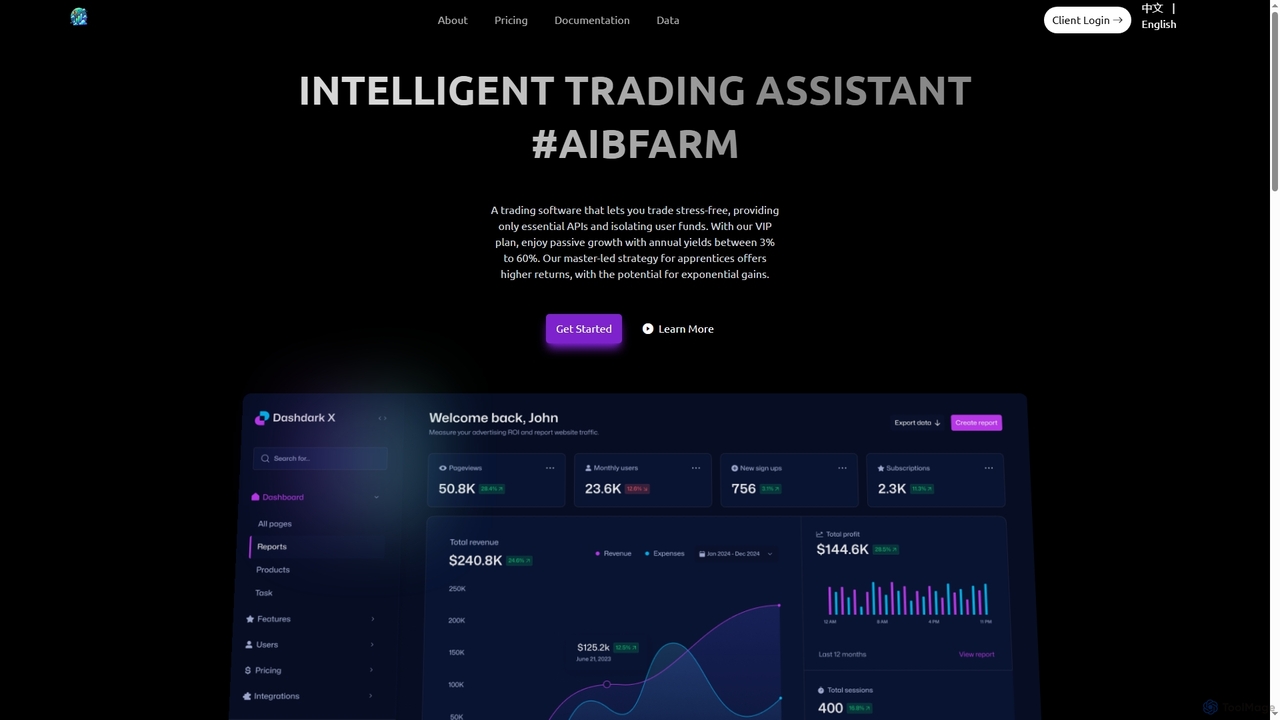
AIBFarm is an intelligent trading assistant designed for quantitative trading, offering automated strategies and stress-free market participation. It …
AIBFarm is an intelligent trading assistant designed for quantitative trading, offering automated strategies and stress-free market participation. It provides essential APIs while isolating user funds, enabling 24/7 market monitoring and lightning-fast order execution for passive growth.
Quant Matter
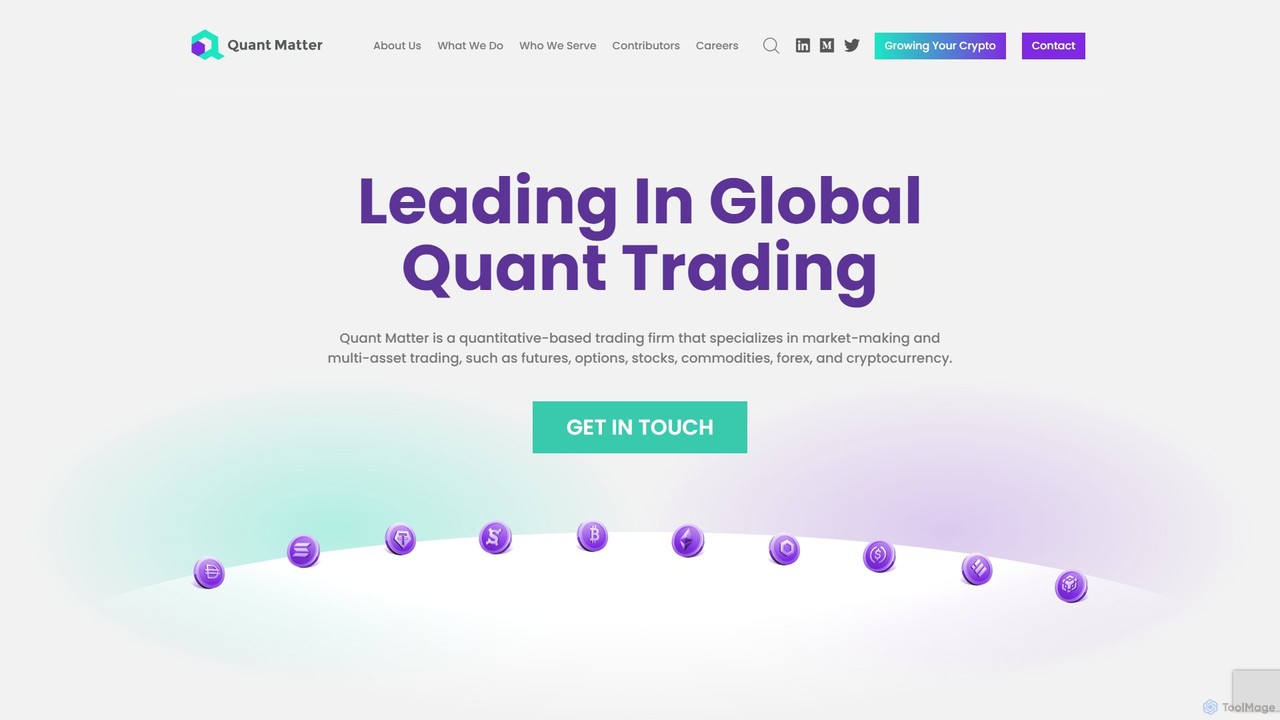
Quant Matter is a global quantitative trading and digital asset management firm. It leverages proprietary technology for algorithmic …
Quant Matter is a global quantitative trading and digital asset management firm. It leverages proprietary technology for algorithmic trading, market making, and treasury management across various assets, including cryptocurrencies, stocks, and forex. The firm provides regulated, high-yield investment solutions and liquidity services for crypto projects.
Quantz
Quantz is an AI-powered platform designed for quantitative financial analysis and algorithmic trading. It empowers traders and analysts …
Quantz is an AI-powered platform designed for quantitative financial analysis and algorithmic trading. It empowers traders and analysts to build, backtest, and deploy complex trading strategies using natural language and advanced machine learning models, without requiring extensive coding knowledge. Access real-time market data, optimize portfolios, and automate your trading with institutional-grade tools.
About Quantitative Trading
Quantitative Trading tools are specialized platforms that leverage artificial intelligence, machine learning, and statistical models to automate investment strategies. These systems analyze vast amounts of market data, including price movements and trading volumes, to identify profitable opportunities and execute trades at superhuman speeds. Their primary value lies in removing emotional bias from trading decisions, enabling systematic risk management, and capitalizing on market inefficiencies that are often too brief for human traders to exploit. This data-driven approach allows for the rigorous backtesting and optimization of strategies before deploying capital.
Core Features
- Strategy Backtesting: Simulates trading strategies on historical market data to evaluate performance and risk.
- Algorithmic Trade Execution: Automatically places buy and sell orders based on predefined rules and signals without manual intervention.
- Real-Time Data Analysis: Processes and analyzes live data streams from multiple sources to inform trading decisions instantly.
- Risk Management Modules: Implements automated controls like stop-losses, position sizing, and portfolio diversification to manage potential downside.
- Predictive Modeling: Utilizes machine learning models to forecast price movements, volatility, or market trends.
Use Cases
These tools are widely used by individual algorithmic traders, quantitative hedge funds, proprietary trading firms, and asset management companies. They are applied across various financial markets, including stocks, forex, cryptocurrencies, and commodities, for strategies like high-frequency trading (HFT), statistical arbitrage, and market making.
How to Choose
When selecting a Quantitative Trading tool, consider the supported asset classes (e.g., equities, crypto), the quality and latency of the data feeds, the flexibility of the strategy development environment (support for languages like Python or C++), the accuracy of the backtesting engine, and the platform's execution speed and reliability.

Quantitative TradingUse Cases
Automated Cryptocurrency Arbitrage
A cryptocurrency trader uses an AI quantitative trading platform to simultaneously monitor the price of Bitcoin across ten different exchanges. The tool's algorithm identifies small, temporary price discrepancies. When it detects that Bitcoin is cheaper on Exchange A than on Exchange B, it instantly executes a buy order on A and a sell order on B, locking in a small, low-risk profit. This entire process is automated, running 24/7 to capture hundreds of such opportunities that would be impossible to execute manually due to their fleeting nature and the need for high-speed execution.
Backtesting a Stock Momentum Strategy
An investment analyst develops a hypothesis that stocks showing strong upward momentum over the past three months tend to continue performing well. Before risking any capital, they use a quantitative trading platform to build this strategy. The platform allows them to run the strategy against 15 years of historical stock market data. The backtest results provide detailed performance metrics, including total return, volatility, and maximum drawdown, helping the analyst refine the rules and confirm the strategy's historical viability before deploying it in a live market.
News Sentiment Analysis for Forex Trading
A quantitative hedge fund integrates a tool that uses Natural Language Processing (NLP) to analyze thousands of news articles, central bank statements, and social media posts in real-time. The AI model assigns a sentiment score (positive, negative, neutral) to news related to the US Dollar and the Euro. When the sentiment for the Euro turns significantly positive following an economic announcement, the system automatically increases its long position in the EUR/USD currency pair, anticipating a price rise based on the positive market mood.
Developing a Statistical Pairs Trading Model
A quantitative analyst identifies two highly correlated stocks in the banking sector, such as JPMorgan Chase and Bank of America. They use a platform to build a statistical arbitrage model that continuously tracks the price ratio between these two stocks. When the ratio deviates significantly from its historical average—for instance, if JPMorgan's stock price rises much faster than Bank of America's—the algorithm automatically shorts JPMorgan and buys Bank of America, betting that their prices will eventually converge back to the mean.
Automated Portfolio Rebalancing
An asset manager for a small fund sets a target allocation for their portfolio: 60% stocks and 40% bonds. They use a quantitative trading tool to automate the rebalancing process. The platform monitors the portfolio's composition daily. If a strong stock market rally pushes the equity allocation to 65%, the system automatically sells a portion of the stocks and buys bonds to bring the portfolio back to its original 60/40 target. This ensures the portfolio maintains its intended risk profile without requiring manual daily oversight.
High-Frequency Market Making in Equities
A proprietary trading firm acts as a market maker for a specific stock on an electronic exchange. They deploy a high-frequency trading (HFT) algorithm that simultaneously places both a buy (bid) and a sell (ask) order, aiming to profit from the bid-ask spread. The AI-powered system processes market data in microseconds, constantly adjusting its bid and ask prices based on order flow, inventory risk, and short-term volatility predictions. This provides liquidity to the market while generating consistent small profits on a massive volume of trades.