
RetireMint
RetireMint is a free, AI-powered retirement planning platform designed specifically for Canadians. It offers a holistic approach, guiding …
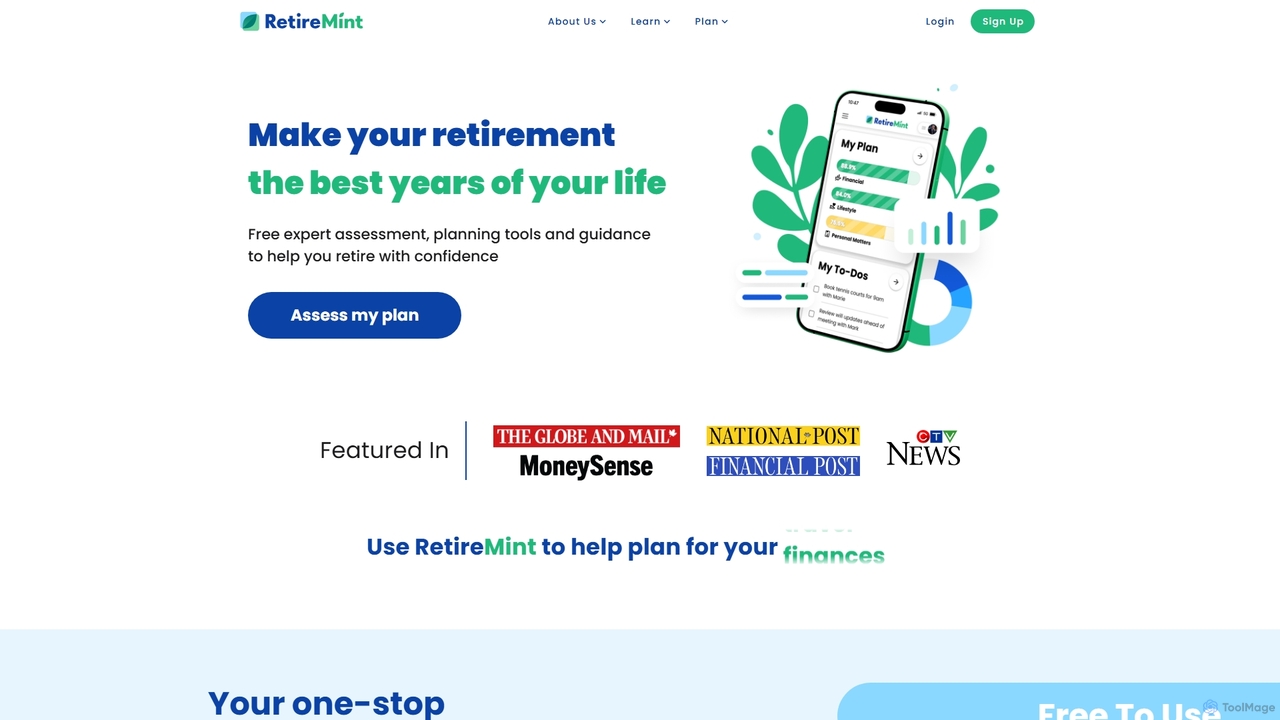
RetireMint is a free, AI-powered retirement planning platform designed specifically for Canadians. It offers a holistic approach, guiding users beyond finances to plan for all aspects of retirement life, including health, travel, hobbies, and estate planning. Through personalized assessments and a virtual assistant, RetireMint helps you create a comprehensive plan to retire with confidence and make your retirement years the best of your life.
About Retirement Planning
AI Retirement Planning tools are specialized financial applications that use algorithms and data analysis to create personalized, long-term retirement strategies. These tools leverage machine learning to run complex simulations, such as Monte Carlo analyses, to forecast portfolio growth, inflation impacts, and potential longevity risks. They provide users with dynamic, data-driven roadmaps for achieving their financial goals in retirement, going far beyond simple savings calculators. This enables a more realistic and adaptable approach to securing one's financial future.
Core Features
- Monte Carlo Simulation: Runs thousands of market scenarios to calculate the probability of a successful retirement plan.
- Tax-Efficient Withdrawal Strategy: Recommends the optimal sequence for drawing funds from different account types (e.g., 401(k), Roth IRA, taxable) to minimize tax liability.
- Healthcare & Longevity Projection: Uses actuarial data to estimate future medical costs and life expectancy, incorporating these critical variables into the plan.
- Social Security Optimization: Analyzes various claiming strategies and ages to help maximize lifetime government pension benefits.
- Income Stream Modeling: Integrates pensions, annuities, and other income sources to create a comprehensive cash flow projection for retirement years.
Use Cases
These tools are primarily used by individuals planning for retirement (from early savers to those nearing retirement age) and financial advisors. Financial professionals use them to build robust, data-backed plans for their clients. Individuals use them to stress-test their current savings, explore different retirement scenarios, and make informed decisions about contributions and investment allocations.
How to Choose
When selecting an AI Retirement Planning tool, consider its ability to link directly to your financial accounts for real-time data. Evaluate the sophistication of its simulation models and the transparency of its assumptions. Also, assess its capacity for tax planning, healthcare cost estimation, and the clarity of its user interface and reports. Choose a tool that aligns with the complexity of your financial situation and your technical comfort level.
Retirement PlanningUse Cases
Stress-Testing a Pre-Retirement Portfolio
A 55-year-old user nearing retirement wants to verify if their savings are sufficient. They link their 401(k) and brokerage accounts to an AI planning tool. The tool runs thousands of Monte Carlo simulations, modeling various market conditions, inflation rates, and life expectancies. The output shows a 75% probability of success with their current plan. The user then models a 'what-if' scenario of retiring two years later, which increases the success probability to 90%, providing clear data to make an informed decision.
Optimizing Social Security Claiming Strategy
A married couple, aged 62 and 64, uses an AI tool to determine the best time to claim Social Security benefits. They input their individual earnings histories and desired retirement lifestyle. The AI analyzes hundreds of combinations, considering factors like spousal benefits and delayed retirement credits. The tool recommends the higher-earning spouse delay claiming until age 70, while the other claims at 65. This strategy is projected to increase their total lifetime benefits by over $100,000 compared to both claiming at their earliest eligibility.
Creating a Tax-Efficient Withdrawal Plan
A new retiree has savings in a traditional 401(k), a Roth IRA, and a taxable brokerage account. They use an AI tool to create a withdrawal sequence that minimizes taxes over their lifetime. The AI models withdrawals from different accounts in various orders, calculating the resulting tax liability each year. It recommends drawing from the taxable account first, followed by the 401(k), while allowing the tax-free Roth IRA to grow longer. This strategy helps the retiree stay in a lower tax bracket and preserves more of their nest egg from taxes.
Early-Career Retirement Goal Setting
A 30-year-old professional wants to start planning for retirement but is unsure how much to save. They use an AI tool, inputting their current salary, savings rate, and desired retirement age of 65. The tool projects their future nest egg value based on historical market returns. It then shows them how increasing their monthly contribution by just $200 could result in nearly $500,000 more at retirement due to compounding. This visualization motivates the user to increase their savings rate and provides a tangible, long-term goal.
Estimating Healthcare Costs in Retirement
A user in their late 40s is concerned about future medical expenses. They use an AI retirement planner that includes a specialized healthcare cost module. By inputting their current health status, family history, and location, the AI generates a personalized estimate of lifetime healthcare costs, including premiums and out-of-pocket expenses. The tool shows that their initial savings goal was likely short by about 15%. Armed with this data, they adjust their retirement savings plan to specifically account for these projected costs, creating a more resilient financial future.
Financial Advisor Client Scenario Modeling
A financial advisor is meeting with clients to review their retirement plan. Using a professional AI planning platform, the advisor models several scenarios in real-time. They demonstrate the financial impact of a potential market downturn, the benefits of converting a portion of their traditional IRA to a Roth IRA, and how a long-term care event could affect their portfolio. This interactive, data-driven approach helps clients visualize complex trade-offs and builds confidence in the advisor's recommendations, leading to a more collaborative and effective planning process.