Finance Best in category 6 results Stock Market Analysis AI Tool

Popular AI tools in the Stock Market Analysis field of Finance include Swaggy Stocks、QUINETICS、Take Profit Trading、TradeUI、finclout、NOTRELOAD, etc., helping you quickly improve efficiency.

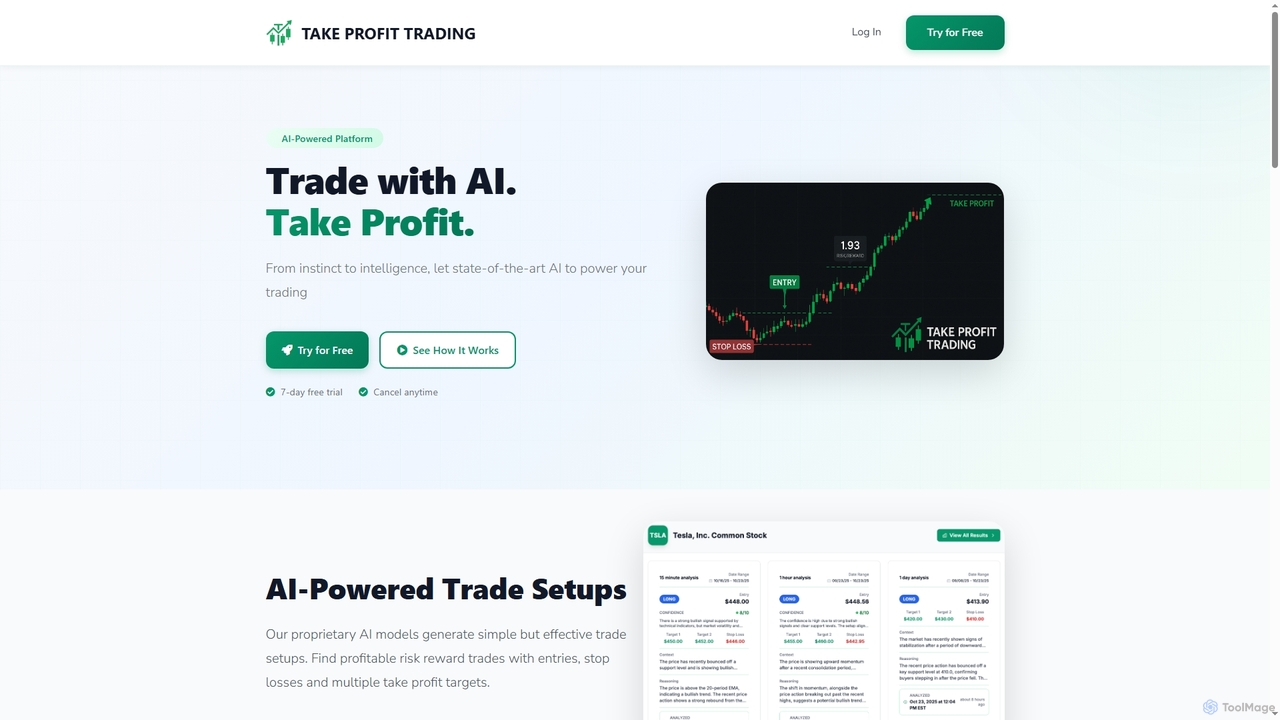
Take Profit Trading

Take Profit Trading

An AI-powered trading assistant that generates actionable trade setups for popular stocks and ETFs. It provides clear entry …

3.2K
Swaggy Stocks

Swaggy Stocks

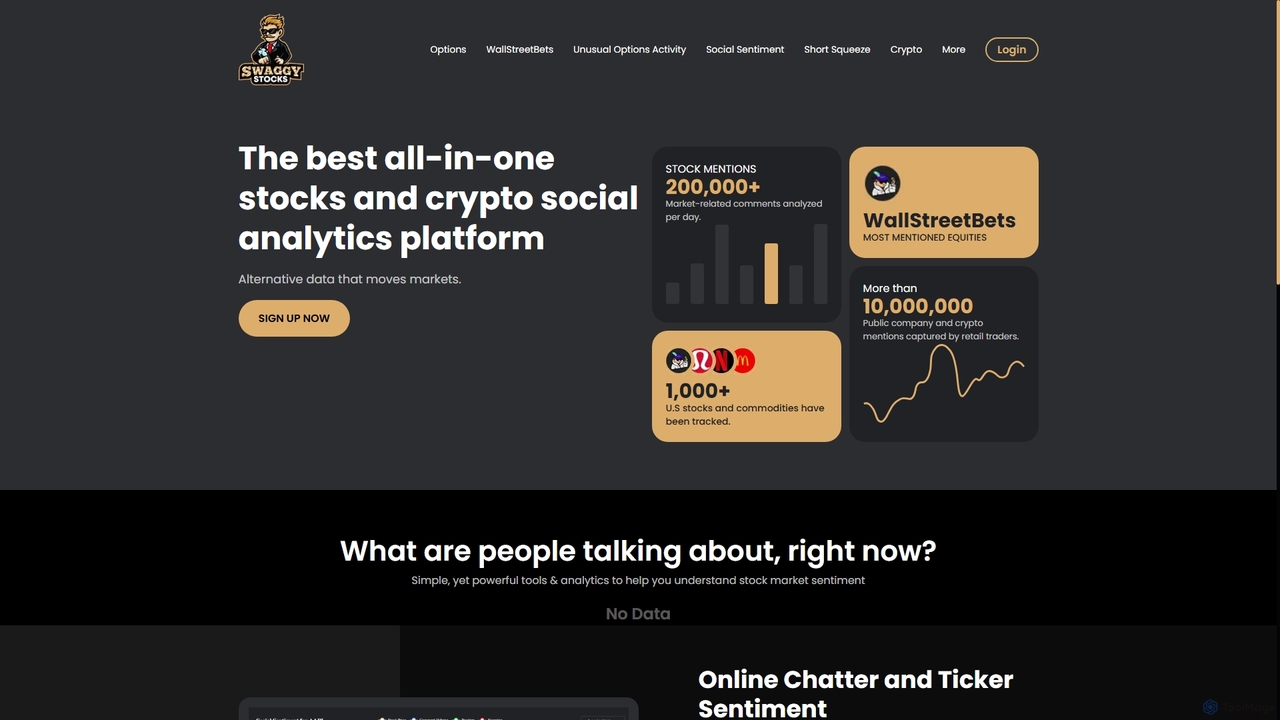
Swaggy Stocks is an all-in-one financial analytics platform that leverages alternative data to track social sentiment for stocks …

34.8K
Free
QUINETICS

QUINETICS

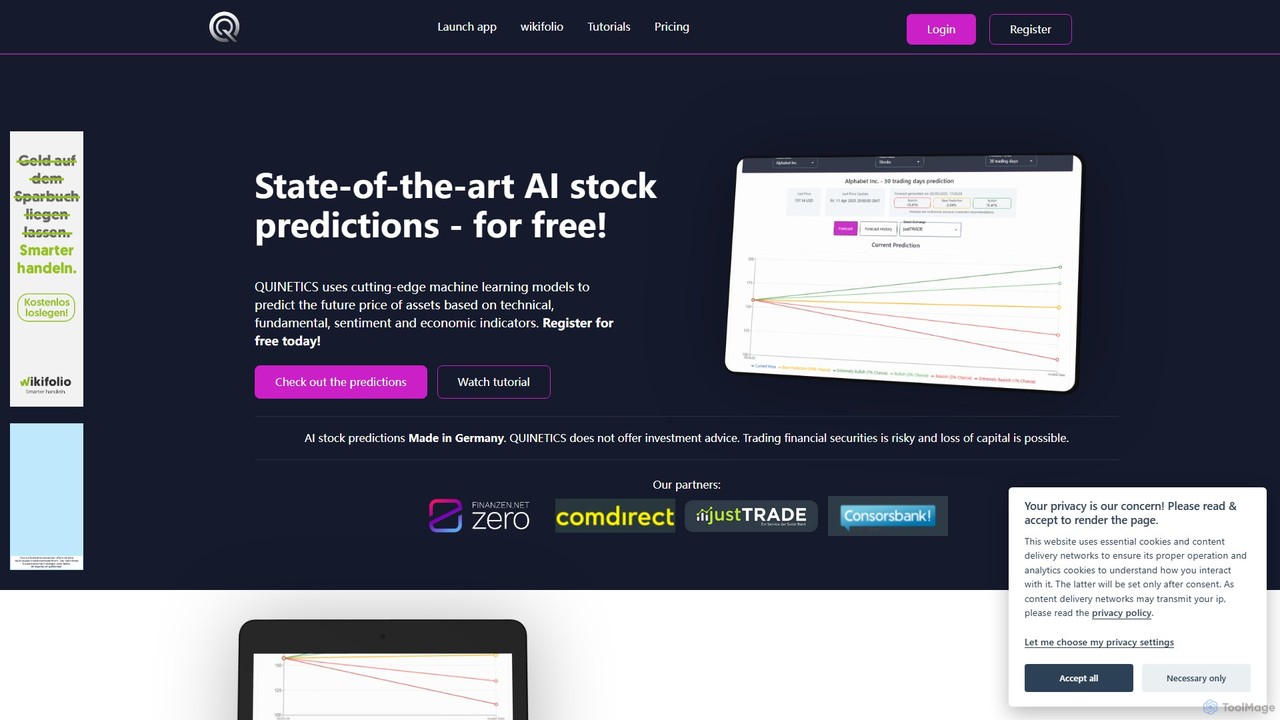
QUINETICS is a free AI-powered platform offering state-of-the-art stock predictions. It utilizes advanced machine learning models that analyze …

3.5K
NOTRELOAD

NOTRELOAD

NOTRELOAD is an AI-powered financial intelligence platform that automates the monitoring of public web content for investors and …

34
finclout

finclout

finclout is an AI-powered financial intelligence platform that analyzes real-time social media and news sentiment for stocks and …

3.1K
TradeUI

TradeUI

TradeUI is an AI-powered trading intelligence platform offering real-time options flow data, stock market analysis, and a vibrant …

3.2K

About Stock Market Analysis

AI Stock Market Analysis tools are specialized platforms that use machine learning and large language models to interpret complex financial data. These tools process vast datasets, including price history, corporate filings, news sentiment, and macroeconomic indicators, to identify patterns and forecast potential market movements. They empower investors and traders to make more data-driven decisions by uncovering insights that are difficult to detect through traditional methods alone. Their primary value lies in their ability to analyze non-linear relationships and process information at a scale and speed beyond human capability.

Core Features

  • Predictive Modeling: Generates forecasts for stock prices, market trends, and volatility using algorithms like regression and neural networks.
  • Sentiment Analysis: Scans news articles, social media, and financial reports to gauge market sentiment towards a specific stock or the broader market.
  • Quantitative Analysis: Applies complex statistical and mathematical models to historical and real-time data to identify trading opportunities.
  • Pattern Recognition: Automatically detects technical chart patterns, such as head and shoulders or support and resistance levels.
  • Risk Assessment: Evaluates and quantifies the potential risk of an investment or portfolio based on various market factors.

Use Cases

These tools are utilized by a wide range of users, from individual retail investors seeking an edge to institutional players like hedge funds and asset management firms. Quantitative analysts ('quants') use them to build and backtest automated trading strategies, while financial advisors leverage them to provide clients with more sophisticated, data-backed recommendations for portfolio management.

How to Choose

When selecting an AI Stock Market Analysis tool, consider the breadth and quality of its data sources (e.g., real-time vs. delayed data). Evaluate the transparency of its models—does it explain its reasoning? Also, assess its backtesting capabilities, integration with brokerage platforms, and whether its user interface matches your technical expertise.

Stock Market AnalysisUse Cases

1

Identifying Breakout Stocks for Retail Investors

A retail investor uses an AI analysis tool to screen thousands of stocks daily. The tool is configured to detect specific criteria, such as stocks nearing their 52-week high with unusually high trading volume and positive news sentiment. When the AI identifies a match, it sends an alert to the investor. This allows the investor to research a small, pre-vetted list of potential breakout candidates, saving hours of manual chart analysis and helping them act on opportunities more quickly.

2

Automating Sentiment Analysis for Hedge Funds

An analyst at a hedge fund configures an AI platform to monitor real-time news feeds, regulatory filings, and social media for sentiment shifts regarding their portfolio holdings. The system automatically flags any significant negative or positive changes, such as a sudden spike in negative mentions of a CEO on Twitter or a positive analyst report. This automated surveillance provides an early warning system, allowing the fund to react to new information faster than competitors who rely on manual research.

3

Backtesting Quantitative Trading Strategies

A quantitative analyst ('quant') develops a new trading hypothesis based on the correlation between oil prices and airline stock performance. Instead of deploying it with real capital, they use an AI analysis tool to backtest the strategy against 20 years of historical market data. The platform simulates trades, calculates performance metrics like Sharpe ratio and maximum drawdown, and provides a detailed report. This allows the quant to refine the strategy's parameters or discard it entirely if it proves unprofitable, all without risking any actual money.

4

Dynamic Portfolio Rebalancing for Financial Advisors

A financial advisor uses an AI analysis tool to continuously monitor client portfolios against their stated risk tolerance and market benchmarks. The AI identifies 'style drift' where a portfolio has become too concentrated in one sector, or when its overall risk level has exceeded the client's profile. The tool then suggests specific trades to rebalance the portfolio, such as trimming positions in overperforming tech stocks and adding to undervalued healthcare assets. This automates a time-consuming quarterly review process into a continuous, data-driven activity.

5

Analyzing Earnings Call Transcripts for Nuance

An equity researcher uploads the transcript from a company's quarterly earnings call into an AI tool. The tool performs a linguistic analysis, identifying the frequency of cautionary words (e.g., 'headwinds', 'challenging') versus optimistic words (e.g., 'strong growth', 'opportunity'). It also analyzes the sentiment of the Q&A section, detecting if analysts' questions became more skeptical over time. This provides the researcher with a quantitative measure of executive sentiment, adding a layer of insight beyond the raw financial numbers reported.

6

Forecasting Macroeconomic Impact on Sectors

A portfolio manager needs to understand how an upcoming interest rate hike might affect different market sectors. They use an AI tool to model this scenario. The AI analyzes historical data from previous rate hike cycles, correlating central bank actions with the performance of sectors like technology, banking, and consumer staples. The output is a ranked list of sectors most likely to outperform or underperform in the new rate environment. This helps the manager proactively adjust their sector allocations before the official announcement is made.

Stock Market AnalysisFrequently Asked Questions