Finance Best in category 2 results Stock Trading AI Tool

Popular AI tools in the Stock Trading field of Finance include LevelFields、Optionsfy, etc., helping you quickly improve efficiency.

LevelFields

LevelFields

LevelFields is an AI-powered platform for stock and options traders that identifies market-moving events. It screens millions of …

38.0K
Optionsfy

Optionsfy

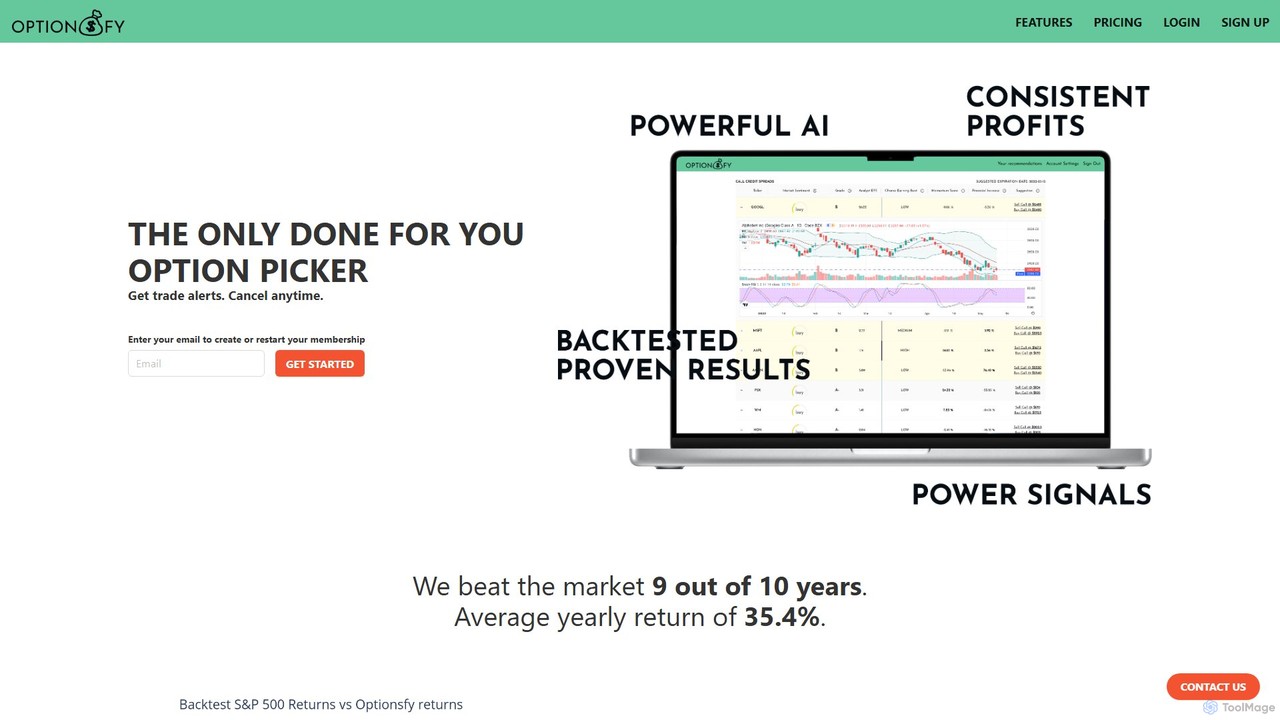
Optionsfy is an AI-powered options picking service designed for both novice and experienced traders. It delivers daily trade …

3.4K

About Stock Trading

AI-powered Stock Trading tools are sophisticated platforms designed to assist investors and traders in navigating the complex financial markets. Leveraging advanced machine learning, deep learning, and natural language processing, these tools analyze vast datasets to identify patterns, predict market movements, and execute trades. They aim to enhance decision-making, optimize investment strategies, and automate trading processes for improved efficiency and potential returns.

Core Features

  • Predictive Analytics: Utilizes historical data and real-time market feeds to forecast stock price movements and market trends.
  • Algorithmic Trading: Automates trade execution based on predefined rules, complex strategies, and real-time market conditions.
  • Sentiment Analysis: Scans news, social media, and financial reports to gauge market sentiment and its potential impact on stock prices.
  • Portfolio Optimization: Recommends adjustments to investment portfolios to maximize returns while managing risk according to user preferences.
  • Risk Management: Identifies potential risks, calculates exposure, and suggests hedging strategies to protect investments.

Applicable Scenarios

AI stock trading tools are invaluable for a range of financial professionals and individual investors. Day traders use them for high-frequency, automated execution based on micro-market movements. Quantitative analysts leverage these tools for backtesting complex strategies against decades of historical data. Long-term investors benefit from AI-driven insights for portfolio rebalancing and identifying undervalued assets, while hedge funds employ them for sophisticated market arbitrage and risk mitigation.

How to Choose

Selecting an AI stock trading tool requires evaluating several key factors. Consider the accuracy and transparency of its predictive models, the customization options for algorithmic strategies, and the breadth of data sources it integrates. Assess its risk management capabilities, ease of integration with your existing brokerage accounts, and the clarity of its user interface. Finally, compare pricing models and the level of customer support to ensure it aligns with your trading style and budget.

Stock TradingUse Cases

1

Automated High-Frequency Trading

For professional day traders and quantitative firms, AI tools enable the execution of high-frequency trading strategies. By analyzing real-time market data, order books, and news feeds, the AI can identify fleeting arbitrage opportunities or execute trades within milliseconds, far exceeding human capabilities. This allows for the rapid deployment and adjustment of complex strategies, aiming to capitalize on small price discrepancies across various assets, significantly increasing trade volume and potential profits.

2

Predictive Market Trend Forecasting

Investment analysts and portfolio managers utilize AI to forecast future market trends and individual stock price movements. By processing vast amounts of historical price data, economic indicators, and company fundamentals, AI algorithms can identify subtle patterns and correlations that human analysts might miss. This predictive capability helps in making more informed decisions about buying, selling, or holding assets, optimizing entry and exit points for long-term and short-term investments.

3

Real-time News & Sentiment Analysis

Individual investors and institutional traders employ AI for real-time sentiment analysis across financial news, social media, and corporate reports. The AI processes unstructured text data to gauge public and market sentiment towards specific stocks or the overall market. This insight helps traders react quickly to sentiment shifts that could impact stock prices, allowing them to adjust positions or identify potential buying/selling opportunities before broader market reactions.

4

Dynamic Portfolio Rebalancing & Optimization

Wealth managers and self-directed investors use AI to dynamically rebalance and optimize their investment portfolios. Based on predefined risk tolerance, financial goals, and market conditions, AI algorithms continuously monitor the portfolio's performance and suggest adjustments. This ensures the portfolio remains aligned with the investor's objectives, automatically identifying underperforming assets or recommending diversification strategies to maximize returns while managing risk effectively.

5

Backtesting & Strategy Validation

Quantitative researchers and strategy developers leverage AI tools to rigorously backtest new trading strategies against extensive historical market data. The AI simulates how a strategy would have performed in past market conditions, providing detailed metrics on profitability, drawdown, and risk. This allows developers to validate, refine, and optimize their algorithms before deploying them in live trading environments, significantly reducing the risk of untested strategies.

6

Enhanced Risk Assessment & Management

Financial institutions and sophisticated investors use AI for comprehensive risk assessment and management within their stock trading operations. AI models analyze various factors, including market volatility, correlation between assets, and macroeconomic indicators, to quantify and predict potential risks. They can identify concentration risks, suggest hedging strategies, and provide real-time alerts on escalating market risks, helping to protect capital and maintain portfolio stability.

Stock TradingFrequently Asked Questions