Finance Best in category 5 results Taxation AI Tool

Popular AI tools in the Taxation field of Finance include Clear、goinri、Kintsugi、Airdoc.pro、Taxly, etc., helping you quickly improve efficiency.

goinri

goinri

goinri is an AI-powered financial super-app designed for Global Indians (NRIs & OCIs). It offers a unified platform …

61.8K
Airdoc.pro

Airdoc.pro

Airdoc.pro is an AI-powered assistant designed to simplify UK tax compliance. It allows users to chat with HMRC's …

3.1K
Taxly

Taxly

Taxly is an AI-powered tax assistant designed to automate UAE Corporate Tax filing for SMEs, Free Zone entities, …

3.1K
Kintsugi

Kintsugi

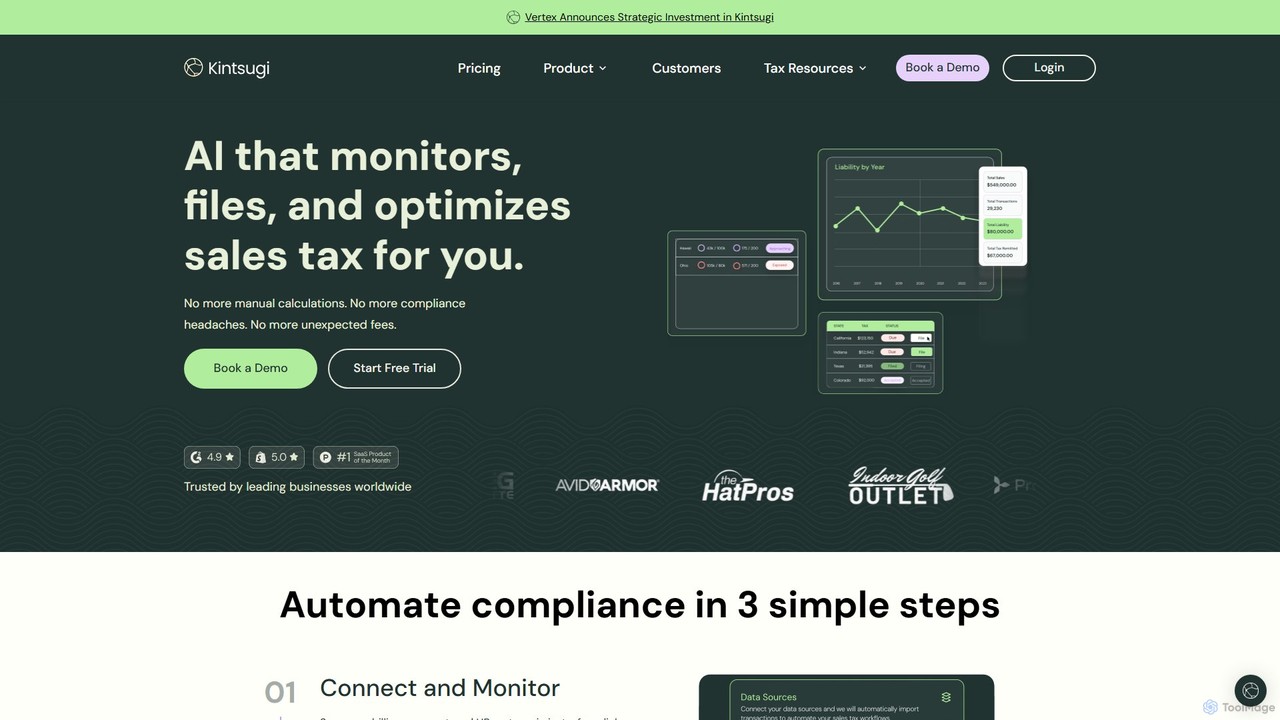
Kintsugi is an AI-powered platform that automates global sales tax compliance. It monitors transactions, manages nexus tracking, calculates …

48.8K
Clear

Clear

Clear is a comprehensive financial technology platform for India, offering AI-powered solutions for individuals, businesses, and tax professionals. …

148.7K

About Taxation

AI Taxation tools are specialized applications that leverage artificial intelligence to automate and optimize tax preparation, compliance, and strategic planning. These tools use machine learning algorithms to analyze financial data, identify potential deductions, and ensure adherence to complex tax regulations. By automating data entry, calculation, and form filling, they significantly reduce manual errors and save valuable time for individuals, businesses, and accounting professionals. Their core value lies in transforming tedious tax processes into an efficient, accurate, and insightful activity.

Core Features

  • Automated Data Extraction: Scans receipts, invoices, and bank statements to automatically capture and categorize relevant financial data.
  • Deduction & Credit Identification: Analyzes transactions and financial patterns to proactively suggest eligible tax deductions and credits.
  • Real-time Compliance Check: Continuously monitors financial activities against current tax laws to flag potential compliance risks.
  • Tax Scenario Modeling: Allows users to simulate the tax impact of various financial decisions, such as investments or large purchases.
  • Automated Form Generation: Populates official tax forms with processed data, preparing them for review and submission.

Applicable Scenarios

These tools are valuable across various sectors. Freelancers and small businesses use them to automate expense tracking and quarterly tax estimations. Larger corporations employ them for complex tasks like R&D tax credit calculations and multi-jurisdictional tax compliance. Accounting firms integrate these tools to enhance service efficiency and provide data-driven advisory to clients.

Selection Criteria

When choosing an AI Taxation tool, consider its support for your specific jurisdiction's tax laws. Evaluate its integration capabilities with your existing accounting software (e.g., QuickBooks, Xero). Assess the tool's security protocols for protecting sensitive financial data. Finally, match the feature set to your specific needs, whether it's for simple income tax, cryptocurrency transactions, or international sales tax.

TaxationUse Cases

1

Automating Annual Tax Filing for Freelancers

A freelance graphic designer struggles with organizing a year's worth of invoices, receipts, and bank statements for their annual tax return. By using an AI Taxation tool, they can connect their bank accounts and upload digital documents. The AI automatically scans and categorizes all income and expenses, identifying business-specific deductions like software subscriptions, home office expenses, and mileage. The tool then populates the necessary tax forms, such as Schedule C, providing a clear summary for review. This process reduces preparation time from days to a few hours and helps maximize their deductions accurately.

2

Calculating R&D Tax Credits for Tech Companies

A software development company needs to claim R&D tax credits but finds the process of documenting qualifying expenses manually to be complex and time-consuming. They implement an AI Taxation tool that integrates with their project management and payroll systems. The AI analyzes project data, timesheets, and expense reports to automatically identify qualifying research activities and associated costs (like developer salaries and prototype materials). It generates a comprehensive, audit-ready report that substantiates the tax credit claim, ensuring compliance and maximizing the financial benefit without extensive manual effort from the finance team.

3

Managing Crypto Tax Reporting

An active cryptocurrency trader has thousands of transactions across multiple exchanges and wallets, making capital gains calculation a nightmare. They use a specialized AI Taxation tool for crypto. By connecting their exchange APIs and public wallet addresses, the tool automatically imports all transaction data. The AI engine then calculates the cost basis, capital gains, and losses for each trade according to the country's specific tax rules (e.g., FIFO, LIFO). It generates the required tax forms, like Form 8949 in the U.S., ready to be included in their annual tax return, saving dozens of hours of manual spreadsheet work and ensuring accuracy.

4

Real-time Sales Tax Compliance for E-commerce

An online store sells products to customers across different states and countries, each with unique sales tax or VAT rates. Manually tracking and applying the correct tax rate for each order is prone to error. They integrate an AI Taxation tool with their e-commerce platform. The tool automatically identifies the customer's location at checkout and applies the current, accurate sales tax or VAT rate. It also tracks sales tax nexus thresholds and automates the filing of periodic sales tax returns to various jurisdictions, ensuring the business remains compliant with complex and ever-changing tax laws globally.

5

Tax Scenario Planning for Investment Decisions

An individual is considering selling a significant amount of stock to fund a down payment on a house but is unsure of the tax implications. Using an AI Taxation tool with scenario planning features, they can input the details of the potential stock sale (cost basis, sale price). The tool instantly calculates the estimated capital gains tax. They can then model different scenarios, such as selling in installments over two tax years or offsetting gains with other investment losses. This data-driven insight allows them to make an informed financial decision that minimizes their tax liability, helping them plan their finances more effectively.

6

Audit Risk Assessment for Accounting Firms

An accounting firm wants to provide more proactive services to its business clients by identifying potential tax audit risks before filing. The firm uses an AI-powered taxation platform that analyzes a client's complete financial dataset. The AI benchmarks the client's deductions, income ratios, and expense categories against industry averages and historical tax authority data. It flags anomalies and high-risk entries that are likely to trigger an audit. This allows the accountants to address these issues with the client beforehand, correct any errors, and prepare necessary documentation, ultimately reducing audit risk and enhancing client trust.

TaxationFrequently Asked Questions