Frugal
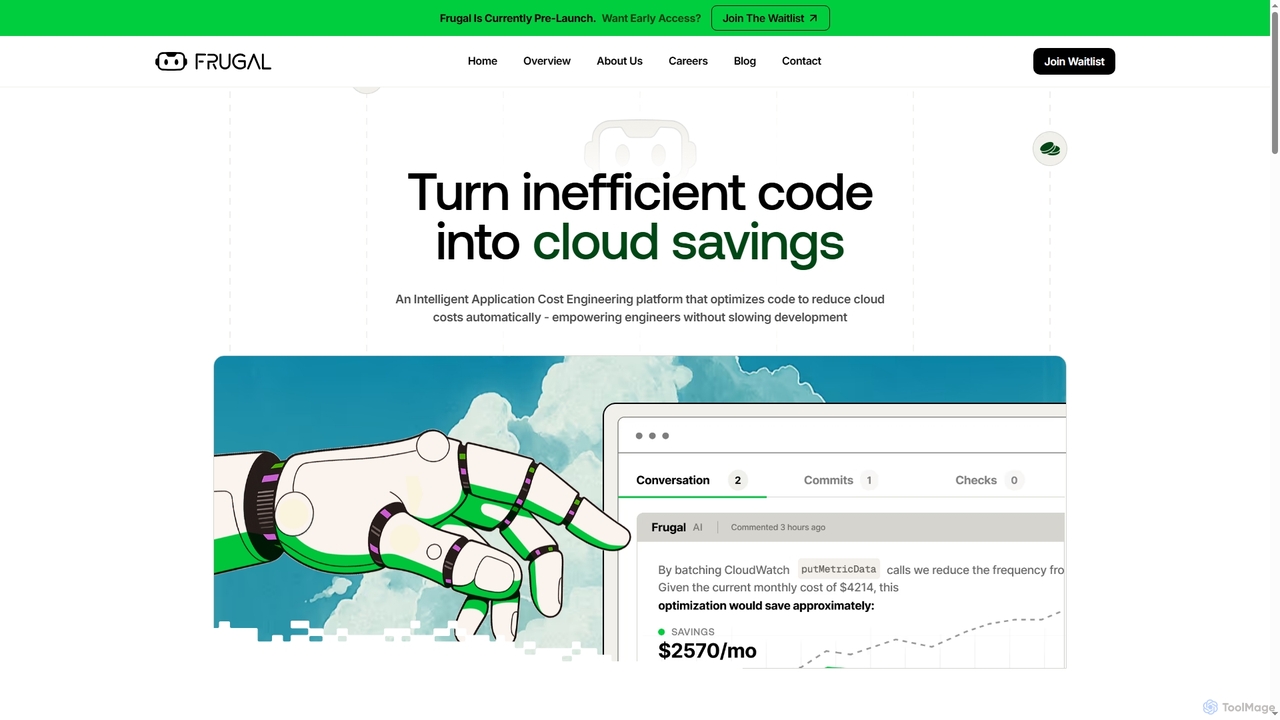
Frugal is an intelligent, AI-powered Application Cost Engineering platform designed for engineers to automatically optimize code and reduce …
Frugal is an intelligent, AI-powered Application Cost Engineering platform designed for engineers to automatically optimize code and reduce cloud costs. It aims to empower developers to eliminate waste at the source without compromising development speed, fostering collaboration between engineering and FinOps teams.
About Finops
FinOps tools are AI-powered platforms designed to manage and optimize cloud financial operations. They leverage machine learning algorithms to analyze cloud spending, forecast costs, and identify optimization opportunities in real-time. These tools enable organizations to gain visibility into their cloud expenditure, enforce budget controls, and align technology costs with business value. By automating complex data analysis, AI FinOps tools empower engineering, finance, and business teams to collaborate effectively on cloud cost management.
Core Features
- Cost Anomaly Detection: Automatically identifies unusual spending patterns and alerts teams to potential budget overruns.
- Automated Cost Optimization: Provides actionable recommendations for rightsizing resources, purchasing reserved instances, or deleting unused assets.
- Predictive Cost Forecasting: Employs AI models to accurately predict future cloud bills based on historical usage and trends.
- Cost Allocation and Chargeback: Automates the process of tagging resources to accurately allocate costs to specific teams, projects, or products.
- Budget Management & Alerts: Sets intelligent budgets and automatically notifies teams when spending approaches or exceeds thresholds.
Applicable Scenarios
FinOps tools are essential for cloud-native companies, large enterprises with multi-cloud environments, and DevOps teams aiming to build a cost-aware engineering culture. They are commonly used for managing Kubernetes costs, optimizing SaaS spending, and allocating shared cloud resource costs across different business units.
Selection Criteria
When choosing a FinOps tool, consider its multi-cloud support (AWS, Azure, GCP), the granularity of its cost visibility, and its integration capabilities with existing tools like Slack and Jira. Also, evaluate the level of automation it offers, from simple recommendations to fully automated cost-saving actions, and the sophistication of its reporting dashboards.
FinopsUse Cases
Automating Cloud Cost Anomaly Detection
A FinOps analyst at a fast-growing tech company is responsible for preventing budget overruns. A developer accidentally provisions an oversized database instance for a test environment, causing costs to spike unexpectedly. The AI FinOps tool's anomaly detection model immediately flags this unusual spending pattern, identifies the specific resource and owner, and sends a real-time alert to the designated Slack channel. The team is notified within minutes, allowing them to investigate and terminate the instance, preventing thousands of dollars in wasted spend that might have otherwise gone unnoticed until the end of the month.
Optimizing Kubernetes Cluster Costs
A DevOps team manages multiple Kubernetes clusters that are often over-provisioned to handle peak loads, leading to significant waste during off-peak hours. Using an AI FinOps tool, the team gets continuous, granular visibility into pod and node utilization. The tool's AI engine analyzes workload patterns and provides specific recommendations for rightsizing container resource requests and limits. It also suggests optimal node pool configurations and identifies idle workloads that can be scaled down, helping the team reduce their Kubernetes costs by 30% without compromising application performance or reliability.
Forecasting Monthly Cloud Expenditure
The finance department needs to create an accurate budget for the company's cloud spend for the next quarter. Manual forecasting based on past invoices is often inaccurate due to fluctuating usage. The AI FinOps tool ingests historical usage data and applies machine learning models to generate a detailed forecast. It accounts for seasonality, growth trends, and known future events (like a product launch). The output provides a reliable spending projection, broken down by service, team, and project, giving the finance team the confidence to set precise budgets and manage cash flow effectively.
Allocating Shared Costs to Business Units
A large enterprise runs shared services like data platforms and monitoring tools that are used by multiple departments. Accurately allocating these costs is a major challenge for the FinOps team. The AI tool uses a combination of resource tags and consumption metrics to intelligently distribute the costs of these shared resources. For example, it can allocate data pipeline costs based on the volume of data processed by each business unit. This provides a transparent and equitable chargeback model, fostering a sense of cost ownership and accountability within each department.
Automating Reserved Instance (RI) Management
A Cloud Center of Excellence (CCoE) team is tasked with maximizing savings through commitment-based discounts like AWS Reserved Instances. Manually managing a large portfolio of RIs is complex and time-consuming. The AI FinOps tool automates this process by continuously analyzing usage patterns. It recommends the optimal purchase of RIs and Savings Plans to maximize coverage and savings. The tool can also identify opportunities to sell unused RIs on the marketplace, ensuring the organization achieves the highest possible discount rate on its cloud spend with minimal manual effort.
Building a Cost-Aware Engineering Culture
An engineering manager wants to empower developers to make more cost-efficient decisions without slowing down innovation. The FinOps tool integrates directly into the CI/CD pipeline, providing developers with cost estimates for infrastructure changes before they are deployed. It also delivers personalized, weekly cost reports to individual developers via Slack, showing the spending impact of their services. This direct feedback loop makes cost a visible and tangible metric for engineers, fostering a culture of financial accountability and encouraging them to build more efficient applications from the ground up.