CryptoCredits
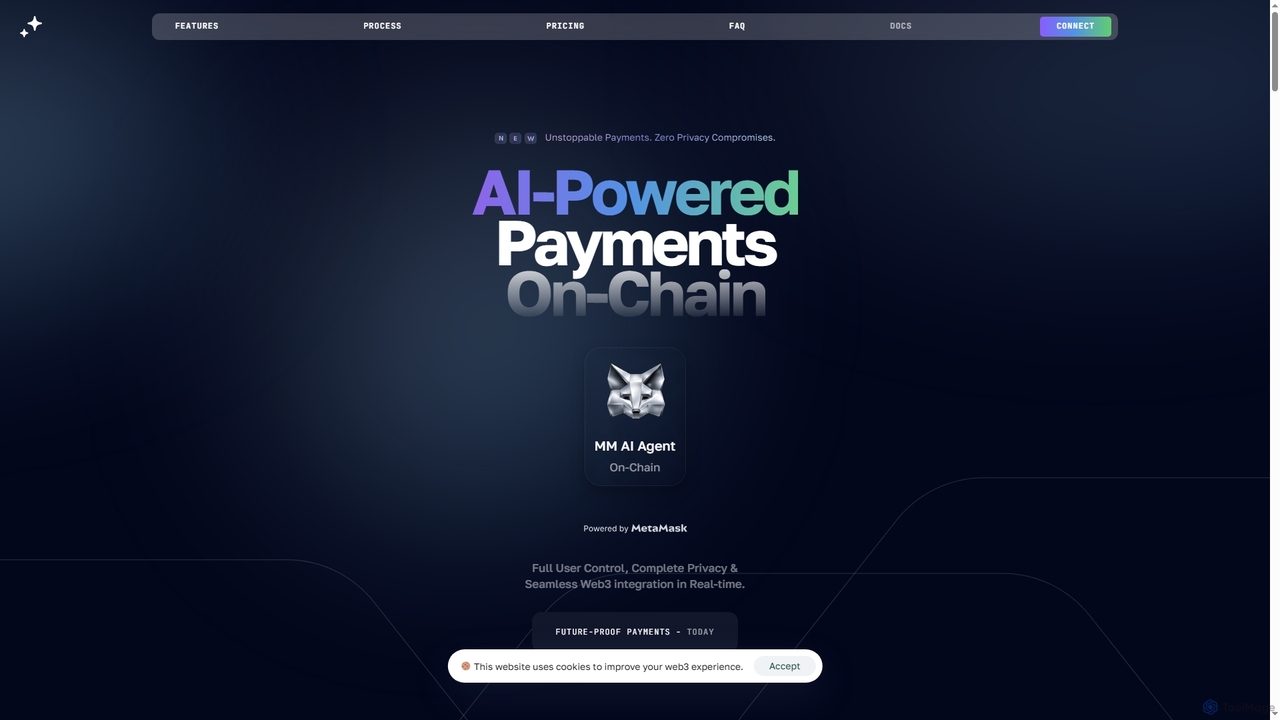
CryptoCredits is an AI-powered, privacy-first Web3 payment agent enabling merchants to accept on-chain cryptocurrency payments with full user …
CryptoCredits is an AI-powered, privacy-first Web3 payment agent enabling merchants to accept on-chain cryptocurrency payments with full user control and zero data compromise. It integrates seamlessly with Web3 wallets like MetaMask, offering non-custodial transactions, low fees, and AI-enhanced execution for secure and efficient digital commerce.
Grapepay
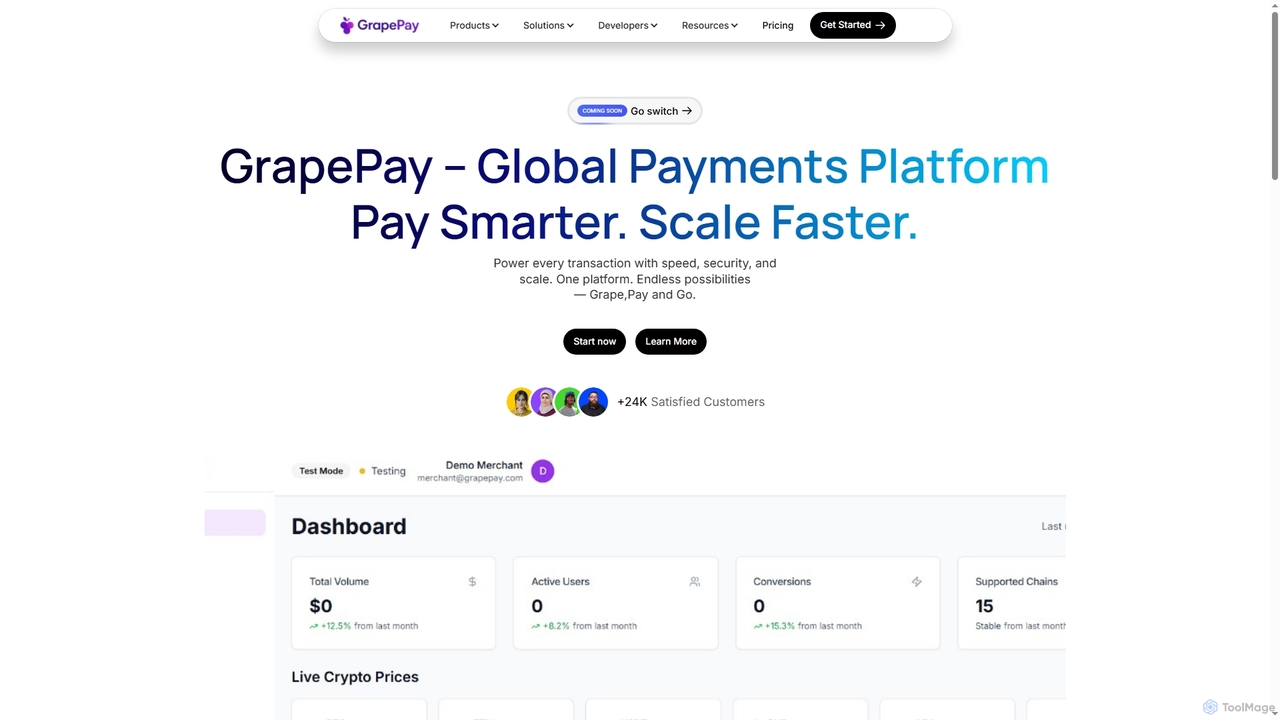
Grapepay is a comprehensive payment platform designed to empower businesses with fast, secure, and scalable transaction processing. It …
Grapepay is a comprehensive payment platform designed to empower businesses with fast, secure, and scalable transaction processing. It offers a suite of products including payment gateways, POS solutions, subscription management, and invoicing, serving diverse industries from startups to global enterprises.

Gostex
Gostex offers white-label fintech solutions, empowering businesses with customizable payment gateways, AI-based customer support, and robust card management …
Gostex offers white-label fintech solutions, empowering businesses with customizable payment gateways, AI-based customer support, and robust card management systems. It focuses on enhancing customer experiences, streamlining operations, and ensuring high security and compliance for financial services.
Drip Capital
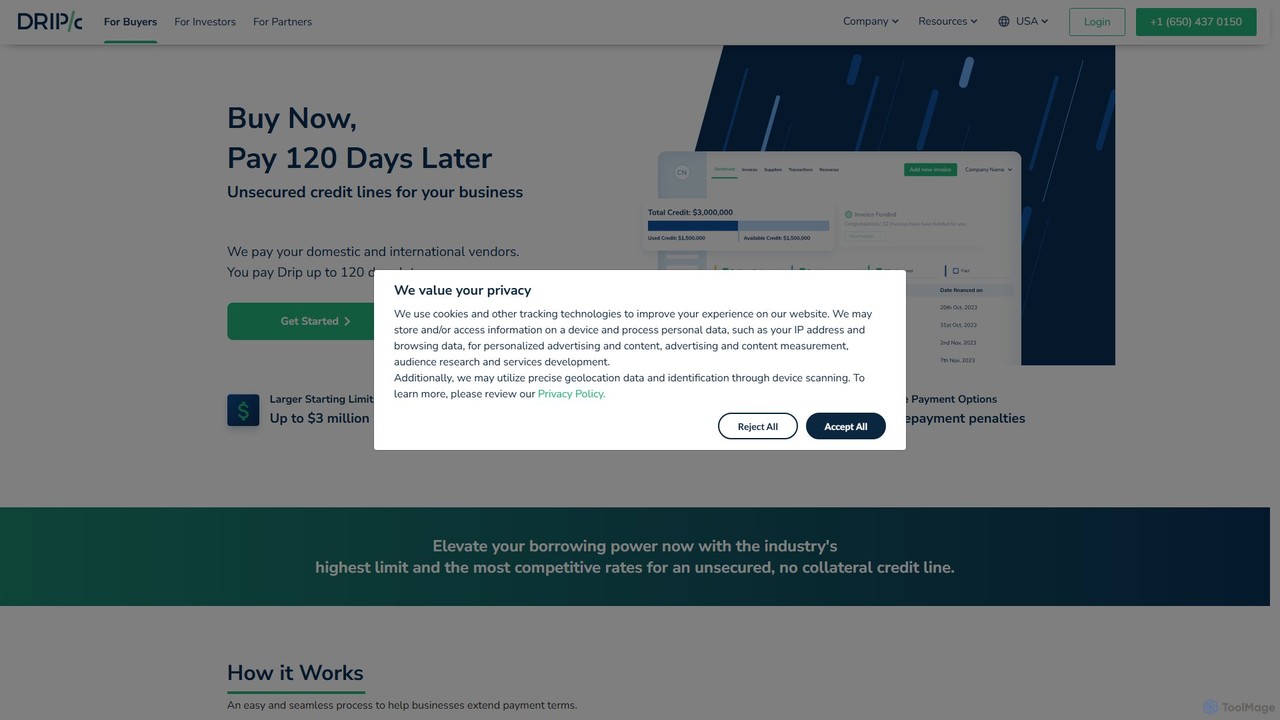
Drip Capital is a FinTech platform that simplifies global trade finance for small and medium-sized businesses. It provides …
Drip Capital is a FinTech platform that simplifies global trade finance for small and medium-sized businesses. It provides unsecured credit lines, allowing companies to pay their domestic and international suppliers instantly while deferring their own payment for up to 120 days. Leveraging AI for risk assessment and process automation, Drip Capital offers fast, flexible, and collateral-free financing to improve cash flow and unlock business growth.
About Fintech
Fintech AI tools are a class of software that leverage artificial intelligence and machine learning to automate, enhance, and personalize financial services. These tools analyze vast datasets to identify patterns, predict market trends, assess risk, and automate complex financial operations. They are widely used across banking, investment, and insurance to improve decision-making, operational efficiency, and customer experience. Their key advantage lies in processing real-time data to provide predictive insights and hyper-personalized services that traditional financial systems cannot offer.
Core Features
- Algorithmic Trading: Automates buy and sell orders based on real-time market data analysis and predefined strategies.
- Credit Scoring & Risk Assessment: Utilizes machine learning and alternative data to generate more accurate and inclusive credit profiles.
- Real-Time Fraud Detection: Identifies and flags unusual transaction patterns instantly to prevent financial fraud and secure accounts.
- Robo-Advisory: Provides automated, algorithm-driven financial planning and investment management services with minimal human intervention.
- AI-Powered Underwriting: Streamlines the insurance and loan underwriting process by analyzing applicant data to assess risk more quickly and accurately.
Applicable Scenarios
Fintech AI tools are essential for financial institutions like banks and credit unions for loan processing and fraud prevention. Investment firms and hedge funds use them for high-frequency trading and portfolio management. Insurance companies apply them to automate claims processing and risk underwriting, while e-commerce platforms use them to secure payments.
Selection Criteria
When choosing a Fintech AI tool, prioritize regulatory compliance to ensure it meets industry standards like GDPR or PCI DSS. Evaluate its data security protocols for handling sensitive financial information. Assess its integration capabilities with your existing systems (e.g., CRM, core banking software) and scrutinize the accuracy and explainability of its AI models to ensure transparent and reliable decision-making.
FintechUse Cases
Automated Fraud Detection for E-commerce
An e-commerce platform's risk management team uses a Fintech AI tool to analyze transaction data in real-time. The system automatically flags suspicious activities, such as multiple failed payment attempts followed by a successful one, or orders from a new account with a high-value item shipping to a different country. This allows the team to intervene immediately, verify the transaction, or block the user, significantly reducing chargeback rates and financial losses without slowing down the checkout process for legitimate customers.
AI-Powered Credit Scoring for Lenders
A micro-lending company aims to serve applicants without a traditional credit history. They use a Fintech AI tool that analyzes alternative data points, such as utility bill payments, rental history, and even digital footprint patterns, to build a more holistic credit profile. The machine learning model assesses the applicant's creditworthiness with high accuracy, enabling the company to approve loans for a wider, underserved demographic while maintaining low default rates. This expands their market and promotes financial inclusion.
Robo-Advisory for Personal Investment Management
An individual investor with limited time and financial expertise uses a robo-advisor platform to manage their retirement savings. After answering a questionnaire about their financial goals, risk tolerance, and investment horizon, the AI algorithm automatically constructs a diversified portfolio of low-cost ETFs. The platform continuously monitors the portfolio and performs automatic rebalancing to stay aligned with the target allocation, providing a sophisticated, low-cost wealth management solution that was once only accessible to high-net-worth individuals.
Developing Algorithmic Trading Strategies
A quantitative analyst at a hedge fund uses an AI-powered platform to design and backtest trading strategies. Instead of manually coding every rule, the analyst defines high-level objectives, such as maximizing Sharpe ratio while minimizing drawdown. The AI explores thousands of variable combinations and market data patterns to generate optimal trading algorithms. The platform's backtesting engine then simulates the strategy's performance against historical data, allowing the analyst to refine and deploy profitable, data-driven strategies much faster than with traditional methods.
Automated Insurance Claims Processing
An insurance company's claims department is overwhelmed with minor auto damage claims. They implement an AI tool where policyholders can upload photos of the damage via a mobile app. The AI uses computer vision to assess the extent of the damage, cross-references it with repair cost databases, and verifies policy details. For straightforward claims under a certain threshold, the system automatically approves the claim and initiates payment within minutes, reducing processing time from days to moments and freeing up human adjusters to focus on complex cases.
Personalized Financial Planning and Budgeting
A user connects their bank accounts and credit cards to a personal finance app powered by AI. The app automatically categorizes all transactions, providing a clear overview of spending habits. Based on this data, the AI identifies areas for potential savings, suggests personalized budget goals (e.g., 'reduce dining out by 15%'), and predicts future cash flow. It can also send smart alerts for upcoming bills or low balances, empowering the user to take control of their finances with actionable, data-driven insights.