ToolMage
Sign in

Best 3 Kids AI tools for For Fun

Popular Kids AI tools in For Fun include Storywizard.ai, StoryBookly, and Makemytale, helping you work more efficiently.

Makemytale
Freemium

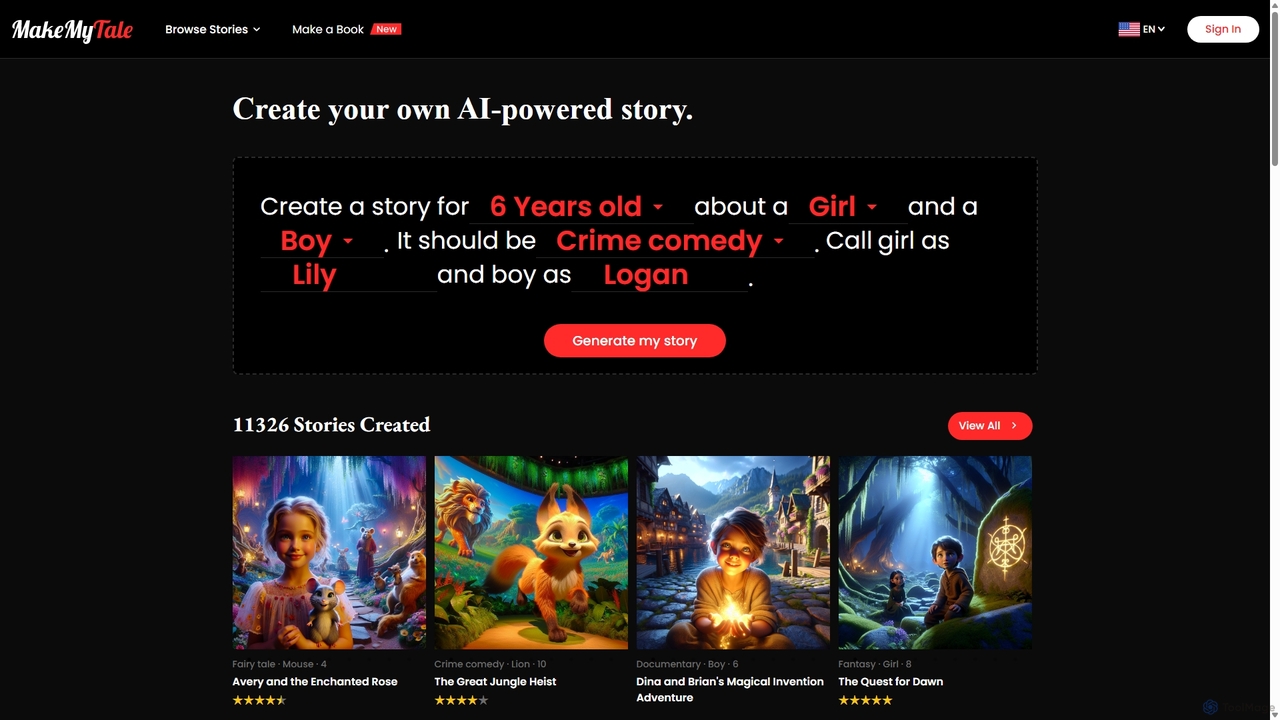
Makemytale

Makemytale is an AI-powered story creation platform designed for children. It allows users to generate unique, personalized stories by selecting characters, themes, and age groups. The platform aims to nurture creativity and imagination in a safe and secure online environment, offering options to turn tales into audio and video formats.

Writing Assistant
Visits 5.5KFavorites 114Likes 125
StoryBookly
Freemium

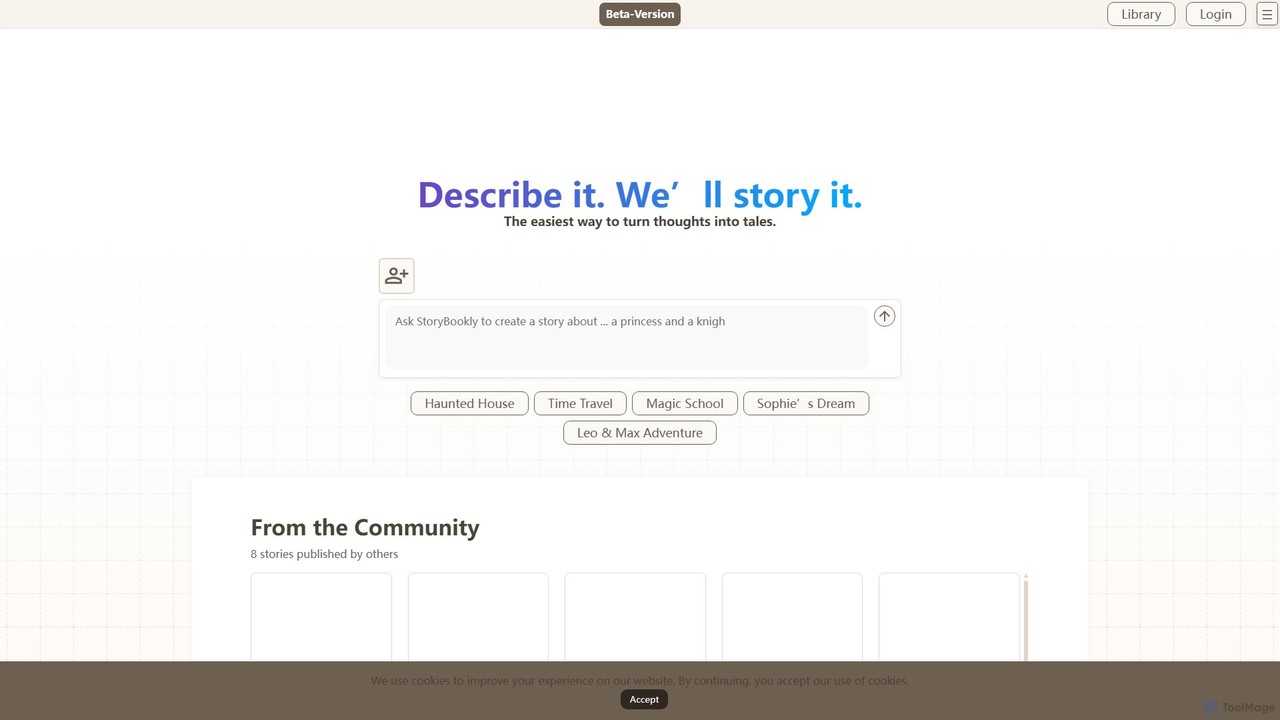
StoryBookly

StoryBookly is an AI-powered platform that transforms simple ideas into beautifully illustrated, personalized storybooks for children. It's designed to spark creativity, enhance learning, and make storytelling a magical, interactive experience for both parents and kids.

Writing
Visits 11KFavorites 133Likes 133
Storywizard.ai
Freemium

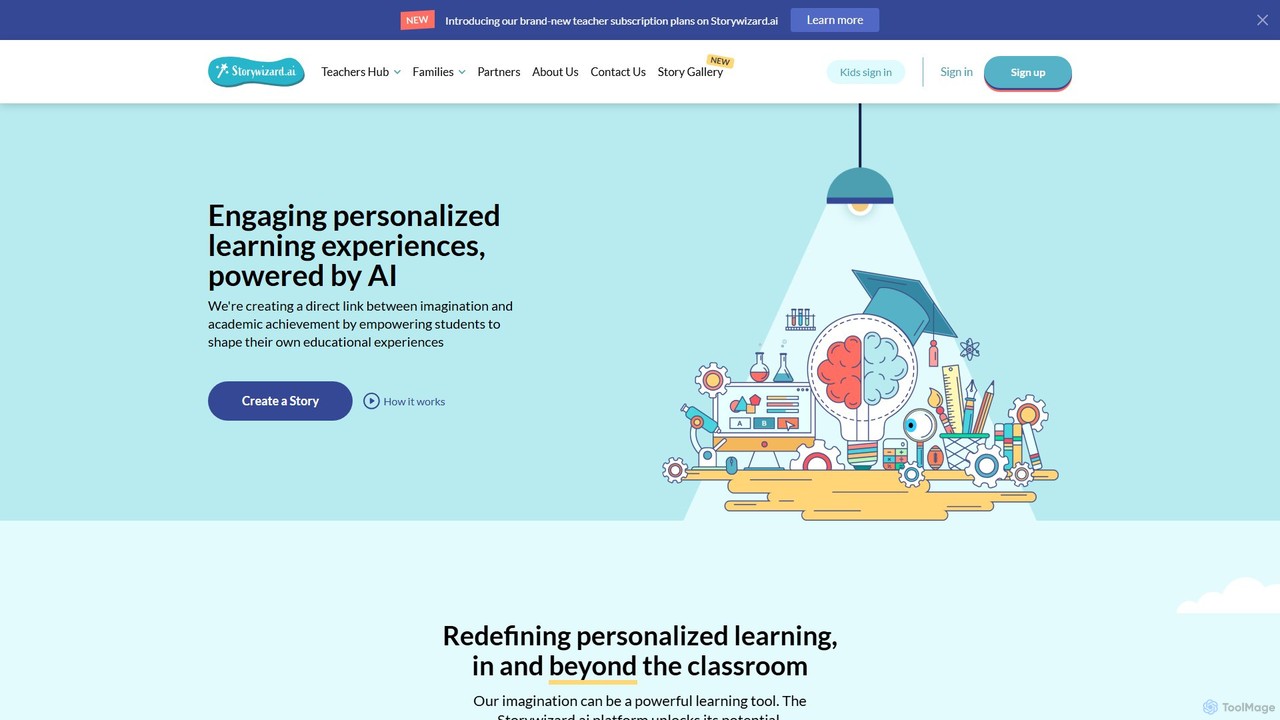
Storywizard.ai

Storywizard.ai is an AI-powered platform designed to create personalized and engaging learning experiences for children. It enables families and educators to generate unique stories with illustrations, turning any child into the hero of their own adventure. The tool supports differentiated learning with customizable assignments, vocabulary controls, and progress tracking, making education both fun and effective.

Generative Ai
Visits 17.7KFavorites 145Likes 145

About Kids

Kids AI tools are AI-powered platforms and applications specifically designed to engage, educate, and entertain children in a safe and age-appropriate manner. These tools leverage artificial intelligence to create interactive learning experiences, foster creativity, and provide personalized content. They aim to support children's cognitive development, problem-solving skills, and imaginative play, often adapting to individual learning paces and preferences, making learning both fun and effective.

Unlike general entertainment tools, Kids AI solutions are built with child development principles at their core, ensuring content is not only captivating but also beneficial. They utilize advanced algorithms to understand a child's progress and interests, offering tailored challenges and feedback that encourage growth without overwhelming them. This personalized approach helps build foundational skills in areas like literacy, numeracy, and critical thinking, preparing children for future learning.

Core Features

  • Interactive Learning: AI-driven games and activities that adapt to a child's progress, provide real-time feedback, and introduce new concepts at an optimal pace.
  • Creative Expression: Tools that assist children in drawing, storytelling, music composition, or even simple coding, enhancing their artistic and logical abilities.
  • Personalized Content: AI algorithms tailor educational materials, stories, or challenges to suit a child's specific interests, learning style, and developmental stage.
  • Safe AI Interaction: Designed with robust privacy controls, age-appropriate content filters, and often parental dashboards to ensure a secure and positive digital environment.
  • Problem-Solving Games: Engaging puzzles and challenges that use AI to guide children through logical thinking, computational skills, and strategic planning in a fun way.

Applicable Scenarios

Parents utilize Kids AI tools for supplementary home learning, creative play, and to introduce digital literacy in a controlled environment. Educators integrate these tools into classrooms to offer personalized instruction, facilitate group activities, and provide interactive lessons that cater to diverse learning needs. Children themselves engage with these tools for self-directed exploration, entertainment, and skill development, fostering independent learning and digital fluency under supervision.

How to Choose

When selecting Kids AI tools, prioritize age appropriateness, ensuring content and interface align with developmental stages and cognitive abilities. Evaluate the tool's educational value and engagement factor, looking for features that promote active learning, critical thinking, and creativity rather than passive consumption. Crucially, check for robust privacy policies, data security measures, and comprehensive parental controls to guarantee a safe and secure online experience. Consider ease of use for both children and supervising adults, and assess the variety of activities offered to ensure long-term appeal and developmental benefits.

Kids use cases

1

Personalized Story Creation for Bedtime

Parents or children can input keywords, characters, and themes, and the AI tool generates a unique, age-appropriate story. This helps foster creativity and literacy, providing endless personalized tales for bedtime reading or imaginative play, adapting narratives to a child's specific interests and vocabulary level.

2

Interactive Language Learning Assistant

A child uses an AI-powered app to learn a new language. The AI provides adaptive exercises, pronunciation feedback, and conversational practice tailored to their progress. This makes language acquisition engaging and effective, offering a patient and personalized tutor that adjusts to the child's learning pace.

3

AI-Assisted Creative Drawing and Art

Children can draw or sketch on a digital canvas, and the AI tool offers suggestions for colors, shapes, or even helps complete drawings based on their input. This encourages artistic exploration and helps overcome creative blocks, allowing children to experiment with different styles and techniques in a fun, guided environment.

4

Developing Computational Thinking with AI Games

Kids engage with AI-driven puzzle games that introduce basic coding concepts, logic, and problem-solving. The AI provides hints and adjusts difficulty, guiding them through challenges that build foundational computational thinking skills in an intuitive and playful manner, preparing them for future STEM learning.

5

Virtual AI Companion for Social-Emotional Learning

A child interacts with a friendly AI character that responds to their questions, tells jokes, and encourages positive behaviors. This can help children practice social skills, express emotions, and learn about empathy in a safe, non-judgmental space, fostering emotional intelligence and communication abilities.

6

Customized Educational Content Delivery

An AI platform assesses a child's academic strengths and weaknesses, then curates a personalized curriculum of videos, quizzes, and activities across subjects like math or science. This ensures learning is always relevant and challenging, optimizing their educational journey and addressing specific learning gaps effectively.

Kids FAQ

What are AI tools for Kids?

AI tools for Kids are specialized software applications and platforms that utilize intelligence to create engaging, educational, and entertaining experiences for children. Unlike general AI tools, they are designed with age-appropriateness, safety, and developmental benefits as primary considerations. They often feature interactive learning games, creative expression tools, and personalized content delivery to support a child's growth.

How do AI tools benefit children's development?

AI tools for children offer numerous developmental benefits by providing personalized learning paths, fostering creativity through guided activities, and enhancing problem-solving skills with adaptive challenges. They can improve literacy and numeracy, encourage critical thinking, and even aid in social-emotional learning through interactive companions. The adaptive nature of AI ensures content is always relevant and appropriately challenging, keeping children engaged and motivated.

Are AI tools for Kids safe and private?

Reputable AI tools for Kids prioritize safety and privacy. They typically incorporate robust content filters to block inappropriate material, implement strict data privacy policies compliant with regulations like COPPA (Children's Online Privacy Protection Act), and offer comprehensive parental controls. These controls allow parents to monitor usage, manage screen time, and customize settings, ensuring a secure and supervised digital environment for their children.

How should I choose the best AI tool for my child?

When selecting an AI tool for your child, consider several key factors. First, ensure it is age-appropriate and aligns with their developmental stage and interests. Second, evaluate its educational value and how it promotes active learning and critical thinking. Third, verify its safety features, including privacy policies and parental controls. Finally, look for user-friendly interfaces for both children and adults, and read reviews from other parents or educators to gauge effectiveness and reliability.

What's the difference between general "For Fun" AI and "Kids" AI tools?

General "For Fun" AI tools, while entertaining, are designed for a broad audience and may lack specific child-safety features or educational focus. "Kids" AI tools, however, are purpose-built for children. They integrate strict content moderation, robust privacy protections, and age-appropriate design principles. Their primary goal is to combine entertainment with developmental benefits, ensuring content is not only fun but also contributes positively to a child's learning and growth, unlike general AI which might not have these safeguards or pedagogical considerations.