ToolMage
Sign in

Best 6 Generative Ai AI tools for Ai Tools

Popular Generative Ai AI tools in Ai Tools include 0xmd, Storywizard.ai, Calculator Tools, Neeva, Tersa, and ChronoSim, helping you work more efficiently.

ChronoSim
Paid

ChronoSim

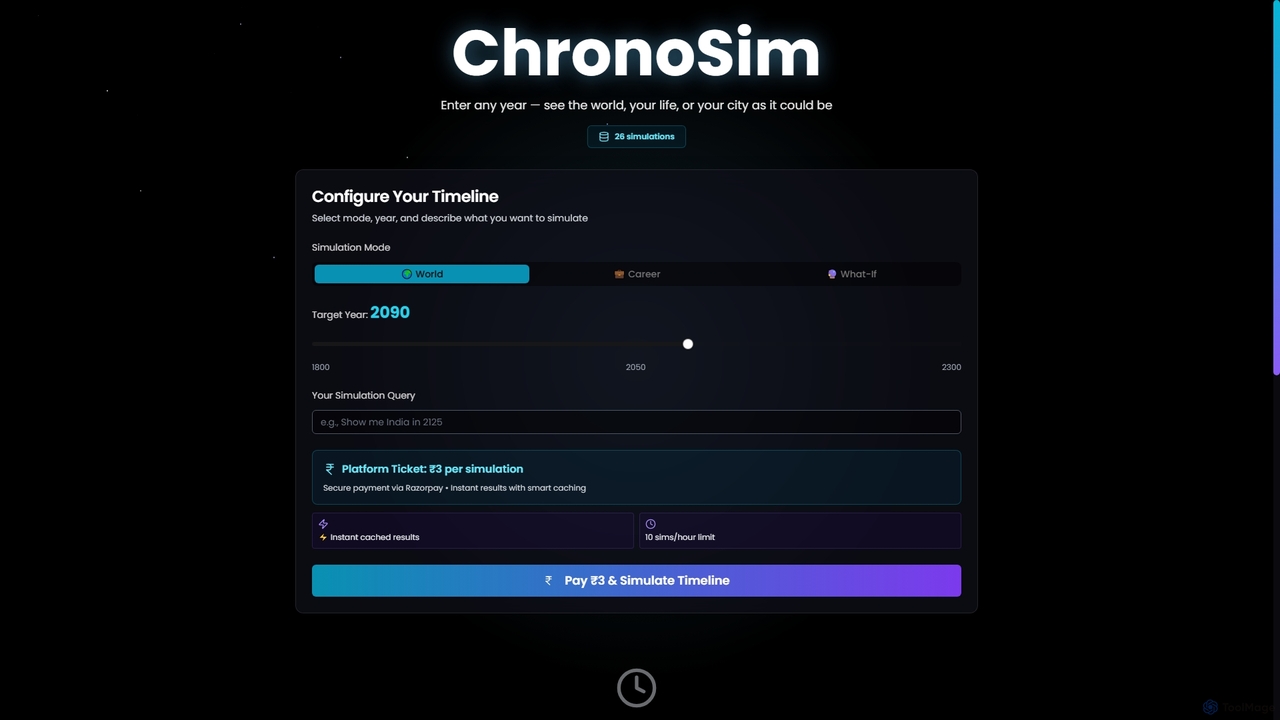
ChronoSim is an AI-powered future simulator that allows users to explore potential scenarios for the world, careers, or hypothetical 'what-if' situations. By simply entering a target year and a descriptive query, users can visualize how things might evolve, offering a unique perspective on future possibilities.

Generative Ai
Visits 4.6KFavorites 129Likes 109
Neeva
Freemium

Neeva

Neeva was a pioneering private, ad-free search engine powered by AI. It offered a user-centric search experience with no ads or trackers, providing unbiased results and AI-generated summaries. The consumer search product was discontinued in June 2023 after Neeva was acquired by Snowflake.

Generative Ai
Visits 5.1KFavorites 111Likes 106
0xmd
Freemium

0xmd

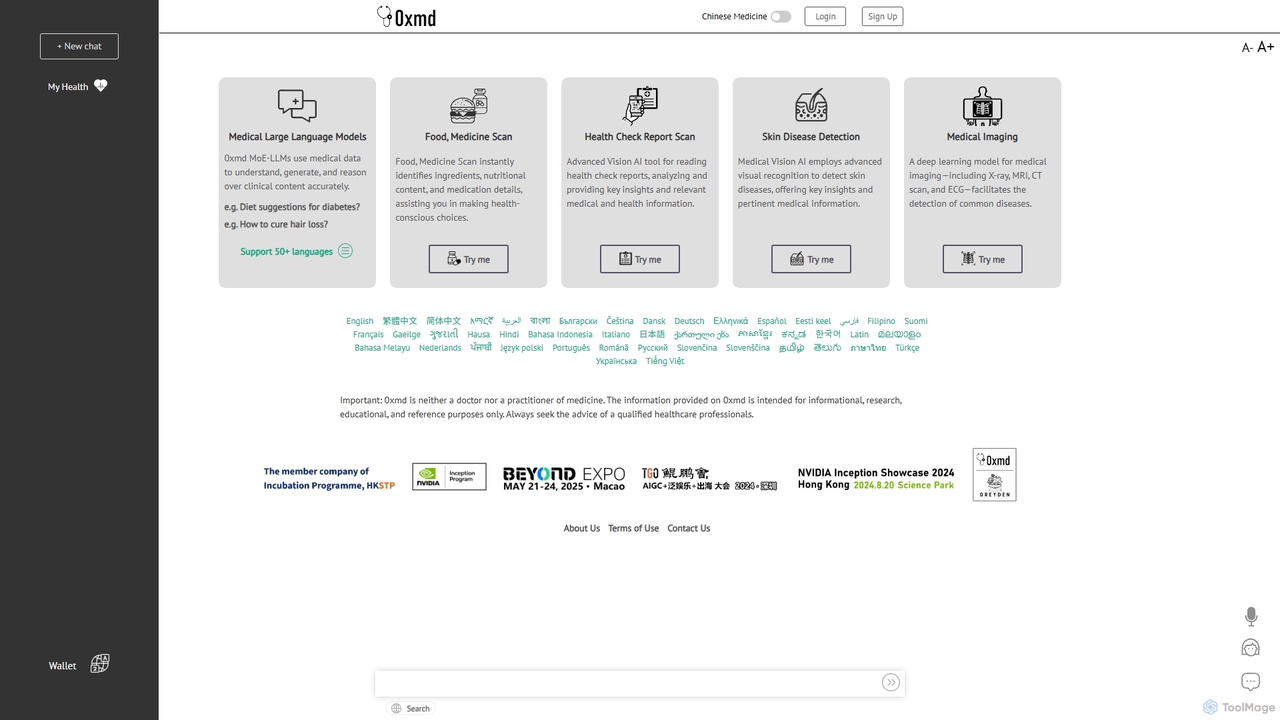
0xmd is an advanced generative AI platform for medicine and healthcare. It utilizes specialized Large Language Models (LLMs) and Vision AI to understand clinical content, analyze health reports, scan medical images like X-rays and MRIs, detect skin diseases, and provide health information in over 50 languages. It serves as an intelligent assistant for both individuals and healthcare professionals.

Generative Ai
Visits 171.3KFavorites 122Likes 121
Calculator Tools
Freemium

Calculator Tools

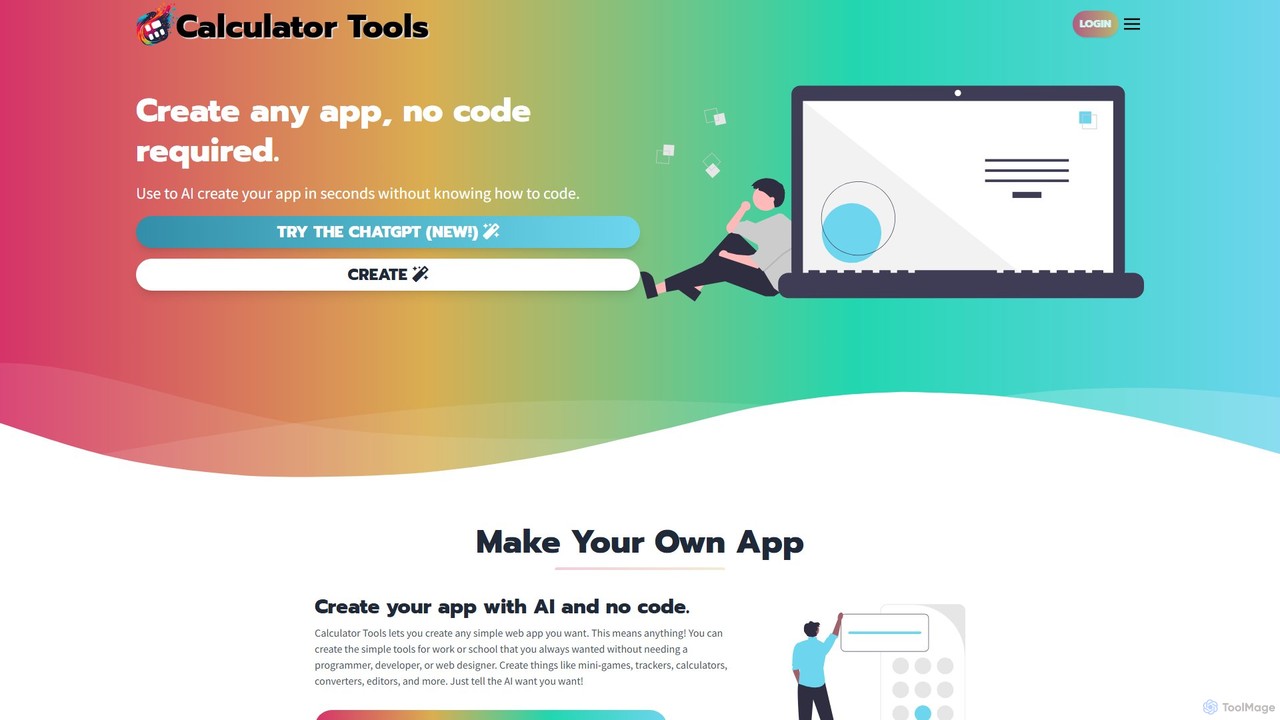
Calculator Tools is an AI-powered, no-code platform that enables anyone to instantly create custom web apps, calculators, tools, and games. Simply describe your idea, upload an image, or provide a screenshot, and the AI will generate a functional application for you to use, edit, and share.

Generative Ai
Visits 5.6KFavorites 132Likes 115
Tersa
Freemium

Tersa

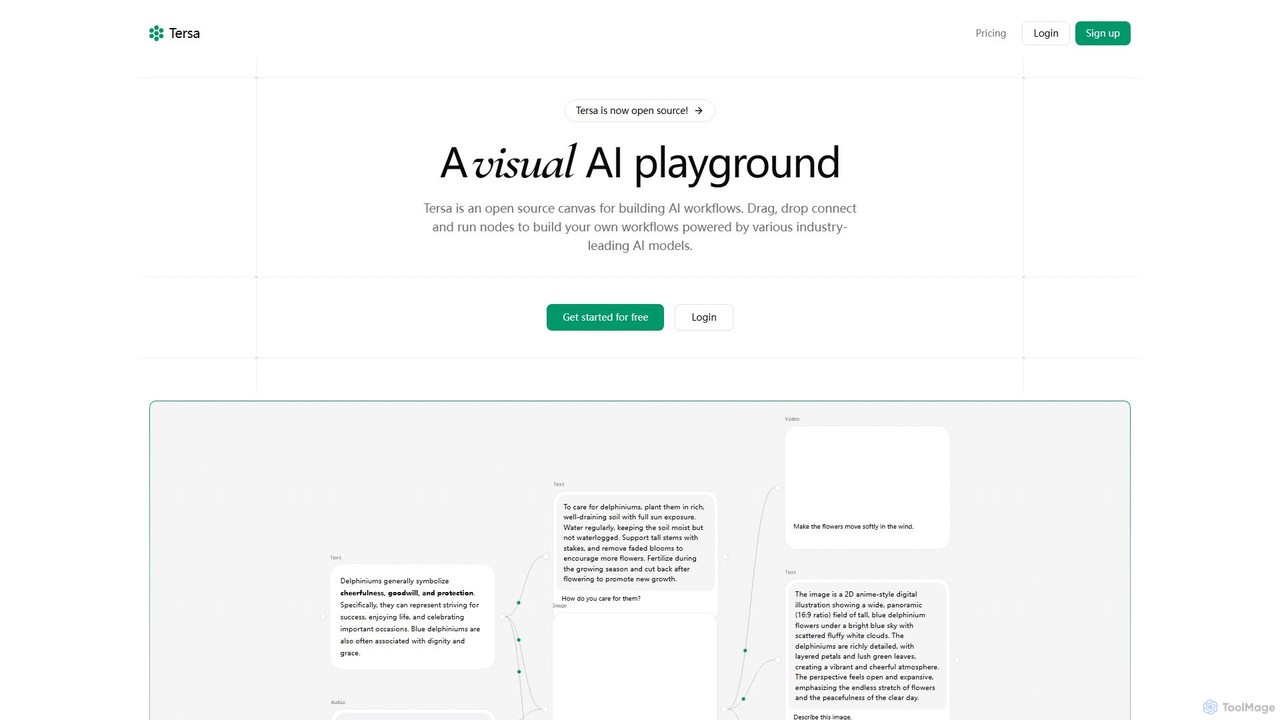
Tersa is an open-source visual AI playground for building complex AI workflows. It features a drag-and-drop canvas where users can connect nodes to integrate over 100 AI models from leading providers like OpenAI and Anthropic. It supports multi-modal operations, including text generation, image creation, video synthesis, audio transcription, and code transformation, making it a versatile tool for developers and creators.

Generative Ai
Visits 4.6KFavorites 105Likes 101
Storywizard.ai
Freemium

Storywizard.ai

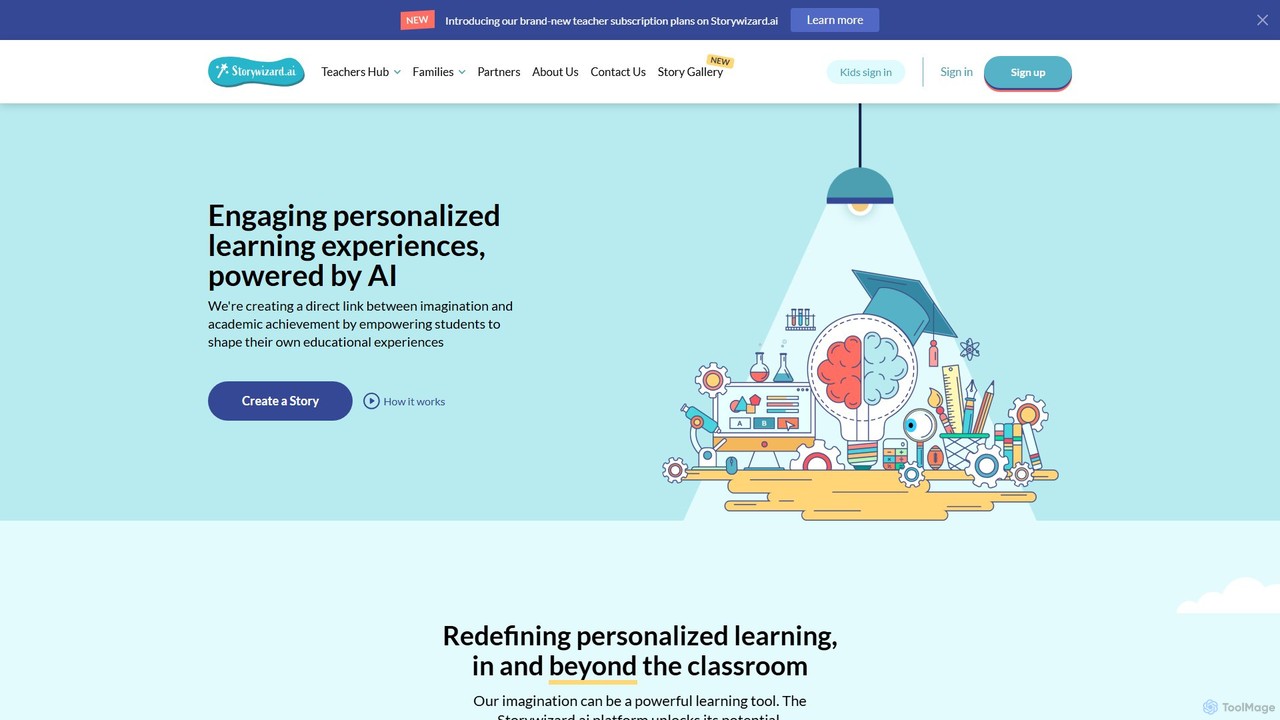
Storywizard.ai is an AI-powered platform designed to create personalized and engaging learning experiences for children. It enables families and educators to generate unique stories with illustrations, turning any child into the hero of their own adventure. The tool supports differentiated learning with customizable assignments, vocabulary controls, and progress tracking, making education both fun and effective.

Generative Ai
Visits 16.8KFavorites 135Likes 134

About Generative Ai

Generative AI is a class of artificial intelligence that creates new, original content, such as text, images, music, and code. These tools learn patterns and structures from vast datasets and then use this knowledge to produce novel outputs that mimic the training data. This capability powers applications from creative content creation and data augmentation to complex problem-solving and personalized user experiences. Unlike analytical AI which only interprets existing data, Generative AI actively produces unique artifacts, opening new frontiers for creativity and automation.

Core Features

  • Multi-Modal Content Creation: Generate diverse outputs including text, images, audio, video, and code from simple prompts.
  • Contextual Understanding: Analyze input prompts to grasp context, style, and intent, tailoring the output accordingly.
  • Iterative Refinement: Allow users to guide the generation process through successive prompts and feedback for improved results.
  • Pattern Synthesis: Identify complex patterns in training data and synthesize them to create coherent and novel content.

Use Cases

Generative AI is widely used across various industries. Content marketers use it to draft blog posts and social media updates. Software developers leverage it for generating code snippets and documentation. Designers and artists apply it to create concept art and design prototypes, significantly accelerating creative workflows.

How to Choose

When selecting a Generative AI tool, first identify the primary output you need (e.g., text, image, code). Evaluate the quality and specialization of the underlying model for your specific task. Consider the availability of an API for integration into existing workflows. Finally, assess the tool's customization options, such as the ability to fine-tune the model with your own data for more relevant results.

Generative Ai use cases

1

Automated Blog Post and Article Writing

A content marketer needs to produce a high volume of quality articles to improve SEO rankings and engage their audience. Using a Generative AI text tool, they input a topic, target keywords, and a desired tone. The AI generates a comprehensive outline, followed by a full draft of the article, including introductions, body paragraphs, and conclusions. This process reduces research and writing time by over 70%, allowing the marketer to focus on strategic editing, fact-checking, and publishing more content consistently.

2

Generating Unique Concept Art for Games and Films

A concept artist is tasked with visualizing new characters for a video game. Instead of starting from a blank canvas, they use a Generative AI image tool. They input detailed text prompts like 'cyberpunk warrior with neon armor in a rainy, futuristic city'. The AI produces dozens of unique visual interpretations in minutes. This allows the artist to rapidly explore different styles, color palettes, and designs, accelerating the ideation phase and providing a rich foundation for creating the final, polished artwork.

3

Prototyping Code and Automating Documentation

A software developer needs to write a new function to parse data from an API. Instead of writing it from scratch, they describe the function's requirements in natural language to a Generative AI code assistant, specifying the input format and desired output. The AI generates a functional code snippet in the correct programming language. The developer can then use the same tool to automatically generate docstrings and comments for the code, ensuring consistency and saving significant time on both development and documentation tasks.

4

Creating Personalized Marketing Email Campaigns

An email marketer wants to increase engagement for a new product launch. They use a Generative AI tool to create multiple variations of email subject lines and body copy tailored to different customer segments, such as new customers and loyal patrons. By providing the AI with product details and segment characteristics, it generates persuasive and contextually relevant copy. This allows the marketer to A/B test dozens of variations effortlessly, identifying the most effective messaging to maximize open rates and conversions without manual copywriting for each segment.

5

Composing Royalty-Free Music for Videos

A video creator needs background music for their new YouTube video but wants to avoid copyright strikes and expensive licensing fees. They use a Generative AI music tool, specifying the desired mood ('uplifting and cinematic'), genre ('electronic'), and duration (3 minutes). The AI composes a unique, high-quality audio track that matches these criteria. The creator can then download the track and use it in their project worry-free, saving significant time and budget compared to searching through stock music libraries or hiring a composer.

6

Synthesizing Realistic Voiceovers for Presentations

A corporate trainer is developing an e-learning module and needs a professional voiceover. Instead of hiring a voice actor, which can be costly and time-consuming, they use a Generative AI text-to-speech tool. They paste the script into the tool, select a preferred voice profile (e.g., 'professional male, calm tone'), and adjust the pacing. The AI generates a high-quality, human-like audio file of the narration. This allows for rapid production and easy updates to the script and audio, providing a scalable and cost-effective solution for creating training materials.

Generative Ai FAQ

What is Generative AI?

Generative AI refers to a category of artificial intelligence models that can create new and original content. Unlike traditional AI that analyzes or classifies existing data, generative models learn the underlying patterns from a dataset and use that knowledge to produce novel outputs, such as text, images, code, or music. For example, they can write an email, paint a picture in a specific style, or compose a piece of music based on a user's prompt. This capability makes them powerful tools for creativity, automation, and problem-solving.

How to choose the right Generative AI tool?

To choose the right Generative AI tool, consider these factors:

  • Primary Use Case: Determine the type of content you need to create (text, images, code, audio, etc.). Different tools specialize in different modalities.
  • Quality and Control: Evaluate the quality of the output. Some tools offer more parameters and controls for fine-tuning results, while others are simpler but less flexible.
  • Integration Needs: If you need to incorporate the AI into your existing software or workflow, check for API availability and documentation.
  • Pricing Model: Compare pricing structures, such as pay-per-use, monthly subscriptions, or free tiers, to find one that fits your budget and usage patterns.
What is the difference between Generative AI and Discriminative AI?

The key difference lies in their purpose. Generative AI learns the distribution of a dataset to create new, similar data points. Its goal is to generate novel content (e.g., creating a realistic image of a person who doesn't exist). In contrast, Discriminative AI learns the boundary between different classes of data. Its goal is to classify or predict a label for a given input (e.g., determining if an image contains a cat or a dog). In simple terms, generative models create, while discriminative models classify.

What are the main types of Generative AI models?

While the field is rapidly evolving, some of the foundational types of generative models include:

  • Generative Adversarial Networks (GANs): Consist of two neural networks, a generator and a discriminator, that compete against each other to create increasingly realistic outputs, especially images.
  • Transformers: This architecture, used in models like GPT, excels at processing sequential data. It's highly effective for generating coherent and contextually aware text, code, and more.
  • Variational Autoencoders (VAEs): These models are skilled at compressing data into a lower-dimensional space and then reconstructing it, making them useful for generating new variations of learned data.
Who can benefit from using Generative AI tools?

A wide range of professionals and creators can benefit from Generative AI. This includes:

  • Content Creators: Writers, artists, and musicians can use these tools for brainstorming, drafting, and producing creative work.
  • Marketers: To generate personalized ad copy, social media posts, and email campaigns at scale.
  • Developers: For writing boilerplate code, generating documentation, and debugging.
  • Business Professionals: To draft reports, summarize documents, and create presentations.
  • Researchers: For data augmentation, simulating experiments, and generating hypotheses.