Outlier
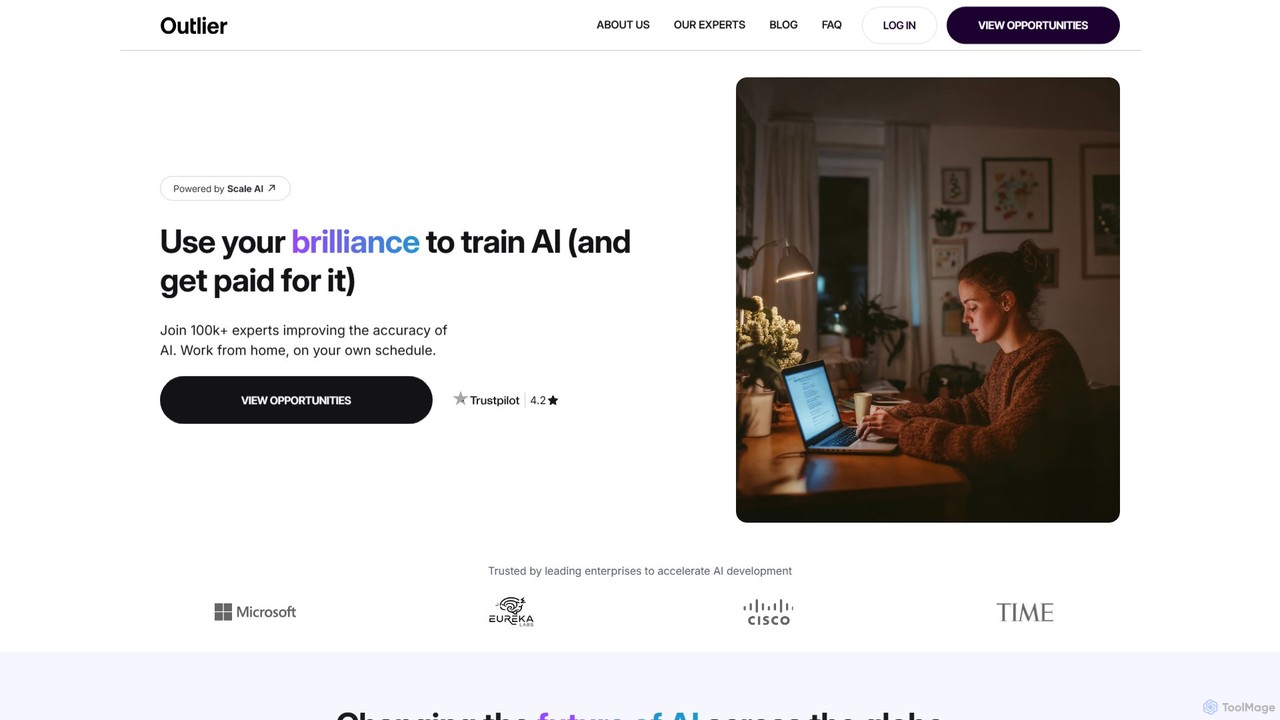
Outlier is a platform powered by Scale AI that connects domain experts with opportunities to train the next …
Outlier is a platform powered by Scale AI that connects domain experts with opportunities to train the next generation of AI models. Freelancers can use their knowledge in fields like coding, math, and languages to complete tasks, improve AI accuracy, and earn money with a flexible, remote work schedule.
About Future Of Work
Future of Work tools are a class of AI-powered solutions designed to fundamentally reshape how tasks are performed, teams collaborate, and organizations operate. These tools leverage technologies like machine learning, natural language processing, and process automation to augment human capabilities rather than simply replace them. They enable businesses to automate complex workflows, derive predictive insights from data, and foster more intelligent collaboration. The primary value lies in freeing employees from repetitive, low-value tasks to focus on strategic thinking, creativity, and complex problem-solving.
Core Features
- Intelligent Automation: Automates multi-step business processes and complex decision-making workflows.
- Augmented Analytics: Provides data-driven insights, forecasts, and recommendations to support strategic decisions.
- Enhanced Collaboration: Facilitates seamless communication and knowledge sharing across teams and departments using AI.
- Personalized Employee Experience: Delivers customized training, support, and workflow suggestions tailored to individual roles and needs.
Use Cases
These tools are applied across various business functions. In Human Resources, they streamline talent acquisition and onboarding. Operations teams use them for supply chain optimization and process mining. For management, they offer advanced analytics for strategic planning and performance monitoring, transforming core business operations.
How to Choose
When selecting a Future of Work tool, first identify the specific business process you aim to improve. Evaluate the tool's integration capabilities with your existing systems like CRM or ERP. Consider its scalability to grow with your organization and assess the level of data security and compliance it offers. Finally, prioritize solutions with intuitive user interfaces to ensure high adoption rates among employees.
Future Of WorkUse Cases
AI-Powered Talent Acquisition and Onboarding
HR managers and recruiters utilize Future of Work platforms to streamline the entire hiring process. These tools can automatically screen thousands of resumes, identifying top candidates based on predefined criteria and predictive success models. They also automate interview scheduling and communications. For new hires, AI creates personalized onboarding plans, delivering relevant training materials and checklists to accelerate their integration into the company, significantly reducing time-to-productivity.
Automating Complex Business Workflows
An operations team in a manufacturing company uses an intelligent automation tool to connect disparate systems like inventory management, CRM, and logistics. The AI monitors inventory levels, automatically places purchase orders when stock is low, updates the CRM with order status, and schedules shipping. This end-to-end automation eliminates manual data entry, reduces human error, and ensures a smooth, efficient supply chain, allowing the team to focus on process improvement rather than routine tasks.
Data-Driven Strategic Decision Making
A leadership team uses an augmented analytics platform to gain a competitive edge. The tool continuously analyzes market trends, competitor activities, customer sentiment from social media, and internal performance data. It presents these complex insights in an easy-to-understand dashboard with predictive forecasts and strategic recommendations, such as identifying an emerging market segment or flagging a potential supply chain risk. This empowers executives to make faster, more informed decisions based on comprehensive data rather than intuition alone.
Enhancing Team Collaboration and Knowledge Sharing
In a global organization with distributed teams, an AI-powered collaboration hub acts as a central nervous system. It automatically transcribes meetings, identifies action items, and summarizes key decisions. Its intelligent search function allows any employee to instantly find relevant documents, past project discussions, or internal experts on a specific topic using natural language queries. This breaks down information silos and ensures that valuable knowledge is easily accessible to everyone, fostering innovation and reducing redundant work.
Personalizing Employee Learning and Development
A company implements an AI-driven learning experience platform (LXP) to upskill its workforce. The platform assesses each employee's current skills and career goals, then recommends a personalized learning path with relevant courses, articles, and mentorship opportunities. It adapts in real-time based on the employee's progress and feedback. This approach moves beyond one-size-fits-all training, increasing employee engagement and ensuring that development efforts are directly aligned with both individual aspirations and business needs.
AI-Assisted Project Management and Resource Allocation
A project manager uses an AI-powered project management tool to oversee a complex initiative. The tool analyzes project requirements, team member skills, and availability to suggest an optimal task allocation and timeline. During the project, it monitors progress, predicts potential delays, and recommends adjustments to keep the project on track. It can also automatically generate status reports for stakeholders, freeing the project manager to focus on strategic oversight, team motivation, and resolving high-level roadblocks.