8bit
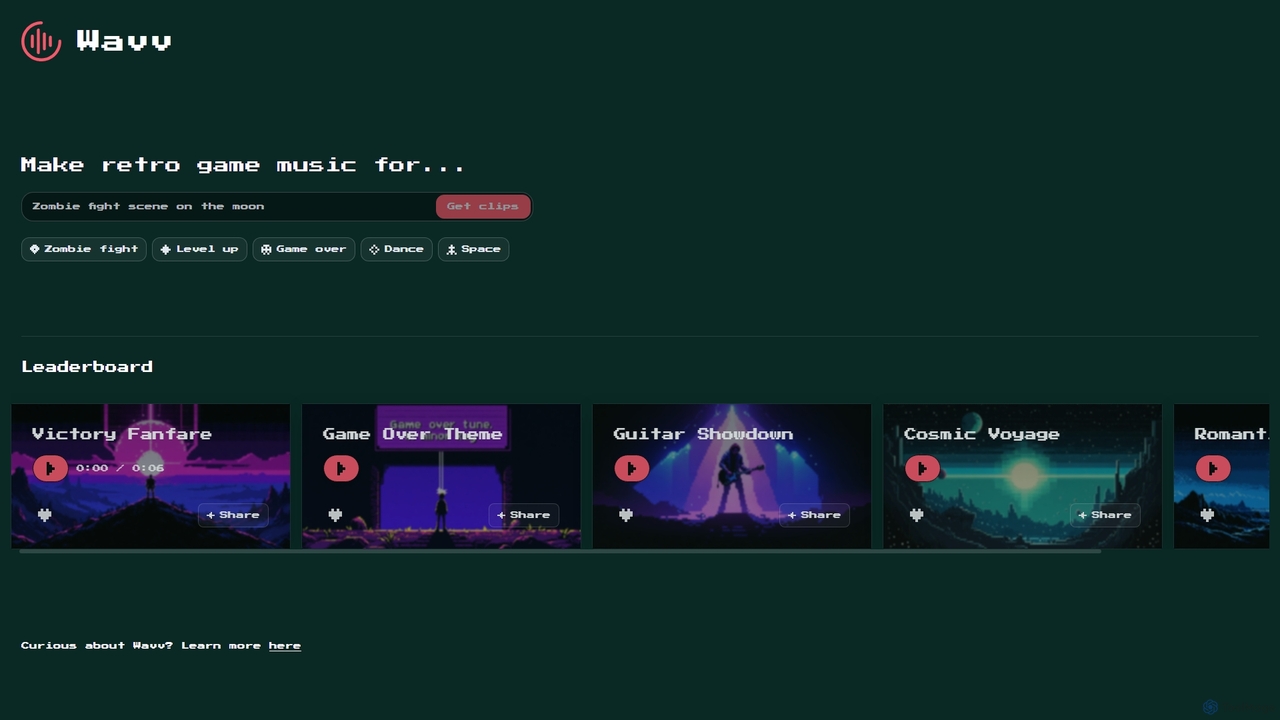
8bit is an innovative AI music generator designed to create nostalgic retro game music. It specializes in producing …
8bit is an innovative AI music generator designed to create nostalgic retro game music. It specializes in producing chiptune-style soundtracks perfect for indie games, Roblox, Minecraft, and other creative projects requiring classic 8-bit audio.
About Game Audio
Game Audio tools are AI-powered solutions specifically designed to enhance and automate various aspects of sound production within the gaming industry. These tools leverage advanced machine learning algorithms to generate, modify, and adapt audio content, ranging from immersive soundscapes and dynamic music scores to realistic sound effects and synthetic voiceovers. They significantly streamline the audio development pipeline, enabling creators to produce high-quality, responsive, and context-aware audio experiences that elevate player immersion and engagement in games.
Core Features
- Procedural Audio Generation: Automatically creates diverse sound effects, ambient noises, or musical elements based on parameters and game events.
- Adaptive Music Systems: Dynamically adjusts musical scores in real-time to match gameplay intensity, player actions, or in-game narrative progression.
- AI Voice Synthesis: Generates realistic or stylized voice lines for non-player characters (NPCs) and narration, often with customizable emotional tones and accents.
- Sound Effect Design & Variation: Assists in designing unique sound effects and generating multiple variations from a single input, saving manual iteration time.
- Audio Localization & Lip-Sync: Automates the process of translating and re-synthesizing voiceovers for different languages, often with integrated lip-sync capabilities.
Use Cases
Game Audio AI tools are invaluable for game developers, sound designers, and audio engineers seeking to innovate and optimize their workflow. They are used for rapidly prototyping audio for new levels, creating vast and varied soundscapes for open-world environments, or generating dynamic soundtracks that respond fluidly to player actions. These tools empower smaller studios to achieve high production values and allow larger teams to focus on creative direction rather than repetitive tasks.
How to Choose
When selecting an AI Game Audio tool, consider its integration capabilities with existing game engines (e.g., Unity, Unreal Engine) and digital audio workstations (DAWs). Evaluate the range and quality of its audio generation capabilities, including the realism of voice synthesis and the flexibility of procedural sound design. Assess the learning curve, community support, and pricing model, ensuring it aligns with your team's technical expertise and project budget. Prioritize tools that offer robust customization options and a clear roadmap for future development.
Game AudioUse Cases
Creating Dynamic Game Music
Game composers use AI to generate music that seamlessly transitions between different emotional states or action sequences based on real-time gameplay events, ensuring a constantly engaging auditory experience without manual scoring for every scenario. This allows for highly responsive soundtracks that enhance player immersion and narrative flow.
Designing Immersive Open-World Soundscapes
Sound designers leverage AI to procedurally generate vast and varied ambient soundscapes for open-world games, automatically populating environments with realistic wind, wildlife, and environmental effects that adapt to player location and time of day. This significantly reduces manual asset creation and ensures a dynamic, living world.
Synthesizing Unique Creature & Spell Sounds
Audio artists employ AI to create novel and distinctive sound effects for fantasy creatures, magical spells, or futuristic weaponry. By inputting descriptive text or basic audio samples, the AI generates multiple variations, accelerating the iterative design process and fostering greater creative exploration.
Automating Non-Player Character Voiceovers
Game developers use AI voice synthesis to generate dialogue for a large number of NPCs, allowing for extensive lore and character interaction without the high cost and time of hiring numerous voice actors. This also facilitates rapid prototyping of dialogue and localization for global audiences.
Streamlining Multi-Language Audio Localization
Localization teams utilize AI to quickly translate and re-synthesize game dialogue into multiple languages, maintaining consistent character voices and emotional delivery. This significantly reduces the time and resources required for global game releases, ensuring a high-quality experience for diverse player bases worldwide.
Rapid Prototyping of Game Level Audio
Level designers and sound designers use AI tools to quickly populate new game levels with placeholder or initial audio assets, including ambient sounds, music cues, and basic sound effects. This allows for early testing and iteration of the audio experience, facilitating faster development cycles and creative experimentation.