ToolMage
Sign in

Best 10 Music Generation AI tools for Music

Popular Music Generation AI tools in Music include OpenMusic, Controlla, Melobytes, Musci, sendfame, tuneonmusic, AISong.Fun, SynthTrails, 8bit, and MusicMCP, helping you work more efficiently.

MusicMCP
Freemium

MusicMCP

MusicMCP is the world's first AI Music Model Context Protocol (MCP) server, enabling AI agents and applications to generate full-length, high-quality music tracks from natural language prompts. It supports various styles, custom lyrics, and instrumental generation, providing commercial rights for all generated content.

Generative Ai
Visits 5.9KFavorites 89Likes 72
8bit

8bit

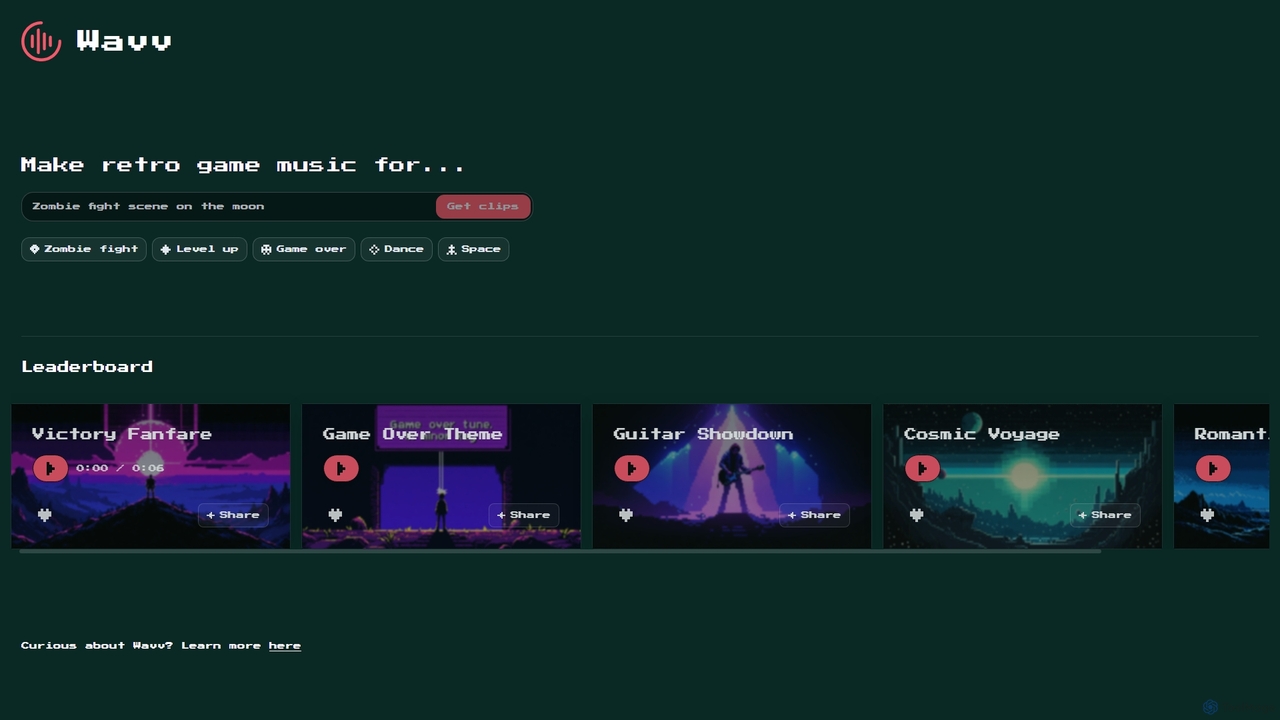
8bit is an innovative AI music generator designed to create nostalgic retro game music. It specializes in producing chiptune-style soundtracks perfect for indie games, Roblox, Minecraft, and other creative projects requiring classic 8-bit audio.

Audio Production
Visits 5.9KFavorites 129Likes 122
OpenMusic
Freemium

OpenMusic

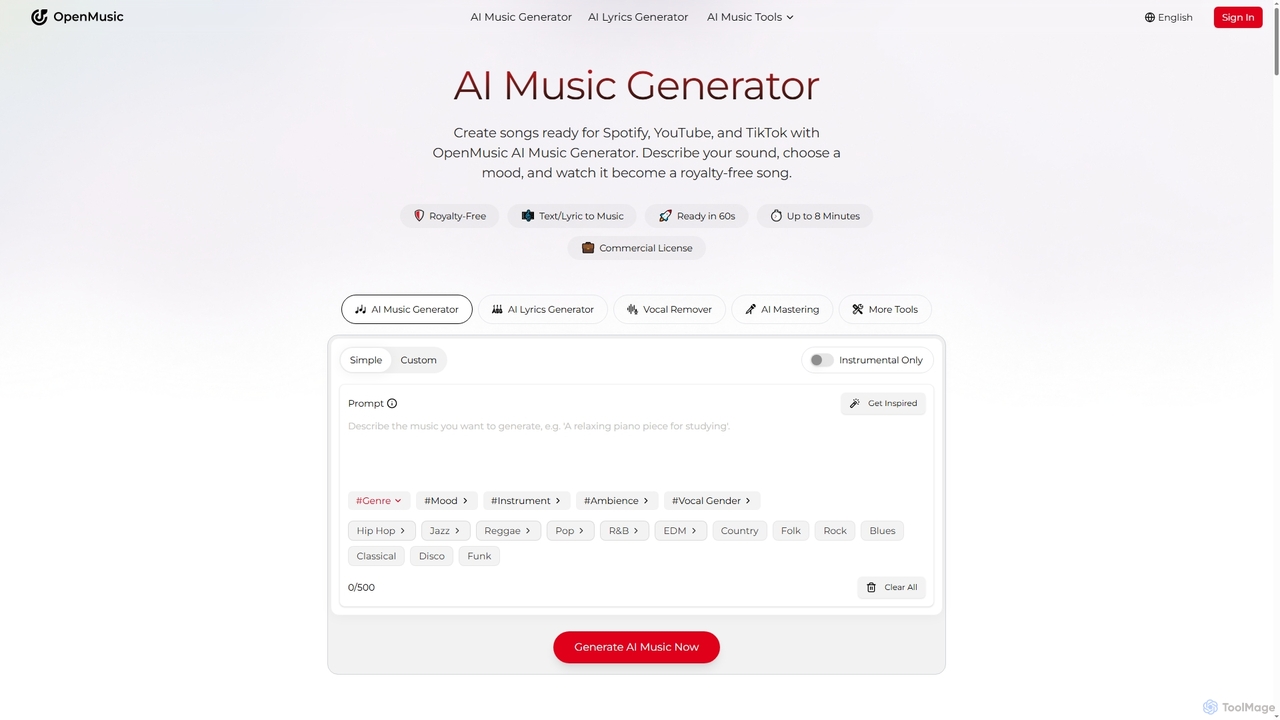
OpenMusic is an advanced AI music generator and comprehensive toolkit designed for creators of all levels. It enables users to effortlessly create royalty-free, studio-quality music, lyrics, and instrumental tracks for commercial use. From generating full songs from text prompts to splitting stems and mastering audio, OpenMusic streamlines the entire music production workflow, making creativity accessible and monetizable.

Stem Separation
Visits 1.2MFavorites 161Likes 154
Musci
Freemium

Musci

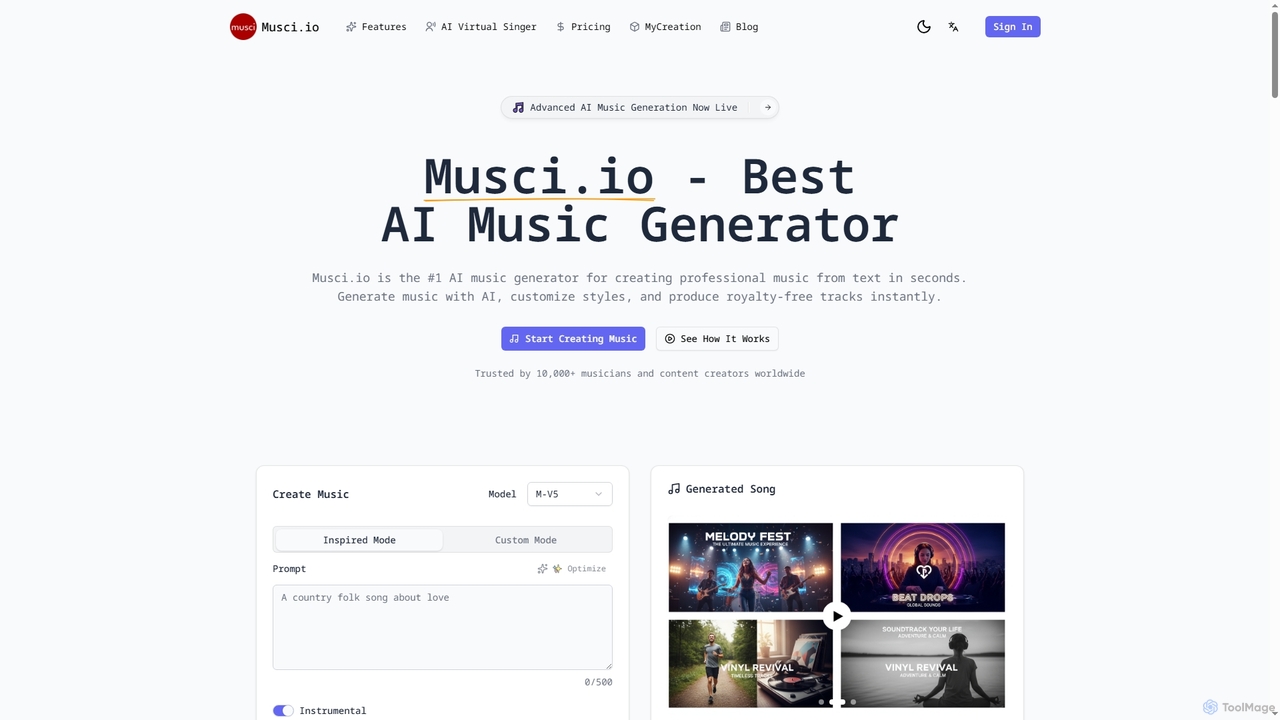
Musci is an advanced AI music generator that allows users to create professional, royalty-free music from text prompts in seconds. It offers over 100 genres, customizable moods, and high-quality audio exports, alongside an AI Virtual Singer for creating lip-synced singing videos from audio and photos.

Sound Design
Visits 243.3KFavorites 151Likes 152
tuneonmusic
Free

tuneonmusic

Tuneonmusic is a free online platform for the piano community, offering a vast collection of sheet music for various genres. It provides a suite of powerful tools, including an AI-powered Audio to MIDI converter, a virtual piano, a metronome, and MIDI players, all designed to make music education and creation accessible to everyone without any cost.

Learning
Visits 50.5KFavorites 111Likes 111
SynthTrails
Freemium

SynthTrails

SynthTrails is a pioneering AI music tool that translates human gestures and movements into unique musical experiences. Using your webcam, it captures your expressions to generate music, control effects, and integrate with DAWs like Ableton. It offers an intuitive, physical way to create and perform music in real-time.

Audio Editing
Visits 6.7KFavorites 163Likes 177
Controlla
Freemium

Controlla

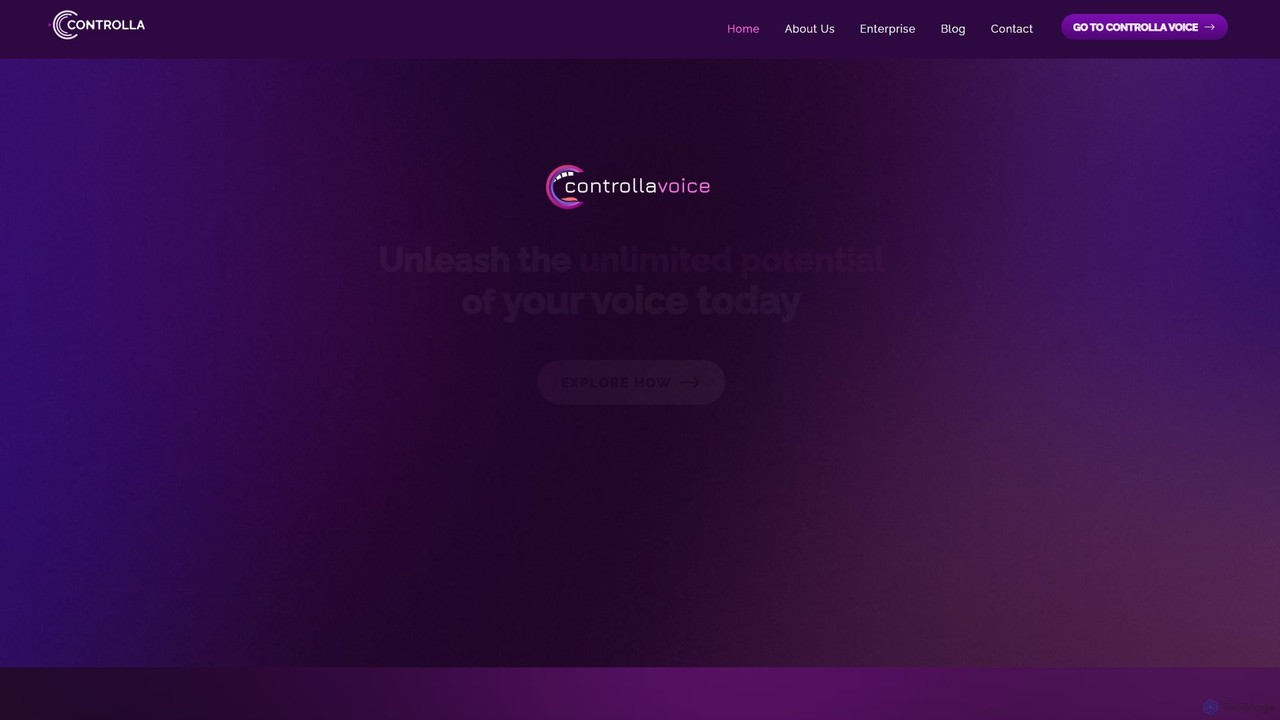
Controlla is an AI-powered voice cloning platform designed for musicians, producers, and creators. It allows you to create a high-fidelity digital replica of your own singing voice, which can then be used to generate AI cover songs, create original vocal tracks, or prototype musical ideas with unparalleled ease and personalization.

Voice Cloning
Visits 447.7KFavorites 103Likes 111
sendfame
Freemium

sendfame

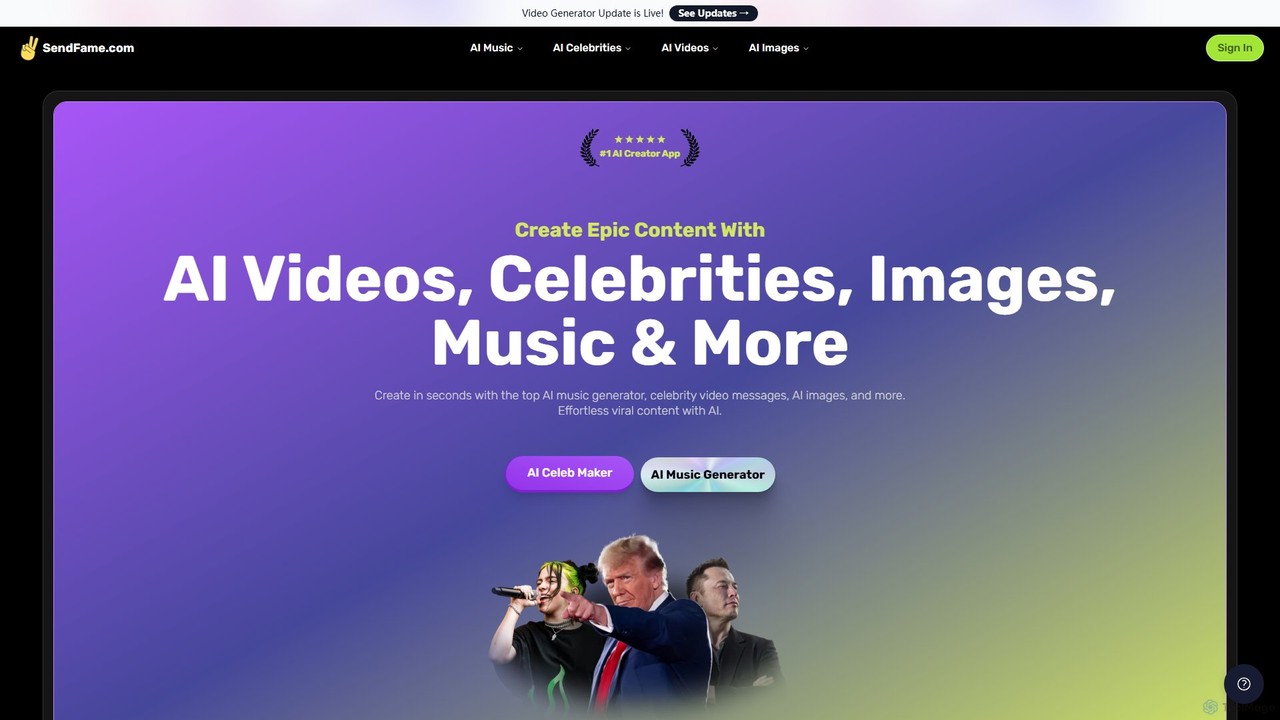
sendfame is a comprehensive AI content creation suite that allows users to generate hyper-realistic celebrity video messages, full songs with lyrics, unique images, and dynamic videos from images. It's designed for creating viral content, personalized greetings, and engaging marketing materials effortlessly.

Meme Generator
Visits 207.1KFavorites 118Likes 129
AISong.Fun
Freemium

AISong.Fun

AISong.Fun is a powerful AI music and song generator that allows users to create original music, songs with vocals, and lyrics for free. Simply provide a prompt, choose a style, or input your own lyrics to generate unique tracks in various genres and languages. Ideal for musicians, content creators, and hobbyists.

Song Creation
Visits 8.7KFavorites 147Likes 142
Melobytes
Freemium

Melobytes

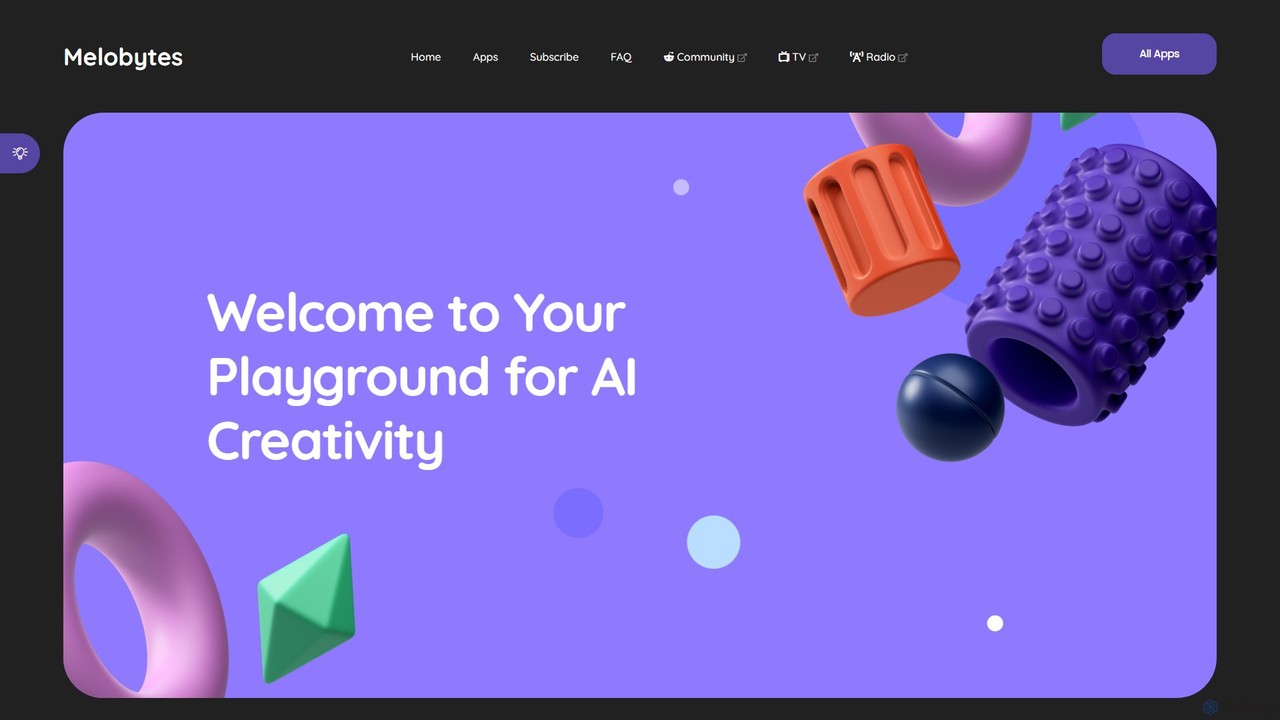
Melobytes is a comprehensive online suite of over 100 AI-powered creative tools. It serves as a digital playground for generating music from text and images, creating AI videos, editing audio, generating art, and much more, catering to both hobbyists and content creators.

Audio Editing
Visits 417.2KFavorites 117Likes 127

About Music Generation

Music Generation tools are a class of AI that compose original, royalty-free musical pieces from text prompts, genre selections, or mood descriptions. These tools leverage deep learning models to analyze patterns in vast music datasets, enabling them to create coherent melodies, harmonies, and rhythms. This allows creators without extensive musical training to produce custom soundtracks for videos, podcasts, and games, or helps musicians quickly prototype new ideas. The primary advantage is the ability to generate unique, context-appropriate music on-demand, bypassing the complexities of licensing stock audio.

Core Features

  • Text-to-Music Composition: Generates music from natural language descriptions of mood, style, or scene.
  • Genre and Mood Selection: Creates tracks based on predefined styles like cinematic, lo-fi, or moods like uplifting and somber.
  • Instrument Customization: Allows users to specify or change the instruments used in the generated piece.
  • Structural Control: Provides options to define song structure elements like intro, verse, chorus, and outro.
  • Stem Generation: Outputs individual instrumental tracks (e.g., drums, bass, vocals) for advanced mixing and editing.

Use Cases

These tools are widely used by content creators for YouTube videos and podcasts, indie game developers needing adaptive soundtracks, and marketers creating unique audio for advertising campaigns. Musicians and producers also use them for inspiration, to break creative blocks, or to quickly generate backing tracks for demos.

How to Choose

When selecting a Music Generation tool, evaluate the audio quality and musical coherence of the output. Consider the depth of customization options available, including control over tempo, key, and instrumentation. Critically review the licensing terms to ensure the music is cleared for your intended use (commercial or personal). Finally, check the available output formats, such as MP3, WAV, or MIDI, to ensure compatibility with your workflow.

Featured tool rankings

Music Generation use cases

1

Create Royalty-Free Soundtracks for Videos

A content creator needs unique background music for their weekly YouTube vlog. Instead of spending hours searching stock music libraries and worrying about copyright claims, they use an AI music generator. They input a prompt like 'upbeat, motivational acoustic pop for a travel video, 120 bpm'. The AI generates several options in minutes. The creator selects the best fit, adjusts the length to match their video edit, and downloads a high-quality, royalty-free track, ensuring their content is original and monetizable.

2

Prototype Musical Ideas for Songwriters

A musician has a lyrical idea and a melody in their head but lacks the skills or resources to produce a full backing track. They use an AI music generator to quickly create a foundation. By selecting 'indie rock', specifying a chord progression, and setting a tempo, they generate a complete instrumental with drums, bass, and guitar. This allows them to record a vocal demo over the track, test different arrangements, and present a more complete concept to bandmates or producers, significantly speeding up the creative process.

3

Generate Ambiance for Indie Games

An indie game developer is creating a fantasy RPG and needs distinct background music for a peaceful village and a dangerous dungeon. Without a budget for a composer, they turn to an AI music generator. For the village, they generate a 'calm, medieval, flute and lute' track. For the dungeon, they prompt for 'dark, ambient, tense, low drones'. The tool produces multiple variations, allowing the developer to implement adaptive music that changes based on the player's location, enhancing immersion at a fraction of the cost.

4

Produce Custom Jingles for Podcasts

A podcaster wants a professional and consistent audio branding with a unique intro, outro, and transition sounds. They use an AI music generator to create a short, memorable jingle. By specifying the mood ('inspirational and techy'), instruments ('synth pads and a simple electronic beat'), and duration (15 seconds), they can generate dozens of options. They select one, and use the tool's stem separation feature to get just the melodic hook for shorter transitions, creating a cohesive and polished sound for their entire show without hiring a sound designer.

5

Create Unique Audio for Marketing Campaigns

A marketing team is creating a video ad for a new product and wants to avoid generic stock music that audiences often ignore. They need a track that matches the ad's emotional arc perfectly. Using an AI music generator, they input prompts that change with the ad's scenes: 'gentle, curious piano intro', transitioning to 'exciting, uplifting orchestral build-up'. This results in a custom-scored ad that enhances the storytelling and brand perception, making the campaign more memorable and effective than one using a generic, overused track.

6

Generate Personalized Focus Music Streams

An individual finds standard focus playlists on streaming services repetitive and distracting. They want a continuous stream of music tailored to their specific needs for deep work. Using an AI music generator, they set parameters like 'lo-fi beats for studying, 90 bpm, no vocals, continuous play'. The AI generates an endless, non-repeating stream of music that maintains a consistent mood and tempo, helping them stay in a state of flow without the interruption of ads or jarring track changes. This creates a personalized audio environment optimized for productivity.

Music Generation FAQ

What is AI Music Generation?

AI Music Generation refers to tools that use artificial intelligence to compose new, original music. These systems are trained on vast datasets of existing music to learn patterns, structures, melodies, and harmonies. Users can typically provide input, such as a text prompt ('a sad cinematic piano track'), a genre, or a mood, and the AI will generate a complete piece of music based on those parameters. It's a way to create custom audio content quickly without needing deep music theory knowledge.

How to choose the right AI Music Generation tool?

Choosing the right tool depends on your specific needs. Consider these factors:

  • Audio Quality: Listen to samples. Does the music sound natural and high-quality, or robotic and generic?
  • Customization Control: How much can you influence the output? Look for controls over tempo, instruments, song structure, and key.
  • Licensing Terms: This is critical. Ensure the tool provides a clear, royalty-free license for commercial use if you need it. Read the fine print.
  • Ease of Use: Is the interface intuitive? Some tools are simple prompt-based generators, while others offer more complex digital audio workstation (DAW) features.
  • Output Formats: Check if it can export in formats you need, like WAV for high quality, MP3 for web use, or MIDI for further editing.
Is music generated by AI royalty-free?

This is a critical point and varies by service. Most commercial AI music generators are designed to produce royalty-free music, meaning you can use it in your projects (including commercial ones) without paying ongoing royalties. However, you must always check the specific terms and conditions of the tool you are using. Some may require a subscription for a commercial license, others might have limitations on usage, and some might require attribution. Never assume the music is free for all uses without verifying the license agreement first.

What's the difference between AI Music Generation and music sample libraries?

The key difference is creation versus curation. AI Music Generation tools create entirely new musical compositions from scratch based on your inputs. The result is a unique piece of music that didn't exist before. Music sample libraries (like Splice or Loopcloud) provide a curated collection of pre-recorded audio clips (loops, one-shots, vocals). A human producer then arranges these existing samples to build a track. AI generation offers originality and speed for complete tracks, while sample libraries offer high-quality, human-played elements for manual composition.

Who can benefit from using AI Music Generation tools?

A wide range of users can benefit from these tools. Key groups include:

  • Content Creators: YouTubers, podcasters, and social media managers who need a constant supply of royalty-free background music.
  • Filmmakers & Video Editors: For quickly scoring scenes, creating temp tracks, or producing final music for independent films and corporate videos.
  • Game Developers: Especially indie developers who need adaptive and varied soundtracks on a limited budget.
  • Musicians & Producers: To overcome creative blocks, generate new ideas, or quickly create backing tracks for demos.
  • Marketers & Advertisers: To create unique audio branding and custom music for ad campaigns that stands out from stock options.