ToolMage
Sign in

Best 1 Ai Music Generator for Music

Popular Ai Music Generator in Music include Fauxto Labs, helping you work more efficiently.

Fauxto Labs
Freemium

Fauxto Labs

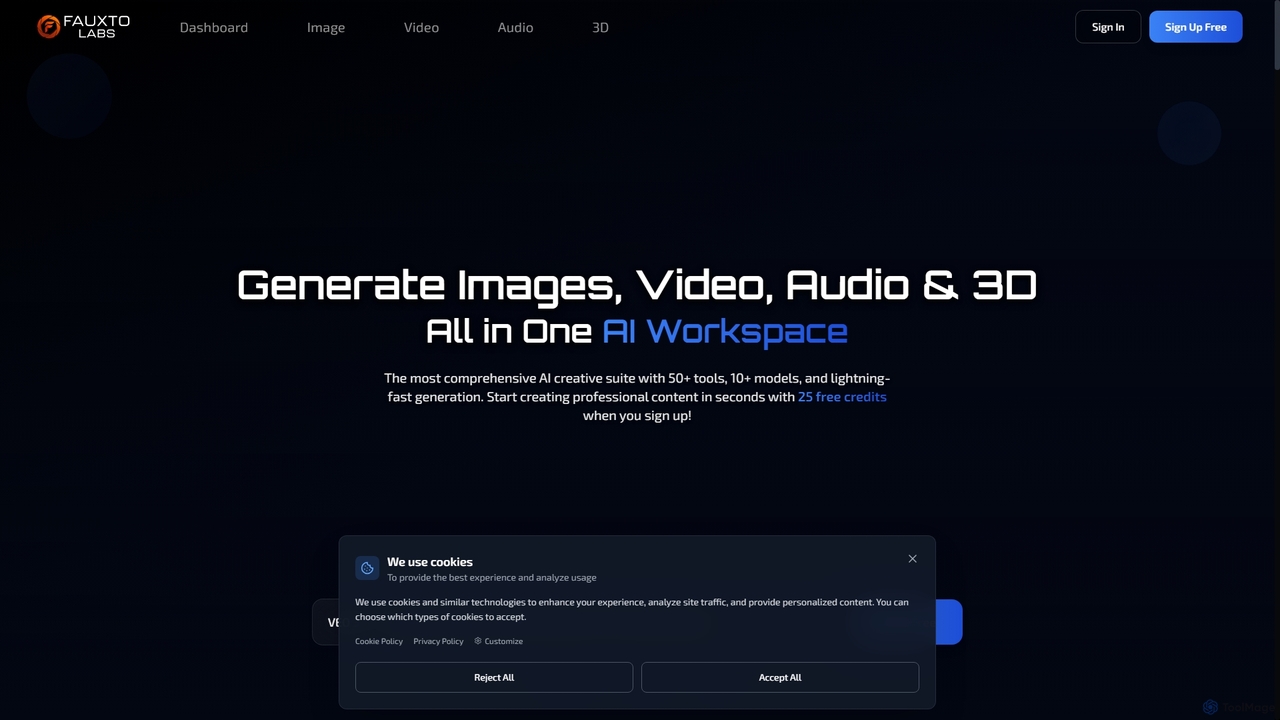
Fauxto Labs is a comprehensive AI creative suite offering over 50 tools and 10+ models for generating images, videos, audio, and 3D content. It provides lightning-fast generation, advanced editing capabilities, and personalized AI models, empowering creators to transform ideas into professional content efficiently.

Creative Suite
Visits 8.8KFavorites 145Likes 159

About Ai Music Generator

AI Music Generators are sophisticated AI-powered tools that automatically compose, arrange, and produce original musical pieces. Leveraging advanced machine learning and deep learning algorithms, these platforms can create melodies, harmonies, rhythms, and full tracks based on user inputs like genre, mood, instrumentation, or specific musical parameters. They offer a revolutionary way for creators to generate unique soundtracks, explore new sonic landscapes, and overcome creative blocks, making music creation more accessible and efficient for a wide range of applications.

Core Features

  • Algorithmic Composition: Automatically generates original melodies, harmonies, and rhythms based on specified styles or parameters.
  • Genre & Mood Adaptation: Creates music tailored to specific genres (e.g., classical, electronic, jazz) or emotional tones (e.g., happy, melancholic, epic).
  • Instrument & Arrangement Control: Allows users to select virtual instruments and define the arrangement structure for generated tracks.
  • Stem Export & Customization: Provides individual audio tracks (stems) for further editing in digital audio workstations (DAWs) and offers granular control over musical elements.

Use Cases

These tools are invaluable for content creators needing royalty-free background music for videos, podcasts, or presentations. Game developers utilize them to generate dynamic, adaptive soundtracks that respond to in-game events. Musicians and producers find AI music generators useful for sparking new ideas, creating demos, or quickly prototyping musical concepts without extensive manual composition.

How to Choose

When selecting an AI music generator, consider its supported genres and styles, the level of customization offered for musical elements, and the quality of the generated output. Evaluate its ease of use, integration capabilities with your existing workflow (e.g., MIDI/audio export), and the licensing terms for commercial use. Pricing models and the community support available are also important factors.

Ai Music Generator use cases

1

Generating Background Music for Videos and Podcasts

Content creators, YouTubers, and podcasters often need unique, royalty-free background music to enhance their productions. AI music generators allow them to input desired mood, genre, and duration, quickly producing custom tracks that perfectly fit their content without licensing concerns or the need for a composer. This saves significant time and budget.

2

Composing Dynamic Soundtracks for Games

Game developers can leverage AI music generators to create adaptive and immersive soundtracks. By defining parameters like intensity, emotional state, or in-game events, the AI can generate music that dynamically changes, enhancing player experience. This automates the creation of varied musical scores for different game scenarios, from calm exploration to intense combat.

3

Inspiring Musicians and Overcoming Creative Blocks

Musicians, composers, and producers can use AI music generators as a creative partner. By generating initial melodies, chord progressions, or rhythmic patterns, the AI provides fresh ideas and helps break through creative blocks. This allows artists to experiment with new styles or structures, serving as a springboard for their own compositions and arrangements.

4

Producing Jingles and Ad Music for Marketing Campaigns

Marketing professionals and advertisers require catchy, brand-aligned jingles and background music for commercials, social media ads, and promotional content. AI music generators can quickly produce multiple variations of short, impactful musical pieces based on brand guidelines, target audience, and desired emotional impact, streamlining the ad production process.

5

Creating Personalized Music for Wellness and Meditation Apps

Developers of wellness, meditation, or sleep aid applications can utilize AI music generators to create an endless supply of unique, calming, or ambient soundscapes. The AI can generate music tailored to specific relaxation techniques, sleep cycles, or focus requirements, offering users a personalized auditory experience that enhances their well-being journey.

6

Educational Tool for Music Theory and Composition

Music educators and students can use AI music generators to explore concepts in music theory and composition. By generating examples of different scales, harmonies, or counterpoints, students can analyze and understand musical structures. It serves as an interactive learning aid, allowing experimentation with various musical rules and immediate auditory feedback.

Ai Music Generator FAQ

What are AI Music Generators?

AI Music Generators are software tools that use artificial intelligence, primarily machine learning and deep learning, to automatically compose and produce original music. They can create melodies, harmonies, rhythms, and full tracks based on user inputs like genre, mood, or instrumentation. Their core purpose is to democratize music creation, offering a fast and accessible way to generate unique audio content for various applications without requiring traditional musical expertise.

How do AI Music Generators work?

AI Music Generators typically work by being trained on vast datasets of existing music. Using neural networks and algorithms like Generative Adversarial Networks (GANs) or Recurrent Neural Networks (RNNs), they learn patterns, structures, and stylistic elements of music. When a user provides prompts (e.g., "upbeat electronic track in C major"), the AI uses its learned knowledge to generate new, original musical sequences that adhere to those parameters, often synthesizing them into audio or MIDI files.

Who can benefit from using AI Music Generators?

A wide range of individuals and professionals can benefit from AI music generators. This includes content creators (YouTubers, podcasters) needing royalty-free background music, game developers for dynamic soundtracks, marketing agencies for ad jingles, and musicians seeking inspiration or quick demos. Educators can also use them as a tool for teaching music theory, while app developers can create personalized soundscapes for wellness applications.

What is the difference between AI Music Generators and traditional music production software (DAWs)?

AI Music Generators focus on automatic composition and generation of musical ideas or full tracks based on high-level prompts. They are designed to create new content from scratch using algorithms. Traditional Digital Audio Workstations (DAWs) like Ableton Live or Logic Pro, on the other hand, are editing and mixing environments where users manually arrange, record, mix, and master audio. While DAWs offer unparalleled control over every sonic detail, AI generators provide speed and novelty in composition, often exporting to DAWs for further refinement.

What factors should I consider when choosing an AI Music Generator?

When selecting an AI music generator, consider the range of genres and moods it supports, as well as the quality and originality of its output. Evaluate the level of customization available, such as instrument selection, tempo, and key control. Check its export options (e.g., MIDI, WAV, stems) for compatibility with your workflow. Licensing terms for commercial use are crucial, as are pricing models and the overall ease of use for your skill level.