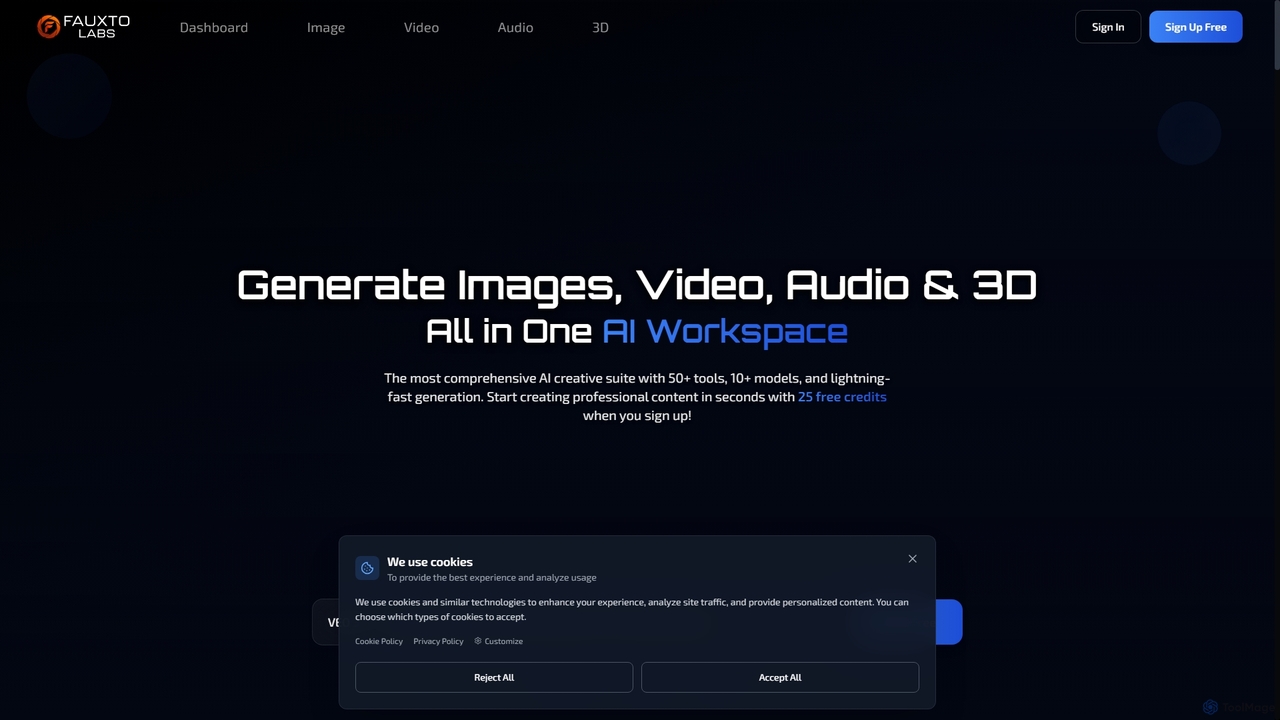
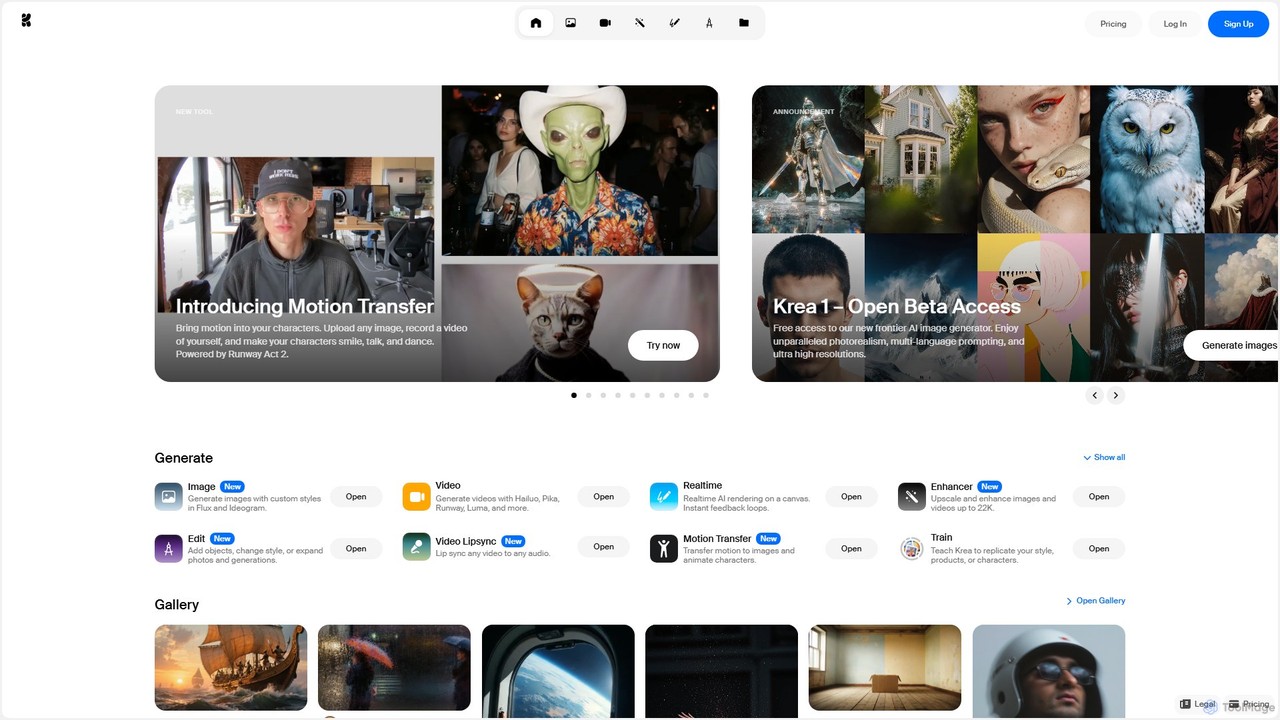
AI Creative Suite refers to a collection of integrated AI-powered tools designed to streamline and enhance various creative tasks within a unified platform. These suites leverage advanced artificial intelligence for generative design, intelligent editing, and workflow automation across different media types. They empower designers, marketers, and content creators to produce high-quality visual, textual, and auditory content more efficiently and consistently. By offering a cohesive environment, an AI Creative Suite fosters greater productivity and creative exploration than using disparate standalone applications.
Core Features
- AI-Powered Content Generation: Automatically generates images, text, video clips, or audio based on user prompts and specifications.
- Intelligent Editing & Enhancement: Provides automated tools for background removal, image upscaling, color correction, style transfer, and video stabilization.
- Workflow Automation: Automates repetitive design tasks, asset organization, version control, and content scheduling.
- Cross-Media Integration: Enables seamless transfer and transformation of assets between different creative modules, such as converting text to speech or image to video.
- Collaborative Tools: Offers features for team collaboration, real-time feedback, and shared asset libraries to facilitate group projects.
Applicable Scenarios
AI Creative Suites are invaluable for professionals and teams requiring a comprehensive toolkit for diverse creative outputs. Marketing agencies utilize them for rapid campaign asset creation, generating varied social media graphics, ad copy, and short promotional videos. Independent content creators leverage these suites to produce high-quality multimedia for blogs, YouTube, and podcasts with optimized workflows. Product design teams also benefit by quickly generating concept art, mockups, and multiple design variations for new products, accelerating their iterative process.
How to Choose
When selecting an AI Creative Suite, consider the breadth of tools offered and their relevance to your specific needs, such as image, video, text, or audio capabilities. Evaluate the level of integration and interoperability between different modules, ensuring seamless asset transfer and a cohesive workflow. Assess the sophistication of the AI capabilities, including generative quality and editing intelligence. Finally, examine the user interface and learning curve, along with the pricing model, to ensure it aligns with your team's technical proficiency and budget.