ToolMage
Sign in

Best 6 Composition AI tools for Music

Popular Composition AI tools in Music include LANDR Composer, ChordChord, NotePerformer, ChordCreate, Chord, and Virtuozy, helping you work more efficiently.

Chord
Freemium

Chord

Chord is an AI-powered music generation platform that helps musicians, producers, and creators instantly generate unique Chord progressions, melodies, and full-fledged musical ideas. Simply select a genre, mood, and key, and let the AI compose royalty-free music tailored to your needs, perfect for overcoming creative blocks or producing custom soundtracks.

Generation
Visits 3.8KFavorites 108Likes 109
Virtuozy
Freemium

Virtuozy

Virtuozy is an AI-powered music suite for musicians, composers, and producers. It offers tools for generating original compositions, receiving real-time performance feedback, transcribing audio to sheet music, and exploring music theory, empowering users to enhance their skills and creativity.

Transcription
Visits 3.7KFavorites 85Likes 84
ChordChord
Freemium

ChordChord

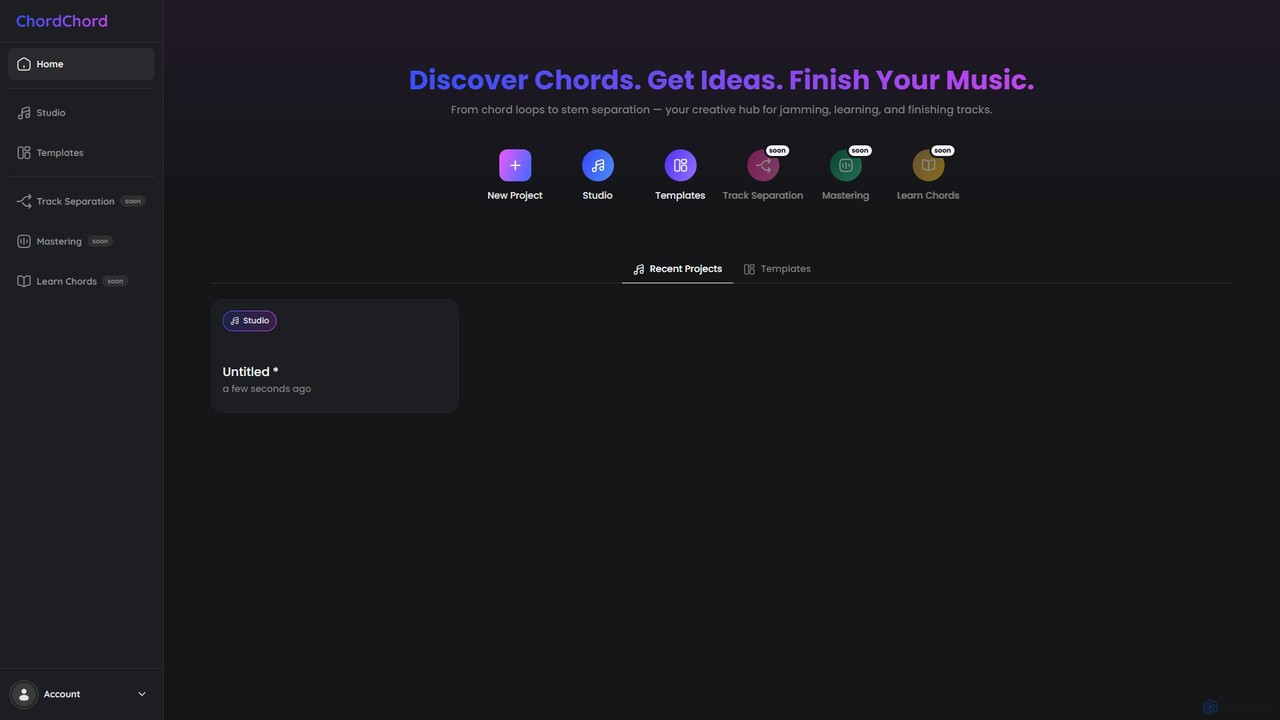
ChordChord is an AI-powered chord progression generator and music creation studio. It helps musicians, producers, and songwriters instantly generate unique chord progressions, add melodies and drums, and overcome creative blocks, making it an essential tool for musical inspiration and rapid prototyping.

Music Generation
Visits 168.3KFavorites 133Likes 125
NotePerformer
Freemium

NotePerformer

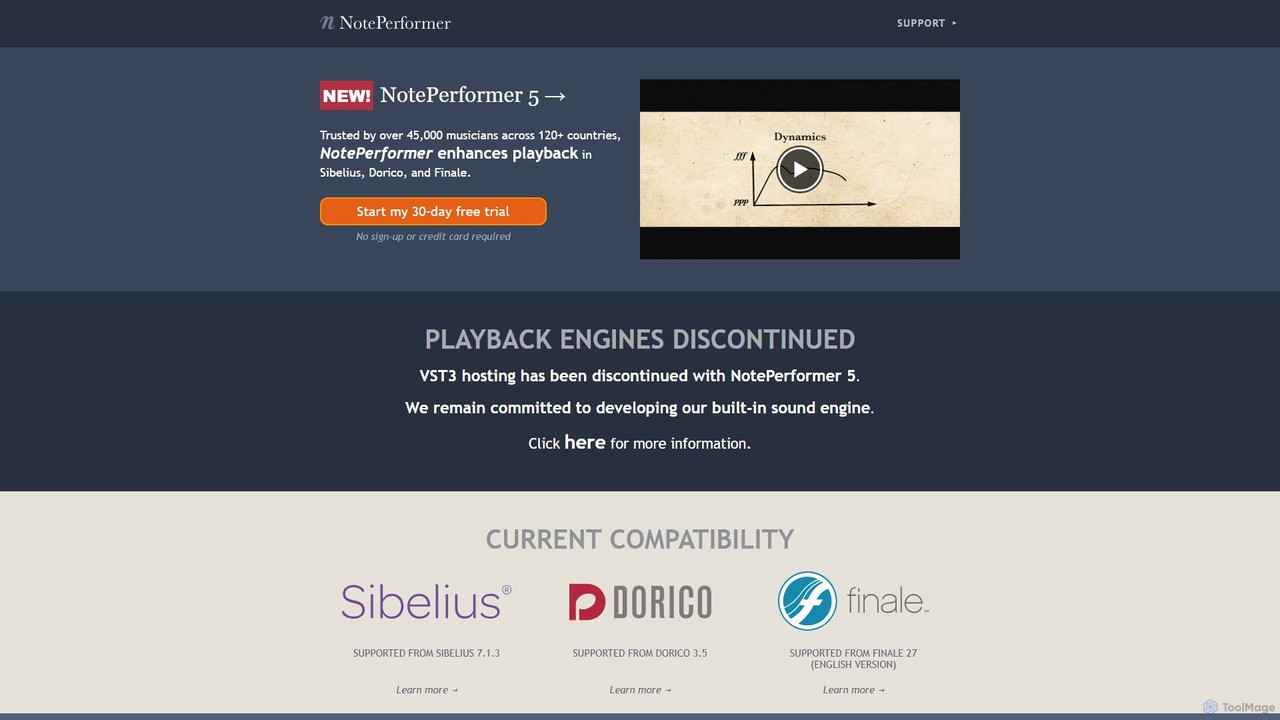
NotePerformer is an AI-powered playback engine that provides stunningly realistic playback for major music notation software like Sibelius, Dorico, and Finale. It intelligently analyzes your score to interpret and perform music with natural phrasing and a vast, built-in orchestral library, eliminating the need for manual sequencing.

Production
Visits 36KFavorites 72Likes 77
ChordCreate
Freemium

ChordCreate

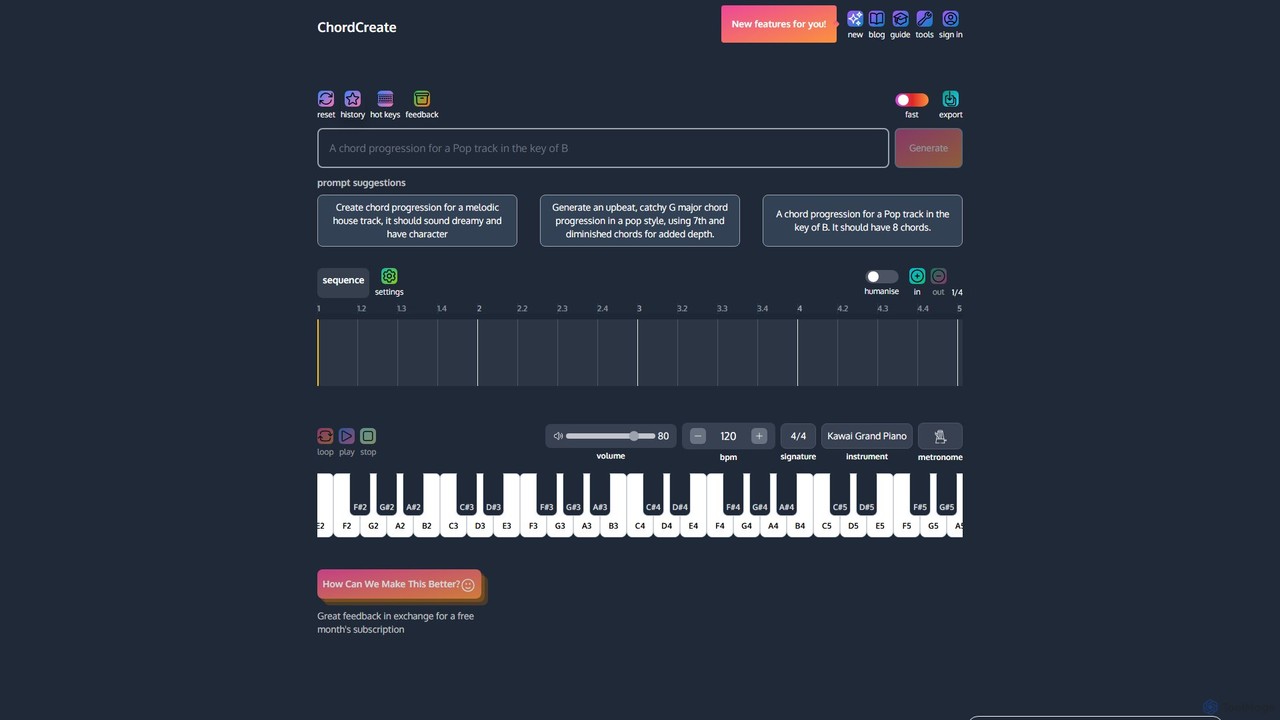
ChordCreate is an AI-powered chord progression generator designed for musicians, producers, and songwriters. Use natural language prompts to instantly generate unique and inspiring chord sequences. Edit, customize, and humanize your creations in an intuitive sequence editor, then export them as MIDI or WAV files to integrate seamlessly into your digital audio workstation (DAW). It's the perfect tool to spark creativity and overcome writer's block.

Music Generation
Visits 7.8KFavorites 132Likes 139
LANDR Composer
Paid

LANDR Composer

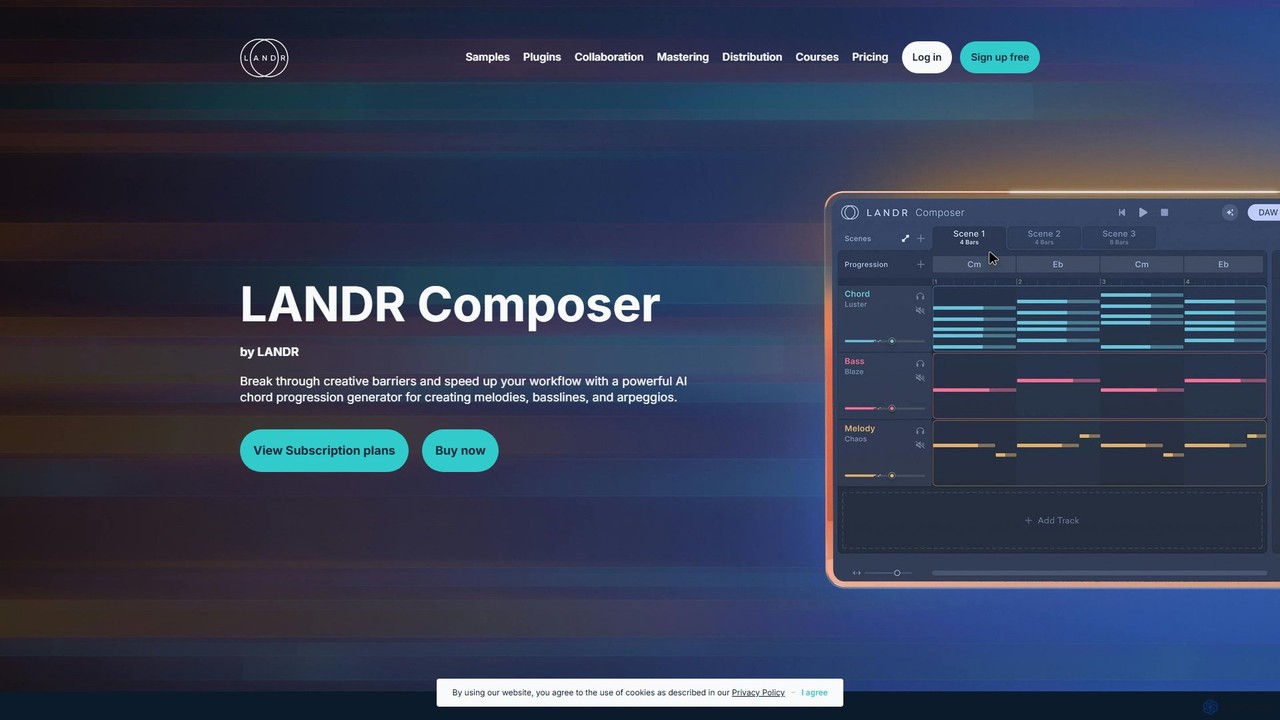
LANDR Composer is a powerful AI plugin that generates inspiring chord progressions, melodies, basslines, and arpeggios. It's designed to break through creative barriers and accelerate the music production workflow for artists of all skill levels, integrating seamlessly with any DAW.

Production
Visits 1.8MFavorites 119Likes 113

About Composition

AI Composition tools are a specialized category of music software that use algorithms to generate original musical elements like melodies, chord progressions, and harmonies. They analyze patterns in vast music datasets to create new, structurally coherent musical ideas from user prompts or parameters. These tools serve as powerful creative partners for musicians, producers, and composers, helping to overcome writer's block, explore new harmonic directions, and rapidly prototype musical concepts. They focus specifically on the foundational act of writing music, distinct from tools that only generate finished audio tracks.

Core Features

  • Melody & Harmony Generation: Creates unique melodic lines and corresponding chord structures based on key, scale, and mood inputs.
  • Algorithmic Arrangement: Suggests instrumentation and structure for generated parts, building a basic musical framework.
  • Style Emulation: Composes music that mimics the characteristics of specific genres, from classical to electronic.
  • MIDI & MusicXML Export: Provides editable output compatible with professional Digital Audio Workstations (DAWs) for further refinement.
  • Interactive Composition: Allows users to guide the AI's creative process by accepting, rejecting, or modifying suggestions in real-time.

Use Cases

These tools are widely used by songwriters seeking inspiration, film and game composers needing to score scenes quickly, and music producers exploring alternative arrangements. They are also valuable for music students learning music theory through practical experimentation and content creators needing custom jingles.

How to Choose

When selecting an AI Composition tool, consider its musical depth and control over parameters like harmony and rhythm. Evaluate its integration with your existing workflow, particularly its compatibility with DAWs (e.g., VST/AU plugin support). Also, assess the quality and musicality of the output and whether its pricing model aligns with your usage needs.

Featured tool rankings

Composition use cases

1

Overcoming Songwriting Creative Blocks

A songwriter is struggling to start a new track. Using an AI Composition tool, they input a desired mood ('melancholic') and key (C minor). The tool generates several distinct melodic phrases and corresponding chord progressions. The songwriter selects a compelling progression, exports it as a MIDI file, and imports it into their DAW. This AI-generated foundation serves as the starting point, breaking the creative block and allowing them to build the rest of the song with their own instrumentation and lyrics.

2

Rapid Prototyping for Film Scores

A film composer is on a tight deadline to create a score for a short chase scene. Instead of manually writing multiple options, they use an AI tool, specifying parameters like 'high-tempo,' 'orchestral,' and 'tense.' The AI generates a complete, multi-instrumental piece in minutes. While not the final product, this prototype allows the composer to immediately present a viable musical direction to the director for feedback, saving hours of initial composition work and accelerating the approval process.

3

Generating Dynamic Game Soundtracks

A solo indie game developer needs adaptive music for their game that changes based on the player's actions (e.g., exploring vs. combat). They use an AI Composition API to generate musical loops for different game states. By integrating the API, the game can trigger different harmonically related musical segments in real-time, creating a dynamic soundtrack that feels responsive and immersive without the need to commission dozens of static music tracks.

4

Exploring Advanced Harmonic Concepts

A jazz musician wants to explore new harmonic possibilities for improvisation over a standard tune. They input the original chord changes into an AI Composition tool and ask it to generate reharmonizations or alternative chord substitutions. The tool provides several options, from simple diatonic substitutions to complex chromatic alterations. This allows the musician to analyze and practice new harmonic approaches, expanding their improvisational vocabulary.

5

Creating Custom Music for Podcasts

A podcaster wants a unique, royalty-free theme song for their show but has no musical background. They use a user-friendly AI Composition tool, selecting a genre ('lo-fi hip hop'), a mood ('chill'), and a duration (30 seconds). The tool generates a complete musical piece with a beat, bassline, and melody. They can then render this as an MP3 file and use it as the professional-sounding intro and outro for every episode.

6

Assisting Music Theory Education

A music teacher is explaining the concept of modal interchange to students. They use an AI Composition tool to demonstrate the effect in real-time. The teacher inputs a simple C major progression, then instructs the AI to borrow chords from the parallel C minor key. The tool instantly generates and plays the new progression, providing a clear auditory example that helps students grasp the theoretical concept much faster than just reading about it in a textbook.

Composition FAQ

What are AI Composition tools?

AI Composition tools are specialized applications that use artificial intelligence to generate original musical elements like melodies, harmonies, and rhythms. Unlike general music generators that often produce a final audio file, these tools focus on creating the structural and theoretical building blocks of music. They function as creative assistants for musicians, providing editable output (like MIDI or MusicXML) that can be further developed in professional music software.

How do I choose the right AI Composition tool?

To choose the right tool, first assess your musical goals. Consider the following:

  • Musical Control: How much control do you need over parameters like key, scale, rhythm, and harmonic complexity?
  • Workflow Integration: Does it work as a standalone app or as a plugin (VST, AU) inside your Digital Audio Workstation (DAW)? Plugin integration is often more efficient for producers.
  • Output Quality: Listen to examples. Is the output musically coherent and inspiring, or does it sound random and robotic?
  • Ease of Use: Is the interface intuitive for your skill level, or does it require deep knowledge of music theory?
What is the difference between AI Composition and AI Music Generation?

The primary difference lies in their focus and output. AI Composition tools are designed for the process of writing music. They generate editable musical ideas—melodies, chord progressions, basslines—typically in formats like MIDI. They are for creators who want to build upon and arrange these ideas. AI Music Generation tools are often focused on the end product. They take a simple prompt (e.g., 'upbeat corporate track') and produce a finished, non-editable audio file (MP3, WAV), suitable for immediate use as background music.

Can AI Composition tools replace human composers?

Currently, AI Composition tools are best viewed as powerful collaborators rather than replacements for human composers. They excel at generating ideas, exploring possibilities, and automating repetitive tasks, which can significantly speed up the creative process. However, they generally lack the emotional nuance, contextual understanding, and overarching artistic vision that a human composer brings to a project. They are tools to augment creativity, not supplant it.

Who are AI Composition tools best suited for?

These tools are valuable for a wide range of users. This includes professional music producers and composers looking to accelerate their workflow and find new inspiration. Songwriters use them to break through creative blocks. Film and game developers use them for rapid score prototyping. Additionally, music students and educators find them useful for learning and demonstrating music theory concepts in an interactive way.