ToolMage
Sign in

Best 3 Production AI tools for Audio

Popular Production AI tools in Audio include LANDR Composer, NotePerformer, and Cosonify, helping you work more efficiently.

Cosonify
Freemium

Cosonify

Cosonify is an all-in-one platform for musicians to capture, organize, and collaborate on musical ideas. It combines a mobile app for idea collection, a visual whiteboard for song structuring, a DAW plugin for seamless integration, and AI tools to overcome creative blocks.

Production
Visits 4.1KFavorites 109Likes 111
NotePerformer
Freemium

NotePerformer

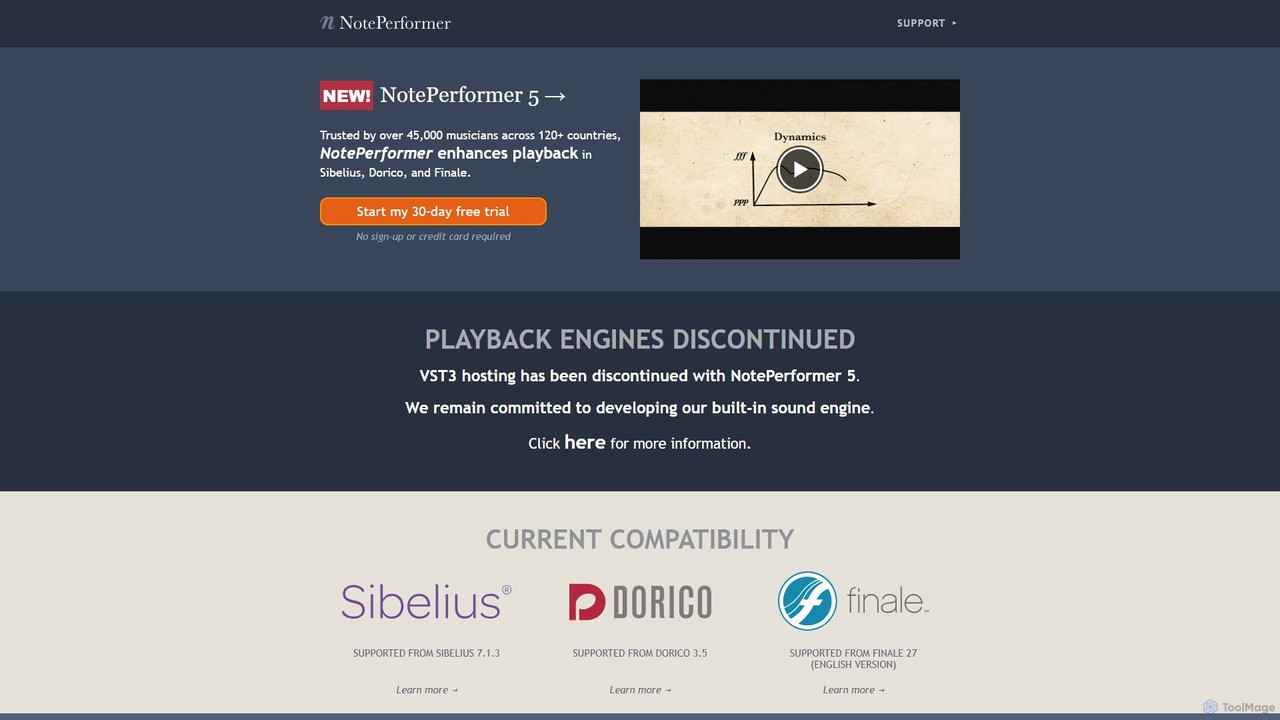
NotePerformer is an AI-powered playback engine that provides stunningly realistic playback for major music notation software like Sibelius, Dorico, and Finale. It intelligently analyzes your score to interpret and perform music with natural phrasing and a vast, built-in orchestral library, eliminating the need for manual sequencing.

Production
Visits 36.4KFavorites 73Likes 81
LANDR Composer
Paid

LANDR Composer

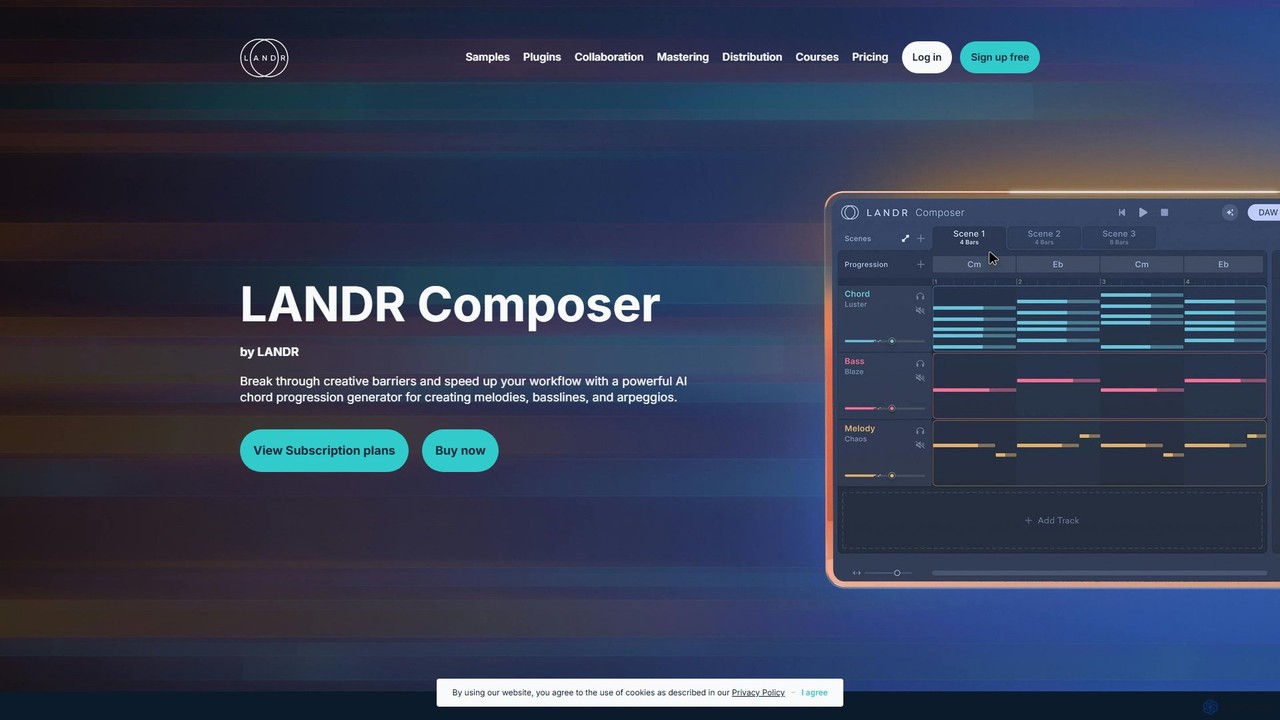
LANDR Composer is a powerful AI plugin that generates inspiring chord progressions, melodies, basslines, and arpeggios. It's designed to break through creative barriers and accelerate the music production workflow for artists of all skill levels, integrating seamlessly with any DAW.

Production
Visits 1.8MFavorites 120Likes 115

About Production

AI Production tools are a specialized category within AI Audio that leverage artificial intelligence to create, manipulate, and refine audio content. These tools utilize advanced algorithms for tasks such as generative music composition, intelligent sound design, automated mixing, and mastering. They empower musicians, producers, and content creators to streamline complex workflows, enhance audio quality, and explore new creative possibilities with unprecedented efficiency.

Core Features

  • AI Music Composition: Generates melodies, harmonies, rhythms, and full instrumental tracks based on user input or style preferences.
  • Vocal Synthesis & Enhancement: Creates realistic AI voices, performs pitch correction, de-essing, and applies vocal effects.
  • Automated Mixing & Mastering: Intelligently balances track levels, applies EQ, compression, and optimizes overall loudness and clarity.
  • Sound Effect Generation: Produces custom sound effects, ambient soundscapes, and foley for various media projects.

Applicable Scenarios

Music producers use these tools for rapid prototyping and generating new ideas, while podcasters and YouTubers leverage them for creating royalty-free background music and enhancing vocal clarity. Game developers can design dynamic and adaptive sound environments, and filmmakers can quickly generate specific sound effects or atmospheric audio to match visual scenes.

How to Choose

When selecting AI Production tools, consider their integration capabilities with your existing Digital Audio Workstation (DAW), the quality and realism of the generated audio, and the level of customization offered. Evaluate the range of features for specific tasks like mixing, mastering, or sound design, and assess the learning curve and pricing model to ensure it aligns with your workflow and budget.

Featured tool rankings

Production use cases

1

AI Music Composition for Content Creators

Content creators, such as YouTubers and podcasters, can utilize AI Production tools to generate unique, royalty-free background music tailored to their video or audio content. By inputting desired mood, genre, and duration, they can quickly produce high-quality soundtracks, saving significant time and cost compared to licensing existing music or composing from scratch, ensuring a consistent audio brand.

2

Automated Vocal Tuning and Mixing for Podcasters

Podcasters and voiceover artists often struggle with inconsistent vocal levels, pitch issues, or unwanted background noise. AI Production tools can automatically correct pitch, apply dynamic processing for consistent volume, and even remove subtle room echoes. This allows creators to achieve professional-sounding vocal tracks with minimal manual effort, significantly improving listener experience.

3

Dynamic Soundscape Generation for Game Developers

Game developers can employ AI Production tools to create adaptive and immersive soundscapes that react to in-game events or player actions. Instead of pre-recording numerous static loops, AI can generate evolving ambient sounds, creature noises, or environmental effects on the fly, enhancing realism and player engagement without requiring extensive manual sound design.

4

AI-Assisted Audio Mastering for Independent Musicians

Independent musicians can use AI Production tools to achieve professional-grade audio mastering without needing expensive studio equipment or engineers. These tools analyze the mix, apply intelligent EQ, compression, and limiting, optimizing the track for various playback systems and ensuring competitive loudness and clarity, making their music ready for distribution platforms.

5

Rapid Sound Effect Design for Filmmakers

Filmmakers and video editors often need specific sound effects (foley, atmospheric, sci-fi) that are hard to find or create manually. AI Production tools can generate custom sound effects based on textual descriptions or reference audio. This accelerates the post-production process, allowing creators to quickly populate their scenes with unique and perfectly matched audio elements, enhancing narrative impact.

6

Instrument Track Generation for Songwriters

Songwriters can leverage AI Production tools to generate backing tracks, drum patterns, basslines, or synth melodies when they lack instrumental skills or collaborators. By providing a basic melody or chord progression, the AI can suggest and create full instrumental arrangements, helping songwriters flesh out their demos, overcome creative blocks, and explore diverse musical styles.

Production FAQ

What are AI Production tools in audio?

AI Production tools in audio are software applications that use artificial intelligence to assist or automate various stages of audio creation and refinement. This includes generating music, synthesizing vocals, designing sound effects, and performing advanced tasks like mixing and mastering. They aim to enhance creativity, improve efficiency, and achieve professional audio quality.

How do AI Production tools differ from general AI Audio tools?

While general AI Audio tools encompass a broad range of applications (like transcription, noise reduction, or basic editing), AI Production tools specifically focus on the "creation and sophisticated manipulation" of audio. They are geared towards generating new content (music, vocals, sound effects) and refining existing audio to a production-ready state, often involving more complex generative and analytical AI models.

What are the key features to look for in AI Production software?

Key features include robust AI music generation capabilities (genre, mood, instrument control), high-quality vocal synthesis and processing (pitch, timbre, effects), intelligent mixing and mastering algorithms (auto-EQ, compression, limiting), and versatile sound effect generation. Look for intuitive interfaces, compatibility with your DAW, and options for fine-tuning AI-generated results to maintain creative control.

Can AI Production tools replace human audio engineers?

Currently, AI Production tools are best viewed as powerful assistants rather than replacements for human audio engineers. While they can automate repetitive tasks and provide creative starting points or professional polish, the nuanced artistry, critical listening, and subjective decision-making of an experienced human engineer remain invaluable, especially for complex projects requiring unique artistic vision.

Who benefits most from using AI Production tools?

Independent musicians, podcasters, YouTubers, game developers, and filmmakers benefit significantly from AI Production tools. They allow individuals and small teams to achieve high-quality audio production without extensive technical expertise or large budgets. These tools are also valuable for experienced professionals seeking to accelerate workflows, generate new ideas, or handle routine tasks more efficiently.