TrueMedia.org
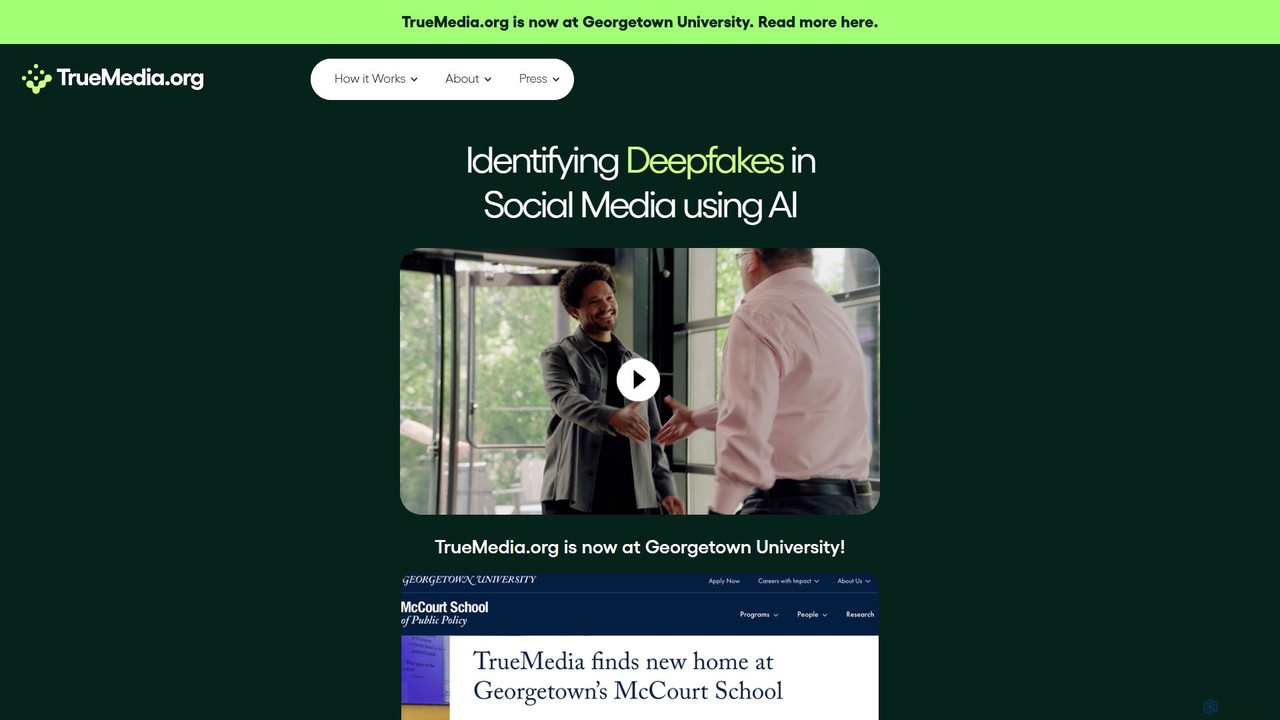
TrueMedia.org is a free, non-profit AI tool from Georgetown University designed to detect deepfakes in videos, images, and …
TrueMedia.org is a free, non-profit AI tool from Georgetown University designed to detect deepfakes in videos, images, and audio. It aggregates multiple detectors to achieve high accuracy, helping journalists, researchers, and the public combat misinformation and verify media authenticity, especially concerning election integrity.
AVbeam
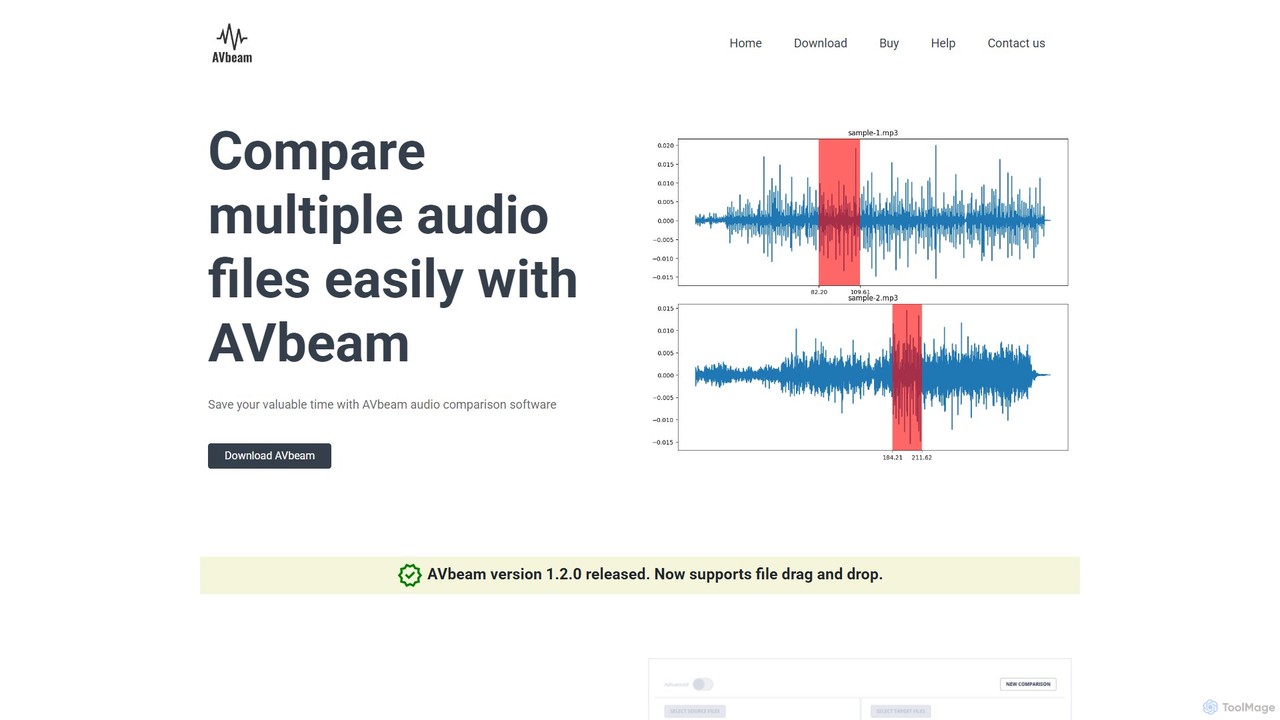
AVbeam is a professional desktop software designed for fast and accurate audio comparison. It uses robust audio fingerprinting …
AVbeam is a professional desktop software designed for fast and accurate audio comparison. It uses robust audio fingerprinting technology to identify matching or similar audio segments across multiple files, even with noise and distortions. It supports various formats and provides detailed reports with time offsets and similarity percentages, saving valuable time for media professionals.
deepfakedetector.ai
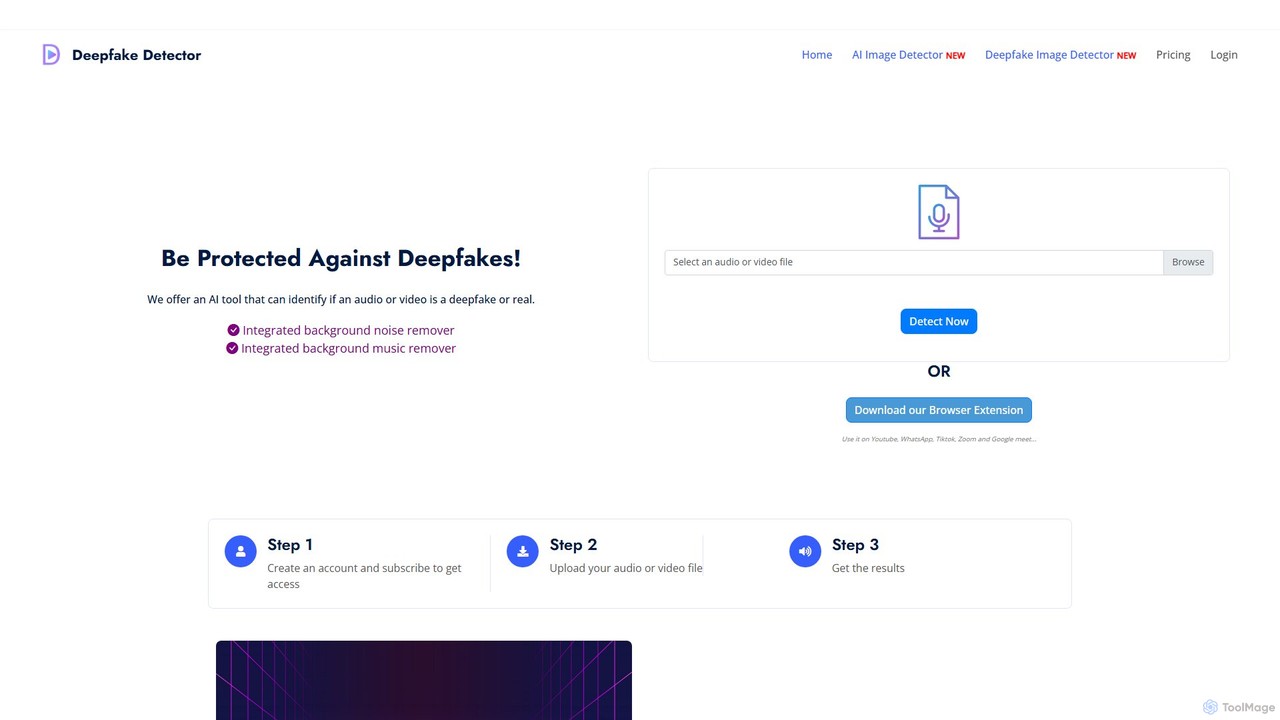
An advanced AI-powered tool designed to detect deepfake images, audio, and videos. It helps users protect themselves from …
An advanced AI-powered tool designed to detect deepfake images, audio, and videos. It helps users protect themselves from fraud, misinformation, and scams by analyzing media content for signs of AI manipulation with high accuracy.
About Audio Analysis
Audio Analysis tools are a specialized category of AI software designed to interpret and extract structured information from audio data. Using machine learning models for speech recognition and sound classification, these tools convert raw audio signals into actionable insights. They are primarily used to understand content, identify speakers, detect emotions, and recognize specific sound events, moving beyond simple audio playback or editing. This capability allows businesses and creators to unlock valuable data hidden within voice recordings, media files, and real-time audio streams.
Core Features
- Speech-to-Text Transcription: Accurately converts spoken language into written text, often with timestamps and punctuation.
- Speaker Diarization: Identifies and labels different speakers within a single audio file, answering the question "who spoke when."
- Sentiment and Emotion Analysis: Determines the emotional tone (positive, negative, neutral) or specific emotions (joy, anger) from speech patterns.
- Sound Event Detection: Recognizes and classifies non-speech sounds, such as alarms, glass breaking, or animal noises.
- Topic Modeling & Keyword Spotting: Automatically identifies key topics and spots predefined keywords or phrases within audio content.
Use Cases
These tools are widely adopted in customer service for analyzing call center interactions, in media for content moderation and subtitling, and in market research for analyzing focus group discussions. They also serve security applications by monitoring for specific alert sounds and assist researchers in analyzing large volumes of audio archives.
How to Choose
When selecting an Audio Analysis tool, evaluate its transcription accuracy (Word Error Rate), the range of supported languages and dialects, and its specific analysis capabilities. Also consider whether you need real-time (streaming) or batch processing, the quality of its API for integration, and the pricing model, which is often based on audio duration.
Audio AnalysisUse Cases
Call Center Quality and Compliance Monitoring
A customer support manager at a financial services company uses an audio analysis tool to automatically process thousands of daily customer calls. The tool transcribes every conversation and performs sentiment analysis to flag calls with high customer frustration. It also uses keyword spotting to ensure agents are following compliance scripts and mentioning required disclosures. This automates the quality assurance process, allowing managers to focus on coaching agents involved in problematic calls instead of manually sampling a small fraction of conversations, improving both compliance and customer satisfaction.
Automated Content Moderation for Media Platforms
A user-generated content platform implements an audio analysis tool to scan all video uploads for policy violations. The AI automatically transcribes the audio track and flags content containing hate speech, harassment, or explicit language in multiple languages. This system significantly reduces the workload on human moderators, allowing them to review a prioritized queue of flagged content instead of watching every single upload. It leads to faster removal of harmful content, creating a safer environment for users and reducing the platform's legal risk.
Analyzing Market Research Focus Groups
A market research firm records hours of focus group discussions for a new product. Instead of manually transcribing and analyzing the audio, they use an AI analysis tool. The tool provides a full transcript with speaker diarization, allowing researchers to easily attribute comments to specific participants. Topic modeling identifies the main themes of the conversation, while sentiment analysis reveals how participants truly feel about different product features. This accelerates the analysis process from weeks to days and provides deeper, data-driven insights for the final report.
Security Monitoring with Sound Event Detection
A security company integrates an audio analysis system into its surveillance camera network for a large warehouse. The AI is trained to detect specific sound events in real-time, such as glass breaking, shouting, or the sound of a forklift operating in an unauthorized zone after hours. When a target sound is detected, the system automatically triggers an alarm, sends a notification with an audio clip to the security team, and highlights the relevant camera feed. This provides an additional layer of security beyond visual monitoring, enabling faster response to potential threats.
Transcribing and Analyzing Academic Interviews
A sociologist conducting qualitative research uses an audio analysis tool to process dozens of in-depth interviews. The tool accurately transcribes hours of recordings, saving significant time and budget compared to manual transcription services. Using the keyword spotting feature, the researcher can quickly locate all mentions of specific concepts across all interviews. The speaker diarization helps keep track of the interviewer's questions and the interviewee's responses, making the coding and thematic analysis phases of the research more efficient and systematic.
Music Library Cataloging and Analysis
A music streaming service uses an audio analysis tool to process its vast library of songs. The AI analyzes each track to automatically identify its genre, mood (e.g., happy, sad, energetic), tempo (BPM), and instrumentation. This extracted metadata is used to enrich the song's profile, powering features like genre-based radio stations, mood-based playlists, and sophisticated recommendation algorithms. This automates a previously manual and subjective cataloging process, improving music discovery for millions of users.