Audio Best in category 3 results Audiobook AI Tool

Popular AI tools in the Audiobook field of Audio include Peech、Dailos、Pooks.ai, etc., helping you quickly improve efficiency.

Dailos

Dailos

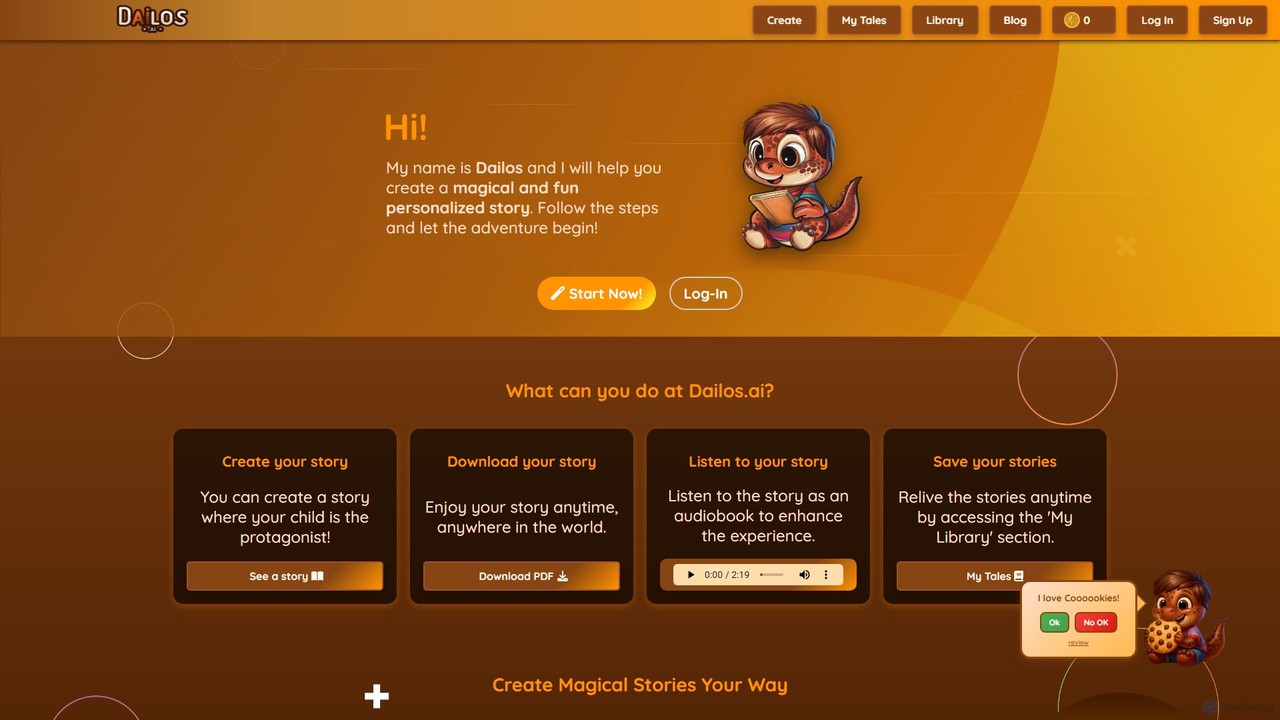
Dailos is an AI-powered platform designed to create magical and personalized children's stories. It allows users to make …

4.4K
Peech

Peech

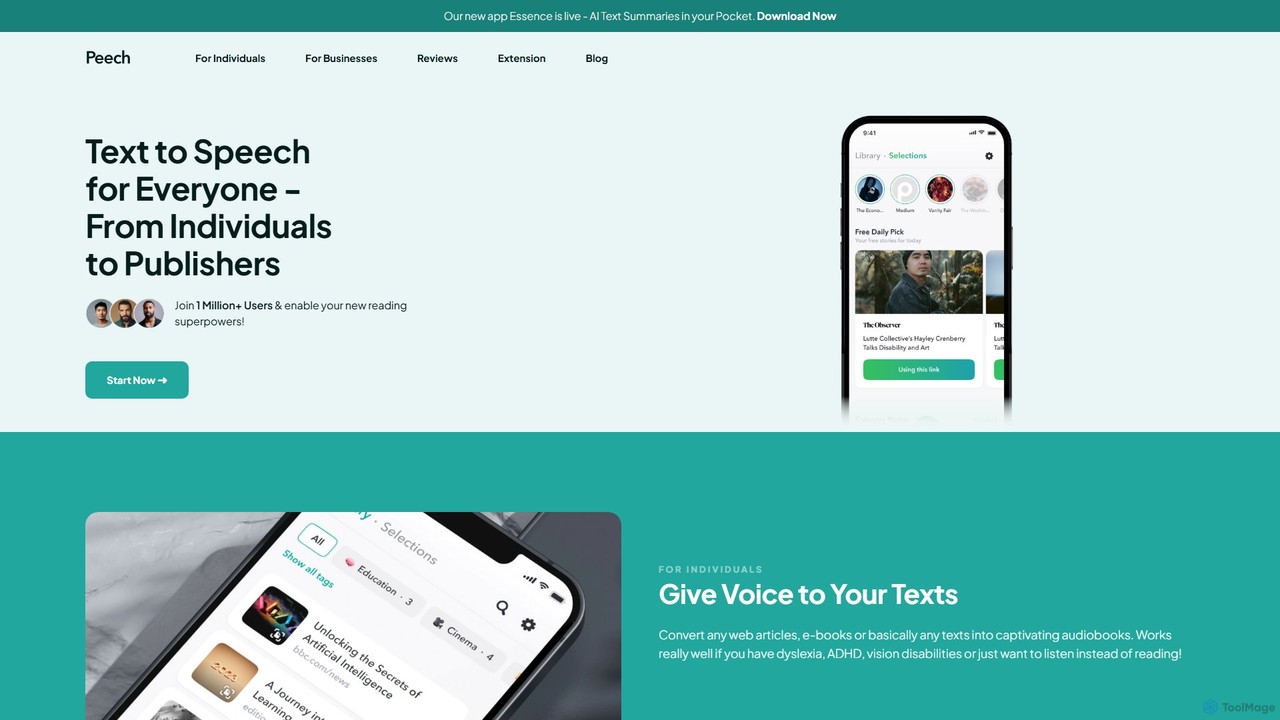
Peech is an AI-powered text-to-speech reader that converts any text, including web articles, PDFs, e-books, and even images, …

275.3K
Free
Pooks.ai

Pooks.ai

Pooks.ai is a free AI-powered platform that revolutionizes reading by creating personalized non-fiction e-books and audiobooks. Simply provide …

4.2K

About Audiobook

AI Audiobook tools are specialized platforms that use advanced text-to-speech and voice synthesis to convert written text into high-quality, engaging audiobooks. They leverage deep learning to generate narration with human-like intonation, emotion, and pacing, moving beyond robotic TTS. These tools enable authors, publishers, and content creators to produce professional-grade audiobooks efficiently and affordably. The core value lies in automating the entire narration and initial production process, making audio content accessible to a wider audience.

Core Features

  • Expressive Voice Synthesis: Generates narration with various emotional styles (e.g., joyful, sad, suspenseful) to match the story's tone.
  • Multi-Voice Casting: Assigns distinct and consistent AI voices to different characters within a script.
  • Pronunciation Control: Allows users to customize the pronunciation of specific names, jargon, or foreign words.
  • Pacing and Pause Management: Provides fine-grained control over reading speed and the insertion of dramatic pauses for better storytelling.
  • Audio Mastering Tools: Includes features for noise reduction, volume leveling, and exporting files that meet platform standards like ACX.

Use Cases

These tools are ideal for independent authors seeking to self-publish audiobooks, publishers wanting to create prototypes or backlist titles, and educational institutions converting textbooks into accessible audio formats. They are also used in corporate training to turn manuals into engaging learning modules.

How to Choose

When selecting an AI Audiobook tool, evaluate the quality and naturalness of the available voices. Consider the level of control over voice emotion, pacing, and pronunciation. Also, check for multi-character support, integration with publishing platforms, and the pricing model (e.g., per-character subscription vs. one-time generation fees).

AudiobookUse Cases

1

Publishing Audiobooks for Independent Authors

An independent author has finished their novel but lacks the budget for a professional voice actor and studio time, a process that can cost thousands. Using an AI Audiobook tool, they upload their manuscript, assign a high-quality AI voice that matches their protagonist's tone, and differentiate other characters with distinct voices. They fine-tune pronunciations for fantasy names and adjust pacing for dramatic scenes. The tool then generates and masters the audio files to meet ACX specifications, allowing the author to publish directly to platforms like Audible and reach a new audience of listeners, all at a fraction of the traditional cost.

2

Converting Educational Materials into Audio Format

An educational institution wants to make its curriculum more accessible to students with visual impairments or learning disabilities like dyslexia. Manually recording hundreds of textbook chapters is unfeasible. They use an AI Audiobook platform to process their digital textbooks. The tool's ability to handle technical jargon and maintain a clear, consistent narration is crucial. They create a custom lexicon for scientific terms. The resulting audio versions of the textbooks are integrated into their learning management system (LMS), providing an essential resource that supports diverse learning styles and enhances student comprehension and engagement.

3

Prototyping Audiobooks for Publishers

A publishing house is considering creating audiobook versions for its backlist of 50 novels but is unsure about the market demand for each title. Instead of a large upfront investment in human narrators, they use an AI Audiobook tool to create high-quality audio samples for each book. They can test different voices and styles for each genre. These samples are used for internal review, shared with marketing teams to gauge interest, and even sent to focus groups. Based on the feedback, the publisher can make data-driven decisions on which books to prioritize for a full-scale, human-narrated production, minimizing financial risk.

4

Creating Audio Versions of Corporate Training Materials

A large corporation needs to update its compliance and onboarding training for a distributed workforce. Traditional text-based manuals have low engagement rates. The HR department uses an AI Audiobook tool to convert these dense documents into a series of easy-to-digest audio modules. They choose a clear, professional AI voice for consistency across all materials. The audio modules can be accessed by employees during their commute or on the go, increasing completion rates and knowledge retention. This approach modernizes their training program, making it more flexible and engaging for a modern workforce.

5

Localizing Fictional Content for New Markets

A content creator has a successful series of short stories in English and wants to expand into the Spanish-speaking market. Hiring voice actors for a full Spanish production is costly. They use an AI platform that combines translation and voice synthesis. The tool first translates the stories, then generates an audiobook using a native-sounding Spanish AI voice. The creator can even use voice cloning to approximate the original English narrator's style. This allows for rapid, cost-effective market testing and content localization, opening up new revenue streams without a significant upfront investment.

6

Creating Personalized Children's Audio Stories

A startup develops a service that creates personalized audio stories for children. Parents can input their child's name, favorite activities, and friends' names into a web form. The backend uses an AI Audiobook tool with dynamic text insertion capabilities. The tool generates a unique story where the child is the main character, narrated by a warm, friendly AI voice. The platform can produce thousands of unique audio files daily, a scale impossible with human narrators. This offers a highly scalable and magical product for parents seeking engaging, screen-free entertainment for their children.

AudiobookFrequently Asked Questions