Audio AI Dynamics
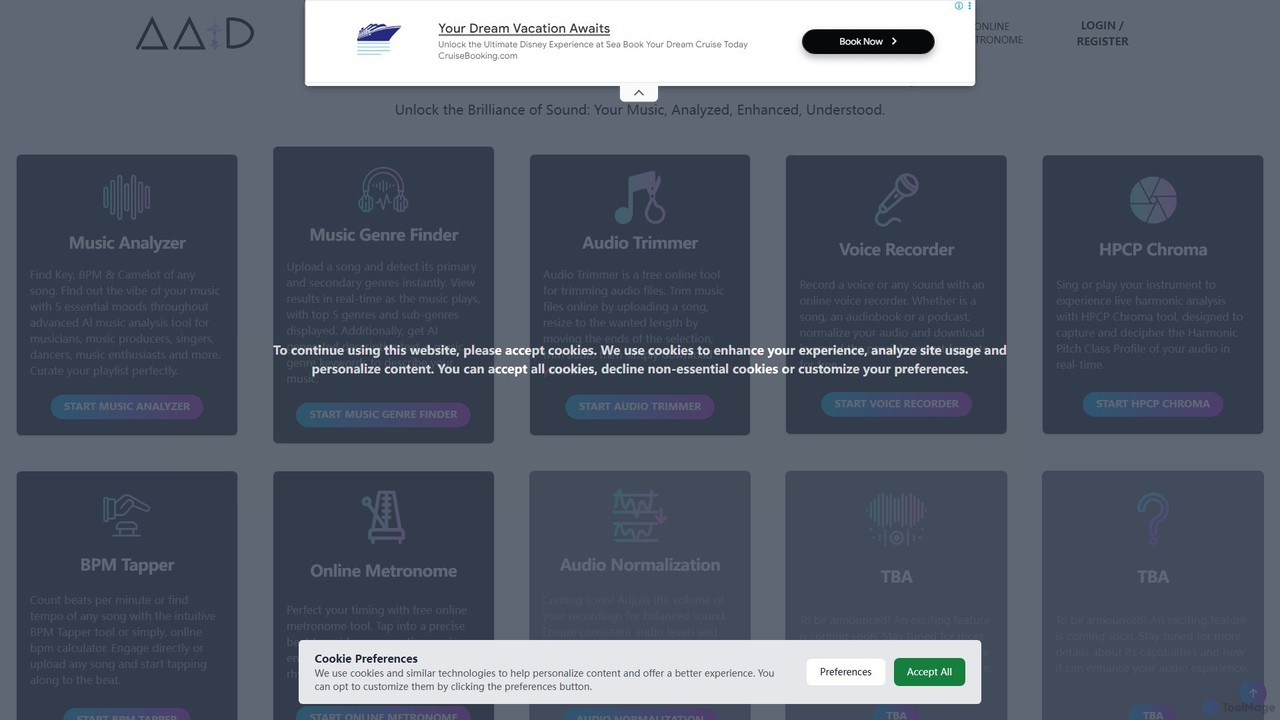
Audio AI Dynamics (AAID) is a comprehensive suite of free, web-based AI audio tools. Designed for musicians, producers, …
Audio AI Dynamics (AAID) is a comprehensive suite of free, web-based AI audio tools. Designed for musicians, producers, and creators, it offers powerful features like music analysis (BPM, key, mood, genre), an advanced audio trimmer with merge capabilities, a voice recorder, and practice utilities like a metronome and real-time harmonic analyzer. Instantly analyze any audio file or YouTube link to gain deep insights and enhance your music production workflow without any cost or software installation.
MyDetectAI
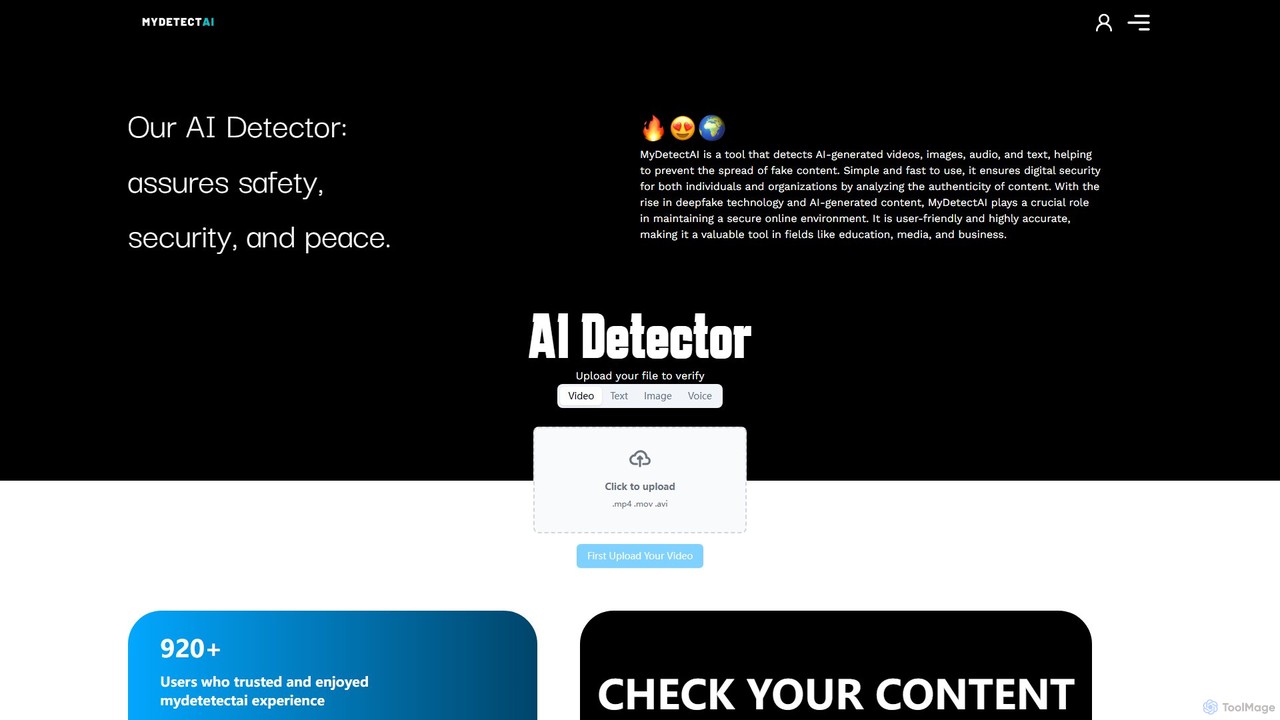
MyDetectAI is a powerful AI detection tool designed to identify AI-generated videos, images, audio, and text. It helps …
MyDetectAI is a powerful AI detection tool designed to identify AI-generated videos, images, audio, and text. It helps users combat misinformation and deepfakes by providing a simple, fast, and accurate analysis of digital content. Ideal for individuals, media, education, and businesses, it ensures digital security and content authenticity with a clear, percentage-based scoring system.
About Analysis
AI Audio Analysis tools are a specialized class of software designed to automatically extract structured data and insights from audio files. Leveraging machine learning models for speech recognition, sound classification, and acoustic analysis, these tools can transcribe speech, identify different speakers, detect sentiment, and recognize specific sound events. Their primary value lies in transforming unstructured audio data, such as recordings and live streams, into actionable, searchable information for various professional applications.
Core Features
- Speech-to-Text Transcription: Accurately converts spoken words into written text, often with timestamps and speaker labels.
- Speaker Diarization: Identifies and distinguishes between multiple speakers within a single audio recording, answering "who spoke when".
- Sentiment & Emotion Analysis: Determines the emotional tone (e.g., positive, negative, neutral) conveyed in speech.
- Sound Event Detection: Recognizes and tags non-speech sounds, such as music, silence, alarms, or glass breaking.
- Acoustic Feature Extraction: Analyzes technical properties of audio, including pitch, tempo, loudness, and frequency spectrum for detailed insights.
Use Cases
These tools are widely used in media production for automatic subtitling and content indexing, in contact centers for quality assurance and customer sentiment analysis, and in music technology for genre classification and copyright detection. Researchers also utilize them to analyze speech patterns or environmental sounds for academic studies.
How to Choose
When selecting an AI Audio Analysis tool, first consider the specific analysis types you require (e.g., transcription vs. music analysis). Evaluate the tool's accuracy rates for your audio type, API availability for integration into workflows, the range of supported languages, and the pricing model, which could be per-minute, per-file, or subscription-based.

AnalysisUse Cases
Call Center Quality Assurance Analysis
A customer service manager uses an AI tool to automatically analyze thousands of call recordings. The tool transcribes calls, identifies keywords related to customer complaints (e.g., "unhappy," "cancel"), and flags calls with negative sentiment for manual review. This process helps improve agent training and identify recurring product issues without needing to listen to every single call, saving significant time and resources.
Automated Podcast Transcription and Content Repurposing
A podcast creator uploads their latest episode's audio file. An AI analysis tool provides a highly accurate transcript and uses speaker diarization to distinguish between the host and guests. This output is invaluable for content repurposing: the transcript becomes a blog post, key quotes are used for social media graphics, and topic summaries help create detailed show notes, significantly expanding the podcast's reach with minimal extra effort.
Music Copyright and Sample Detection
A music distribution platform integrates an AI audio analysis API to scan new song submissions. The tool analyzes the acoustic fingerprint of each track, identifying its key, tempo, and instrumental composition. It then compares this data against a massive database to detect potential copyright infringement or the unauthorized use of samples, ensuring legal compliance before the music is released to streaming services.
Media Content Indexing and Search
A large news organization processes its vast video and audio archive. An AI analysis tool transcribes all spoken content and detects sound events (e.g., applause, sirens, music). This creates a rich, searchable metadata layer. Journalists and researchers can then instantly find specific moments by searching for keywords or sounds (e.g., "find all clips with 'economic policy' and applause"), a task that would be impossible to do manually at scale.
Security and Surveillance Sound Monitoring
A smart security system for a warehouse uses AI audio analysis to monitor the premises after hours. It is trained to ignore ambient noises like traffic but instantly detects specific events like glass breaking, shouting, or the sound of power tools. Upon detection, it automatically triggers an alarm, begins video recording, and sends an immediate alert with a short audio clip of the event to the security team's mobile devices.
Linguistic and Behavioral Research Analysis
A university research team analyzes hours of recorded interviews to study speech patterns. The AI tool provides detailed acoustic data, including pitch variation, speaking rate, and pause duration for each participant. It can also perform sentiment analysis over time to track emotional shifts during the conversation. This quantitative data helps researchers objectively analyze communication styles and emotional states without subjective manual measurement.