Songtell
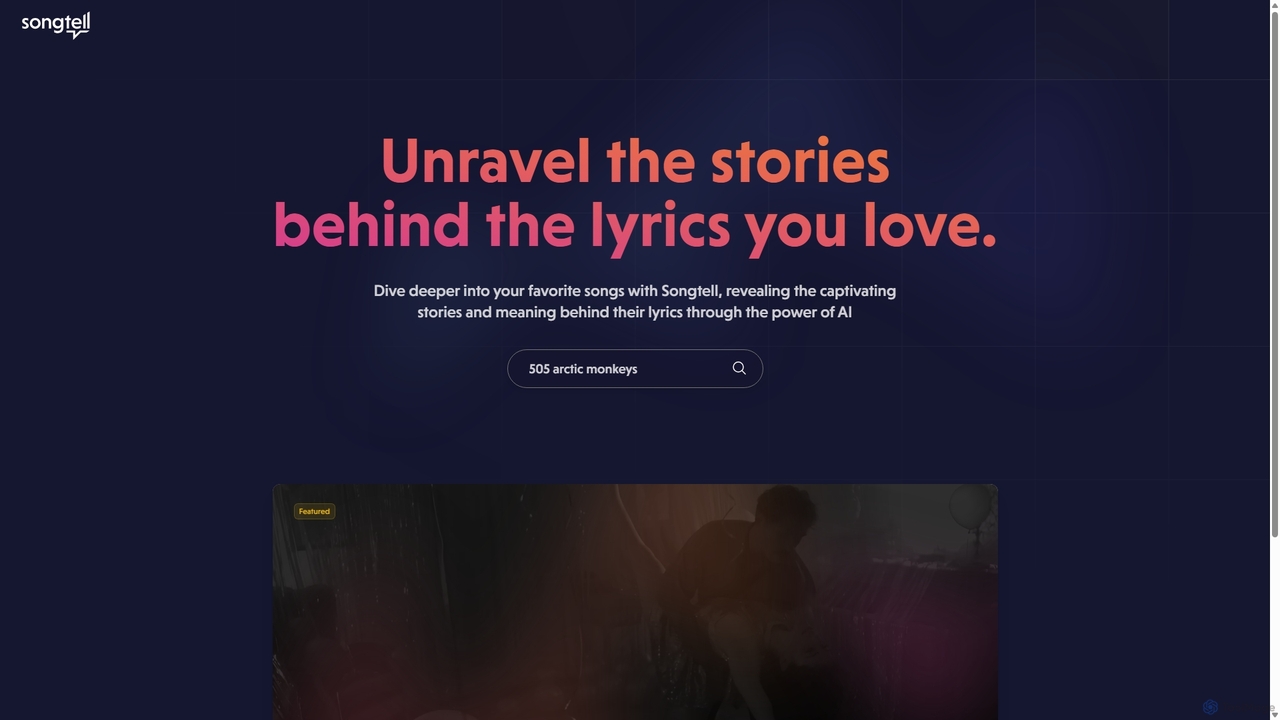
Songtell is an AI-powered platform that unravels the stories and meanings behind song lyrics. It provides in-depth analysis …
Songtell is an AI-powered platform that unravels the stories and meanings behind song lyrics. It provides in-depth analysis by combining AI insights, musical element breakdowns, historical context, and community knowledge to offer a deeper appreciation of your favorite music.
RoastMyWrapped
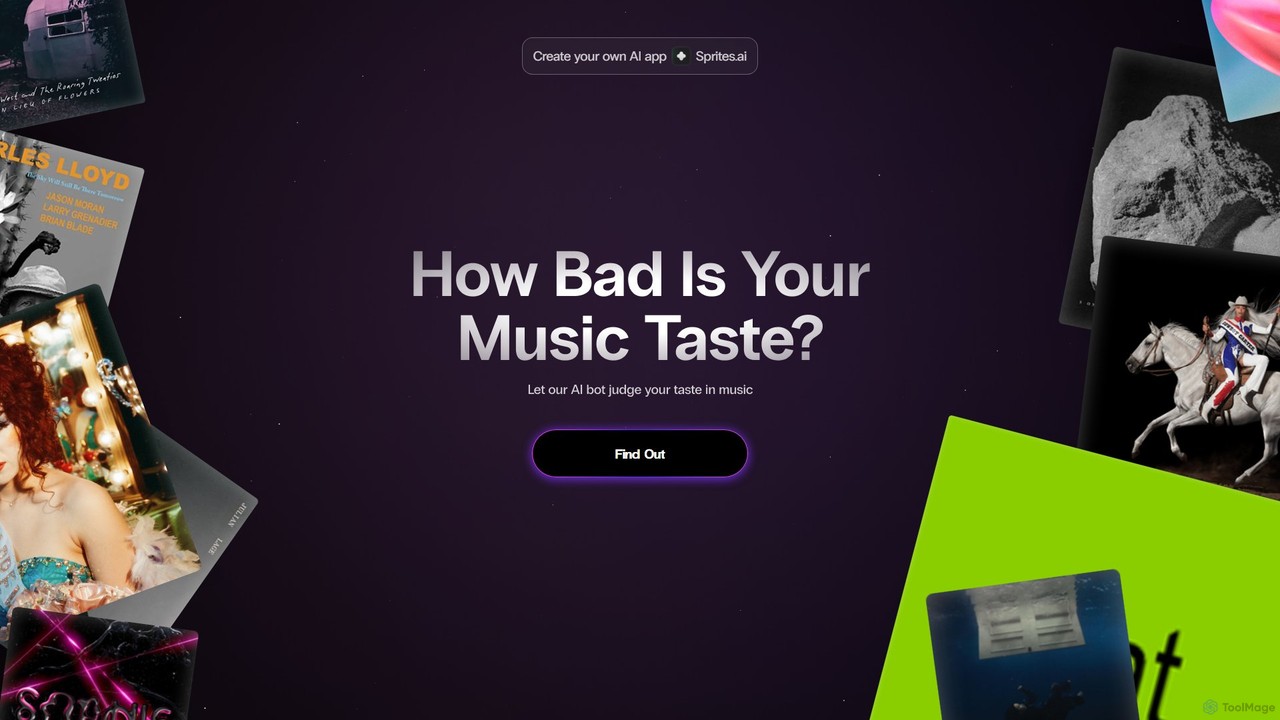
RoastMyWrapped is an AI-powered tool that humorously roasts your Spotify Wrapped. Simply upload a screenshot of your music …
RoastMyWrapped is an AI-powered tool that humorously roasts your Spotify Wrapped. Simply upload a screenshot of your music summary, and the AI will generate a witty, personalized critique of your listening habits. It's a fun way to engage with your annual music review and share a laugh with friends on social media.
About Analysis
AI Music Analysis tools are a class of software that uses machine learning to deconstruct and interpret musical compositions. These tools apply algorithms to audio or MIDI data to identify patterns, structures, and theoretical elements automatically. They provide musicians, producers, and researchers with deep insights into harmony, melody, rhythm, and form, transforming complex musical theory into actionable data. This enables a more efficient and objective understanding of any piece of music.
Core Features
- Harmonic Analysis: Automatically identifies and labels chord progressions, key signatures, and modulations.
- Melodic & Rhythmic Extraction: Transcribes melodies and rhythmic patterns from audio, often into standard notation or MIDI.
- Structural Segmentation: Divides a song into sections like intro, verse, chorus, and bridge.
- Timbre and Instrumentation Analysis: Identifies the instruments playing and describes their sonic characteristics (timbre).
- Tempo and Beat Tracking: Accurately detects the beats per minute (BPM) and rhythmic grid of a track, including variations.
Use Cases
These tools are valuable for music educators demonstrating theoretical concepts, musicologists conducting large-scale comparative studies, and composers analyzing existing works for inspiration. Producers also use them to deconstruct reference tracks to understand their structure and arrangement, while songwriters can quickly find the key and chords of a sample they want to use.
How to Choose
When selecting an AI Music Analysis tool, consider the accuracy of its transcription and chord detection. Evaluate the range of supported input formats (e.g., MP3, WAV, MIDI) and the quality of its data visualization. For professional use, check for API access or integration capabilities with Digital Audio Workstations (DAWs). Finally, assess the user interface's clarity and ease of use for your specific workflow.

AnalysisUse Cases
Analyzing Chord Progressions for Songwriting
A songwriter experiencing writer's block can use an AI Music Analysis tool to study popular songs in their genre. By uploading an audio file of a hit song, the tool automatically transcribes the chord progression and identifies the key. The songwriter can then visualize the harmonic structure, discover common patterns, and understand how tension and release are created. This data-driven approach provides concrete inspiration, helping them experiment with new progressions for their own composition and overcome creative hurdles.
Accelerating Music Theory Education
A music student struggling with aural skills can use an analysis tool to supplement their learning. They can upload a recording of a classical piece being studied in class. The AI provides an instant breakdown of its form (e.g., Sonata form), key changes, and complex chords that are difficult to identify by ear alone. This visual feedback reinforces theoretical concepts, allowing the student to connect what they hear with what they see on the score, significantly speeding up their comprehension of music theory.
Deconstructing Reference Tracks for Production
A music producer aims to match the energy and structure of a popular electronic track. They use an AI analysis tool to get a detailed report on the reference track. The tool maps out the song's structure (intro, build-up, drop, breakdown), detects the exact BPM and any tempo changes, and identifies the key. This objective data allows the producer to create a structural template in their DAW, ensuring their own track's arrangement has a similar flow and impact, saving hours of manual listening and guesswork.
Large-Scale Musicological Research
A musicologist is studying the evolution of harmonic complexity in jazz from the 1940s to the 1970s. Manually analyzing thousands of recordings is impractical. Instead, they use an AI analysis tool with batch processing capabilities. They upload a large dataset of digitized recordings, and the AI automatically extracts chord progressions, tempo, and structural data for each track. The researcher can then statistically analyze this structured data to identify trends, compare different artists, and publish quantitative findings that would have been impossible to achieve manually.
Automating Sample Library Tagging
A sound designer or a company managing a large audio sample library needs to tag thousands of files with accurate metadata. Manually listening to and tagging each sample with its key, BPM, and mood is extremely time-consuming. By using an AI analysis tool's API, they can automate this entire process. A script feeds each sample to the AI, which returns structured data (e.g., 'C minor', '120 BPM', 'energetic'). This data is then written into the files' metadata, making the library searchable and much more useful for music producers.
Interactive Music Practice and Feedback
A developer is creating an app to help musicians practice improvisation. They integrate an AI music analysis API into their application. When a user plays a solo over a backing track, the app records their performance and sends it to the analysis API. The API returns a transcription of the notes played and analyzes them against the underlying chords. The app can then provide real-time feedback, highlighting notes that are in or out of key and suggesting alternative melodic ideas, creating a powerful and interactive learning experience.