ToolMage
Sign in

Best 4 Ai Music Generation AI tools for Music

Popular Ai Music Generation AI tools in Music include Uberduck, Voicemy.ai, Popstarz, and Melodyrics, helping you work more efficiently.

Melodyrics

Melodyrics

Melodyrics is an AI-powered music generator that enables users to create unique, royalty-free melodies and songs in seconds. It offers a simple three-step process: customize lyrics and mood, fine-tune details like genre and tempo, and generate. Designed for both musicians and non-musicians, it provides a high degree of creative control without requiring any prior musical knowledge.

Generative Audio
Visits 5.9KFavorites 169Likes 179
Popstarz
Paid

Popstarz

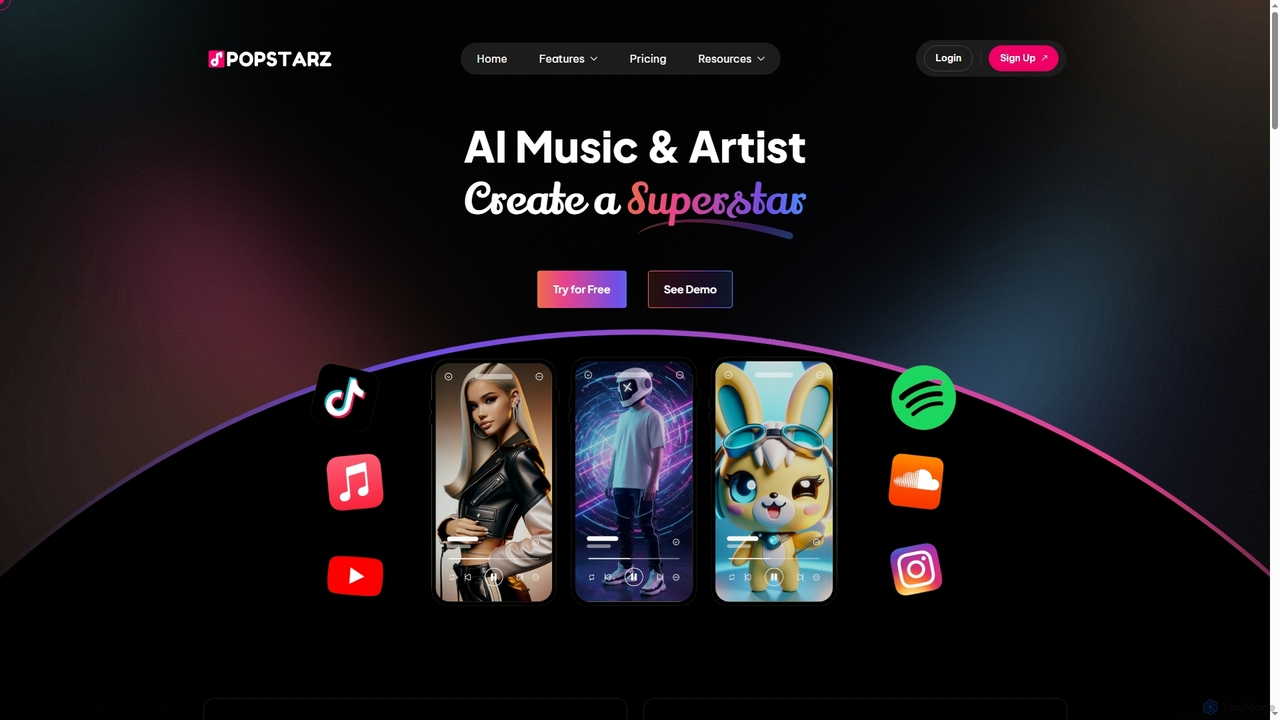
Popstarz is an AI-powered platform for creating virtual artists, generating original music tracks, and producing visual content for social media. It enables users to build a complete music brand from scratch, without needing technical skills or studio equipment.

Virtual Influencer
Visits 6.3KFavorites 139Likes 142
Voicemy.ai
Freemium

Voicemy.ai

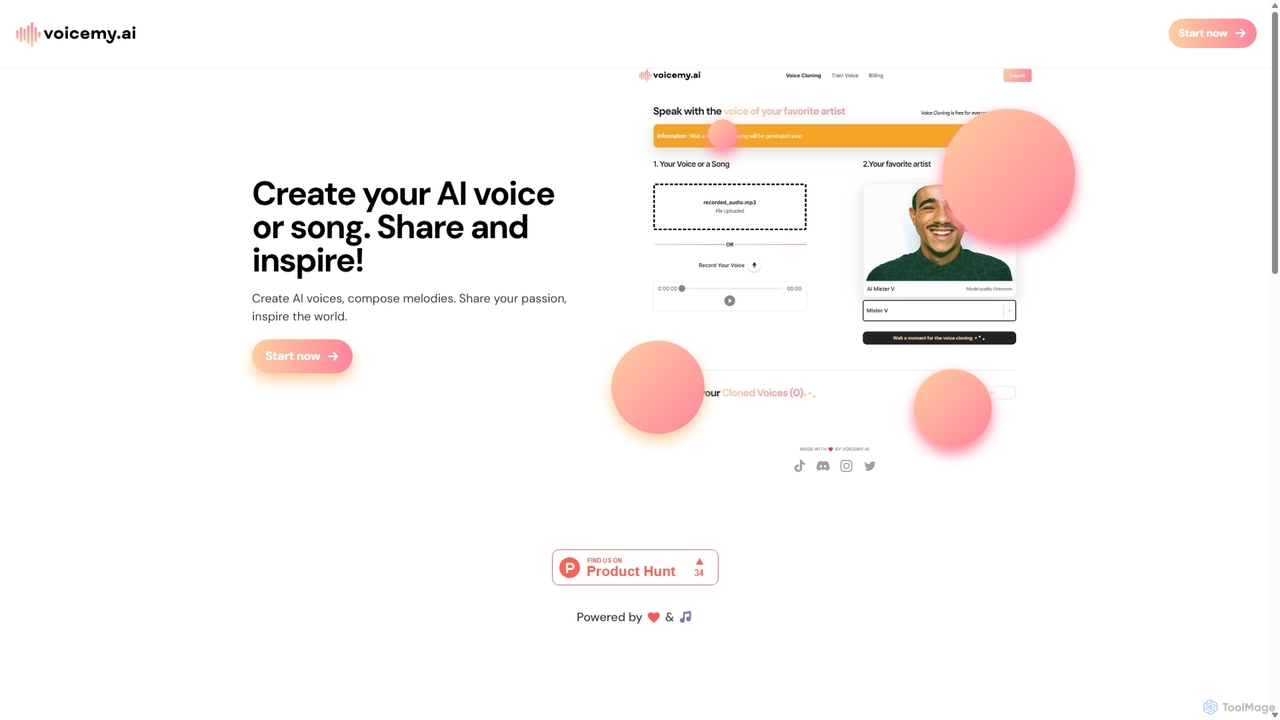
Voicemy.ai is an AI-powered platform for creating unique AI voices and songs. It specializes in voice cloning, custom voice model training, and AI song generation, allowing users to transform their creative audio ideas into reality and share them with a global community.

Voice Cloning
Visits 18.4KFavorites 106Likes 110
Uberduck
Freemium

Uberduck

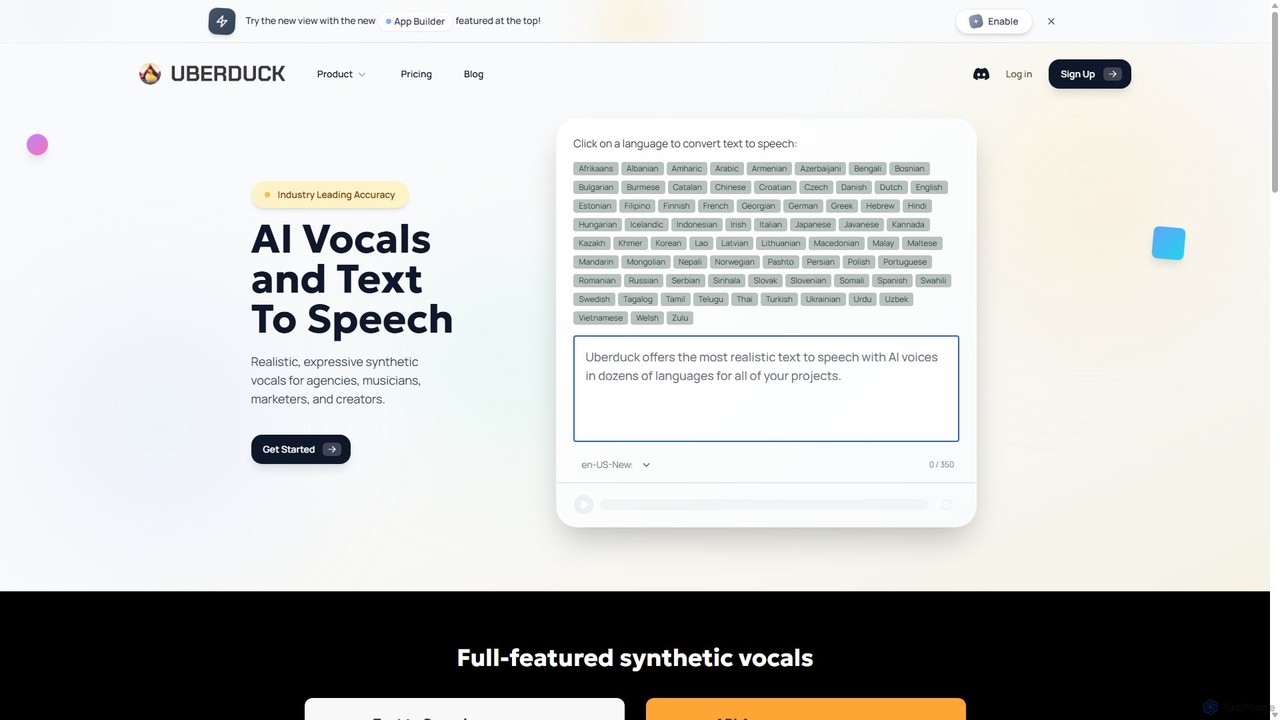
Uberduck is a versatile generative AI platform specializing in AI vocals, text-to-speech, voice cloning, and creative media generation. It enables users to create realistic speech, singing, and rapping from text, clone voices, and even generate AI images and videos, making it a comprehensive toolkit for musicians, creators, and developers.

Text To Speech
Visits 245.5KFavorites 139Likes 131

About Ai Music Generation

AI Music Generation tools are a class of applications that use artificial intelligence to compose original, high-quality music. These tools leverage deep learning models to analyze vast datasets of musical compositions, learning patterns, melodies, and structures to create new tracks from scratch. They empower users to generate royalty-free background music for videos, podcasts, or games, often by simply providing a text prompt, selecting a genre, or defining a mood. This technology significantly lowers the barrier to music creation, offering a fast and accessible alternative to traditional music production.

Core Features

  • Genre and Mood Selection: Specify musical styles like cinematic, lo-fi, or electronic, and moods such as happy, sad, or epic to guide the AI's output.
  • Composition from Text Prompts: Describe the desired music using natural language (e.g., "a chill acoustic track for a coffee shop scene") to generate a matching composition.
  • Instrument and Tempo Control: Customize the generated track by selecting specific instruments, adjusting the beats per minute (BPM), and modifying the song structure.
  • Stem Generation: Output individual instrument tracks (stems) like drums, bass, and melody, allowing for greater flexibility in mixing and post-production.

Use Cases

These tools are widely used by content creators on platforms like YouTube and TikTok for unique background music, avoiding copyright claims. Game developers utilize them to create dynamic, adaptive soundtracks that respond to player actions. Additionally, music producers and artists use them as a source of inspiration to overcome creative blocks or quickly prototype new musical ideas.

How to Choose

When selecting an AI Music Generation tool, consider the audio quality and realism of the output. Evaluate the depth of customization options available, such as control over instruments, key, and arrangement. It's also crucial to review the licensing terms to ensure the music can be used for your intended commercial or personal projects. Finally, assess the user interface and whether it aligns with your technical skill level, from simple prompt-based interfaces to more advanced editors.

Ai Music Generation use cases

1

Royalty-Free Music for Content Creators

A video creator needs a constant supply of unique background music for their YouTube channel to enhance viewer engagement and avoid copyright strikes. Using an AI Music Generation tool, they can input prompts like "upbeat electronic track for a tech review" or "calm lo-fi hip hop for a study vlog." The AI generates multiple options in seconds. The creator can then select the best fit, adjust the length to match their video, and download a high-quality, royalty-free track. This process saves significant time and money compared to licensing stock music or hiring a composer.

2

Dynamic Soundtracks for Game Development

An indie game developer is creating a role-playing game and wants the music to adapt to the player's actions, such as entering combat or discovering a new area. Instead of commissioning dozens of separate tracks, they use an AI music tool with API access. They define musical moods and parameters linked to in-game events. The AI then generates music in real-time that seamlessly transitions between exploration, tension, and battle themes. This creates a more immersive player experience and allows a small team to produce a sophisticated, adaptive soundtrack that would otherwise be prohibitively expensive.

3

Musical Idea Generation for Producers

A music producer is experiencing writer's block while working on a new album. To find inspiration, they turn to an AI music generator. They input a simple chord progression and specify a genre, like '80s synth-pop'. The AI generates several melodic variations, basslines, and drum patterns based on this input. The producer can then listen through the ideas, select a compelling melody, export it as a MIDI file, and import it into their Digital Audio Workstation (DAW) to develop it further with their own sounds and arrangement. This acts as a creative partner, helping to kickstart the composition process.

4

Custom Jingles for Marketing Campaigns

A marketing agency is running a social media campaign for a new beverage brand and needs short, catchy audio clips for video ads. They use an AI music generator to create dozens of 15-second jingles. By specifying moods like 'energetic,' 'refreshing,' and 'youthful,' and the genre 'pop,' they can quickly produce a wide variety of options. This allows them to A/B test different audio tracks with different ad visuals to see which combination performs best, all without the high cost and long turnaround time of a traditional music production studio.

5

Rapid Prototyping for Film Scores

A film director is in the early stages of editing a scene and needs temporary music (temp track) to establish the emotional tone and pacing. Instead of searching through libraries of existing music, the editor uses an AI tool. They describe the scene: "A tense, slow-building orchestral piece for a detective discovering a clue." The AI generates a suitable track in minutes. This allows the director and editor to make more informed editing decisions early in the process and provides a clear creative brief for the human composer who will later create the final score.

6

AI Vocal and Lyric Creation for Songwriters

A songwriter has a finished instrumental track but is struggling to write lyrics and a vocal melody. They use a specialized AI music tool that can generate both. First, they input the theme of the song, such as 'longing for a lost love,' and the AI suggests several sets of lyrics. After choosing a verse, they upload their instrumental track, and the AI generates a fitting vocal melody for the selected lyrics. While the result may not be the final version, it provides a strong starting point, helping the songwriter overcome their creative block and complete the song with their own artistic touch.

Ai Music Generation FAQ

What is AI Music Generation?

AI Music Generation refers to software that uses artificial intelligence, particularly deep learning models, to create new and original musical compositions. These tools analyze patterns from vast amounts of existing music to generate novel melodies, harmonies, and rhythms. They can produce music in various genres and moods, often based on simple user inputs like text prompts or parameter selections. Key applications include creating royalty-free background music for content, generating ideas for artists, and producing adaptive soundtracks for games.

How to choose the right AI Music Generation tool?

To choose the right tool, consider these factors:

  • Audio Quality: Listen to samples. Does the music sound natural and high-quality, or robotic and generic?
  • Customization Control: Check how much control you have over the output. Can you specify instruments, tempo, key, and song structure?
  • Licensing Terms: Carefully read the terms of use. Ensure the license allows for your intended use case (e.g., commercial use on YouTube) and understand any attribution requirements.
  • Ease of Use: Evaluate the user interface. Some tools are simple and prompt-based, while others offer complex editors similar to a DAW. Choose one that matches your skill level.
What's the difference between AI Music Generation and using sample libraries?

The key difference is originality and flexibility. Sample libraries provide pre-recorded loops and sounds created by humans, which you arrange to build a track. While high-quality, these samples are used by many producers, potentially leading to less unique music. AI Music Generation creates entirely new musical phrases and compositions from scratch based on its training. This offers greater originality and the ability to generate endless variations. AI tools are often better for creating complete, unique background tracks quickly, while sample libraries offer more hands-on control for producers building a track piece by piece.

Can I use AI-generated music commercially?

This depends entirely on the specific tool's terms of service. Many AI music generation platforms operate on a subscription model where a paid plan grants you a royalty-free license for commercial use. This means you can use the music in monetized videos, ads, or products without paying additional royalties. However, free plans often have restrictions, such as personal use only or requiring attribution. Always read the licensing agreement carefully before using any generated music for commercial purposes to ensure you are compliant.

How does AI Music Generation work?

AI Music Generation typically works by using deep learning models, such as Generative Adversarial Networks (GANs) or Transformers. These models are trained on massive datasets containing thousands of hours of music across various genres. During training, the AI learns the underlying rules of music theory, structure, melody, and rhythm. When a user provides a prompt (like a genre, mood, or text description), the AI uses its learned knowledge to generate a new sequence of musical notes and patterns that fit the request, effectively composing a new piece of music.