
ToolMage
Sign in

Best 1 Concert Tools for Music

Popular Concert Tools in Music include setlistpredictor, helping you work more efficiently.

setlistpredictor
Free

setlistpredictor

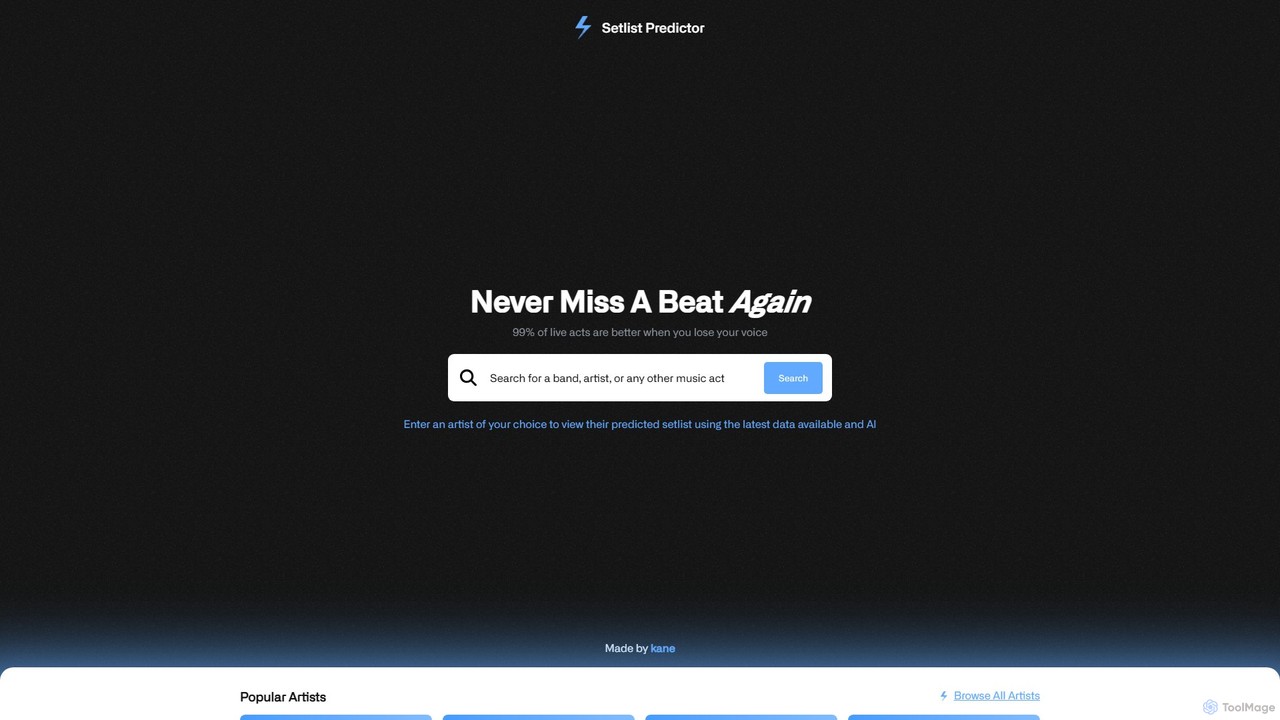
Setlist Predictor is a free AI-powered tool that forecasts the likely setlist for an artist's upcoming concerts. By analyzing the latest tour data and performance patterns, it helps music fans prepare for live shows, ensuring they never miss a beat or feel awkward not knowing the lyrics.

Music
Visits 5.8KFavorites 132Likes 124

About Concert Tools

AI Concert Tools are specialized applications that leverage artificial intelligence to optimize the planning, promotion, and execution of live music events. These tools utilize machine learning models to analyze vast datasets, enabling predictions on ticket sales, automation of marketing campaigns, and enhancement of the audience experience. They provide artists, promoters, and venue managers with data-driven insights to maximize revenue and streamline complex logistical operations. This technology transforms traditional concert management by introducing predictive accuracy and personalized engagement at scale.

Core Features

  • Predictive Ticketing Analytics: Analyzes historical data and market trends to forecast demand and suggest optimal dynamic pricing strategies.
  • Automated Promotion Content: Generates targeted social media posts, ad copy, and promotional videos tailored to specific fan demographics.
  • Real-time Visual Synthesis: Creates dynamic, music-responsive visuals and lighting sequences that sync with the live performance.
  • Tour Route Optimization: Calculates the most efficient and profitable tour schedules based on venue availability, travel costs, and audience density.
  • Fan Sentiment Analysis: Monitors social media platforms to gauge audience reactions, track buzz, and identify key influencers.

Use Cases

AI Concert Tools are primarily used by music industry professionals. Tour managers and booking agents use them to plan multi-city tours, while marketing teams at record labels and promotion agencies leverage them for targeted advertising. Artists and their management can analyze fan data to tailor setlists and engagement strategies. Venue operators also benefit by optimizing event scheduling and resource allocation.

How to Choose

When selecting an AI Concert Tool, consider its integration capabilities with existing ticketing platforms like Ticketmaster or Eventbrite. Evaluate the depth and accuracy of its predictive analytics for your target markets. Assess the ease of use for marketing automation features, especially for teams without data scientists. Finally, consider the scalability of the tool, ensuring it can handle everything from small club shows to large-scale stadium tours.

Concert Tools use cases

1

Optimize Ticket Pricing for a Stadium Tour

A tour manager for a global pop star is planning a 30-city stadium tour. They use an AI Concert Tool to analyze historical sales data, social media buzz, local economic factors, and competing events in each city. The AI model predicts demand curves for different seating sections and recommends a dynamic pricing strategy. Prices are set higher for high-demand cities and adjusted in real-time based on sales velocity, maximizing total revenue by an estimated 15% while ensuring most shows sell out close to the event date.

2

Generate Hyper-Targeted Social Media Campaigns

A marketing team for an indie rock band wants to promote a new single and upcoming tour. They use an AI tool to analyze the band's follower data on Spotify and social media. The AI identifies distinct fan segments, such as 'classic rock enthusiasts' and 'modern indie listeners'. It then automatically generates dozens of short video ads and ad copy variations, each tailored to the specific musical tastes and visual preferences of each segment, leading to a 40% higher click-through rate compared to previous generic campaigns.

3

Create Immersive Real-time Concert Visuals

A VJ (video jockey) for an electronic music festival uses an AI tool that analyzes the audio output from the DJ's mixer in real time. The AI interprets the music's tempo, frequency, and mood to generate complex, evolving geometric patterns and abstract visuals. These visuals are projected onto large screens behind the stage, perfectly synchronized with every beat drop and melodic change, creating a highly immersive and dynamic visual experience for the audience without manual programming of every sequence.

4

Plan an Efficient and Profitable Tour Route

A booking agent for a mid-sized band is planning a European tour. They input potential cities, venue capacities, and date constraints into an AI route optimization tool. The tool analyzes travel distances, fuel costs, historical ticket sales data for the band in each region, and even local holidays or competing events. It then outputs several optimized route options that maximize potential profit by minimizing travel days and targeting cities with the highest predicted fan engagement, saving weeks of manual research and calculation.

5

Gauge Fan Reaction to a Surprise Song Debut

An artist debuts a brand-new, unreleased song during a live-streamed concert. Immediately following the performance, their management team uses an AI sentiment analysis tool to scan Twitter, Instagram, and fan forums for mentions of the song title. The tool categorizes thousands of comments in minutes, providing a clear report on the overall sentiment (e.g., 85% positive), key descriptive words used by fans ('energetic', 'emotional'), and comparisons to previous work. This rapid feedback helps them decide whether to release it as the next official single.

6

Personalize Pre-Show Fan Engagement

A large arena uses an AI-powered fan engagement platform connected to their ticketing app. Before a concert, the system analyzes ticket holders' listening history and past merchandise purchases. It then sends personalized push notifications. A long-time fan might receive an offer for an exclusive soundcheck viewing, while a newer fan might get a curated playlist of the opening acts. This targeted communication enhances the pre-show excitement and drives additional revenue through tailored merchandise and upgrade offers.

Concert Tools FAQ

What are AI Concert Tools?

AI Concert Tools are a specialized category of software designed to manage, promote, and enhance live music events using artificial intelligence. They move beyond simple event management by using data analytics and machine learning to provide predictive insights and automate complex tasks. Key functions include forecasting ticket demand, optimizing tour logistics, generating targeted marketing content, and creating real-time interactive experiences for audiences.

How do AI Concert Tools differ from general AI Music Tools?

The primary difference lies in their application. General AI Music Tools focus on the creation of music itself, such as composing melodies, generating lyrics, or mastering audio tracks. In contrast, AI Concert Tools focus on the business and experiential aspects of a live performance. They do not create music; instead, they manage the event surrounding the music, from ticket sales and promotion to logistics and live audience engagement.

Who are the primary users of AI Concert Tools?

These tools are designed for professionals across the live music ecosystem. The primary users include:

  • Promoters and Booking Agents: To identify profitable markets and optimize tour schedules.
  • Tour and Artist Managers: For logistics planning, budget management, and analyzing fan data.
  • Marketing Teams: To automate and personalize promotional campaigns across social media and other channels.
  • Venue Operators: To forecast attendance, manage staffing, and optimize ticket pricing for events.
  • Live Production Professionals (VJs, Lighting Designers): To create dynamic, AI-driven visual shows.
How do I choose the right AI Concert Tool?

Choosing the right tool depends on your specific needs. Consider the following factors:

  • Core Functionality: Do you need predictive ticketing, marketing automation, route planning, or live visuals? Prioritize tools that excel in your required area.
  • Integration: Ensure the tool can connect with your existing systems, such as ticketing platforms (e.g., Ticketmaster), CRM software, and social media accounts.
  • Data Accuracy: For predictive tools, inquire about the data sources they use and the proven accuracy of their models. Look for case studies or testimonials.
  • Ease of Use: The platform should be intuitive for your team to use without requiring a dedicated data scientist, unless you have one.
  • Scalability: Select a tool that can grow with you, from managing a single show to a multi-country tour.
Can AI tools really predict a concert's success?

AI tools cannot guarantee success, but they can significantly increase its probability by providing data-driven predictions. By analyzing variables like an artist's historical ticket sales, social media engagement, streaming numbers in a specific city, and even external factors like local paydays or weather forecasts, AI models can generate a highly accurate forecast of potential attendance and revenue. This allows promoters to make more informed decisions about venue size, ticket prices, and marketing spend, mitigating financial risk.