Free
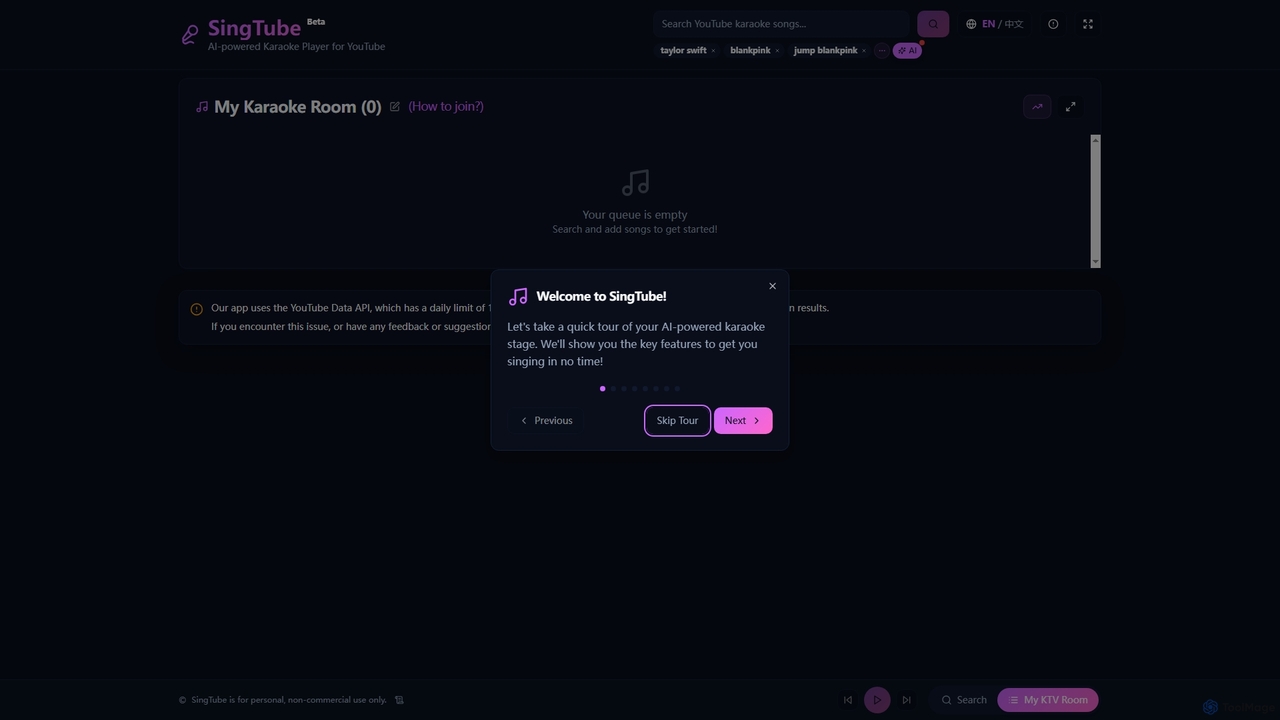
Popular Music AI tools in Entertainment include SpotiGuess, Muzify, Songtell, Gnod, SongleAI, Maroofy, PowerHour.lol, setlistpredictor, Singtube, and tswift, helping you work more efficiently.
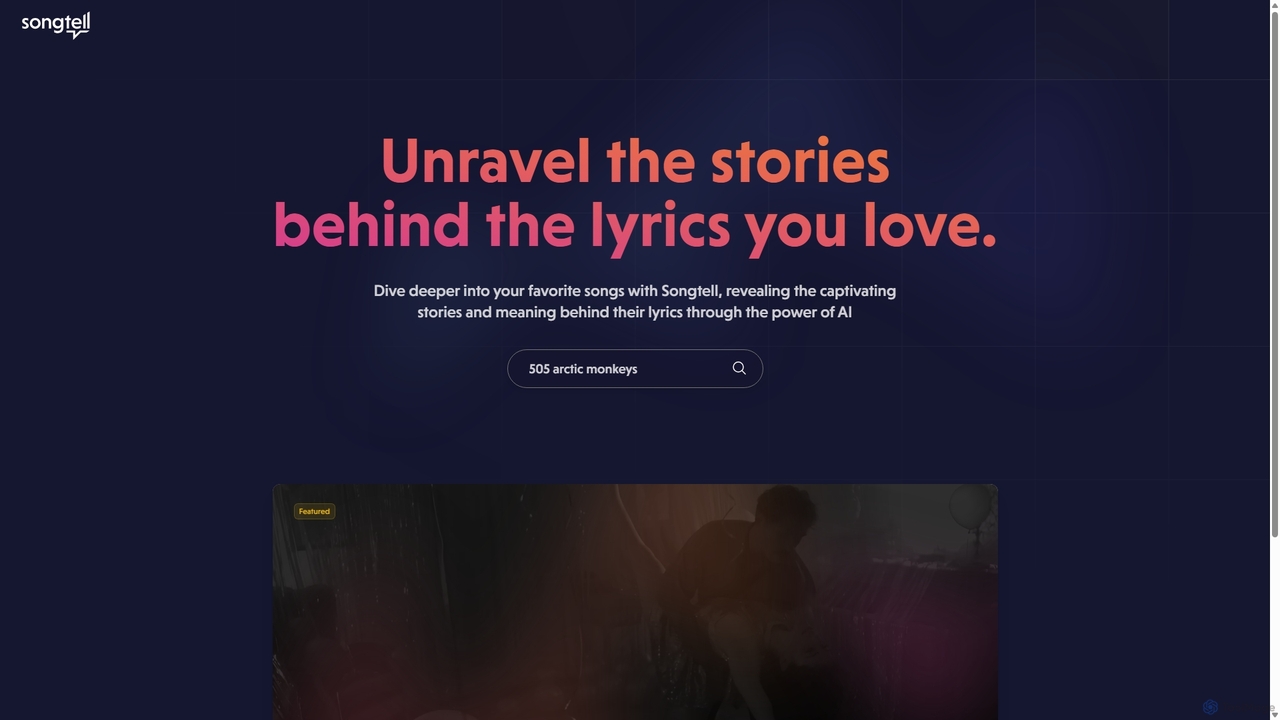
Songtell is an AI-powered platform that unravels the stories and meanings behind song lyrics. It provides in-depth analysis by combining AI insights, musical element breakdowns, historical context, and community knowledge to offer a deeper appreciation of your favorite music.
Learning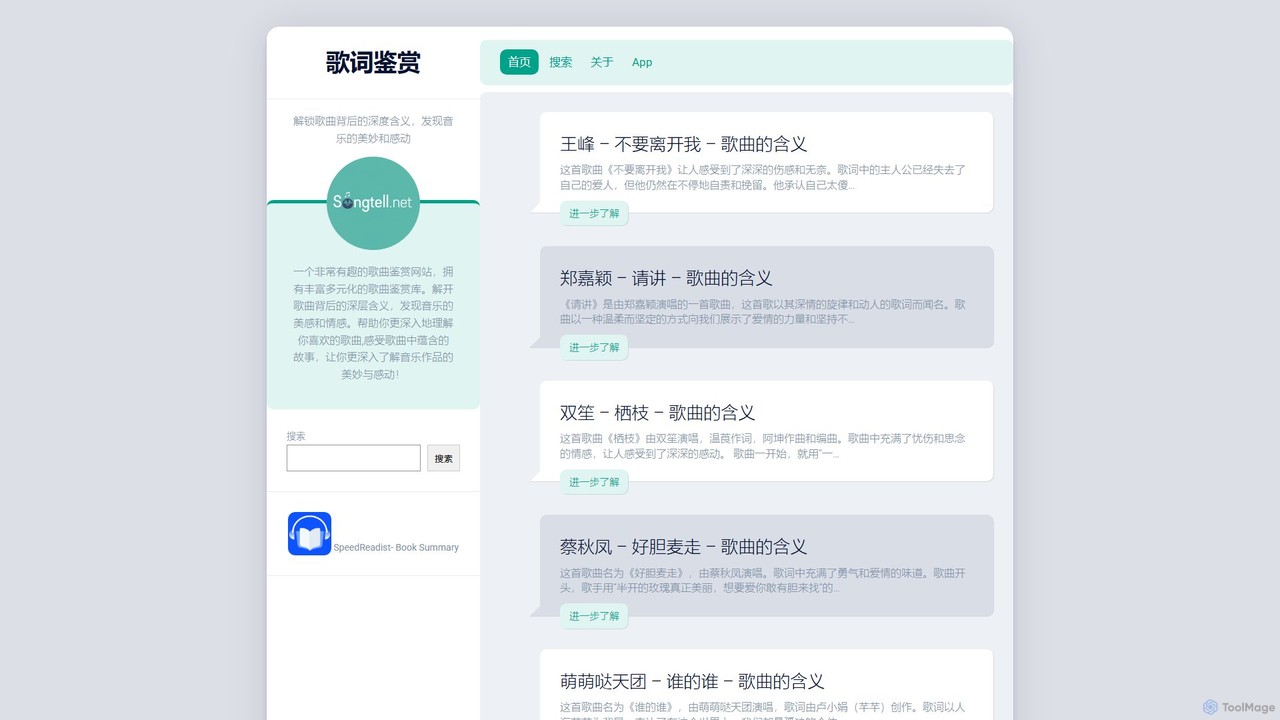
Songtell is an AI-powered platform that deciphers the meaning behind song lyrics. It offers a vast database of song interpretations, helping music lovers, writers, and researchers understand the stories, emotions, and context of their favorite tracks.
Musicology
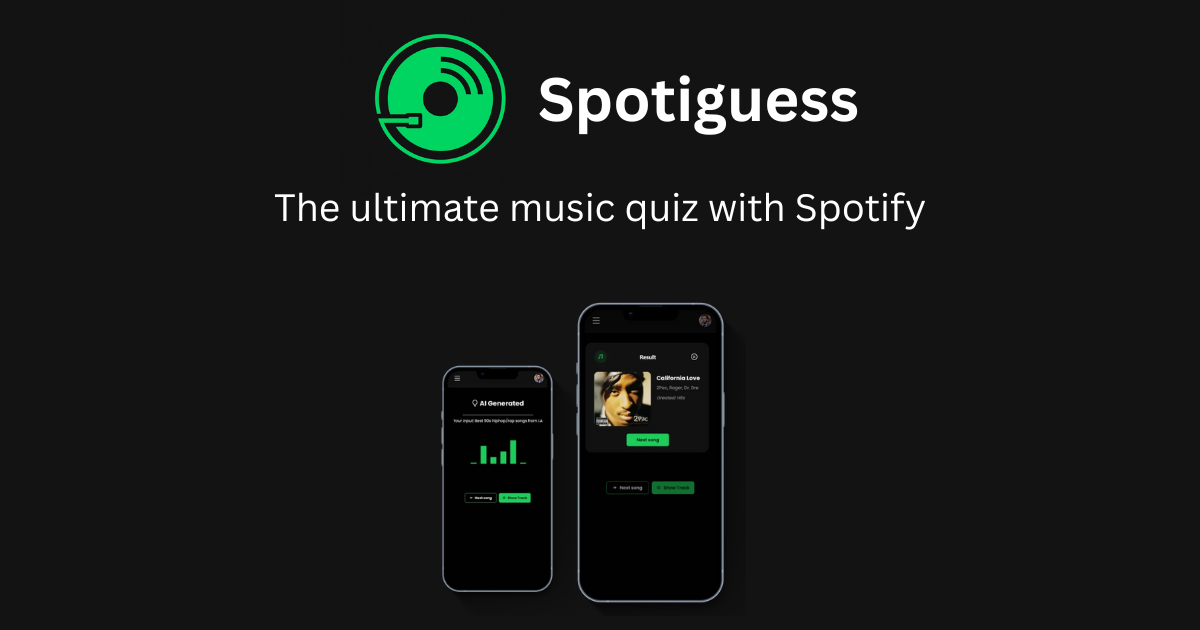
SpotiGuess is an AI-powered music quiz game that creates personalized challenges using your Spotify account. Test your music knowledge with quizzes based on your liked songs, playlists, and favorite artists. Compete with friends and a global community across multiple game modes.
Music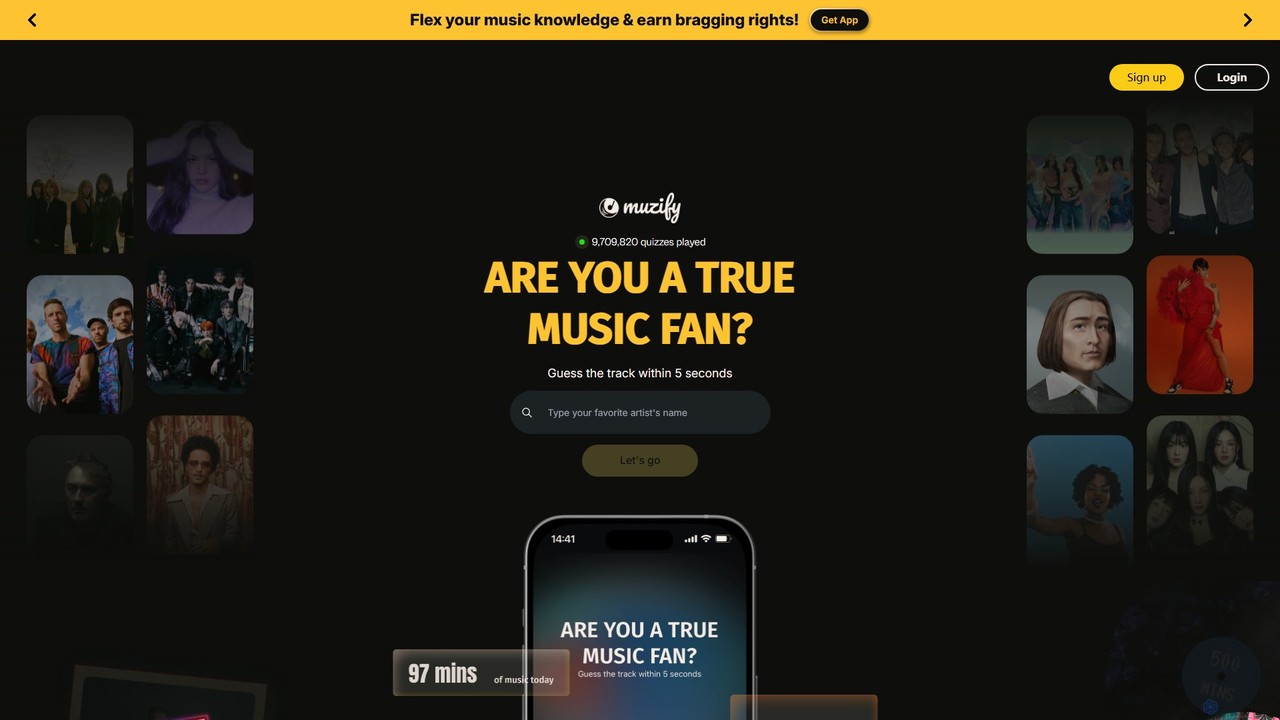
Muzify is an AI-powered music trivia platform that challenges you to 'Name That Tune'. Test your knowledge across various genres, track your music stats, earn badges, and compete on global leaderboards. It's a fun, gamified way to prove your music fandom and discover new tracks.
Music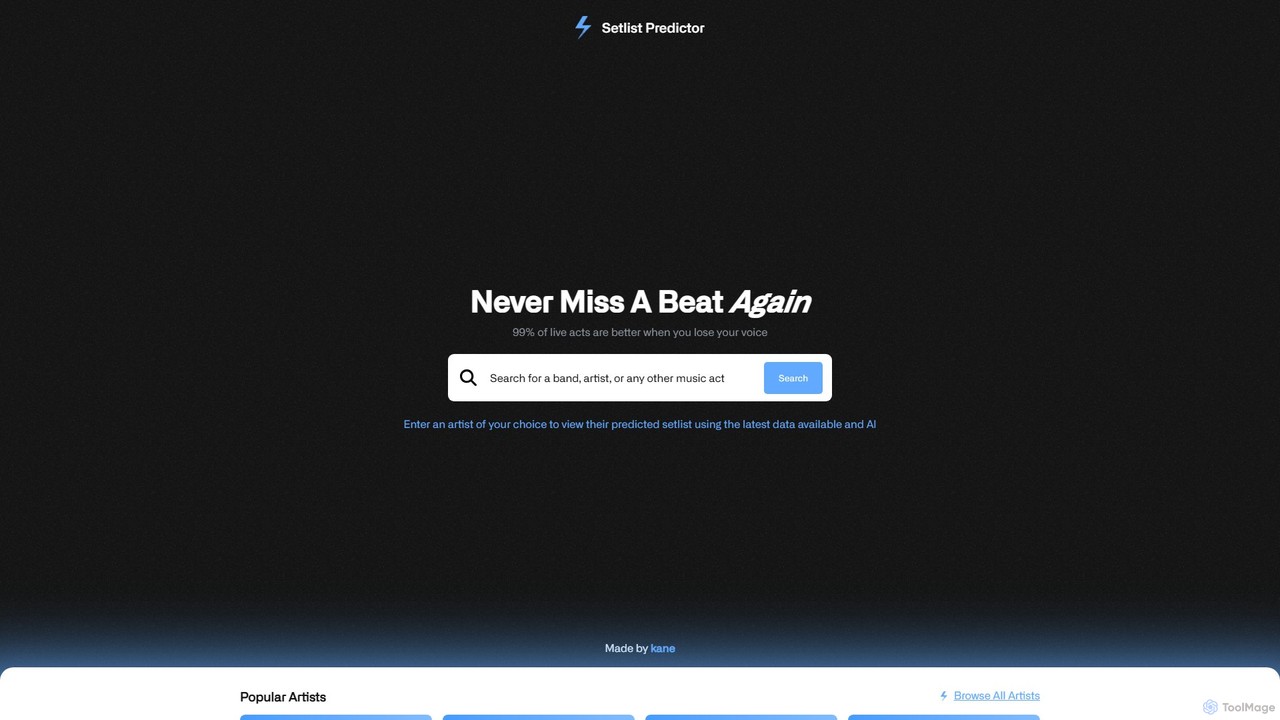
Setlist Predictor is a free AI-powered tool that forecasts the likely setlist for an artist's upcoming concerts. By analyzing the latest tour data and performance patterns, it helps music fans prepare for live shows, ensuring they never miss a beat or feel awkward not knowing the lyrics.
Music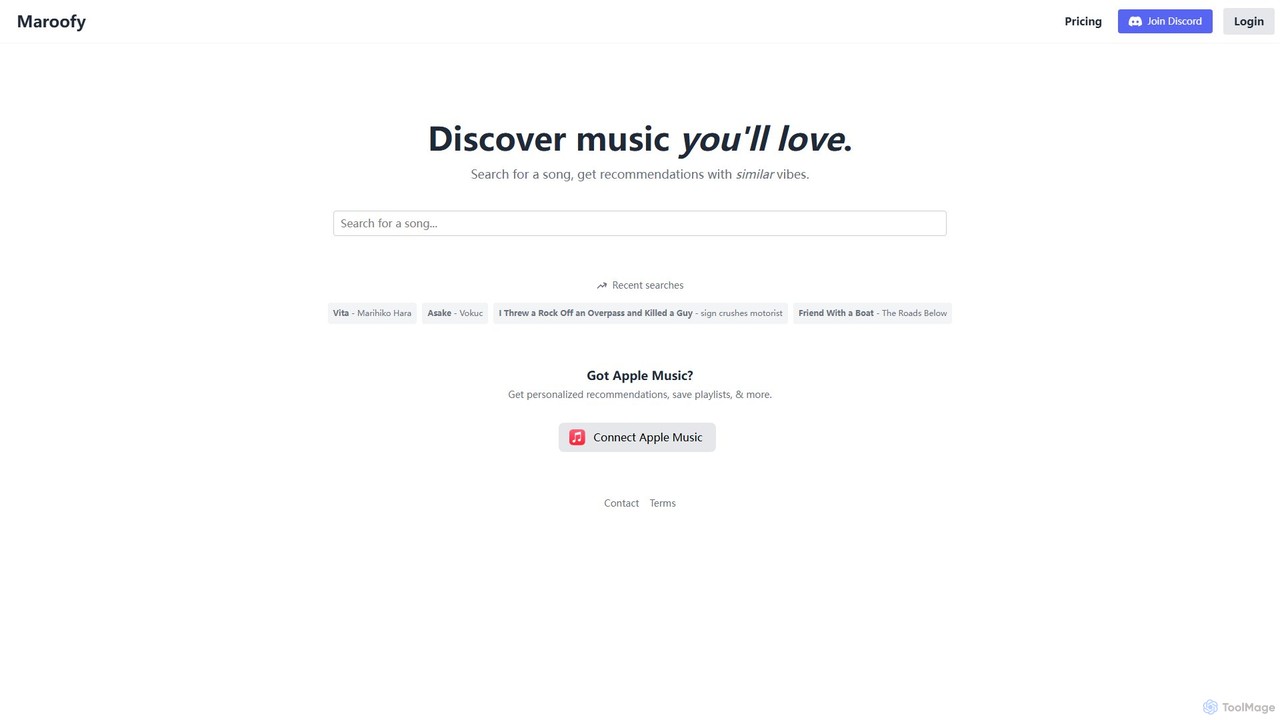
Maroofy is an AI-powered music discovery tool that helps you find new songs based on the vibe of a song you already love. Simply search for a track, and Maroofy's AI will analyze its sonic characteristics to recommend a list of similar-sounding music, expanding your musical horizons effortlessly.
Music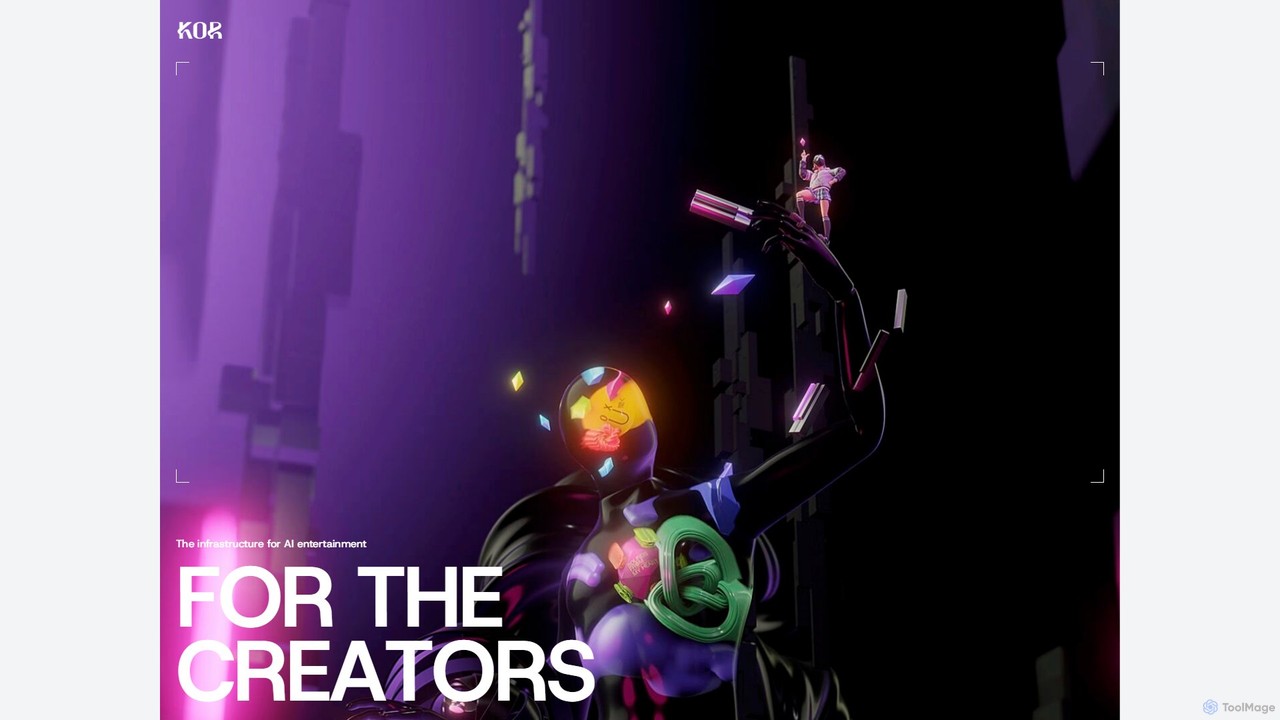
KOR Protocol is a Web3 infrastructure for AI-powered entertainment, empowering creators with on-chain IP protection, transparent licensing, and co-creation tools. It combines AI and blockchain to enable new revenue streams and collaborative experiences for artists, developers, and fans in music, gaming, and digital art.
Sdk
Gnod (Global Network of Discovery) is a suite of AI-powered discovery engines designed to help you find new music, movies, authors, and art based on your tastes. It also features a versatile meta-search tool for comparing results from various search engines.
Recommendation Engine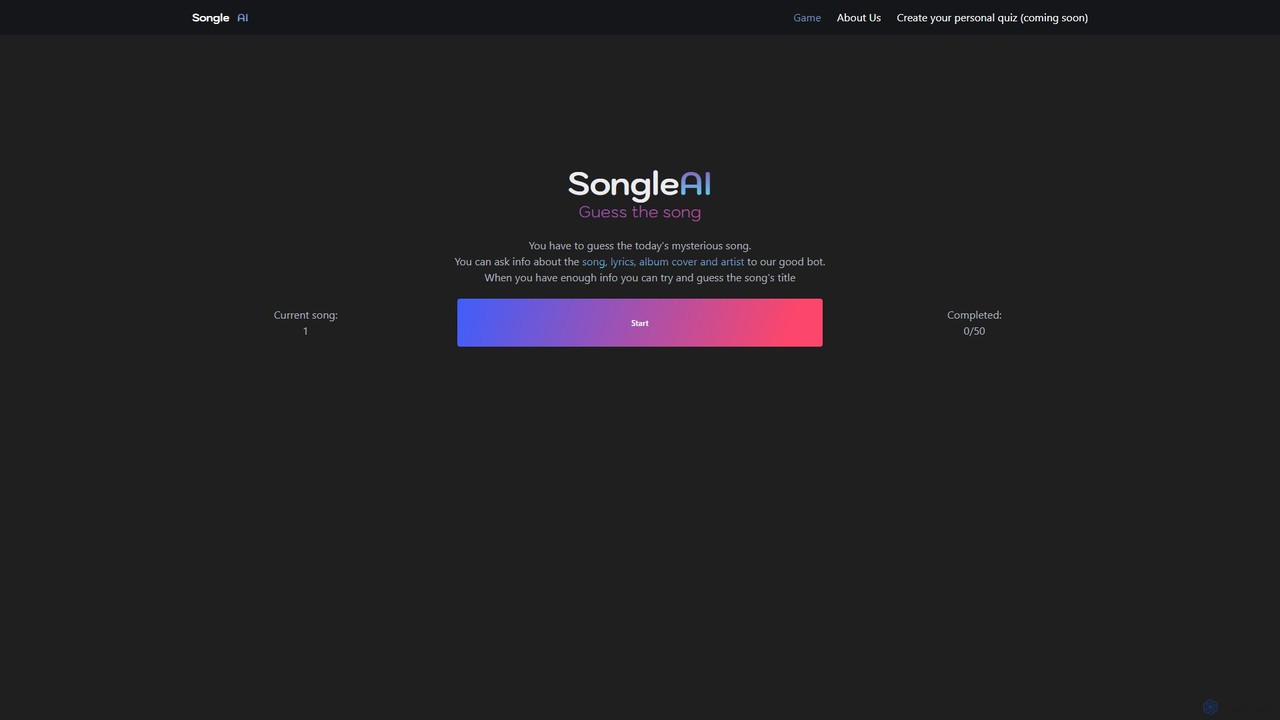

PowerHour.lol is an AI-powered tool that instantly generates themed 'Power Hour' music playlists. Simply enter a theme, and the AI will curate a list of 60 songs, find them on YouTube, and create a shareable playlist for your party or event. It's perfect for creating fun, themed musical experiences with minimal effort.
Music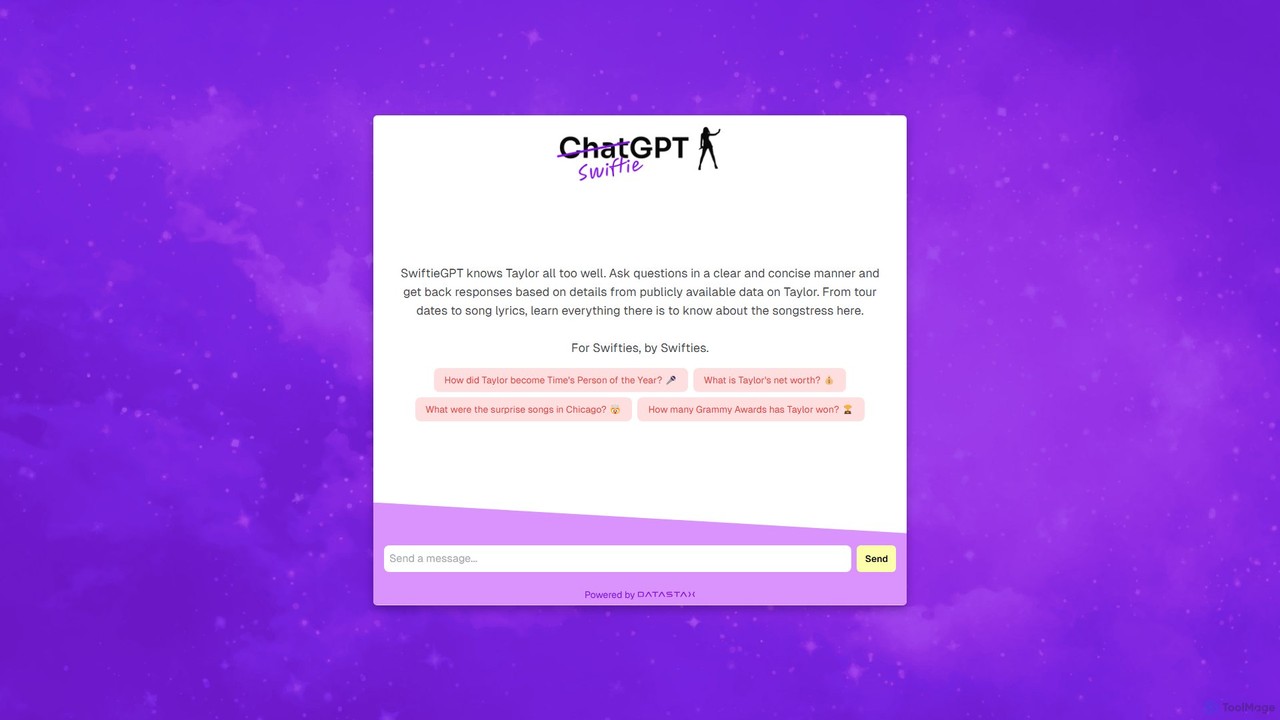
tswift, also known as SwiftieGPT, is a specialized AI chatbot designed for Taylor Swift fans. It provides instant, accurate answers to any question about her life, career, music, and achievements, drawing from a vast database of public information. It's the ultimate go-to resource for trivia, facts, and deep dives into the world of Taylor Swift.
MusicAI Music tools are a category of artificial intelligence applications designed to create, modify, or analyze musical content. Leveraging advanced algorithms like machine learning and deep learning, these tools can generate original compositions, assist in production, and enhance audio quality. As a key branch within the broader Entertainment category, they empower musicians, producers, and content creators to innovate and streamline their creative workflows.
AI Music tools are invaluable for professional musicians seeking creative inspiration, independent artists needing high-quality production assistance, and content creators requiring custom, royalty-free background music. They also serve educators demonstrating music theory concepts and game developers creating dynamic soundtracks.
When selecting AI Music tools, consider the specific features you need, such as composition, mastering, or stem separation. Evaluate the range of musical genres supported, the level of customization offered, and its compatibility with existing Digital Audio Workstations (DAWs). Also, assess the licensing terms for generated content and the pricing model.
Content creators and YouTubers can use AI music tools to quickly generate unique, royalty-free background tracks for their videos. By inputting desired mood, genre, and length, they can obtain custom soundtracks that perfectly fit their content without worrying about copyright issues or expensive licensing fees, significantly speeding up their production workflow.
Songwriters can leverage AI music tools to overcome creative blocks or explore new musical ideas. By providing a basic chord progression or lyrical theme, the AI can suggest diverse melody lines, harmonic variations, or even complete instrumental sections, offering fresh perspectives and accelerating the songwriting process from initial concept to a more developed demo.
Music producers and audio engineers can utilize AI mastering tools to achieve professional-grade sound without extensive manual tweaking. These tools analyze the sonic characteristics of a track and apply intelligent equalization, compression, and limiting to optimize its loudness, clarity, and punch across various playback systems, saving significant time in the post-production phase.
DJs, remixers, and music students can employ AI stem separation tools to isolate vocals, drums, bass, and other instruments from a complete song. This capability allows for creative remixing, creating karaoke versions, or analyzing individual components of a track for educational purposes, opening up new possibilities for audio manipulation and learning.
Game developers can utilize AI music generation to create adaptive and dynamic soundtracks that respond to in-game events, player actions, or changing environments. Instead of static loops, AI can generate evolving musical scores that enhance immersion and emotional impact, providing a more personalized and engaging audio experience for players.
Musicians and producers can use AI style transfer tools to experiment with transforming existing melodies or entire tracks into different genres or the style of a specific artist. This allows for creative exploration, generating unique remixes, or understanding the stylistic elements of various musical forms, pushing the boundaries of traditional music production and inspiring new compositions.
AI Music tools are software applications that use artificial intelligence, primarily machine learning and deep learning, to assist in or automate various aspects of music creation, production, and analysis. They can generate original compositions, separate audio components, master tracks, and even transfer musical styles. These tools aim to augment human creativity and streamline complex audio workflows.
AI Music tools typically work by training machine learning models on vast datasets of existing music. These models learn patterns, structures, and stylistic elements. When a user provides input (e.g., a text prompt, a melody, or a desired genre), the AI uses its learned knowledge to generate new musical content, modify existing audio, or analyze its properties. Some tools employ neural networks to mimic human composition or audio processing techniques.
A wide range of individuals and professionals can benefit from AI Music tools. This includes musicians and songwriters seeking inspiration or assistance with composition, music producers and audio engineers looking to streamline mastering or remixing, and content creators needing custom background music. Game developers, educators, and even hobbyists exploring new creative avenues can also find these tools highly valuable for various musical tasks.
When choosing AI Music software, prioritize features that align with your specific needs. Look for robust AI composition capabilities if you need help generating melodies or full tracks. For audio enhancement, consider tools with advanced mastering and stem separation. Other important features include genre versatility, customization options for generated music, integration with Digital Audio Workstations (DAWs), and clear licensing terms for commercial use.
Traditional music production software (DAWs) provides comprehensive manual control over recording, editing, mixing, and arranging audio. AI Music tools, conversely, focus on automating or augmenting creative processes through algorithms. While DAWs offer precise control, AI tools can generate entirely new content, perform intelligent mastering, or separate complex audio components with minimal human input. They often complement, rather than replace, traditional DAWs by providing powerful new capabilities.