ToolMage
Sign in

Best 2 Audio Production AI tools for Creative Tools

Popular Audio Production AI tools in Creative Tools include 8bit and MusicMCP, helping you work more efficiently.

MusicMCP
Freemium

MusicMCP

MusicMCP is the world's first AI Music Model Context Protocol (MCP) server, enabling AI agents and applications to generate full-length, high-quality music tracks from natural language prompts. It supports various styles, custom lyrics, and instrumental generation, providing commercial rights for all generated content.

Generative Ai
Visits 4.7KFavorites 79Likes 66
8bit

8bit

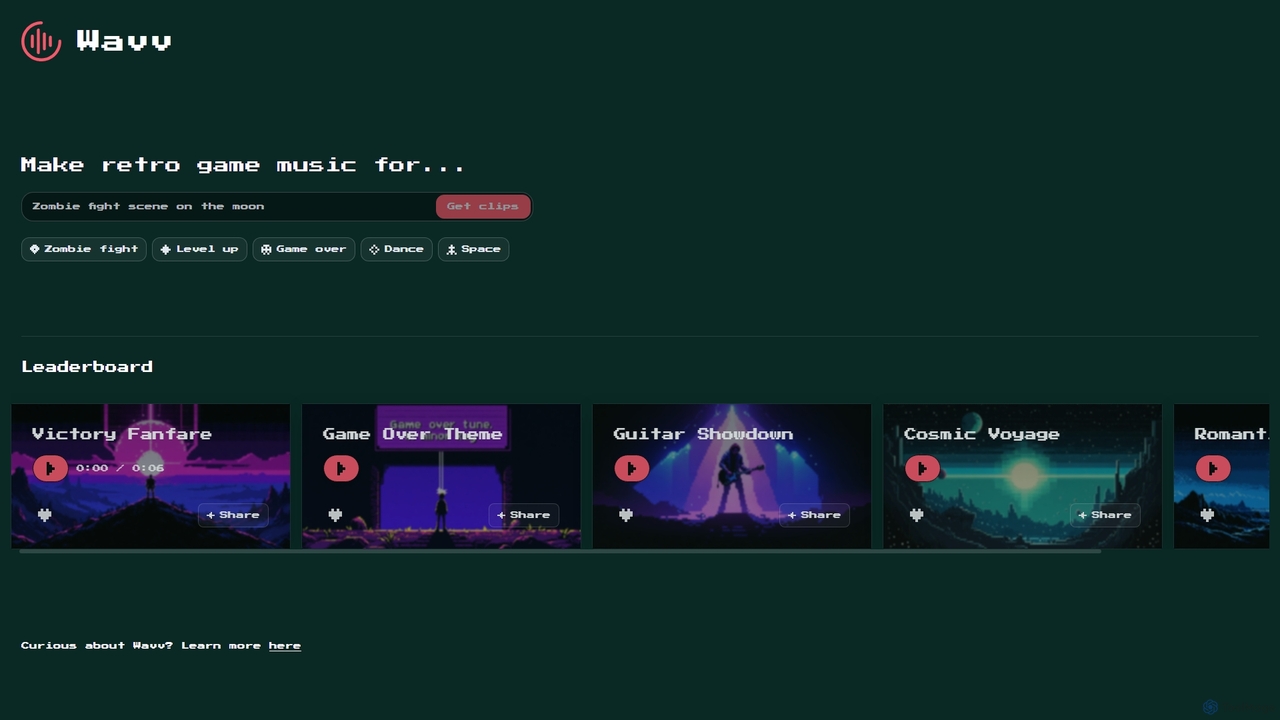
8bit is an innovative AI music generator designed to create nostalgic retro game music. It specializes in producing chiptune-style soundtracks perfect for indie games, Roblox, Minecraft, and other creative projects requiring classic 8-bit audio.

Audio Production
Visits 4.7KFavorites 122Likes 111

About Audio Production

Audio Production tools are AI-powered solutions designed to streamline and enhance the creation, editing, and manipulation of sound across various media. Leveraging advanced machine learning algorithms, these innovative tools can automate complex audio tasks, generate new sonic elements, and significantly improve the quality of existing recordings. They empower musicians, podcasters, filmmakers, game developers, and content creators to produce professional-grade audio more efficiently, reducing technical barriers and expanding creative possibilities. From intelligent noise reduction to algorithmic music composition, AI is transforming how we interact with sound.

Core Features

  • AI-Powered Noise Reduction: Automatically identifies and removes unwanted background noise, hums, echoes, and reverberation from audio recordings, ensuring pristine clarity.
  • Voice Synthesis & Cloning: Generates highly realistic human speech from text input, or clones existing voices to create new spoken content for narration, audiobooks, or virtual assistants.
  • Music Generation: Composes original musical pieces, melodies, or background scores based on user-defined parameters such as genre, mood, instrumentation, and tempo, accelerating creative workflows.
  • Audio Mastering & Enhancement: Applies intelligent processing to optimize loudness, dynamics, and spectral balance, ensuring audio is polished and broadcast-ready across different platforms.
  • Sound Effect Design: Creates custom sound effects from text descriptions or modifies existing ones with AI-driven transformations, providing unique sonic textures for games and films.

Use Cases

These tools are indispensable for professionals and enthusiasts alike in various audio-centric fields. Musicians utilize them for rapid song prototyping, stem separation, and mastering, while podcasters leverage AI for cleaning up interviews, generating dynamic intros, and transcribing content. Video creators benefit from crafting immersive soundscapes, generating realistic voiceovers, and synchronizing audio to visuals, significantly reducing manual effort and specialized equipment needs.

How to Choose

When selecting an AI audio production tool, consider its specific functionalities (e.g., music generation vs. voice editing vs. mastering), the quality and naturalness of its AI models, and its ease of integration with your existing digital audio workstation (DAW) or creative workflow. Evaluate the output quality for your specific needs, whether it's for professional broadcast, commercial projects, or personal creative endeavors, and check for compatibility with your operating system and other software. Also, assess the learning curve and available support resources.

Audio Production use cases

1

Automated Podcast Editing & Enhancement

Podcasters and content creators can leverage AI tools to automatically remove background noise, level audio volumes across speakers, and even generate dynamic intros or outros. This significantly reduces post-production time, allowing creators to focus more on content and less on tedious editing, ensuring a polished listening experience for their audience.

2

Generate Background Music for Videos

Video content creators can input desired mood, genre, and duration to automatically generate unique, royalty-free background music tracks, saving time and licensing costs. This allows them to quickly find the perfect sonic backdrop for their visual content without extensive searching or composing.

3

AI Music Composition for Content Creators

For YouTubers, marketers, or filmmakers needing original background music, AI tools can generate royalty-free tracks tailored to specific moods, genres, or durations. Users input parameters like "upbeat, electronic, 2 minutes" and receive unique compositions, eliminating the need for expensive licensing or complex manual composition.

4

Automate Podcast Audio Cleanup

Podcasters can upload raw recordings to AI tools that automatically remove background noise, equalize voices, and enhance clarity, delivering professional-sounding episodes with minimal manual editing. This significantly reduces post-production time, allowing podcasters to focus more on content creation.

5

Create Realistic Voiceovers for E-learning

E-learning developers can convert text scripts into natural-sounding voiceovers in multiple languages using AI voice synthesis, making educational content more accessible and engaging without hiring voice actors. This accelerates content localization and ensures consistent voice quality across all modules.

6

Voiceover Generation for Videos & E-learning

Video producers and e-learning developers can use AI text-to-speech engines to create natural-sounding voiceovers in multiple languages. This is ideal for explainer videos, tutorials, or corporate training modules, providing consistent narration without hiring voice actors or managing recording sessions, speeding up localization efforts.

7

Sound Design for Game Developers

Game developers can utilize AI to generate unique and immersive sound effects or ambient soundscapes based on textual descriptions or existing audio samples. This accelerates the sound design process for complex game environments, creating dynamic audio that reacts to gameplay without extensive manual creation or large sound libraries.

8

Design Unique Sound Effects for Games

Game developers can use AI to generate custom sound effects for in-game actions, environments, or character interactions by simply describing the desired sound, adding depth and originality to their games. This allows for rapid prototyping of audio assets and ensures a unique auditory experience for players.

9

Audio Restoration for Archival Content

Historians, archivists, and media professionals can employ AI tools to restore old or damaged audio recordings. These tools intelligently remove common imperfections like hiss, crackle, hum, and distortion from vintage speeches, music, or interviews, preserving valuable historical content and making it clearer for modern audiences.

10

Produce Demo Tracks for Songwriters

Songwriters can quickly create instrumental demo tracks by providing chord progressions or melodic ideas to AI music generators, allowing them to hear their compositions realized without needing a full band or studio. This accelerates the songwriting process and helps in refining musical arrangements before full production.

11

Intelligent Audio Mastering for Independent Artists

Independent musicians and producers can use AI mastering platforms to achieve professional-grade audio quality for their tracks without needing a dedicated mastering engineer. The AI analyzes the mix and applies optimal compression, EQ, and limiting to ensure the music sounds balanced, loud, and clear across all playback systems, ready for distribution.

12

Restore Old or Damaged Audio Recordings

Archivists or audio enthusiasts can utilize AI tools to intelligently remove hiss, crackle, and other imperfections from old vinyl recordings or damaged audio files, preserving historical sounds with improved fidelity. This process can revitalize valuable historical archives and personal collections, making them more listenable.

Audio Production FAQ

What are AI Audio Production tools?

AI Audio Production tools are software applications that use artificial intelligence algorithms to assist in creating, editing, mixing, and mastering audio. They can generate music, synthesize voices, reduce noise, and automate complex audio tasks, making professional audio production more accessible and efficient for various creators.

What are AI Audio Production tools?

AI Audio Production tools are software applications that leverage artificial intelligence and machine learning to assist in various stages of audio creation, editing, and enhancement. They can automate complex processes like noise reduction, generate original music or voiceovers, and intelligently master tracks. These tools aim to make high-quality audio production more accessible and efficient for users of all skill levels.

How do AI tools generate music or voices?

AI music generation typically uses deep learning models trained on vast datasets of existing music to understand patterns, harmony, and rhythm. Users provide parameters like genre or mood, and the AI composes new pieces. Voice synthesis (text-to-speech) uses neural networks to convert written text into natural-sounding speech, often trained on human voice recordings to mimic intonation and emotion.

How do I choose the best AI Audio Production tool for my needs?

To choose the best tool, first identify your primary use case: are you generating music, cleaning vocals, or mastering? Evaluate the quality of the AI output, the range of features offered, and its compatibility with your existing workflow or digital audio workstation (DAW). Consider the pricing model, user interface, and the availability of tutorials or support. Free trials are often a good way to test suitability.

Who can benefit most from using AI Audio Production tools?

Musicians, composers, podcasters, video content creators, game developers, filmmakers, and e-learning professionals can significantly benefit. These tools help streamline workflows, overcome creative blocks, reduce production costs, and achieve high-quality audio output even without extensive technical expertise, making professional-grade audio more accessible to a wider audience.

How do AI Audio Production tools differ from traditional audio software?

Traditional audio software relies heavily on manual input and user expertise for every adjustment, requiring deep technical knowledge. AI Audio Production tools, however, use algorithms to analyze audio and make intelligent decisions, automating many tasks that would otherwise be time-consuming or require specialized skills. While traditional tools offer granular control, AI tools provide speed, accessibility, and often innovative generative capabilities.

What specific tasks can AI perform in audio production?

AI can perform a wide range of tasks, including automatic noise and echo removal, vocal isolation, intelligent audio mastering, and dynamic leveling. Generative AI can compose original music, create realistic text-to-speech voiceovers, or design unique sound effects. It can also assist with transcription, translation, and even emotion detection in spoken audio, significantly expanding creative and technical possibilities.

What are the key differences between AI Audio Production and traditional audio software?

Traditional audio software provides manual control over every aspect of audio editing and production, requiring significant skill and time. AI Audio Production tools, conversely, automate many complex tasks, offering intelligent suggestions, generating content, and performing enhancements with minimal user input, often accelerating the creative process and lowering the technical barrier. While traditional tools offer ultimate control, AI tools prioritize efficiency and accessibility.

Are AI Audio Production tools suitable for beginners?

Yes, many AI Audio Production tools are designed with user-friendliness in mind, making them highly suitable for beginners. They often feature intuitive interfaces and automated processes that simplify complex tasks like mastering or noise reduction, which traditionally require significant technical knowledge. This allows new users to achieve professional-sounding results quickly, lowering the barrier to entry for audio content creation.

Can AI Audio Production tools replace human artists or sound engineers?

While AI tools can automate many tasks and generate impressive results, they are primarily designed to augment, not replace, human creativity and expertise. They serve as powerful assistants, handling repetitive or complex tasks, freeing up artists and engineers to focus on higher-level creative decisions, artistic direction, and fine-tuning that still require human intuition and judgment. They are best viewed as collaborative partners.