Creative Tools Best in category 1 results Audio AI Tool

Popular AI tools in the Audio field of Creative Tools include Suno AI, etc., helping you quickly improve efficiency.

Suno AI

Suno AI

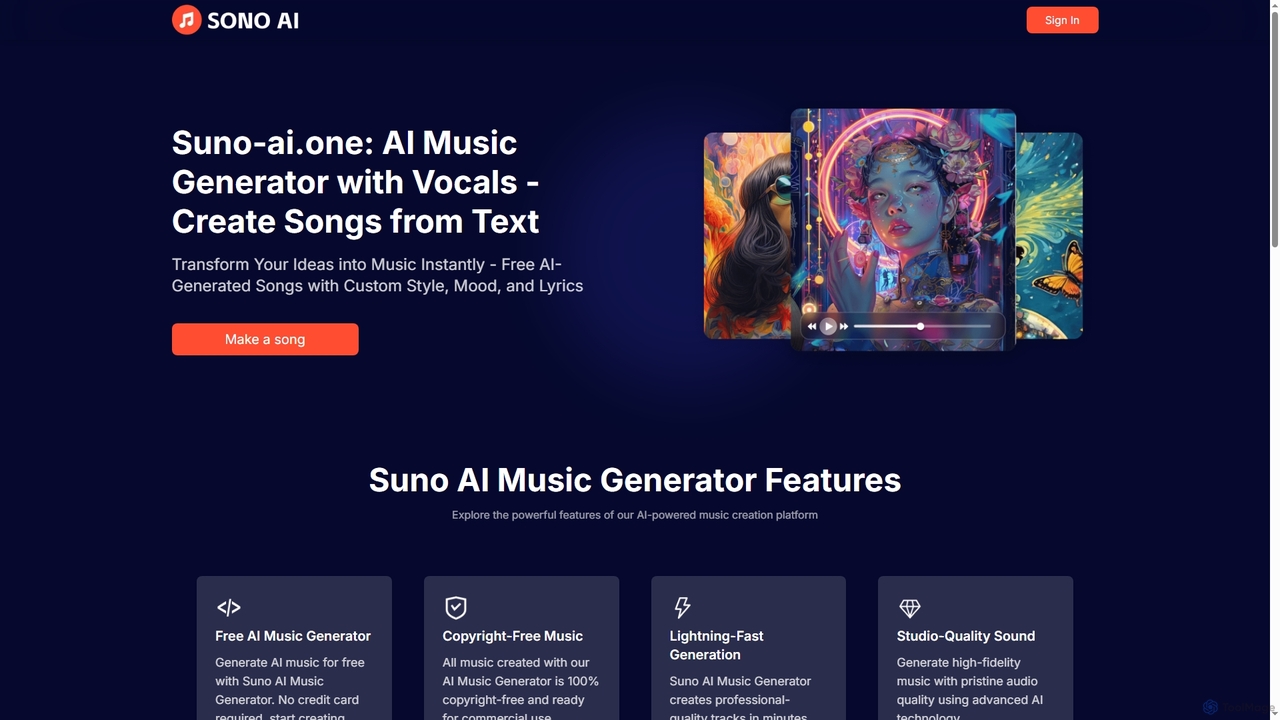
Suno AI is a powerful AI music generator that transforms text prompts into original, studio-quality songs with vocals. …

4.7K

About Audio

AI audio tools are a category of artificial intelligence applications designed to create, modify, enhance, and analyze sound. These tools leverage advanced machine learning algorithms, including deep learning models, to process and generate audio content, ranging from speech and music to sound effects. They offer unprecedented capabilities for automating complex audio tasks, enabling users to produce high-quality soundscapes, voiceovers, and musical compositions with greater efficiency. This technology empowers creators, producers, and developers to innovate in various audio-centric fields, transforming traditional workflows.

Core Features

  • Speech Synthesis (Text-to-Speech): Converts written text into natural-sounding spoken audio in various voices and languages.
  • Voice Cloning & Generation: Creates synthetic voices that mimic specific human voices or generates entirely new, unique vocal identities.
  • Music Generation: Composes original musical pieces, melodies, harmonies, and rhythms based on user inputs like genre, mood, or instrumentation.
  • Audio Enhancement & Restoration: Improves audio quality by removing noise, separating tracks, or restoring old recordings.
  • Sound Effect Generation: Creates custom sound effects for games, films, or multimedia projects from textual descriptions.

Use Cases

Content creators use AI audio tools for generating voiceovers for videos or podcasts, saving time and resources on recording. Game developers leverage these tools to create dynamic sound effects and unique character voices, enhancing immersive experiences. Musicians and producers utilize AI for generating instrumental tracks or exploring new melodic ideas, accelerating their creative process.

How to Choose

Evaluate if the tool offers the precise features needed, such as text-to-speech, music generation, or noise reduction. Assess the naturalness, clarity, and fidelity of the generated or processed audio for professional use. Consider the user interface, learning curve, and compatibility with existing audio software or workflows. Look for flexibility in voice styles, musical genres, sound parameters, and language support.

AudioUse Cases

1

Generate Realistic Voiceovers for Videos

Video content creators, YouTubers, and marketers can use AI audio tools to convert scripts into natural-sounding voiceovers. This eliminates the need for hiring voice actors or setting up recording studios, significantly reducing production time and costs. Users can select from various voices, languages, and emotional tones to match their content, ensuring high-quality audio narration for tutorials, explainers, or advertisements.

2

Compose Original Background Music for Media

Filmmakers, podcasters, and game developers can leverage AI music generators to create unique, royalty-free background scores. By inputting desired mood, genre, instrumentation, or tempo, the AI can compose custom tracks that perfectly fit the visual or narrative content. This provides a cost-effective and efficient solution for obtaining bespoke music without licensing complexities.

3

Enhance and Restore Old Audio Recordings

Archivists, audio engineers, and hobbyists can utilize AI audio enhancement tools to clean up noisy recordings, remove background hums, or restore damaged historical audio files. These tools employ advanced algorithms to isolate and reduce unwanted sounds, clarify speech, and even reconstruct missing frequencies, bringing old interviews, music, or speeches back to life with improved fidelity.

4

Create Dynamic Sound Effects for Games

Game designers and developers can use AI sound effect generators to produce a vast library of unique and context-aware audio assets. Instead of relying on generic sound packs, they can describe specific actions or environments (e.g., "futuristic laser blast," "forest ambiance with distant birds") and the AI will generate tailored sound effects, adding depth and immersion to the gaming experience.

5

Personalize Voice Assistants and Chatbots

Businesses and developers building conversational AI interfaces can employ voice cloning and generation tools to create distinct, branded voices for their virtual assistants or chatbots. This allows for a more consistent and personalized user experience, moving beyond generic robotic voices to a unique auditory identity that aligns with the company's brand image and enhances user engagement.

6

Automate Podcast Editing and Transcription

Podcasters and audio content producers can streamline their post-production workflow using AI audio tools for tasks like automatic transcription, filler word removal, and even basic audio mixing. AI can quickly convert spoken words into text, identify and cut out "ums" and "ahs," and balance audio levels, drastically reducing manual editing time and allowing creators to focus more on content.

AudioFrequently Asked Questions