Cosmos
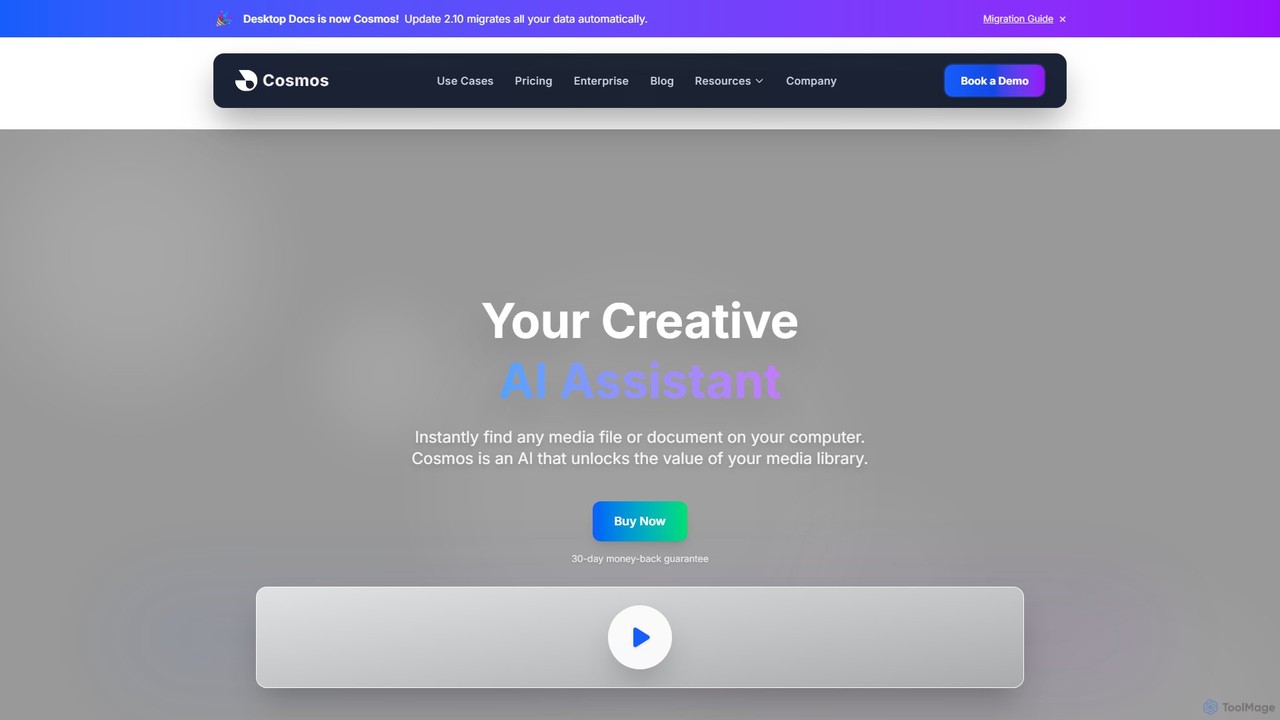
Cosmos is an AI-powered desktop assistant that revolutionizes how you find files. It runs locally on your computer, …
Cosmos is an AI-powered desktop assistant that revolutionizes how you find files. It runs locally on your computer, indexing your media and documents to enable natural language search. Instead of remembering file names, you can search for content like "photo of a red car" or "presentation with charts." Designed for creative professionals and teams, it ensures 100% privacy, works offline, and dramatically speeds up your workflow by eliminating the hunt for files.
About Asset Management
AI Asset Management tools are specialized platforms that leverage artificial intelligence to streamline the organization, storage, retrieval, and distribution of digital assets. These tools utilize machine learning for automated tagging, content analysis, and metadata generation, significantly enhancing the discoverability and usability of creative resources. They empower content creators, marketing teams, and enterprises to efficiently manage vast libraries of images, videos, audio files, and documents, ensuring brand consistency and accelerating content workflows.
Core Features
- Automated Tagging: AI automatically identifies objects, scenes, and concepts within assets, generating relevant keywords and metadata.
- Smart Search & Retrieval: Enables natural language queries and visual search to quickly locate specific assets across large repositories.
- Version Control: Tracks changes, manages multiple iterations of assets, and ensures users always access the latest approved versions.
- Rights Management: Automates the tracking of usage rights, licenses, and compliance for digital content, preventing misuse.
- Content Repurposing: AI can suggest or automatically generate variations of assets optimized for different platforms and formats.
Applicable Scenarios
These tools are indispensable for marketing departments managing campaigns with diverse media, creative agencies handling client assets, and large enterprises needing to maintain brand consistency across global teams. They are also vital for e-commerce businesses organizing product imagery and media companies archiving vast content libraries.
How to Choose
When selecting an AI asset management tool, consider its integration capabilities with existing creative suites and marketing platforms, the accuracy and breadth of its AI tagging features, scalability for future asset growth, and robust security protocols. Evaluate the user interface for ease of use and the flexibility of its metadata customization options to fit specific organizational needs.

Asset ManagementUse Cases
Automated Tagging of Marketing Visuals
Marketing teams often manage thousands of images and videos for campaigns. AI asset management tools automatically analyze these visuals, identifying products, themes, and emotions, then apply relevant tags. This saves hours of manual tagging, making assets instantly searchable and ensuring brand consistency across all marketing channels, accelerating campaign deployment.
Efficient Video Content Search for Media Production
Media production houses deal with vast archives of raw and edited video footage. AI asset management tools can analyze video content frame by frame, detecting objects, faces, spoken words, and scenes. This allows editors and producers to quickly find specific clips, B-rolls, or soundbites using natural language queries, drastically reducing search time from hours to minutes for project assembly.
Ensuring Brand Asset Consistency Across Global Teams
Large enterprises with global operations struggle to maintain consistent brand messaging and visual identity. AI asset management platforms centralize all approved brand assets (logos, fonts, templates, imagery) and use AI to monitor usage. This ensures that all regional teams access and utilize only the latest, compliant brand elements, preventing off-brand content creation and maintaining a unified corporate image worldwide.
Product Image Organization for E-commerce
E-commerce businesses manage vast catalogs of product images, often requiring specific formats and resolutions for different platforms. AI asset management tools automate the categorization, resizing, and format conversion of product images. This ensures that high-quality, correctly formatted images are readily available for website listings, social media, and advertising, significantly speeding up product launches and updates.
Legal Compliance for Licensed Media
Organizations using licensed stock photos, music, or video clips must adhere to strict usage rights. AI asset management tools can track license expiry dates, usage restrictions (e.g., editorial use only, specific regions), and automatically flag non-compliant usage. This helps legal and compliance teams mitigate risks, avoid costly penalties, and ensure all creative assets are used within their legal boundaries.
Personalized Content Delivery for Digital Marketers
Digital marketers aim to deliver highly personalized content to different audience segments. AI asset management tools can integrate with CRM and marketing automation platforms, using AI to recommend the most relevant creative assets (e.g., specific ad creatives, email banners) based on user demographics, behavior, and past interactions. This enhances engagement rates and optimizes campaign performance by ensuring the right content reaches the right audience.